Gulf Coast RV Parks & Resorts: The Best Beach Camping From South Padre to Naples
The best RV parks and resorts on the Gulf Coast, state by state from Texas through Louisiana, Mississippi, Alabama and Florida — beachfront state parks, national seashores and full-hookup resorts, with 2026 rates, beach access and hookups compared.
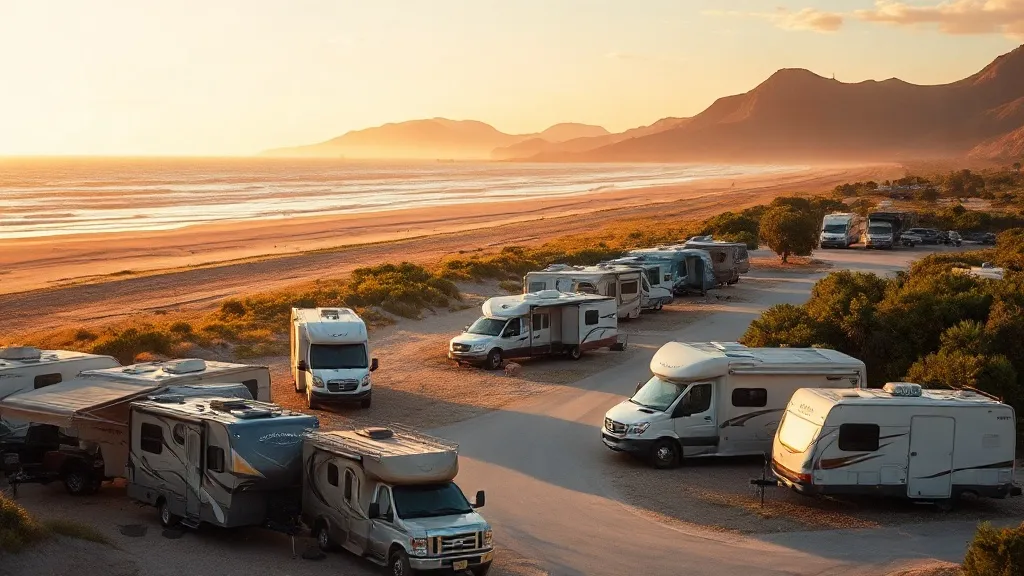
The Gulf of Mexico shoreline runs about 1,600 miles from the Rio Grande to the Everglades, and it is the most underrated RV coastline in the country. It has the only legal beach driving and beach camping in the eastern United States, three national seashores, a run of state parks that put a $30 site a two-minute walk from the water, and — from Fort Myers to Naples — the densest snowbird RV infrastructure in America. It also has hurricanes, humidity, marsh, and long stretches where the “coast” road is 20 miles from any water, which is why most people only ever see one piece of it.
This guide is the piece we did not have: a single page that runs the whole coast west to east, state by state, and tells you where the RV parks actually are, which ones put you on or near the sand, and which have hookups. It leans on the detailed guides and reviews we have already written for each zone — linked throughout — and on the official park sources those pages were checked against. Where a park has its own review, we quote the verified numbers; where we could not verify a detail, we say “confirm with the operator” and mean it.
Verified September 9, 2026: Fort Pickens electric sites are $40 and non-electric $26 per night, and Davis Bayou electric sites are $22, per the Gulf Islands National Seashore fee page. Fort De Soto charges $45.77–$53.68 plus tax by site number and waterfront status per Pinellas County. Galveston Island State Park beachside water/electric sites are $30 (premium $35) and Mustang Island developed sites $25 (primitive beach $13) per Texas Parks and Wildlife. Gulf State Park lists 496 full-hookup sites 1.5 miles from the beach with rates shown by date only (Alabama State Parks). All public rates exclude entrance fees and reservation fees.
Quick answer: The best RV parks on the Gulf Coast in 2026 are Fort Pickens Campground near Pensacola ($40 electric, no sewer, walk to Gulf and bay), Fort De Soto near St. Petersburg ($45.77–$53.68 plus tax, water/electric, walk to a top-rated beach) and Galveston Island State Park in Texas ($30–$35 beachside water/electric, steps from the sand). For camping on the sand itself, go to Texas: Mustang Island State Park ($13 primitive, $25 with hookups) and the Port Aransas city beach ($12 permit). For a full-hookup Gulf Coast RV resort with sewer at the site, the standouts are Gulf State Park in Gulf Shores (496 sites, dynamic rates), Topsail Hill Preserve on 30A (about $49 before tax) and the private resorts in Galveston and Port Aransas ($59–$105 published). Snowbirds head to South Padre, Port Aransas or Fort Myers–Naples.
Best Gulf Coast RV parks at a glance
West to east. “Beachfront” means the campground itself touches the Gulf beach or its dunes; rates are 2026 nightly, before entrance fees, reservation fees and tax.
| Park | State | Beachfront | Hookups | 2026 rate | Big-rig |
|---|---|---|---|---|---|
| Galveston Island State Park | Texas | Yes (beachside loop) | Water + 20/30/50 amp, no sewer | $30–$35 beachside; $20 bayside ($500/mo Nov–Feb) | Site-specific |
| Jamaica Beach RV Resort | Texas | No (across the road) | Full | Dynamic; quote live | Yes, 181+ pull-throughs |
| Sandpiper RV Resort | Texas | No (across the Seawall) | Full | $60–$105 published | Yes (43 sites) |
| Pioneer Beach Resort | Texas | Yes (private boardwalk over dunes) | Full | $59–$80 on posted table; confirm live | Yes |
| Port Aransas city beach | Texas | On the sand | None | $12 annual permit | No (soft sand) |
| Mustang Island State Park | Texas | Yes (primitive on sand; W/E loop 400 yd back) | Water + 50 amp, no sewer, or none | $25 developed; $13 primitive | Site-specific |
| Malaquite Campground, Padre Island NS | Texas | Yes (walk over dunes) | None | $14, first-come | Tight |
| South Padre Island KOA Holiday | Texas | No (short drive) | Full | Dynamic | Yes |
| Grand Isle State Park | Louisiana | Yes (walk from campground) | Water/electric (confirm) | Confirm with the park | Confirm |
| Davis Bayou, Gulf Islands NS | Mississippi | No (bayou; beaches by boat) | Electric + water, no sewer | $22 electric (NPS 2026) | Site-specific |
| Gulf State Park | Alabama | No (1.5 miles by trail) | Full | Dynamic by date; quote live | Yes, 65-ft pull-throughs |
| Fort Pickens Campground | Florida | Yes (walk to Gulf and bay) | Water + electric, no sewer | $40 electric; $26 non-electric | Site-specific |
| Pensacola Beach RV Resort | Florida | Yes (sound-front; beach access) | 30/50 amp; confirm sewer | Seasonal; quote live | Yes |
| Topsail Hill Preserve State Park | Florida | No (path or tram to beach) | Full | About $49 before tax ($42 + $7 utility; Campendium Mar 2026) | Yes, to 45 ft |
| Grayton Beach State Park | Florida | Yes (direct beach access) | Full or water/electric by loop | Confirm with the park | Site-specific |
| St. Andrews State Park | Florida | Yes (walk to Gulf and jetties) | Water/electric (confirm) | Confirm with the park | Site-specific |
| Fort De Soto Campground | Florida | Yes (walk to beach) | Water + 30/50 amp, no sewer | $45.77–$53.68 + tax | Some sites tight over 40 ft |
| Fort Myers–Naples resorts | Florida | No (drive to beach) | Full | Typically $55–$120 winter; quote live | Yes, up to 75-ft pull-throughs |
Gulf Coast by state
This page is the coast-wide overview. Each state has its own detailed guide with park-by-park rates and booking rules:
- Texas Gulf Coast RV parks — Galveston to South Padre: seven campgrounds compared, including the only legal drive-on beach camping on the Gulf, with Galveston and Port Aransas covered park by park.
- Gulf Shores RV parks — Alabama’s 60 miles of coast: Gulf State Park’s 496 full-hookup sites plus the five best private resorts in Gulf Shores and Orange Beach.
- Florida Gulf Coast RV parks — Tampa Bay to Naples: Fort De Soto and the snowbird resorts of Sarasota, Fort Myers and Naples, with monthly rates and 55-plus rules. The Panhandle is covered in our Pensacola RV parks guide.
Louisiana and Mississippi do not have their own guides yet; the sections below are the most complete coverage we have.
Texas: the beach-driving coast
Texas has 367 miles of Gulf shoreline and, uniquely on the Gulf, most of it is legally a road. That single fact reshapes RV camping here: on Mustang Island, North Padre and the Bolivar Peninsula you can drive your rig onto hard-packed sand and camp with the surf in front of you, for a permit fee that costs less than a tank of propane. The trade is hookups — the on-sand camping is dry — and hurricane exposure. Our Texas Gulf Coast RV parks guide compares the seven best bases; here is how the coast lays out from north to south.
Galveston
Galveston is Houston’s beach, an hour from downtown, and the most developed RV base on the upper Texas coast. The anchor is Galveston Island State Park on the island’s west end, where the Texas Parks and Wildlife fee page we checked lists 50 beachside water/electric sites at $30 and eight premium beachside sites at $35 (20/30/50 amp, no sewer, plus entrance fee), with 20 bayside water/electric sites at $20 nightly or $500 monthly a mile and a half from the sand. The private side is led by Jamaica Beach RV Resort — 181-plus full-hookup pull-throughs, a lazy river and pools, beach across the road, dynamic pricing — and Sandpiper RV Resort on the Seawall, 43 full-hookup sites at a published $60 to $105. The city’s beachfront Dellanera RV Park, the west-end Stella Mare and bayside Bayou Shores round it out. Details, and what we could and could not verify, are in our Galveston RV parks guide.
Port Aransas and Mustang Island
Two hundred road miles south, Port Aransas is the best all-around RV town on the Texas coast: a fishing village on the tip of Mustang Island, reached by a free ferry or the JFK Causeway, with the full spectrum of camping. At the top, Pioneer Beach Resort has 363 full-hookup sites and a private boardwalk over the dunes (our review), and Gulf Waters and On the Beach RV Park compete on proximity and polish. In the middle, Mustang Island State Park offers water/50-amp sites 400 yards behind the dunes at $25 and primitive camping on its own beach for $13 (TPWD 2026) (our review). At the bottom of the price list and the top of the experience list, the City of Port Aransas beach is open to camping with a $12 annual permit — three nights in any three-week period, no hookups, rig perpendicular to the water. Our Port Aransas RV parks guide covers all eight parks and the ferry math.
Padre Island National Seashore
South of Mustang Island, Padre Island National Seashore protects the longest undeveloped barrier island in the world. Malaquite Campground has 48 sites, no hookups, a $14 fee, first-come only, and a walk across the dunes to the beach; beyond it, primitive beach camping on North and South Beach costs nothing beyond the entrance pass, with a 14-night limit. South Beach’s first miles are usually passable to two-wheel drive; beyond that it is four-wheel-drive country and no place for a towable. Malaquite is the quietest place to wake up on the entire Gulf.
South Padre Island
At the bottom of Texas, South Padre Island is the state’s warmest winter base and its most resort-like beach town. South Padre Island KOA Holiday runs year-round with full hookups, a pool, hot tub and boat ramps at dynamic prices; Isla Blanca county park and a handful of private resorts fill in, and the Brownsville-side parks like Jetstream RV Resort at Tropical Trails offer bigger pads for less, 24 miles from the sand. Winter Texans book by late summer. Read the South Padre section of our Texas Gulf Coast RV parks guide for the current details.
Louisiana: Grand Isle and not much else
Louisiana’s coast is mostly marsh, and its one true beach-camping destination is Grand Isle, a barrier island two hours south of New Orleans at the end of Louisiana 1. Grand Isle State Park occupies the island’s eastern tip with a campground a short walk from a wide Gulf beach, a long fishing pier, and — the reason locals come — some of the best surf and inshore fishing on the Gulf. The campground has traditionally offered improved sites with water and electric plus primitive beach camping; the island has been hit hard by hurricanes in the past few years and facilities have been rebuilt in phases, so confirm current site inventory, hookups and the reservation window with the Louisiana State Parks reservation system rather than relying on older listings, including this one. We were not able to verify 2026 numbers from the state parks site for this guide.
The rest of the Louisiana coast is worth a detour for food and culture — Lafayette, the Atchafalaya, New Orleans itself — but for beach camping, Grand Isle is the stop, and it is a small one: come for the fishing and the isolation, not for resort amenities.
Mississippi: Davis Bayou and the casino coast
Mississippi’s 44 miles of Gulf shore run from Bay St. Louis through Gulfport and Biloxi to Ocean Springs, and the beach here is man-made and mainland — a long strip of sand along US 90 with the barrier islands 10 miles offshore. RV camping splits accordingly.
Davis Bayou, Gulf Islands National Seashore
The Mississippi unit of Gulf Islands National Seashore is headquartered at Davis Bayou in Ocean Springs, and its campground is the quiet, forested public option on this coast — sites among live oaks on a bayou, with electric and water at improved sites ($22 per night for an electric site in 2026, no entrance fee, per the NPS fee page), restrooms with showers and a dump station, but no beach at your site: the seashore’s beaches are on the barrier islands (Ship, Horn, Petit Bois), reached by boat, and the mainland Ocean Springs beach is a short drive. We verified the rate but not the site count or amperage, so check Recreation.gov for the live listing. It is a favorite of RVers passing between Texas and Florida who want a national park campground without the Fort Pickens booking scramble.
Biloxi and Gulfport private resorts
Biloxi and Gulfport are casino towns, and the private RV parks reflect it: full-hookup, big-rig-friendly, often affiliated with a casino, with the mainland beach across US 90 and Ocean Springs’ art-and-restaurant district 15 minutes east. They are convenient overnight and week-long bases rather than destinations in themselves. Rates and inventory change frequently, so pull live quotes; the honest advantage of this coast is that it is rarely full outside holiday weekends and Cruisin’ the Coast week in October, which is when every park from Bay St. Louis to Pascagoula sells out.
Alabama: Gulf Shores and Gulf State Park
Alabama has only about 60 miles of Gulf shore, and it packs one of the biggest and best-run public campgrounds on the entire coast into it. Gulf State Park in Gulf Shores lists 496 full-hookup sites in its main campground — back-ins averaging about 45 feet, pull-throughs about 65 — plus a separate, newer RV Resort with 104 full-hookup sites, 11 bathhouses, a lake, and a paved trail network that reaches the beach. The honest qualifier, which we verified against the Alabama State Parks page for our beachfront roundup: the main campground is about 1.5 miles from the sand. It is a big-rig, long-stay, sewer-at-the-site park with the beach a bike ride away, not a rig-beside-the-surf park.
Around it, Gulf Shores and Orange Beach have a dense set of private full-hookup resorts, and the town is the most family-oriented beach strip between Galveston and Destin. For a park-by-park breakdown, see our Gulf Shores RV parks guide. Note for planners: from Gulf Shores it is 20 minutes to Perdido Key and under an hour to Pensacola, so the Alabama and western Florida Panhandle parks are one contiguous zone in practice.
Florida Panhandle: the emerald coast
From Perdido Key to Apalachicola, the Florida Panhandle has the whitest sand on the Gulf — quartz washed down from the Appalachians — and the best run of public beach campgrounds anywhere on this coastline. This is where the phrase “beachfront RV park” comes closest to being literal.
Pensacola and Fort Pickens
Fort Pickens Campground, on Santa Rosa Island inside Gulf Islands National Seashore, is our top pick on the whole Gulf for the combination of price and position: $40 for an electric site and $26 non-electric in 2026 (NPS), 137 water/electric family sites across five loops, no sewer, 14-night limit, Recreation.gov, and every site a short walk from both the Gulf and Pensacola Bay, with an 1834 brick fortress at the end of the road. The catch is Fort Pickens Road, which floods and closes after storms. Around it: Pensacola Beach RV Resort (30/50 amp at every site, heated pool, beach and sound access, seasonal rates), Big Lagoon State Park on the mainland with 50-amp sites, and the Navarre and Perdido Key parks. Full detail in our Fort Pickens Campground review and Pensacola RV parks guide.
Destin and 30A: Henderson Beach, Topsail Hill, Grayton Beach
East of Navarre the coast turns into Destin, then the 20-mile Scenic 30A corridor of planned beach towns. Three state parks anchor the camping. Henderson Beach State Park in Destin has 30/50-amp water/electric sites tucked behind tall dunes with the beach a short walk away and Destin’s restaurants at the gate. Topsail Hill Preserve State Park in Santa Rosa Beach is the outlier — a state park whose campground, the Gregory E. Moore RV Resort, is a paved full-hookup RV resort with a pool and bungalows, sitting inland behind the dunes with a path and tram to more than three miles of undeveloped beach (our review). Grayton Beach State Park, 10 minutes east, is smaller, with a newer full-hookup loop and older water/electric sites and a shorter walk to the sand beside a coastal dune lake — select the hookup type when you book, because the loops differ. All three open reservations 11 months out and fill immediately for spring and summer.
Panama City Beach: St. Andrews State Park
St. Andrews State Park sits at the eastern tip of Panama City Beach, where the pass into St. Andrews Bay meets the Gulf: campground sites among the pines on the bay side, a jetty-protected swimming lagoon, a Gulf beach a walk away, and a shuttle to Shell Island in season. Sites are water/electric to our knowledge — confirm the hookup type and rate on the Florida State Parks reservation system, as we did not verify them for this guide. It is the best public campground in Panama City Beach by a distance, and the contrast between the quiet campground and the spring-break strip 10 minutes away is part of its charm.
The Forgotten Coast
East of Panama City the Panhandle goes quiet: Mexico Beach, Port St. Joe, Cape San Blas and Apalachicola. T.H. Stone Memorial St. Joseph Peninsula State Park on Cape San Blas has some of the finest beach in Florida and a campground rebuilt after Hurricane Michael; St. George Island State Park off Apalachicola is similar. Both are water/electric-style state park campgrounds with beach access; confirm current status and inventory with Florida State Parks, since both have had post-storm closures. This is the stretch to choose when you want the Panhandle sand without the Destin crowds.
Florida west coast: Fort De Soto to Naples
South of the Big Bend’s marsh coast, the Florida peninsula’s Gulf side is a 200-mile run of beach cities — Clearwater, St. Petersburg, Sarasota, Fort Myers, Naples — and the center of American snowbird culture. Our Florida Gulf Coast RV parks guide covers Tampa to Naples park by park; here is the shape of it.
Fort De Soto and Tampa Bay
Fort De Soto Park, a Pinellas County park on five islands at the mouth of Tampa Bay, is the west coast’s answer to Fort Pickens: a repeatedly award-winning beach within walking distance of a 236-site campground, water and 30/50-amp electric at the RV sites, no sewer, and a total nightly cost in the mid-$40s to low-$50s with fees. It took heavy hurricane damage and has been reopening in phases, with some sections still closed into 2026 — check current availability before you plan around it. Our Fort De Soto Campground review has the site-by-site detail. Tampa’s private side is led by Bay Bayou RV Resort, 353 full-hookup sites, 20 minutes from the airport and 30 from the beaches.
Sarasota and the barrier islands
Sarasota’s Siesta Key and Lido Key have superb sand and no RV camping on them; the RV bases are inland. Sun Outdoors Sarasota is the 600-site resort option; Myakka River and Oscar Scherer state parks are the quiet, cheap, no-frills alternatives — 34-to-40-foot limits and alligators from the campsite. Beach days are a drive.
Fort Myers to Naples: snowbird central
From Fort Myers south through Bonita Springs to Naples, the parks are built for people who stay for months: heated pools, activity calendars, 55-plus restrictions at many, and booking windows for returning guests that open a year out. Sun Retreats Estero Bay (75-foot pull-throughs), Lakes RV (from $650 a month with full hookups, per its 2026 rate page), Sanctuary RV Resort (all-ages, 185 sites) and Northtide Naples RV Resort, the park long known as Rock Creek (55-plus, creek access to the Gulf) are the standouts we cover in the Florida Gulf Coast guide. None are on the beach; all are within a short drive of it. Naples is the southern end of the road — beyond it the coast becomes the Ten Thousand Islands and the Everglades, which we cover in our Everglades RV camping guide.
Beach access versus hookups: the Gulf Coast trade-off
Almost every decision on this coast reduces to one table:
| What you want most | Where to camp | What you give up |
|---|---|---|
| Rig on the sand | Port Aransas beach ($12 permit), Mustang Island primitive, Padre Island NS beaches | All hookups; hurricane and tide exposure |
| Hookup site with a short walk to the beach | Fort Pickens, Fort De Soto, Galveston Island SP beachside, Henderson Beach, Grayton Beach W/E, Mustang Island W/E | Sewer at the site; must book far out |
| Full hookups behind the dunes | Topsail Hill, Grayton Beach full-hookup loop, Pensacola Beach RV Resort, Pioneer Beach, Jamaica Beach, Sandpiper | Distance to the water ranges from a boardwalk to a road crossing |
| Full hookups, big pads, beach by bike or car | Gulf State Park, South Padre KOA, Bay Bayou, the Fort Myers–Naples resorts | Beach at your site |
| Lowest price on the coast | Malaquite ($14), Mustang Island primitive ($13), Port A permit ($12/yr), Galveston SP bayside ($20) | Hookups and, at most, shade |
If sewer at the site is non-negotiable, your Gulf-front options narrow to Topsail Hill, Grayton’s newer loop and the private resorts; everywhere else, plan around dump stations and a portable tote. Our explainer on full hookup versus partial hookup covers how to make a water/electric site work for a week.
When to go
| Zone | Best months | Avoid |
|---|---|---|
| South Texas (South Padre, Port A) | Nov–Apr for winter Texans; Apr–May and Oct for beach weather | Spring break week; peak hurricane Aug–Sept |
| Upper Texas (Galveston) | Apr–May, Oct | Summer weekends; Sept storms |
| Louisiana–Mississippi | Mar–May, Oct–Nov | Summer humidity; Cruisin’ the Coast if you need a site |
| Alabama–Florida Panhandle | Mar–May, Sept–Oct (warm water, thin crowds) | Spring break March; July heat |
| Florida west coast | Nov–Apr | Summer storms; snowbird booking crunch Jan–Mar |
Hurricane season runs June 1 to November 30 and peaks from mid-August through September across the whole Gulf. Every park in this guide has closed for a storm at some point. Book with refundable terms in season, know each island’s single evacuation route, and treat a tropical storm watch as a reason to move a 40-foot rig early rather than late.
Snowbird and monthly stays on the Gulf
The Gulf Coast has two winter capitals. South Texas — South Padre and Port Aransas — is winter Texan country, with monthly sites at Pioneer Beach, Port A RV Resort, Gulf Waters and the South Padre parks running roughly $675 to $1,000 plus electric in Port A and filling by late summer. Southwest Florida — Fort Myers to Naples — is the snowbird corridor proper, with resort programs, 55-plus parks and returning-guest booking that opens a year ahead. The northern Gulf, from Galveston through the Panhandle, is cooler in January (50s and 60s, occasional frosts inland) but far cheaper monthly: Galveston Island State Park’s bayside $500-a-month rate is one of the best long-stay values on the entire coast. Our snowbird RV parks guide and snowbird RV parks in Florida go deeper.
Big rigs on the Gulf Coast
The coast is flat and its highways are wide, so getting a 45-footer to the water is easy; the pinch is inside the older public campgrounds. Rules of thumb:
- Sure things for big rigs: Gulf State Park (65-foot pull-throughs), Jamaica Beach, Pioneer Beach, Bay Bayou, Sun Retreats Estero Bay (75-foot pull-throughs), Northtide Naples, formerly Rock Creek (70 feet), Topsail Hill.
- Site-specific — read the record: Fort Pickens, Fort De Soto (some interior sites tight over 40 feet), Galveston Island SP, Mustang Island SP, Grayton Beach, Henderson Beach, St. Andrews.
- Small-rig territory: Myakka River and Oscar Scherer (34–40 feet), Malaquite (no universal maximum, but tight), any on-sand camping with a towable.
Ferries matter too: the Port Aransas ferry carries combinations up to 80 feet long and 13 feet 6 inches tall; the Bolivar ferry from Galveston has its own limits — check before you commit. Our big-rig-friendly RV parks guide is the national list.
A west-to-east route that works
If you have five or six weeks, this is the itinerary we would drive, starting warm and ending warm:
- South Padre Island — three or four nights at the KOA or a beach-adjacent resort. Note that Padre Island National Seashore cannot be crossed from the south, so save it for the next stop and return to the mainland via Brownsville.
- Port Aransas / Mustang Island — a week: two nights on the sand with a $12 permit, the rest at Mustang Island SP or Pioneer Beach; a Malaquite night if you want silence.
- Galveston — three nights at the state park’s beachside loop or Sandpiper; The Strand and the Bolivar ferry.
- Grand Isle — two nights if the fishing calls; otherwise route through New Orleans and skip.
- Davis Bayou / Ocean Springs — two nights under the live oaks; Biloxi if you like casinos.
- Gulf Shores — four nights at Gulf State Park with the bikes out.
- Fort Pickens — as many nights as Loop A will give you, up to 14.
- Topsail Hill or Grayton Beach — four nights; 30A by bike.
- St. Andrews or Cape San Blas — three nights.
- Fort De Soto — four nights (check reopening status).
- Fort Myers–Naples — the rest of the winter, if you are that kind of RVer.
That is roughly 1,600 miles of coast, and it touches all three national seashores, five state park beach campgrounds and the two snowbird capitals. Nobody does it in one trip on the first try. Most people find the one zone that fits them — the sand-drivers end up in Texas, the sewer-at-the-site crowd in Gulf Shores and Topsail, the walk-to-the-water campers at Fort Pickens and Fort De Soto — and go back every year.
For each piece of the coast in depth: Texas Gulf Coast RV parks, Galveston, Port Aransas, Gulf Shores, Pensacola, Florida Gulf Coast, and, for the coast-to-coast comparison that includes the Atlantic and Pacific, our best beachfront RV parks in the USA. State hubs: Texas and Florida.
Frequently asked questions
What is the best RV park on the Gulf Coast?
Fort Pickens Campground near Pensacola is our top pick for the whole coast: $40 for an electric site in 2026, no sewer, and every site a short walk from both the Gulf and Pensacola Bay. Fort De Soto near St. Petersburg ($45.77–$53.68 plus tax) is the Florida west coast equivalent, and Galveston Island State Park ($30–$35 beachside) is the Texas value pick. For full hookups and big pads near a beach, Gulf State Park in Gulf Shores (496 full-hookup sites, 1.5 miles from the sand) is the coast's workhorse.
How much does a Gulf Coast RV resort cost per night?
Public beach campgrounds run $25 to $54 in 2026: Mustang Island State Park $25, Galveston Island State Park $30–$35, Fort Pickens $40, Topsail Hill about $49 before tax, Fort De Soto $45.77–$53.68. Private full-hookup Gulf Coast RV resorts mostly use dynamic pricing; published examples are Sandpiper in Galveston at $60–$105 and Pioneer Beach in Port Aransas at $59–$80 on its posted table, while Florida west coast resorts typically quote $55–$120 in winter.
Can you RV camp on the beach on the Gulf Coast?
Yes, mostly in Texas. Port Aransas allows beach camping with a $12 annual city permit, Mustang Island State Park has 50 primitive beach sites at $13, and Padre Island National Seashore permits dispersed beach camping with an entrance pass. Elsewhere on the Gulf, beachfront usually means a campground behind the dunes with a short walk to the water.
Which Gulf Coast RV parks have full hookups near the beach?
Gulf State Park in Alabama, Topsail Hill Preserve State Park and the newer loop at Grayton Beach in Florida, Jamaica Beach RV Resort and Sandpiper in Galveston, Pioneer Beach Resort in Port Aransas, and Pensacola Beach RV Resort. Fort Pickens, Fort De Soto, Galveston Island and Mustang Island state parks offer water and electric but no sewer at the site.
How do Gulf Coast RV camping reservations work?
Fort Pickens and Davis Bayou book on Recreation.gov six months out; Florida state parks open 11 months ahead on the Florida State Parks reservation system; Texas state parks book five months ahead at texasstateparks.reserveamerica.com; Fort De Soto opens six months out (seven for Pinellas County residents); Gulf State Park books at reserve.alapark.com. Private resorts book direct, and the snowbird parks in Florida and South Texas open returning-guest windows a year ahead.
When is the best time to RV the Gulf Coast?
October and November, and again March through May. You get warm water or warm days, low humidity, thinner crowds and, in fall, the lowest rates after hurricane season's peak. Summer is hot, humid and busy; winter is the snowbird season, mild in south Texas and southwest Florida, cooler along the northern Gulf.
Is the Gulf Coast good for snowbird RV stays?
The southern ends are. South Padre Island and Port Aransas in Texas and the Fort Myers to Naples corridor in Florida are the classic winter Texan and snowbird bases, with monthly rates and long-stay culture. The northern Gulf from Galveston to Pensacola is quieter and cooler in January but offers cheaper monthly rates, such as Galveston Island State Park's $500 bayside monthly rate from November to February.
About the author
Marisol ReyesCamping & Outdoors Editor
Marisol spent six years as an interpretive ranger in the California and Colorado state park systems before turning to writing full-time. She knows public-land camping from the inside — how reservation windows really work, why some loops fill before others, and which 'first-come, first-served' sites are worth gambling on.
More from Marisol →Keep reading
Mesa & Apache Junction RV Resorts: 12 Parks With 2026–27 Rates
The East Valley snowbird deep dive: Mesa Spirit, Viewpoint, Valle del Oro, Monte Vista, Towerpoint, Mesa Regal, Sun Life, Good Life, Val Vista Villages, the Mesa/Apache Junction KOA, Lost Dutchman State Park and Usery Mountain, with 2026–27 nightly, monthly and seasonal rates, 55+ rules and short-stay policies.
Quartzsite RV Parks: 10 Hookup Parks, La Posa LTVA and Free BLM (2026–27)
Park-by-park guide to RV camping in Quartzsite, Arizona for the 2026–27 snowbird season: full-hookup parks with verified nightly, monthly and seasonal rates, the La Posa LTVA permit, the five free 14-day BLM areas, and the January 2027 show dates.
Yuma RV Parks: 12 Best Snowbird Resorts and BLM Camps (2026–27)
Verified 2026–27 guide to RV parks in Yuma, Arizona: Sun Vista, Westwind, Fortuna de Oro, Caravan Oasis, Bonita Mesa, Villa Alameda, Cocopah Bend, Yuma Lakes, the River Front KOA, Winterhaven across the river, and BLM boondocking at Imperial Dam LTVA and Senator Wash, with nightly, monthly and seasonal rates, 55+ rules and the Los Algodones day trip.