Mustang Island State Park Review: Texas Beach Camping with Hookups
A researched Mustang Island State Park review — $25 water/50-amp sites behind the dunes, $13 primitive beach camping, fees, wind, and rig tradeoffs — plus the other RV parks and resorts on the island.
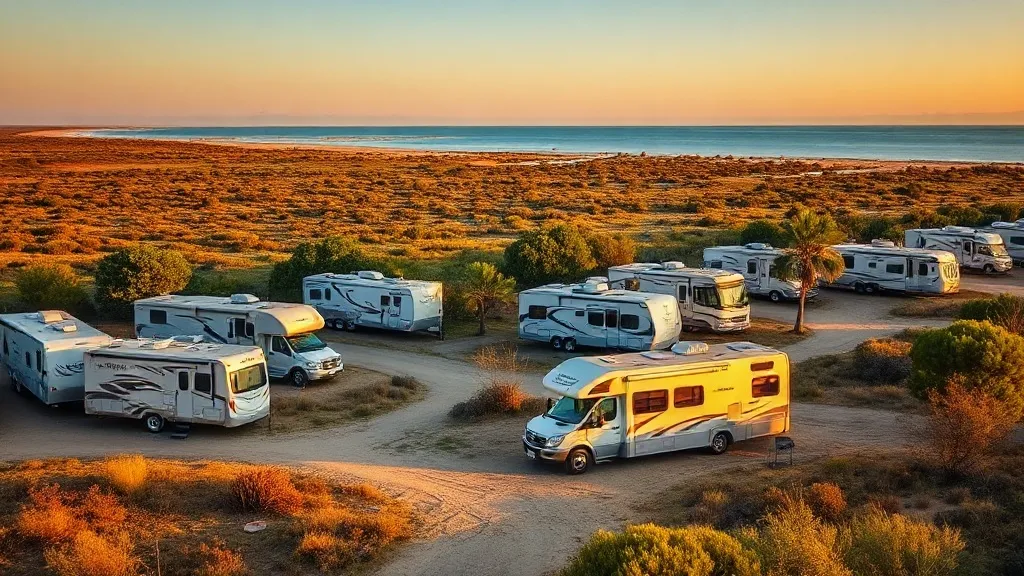
Mustang Island State Park offers two very different ways to camp on the Texas Gulf Coast. Texas Parks & Wildlife currently lists 48 developed water/50-amp sites behind the dunes at $25 per night, or 50 primitive drive-up beach sites at $13 per night. Both prices are before the daily entrance fee. The park sits between Port Aransas and Padre Island National Seashore, about 30 miles southeast of Corpus Christi.
Quick answer: For an RV park on Mustang Island you have two kinds of options. Mustang Island State Park, mid-island, has 48 water/50-amp sites at $25 a night and 50 primitive drive-up beach sites at $13, each plus a $7 per-adult entry fee (as of TPWD’s current fee page). It has no sewer hookups and no resort extras. For a full-hookup RV resort on Mustang Island, look 14 miles north in Port Aransas, where Pioneer Beach Resort, Gulf Waters, On the Beach, Port A RV Resort, Island RV Resort, and I.B. Magee Beach Park cluster near the ferry landing and jetties. Beach camping in the state park is the raw, cheap experience; the resorts are where you get pools, sewer, and concrete pads.
| Decision point | Developed campground | Primitive beach camping |
|---|---|---|
| Nightly site fee | $25 + entrance fee | $13 + entrance fee |
| Hookups | Water + 50 amp | None |
| Gulf access | About 400 yards, behind dunes | Directly on a 1.5-mile beach section |
| Reservation | Reserve online | Not reservable; call for conditions |
| Fire | Grill only; no site fire ring | Small beach fire allowed when restrictions permit |
| Best for | RVers needing power and showers | Self-contained, sand-capable rigs |
Verified against TPWD, August 2026: Site counts, hookups, and the $25/$13 rates match the official campsite page. Adults age 13+ pay $7/day; children 12 and younger enter free. Beach sites can close because of weather or driving conditions. Check the official campsite page and call the park before putting a heavy rig on sand.
The campground gets strong marks across review platforms. Campendium reviews highlight the unique beach-camping experience and clean facilities. TripAdvisor users rank it among the top outdoor attractions near Corpus Christi. The Dyrt campers praise the staff and the raw beach setting. The consistent theme: for the price, the beach access, and the state park atmosphere, Mustang Island delivers an experience that the $60-to-$200 per night private resorts along the coast cannot match.
The caveats are real. The wind can be relentless. Developed sites are behind the dunes, about 400 yards from the water, so they are not Gulf-front despite offering beach access. Primitive sites depend on sand and weather conditions. This review covers those tradeoffs so you can compare the park with private parks in Port Aransas and along the Gulf Coast.
Getting to Mustang Island State Park
Mustang Island State Park is located at 9394 State Highway 361, Corpus Christi, TX 78418, on Mustang Island between Port Aransas and Padre Island National Seashore. There are two primary approaches:
From Corpus Christi (south): Take the JFK Causeway (Park Road 22) north across the Laguna Madre to Mustang Island, then turn left (south) on State Highway 361. The park entrance is about 5 miles south of the causeway intersection. This approach is straightforward and avoids the ferry.
From the north via Port Aransas: Take the free ferry from Aransas Pass to Port Aransas (runs 24 hours), then drive south on Highway 361. The park is approximately 14 miles south of Port Aransas. The ferry ride itself is about 5 minutes, but summer weekend waits can stretch past an hour. Plan your arrival for early morning or late evening if you are towing a trailer during peak season.
The park sits at sea level on a barrier island. The terrain is flat — sand dunes, salt grass, and tidal flats. Elevation is not a concern. Heat is.
Provisioning tip: Port Aransas to the north and Corpus Christi to the south both have full grocery stores, fuel stations, and basic supplies. The park has no camp store, so provision completely before arrival. H-E-B in Port Aransas (about 14 miles north) and the Walmart and H-E-B on South Padre Island Drive in Corpus Christi (about 20 miles south) are the nearest full-service options.
Mustang Island State Park camping: the two campgrounds
Mustang Island State Park has two distinct camping areas that offer fundamentally different experiences: 48 water-and-electric campsites in the developed campground behind the dunes, and 50 primitive drive-up beach sites directly on the Gulf of Mexico.
Mustang Island State Park RV sites (48 water/50-amp)
The 48 developed sites sit behind the dunes, about 400 yards from the beach. They have water and 50-amp electric, picnic tables, grills, shade shelters, and nearby restrooms with showers. They are not beachfront sites.
The sites are arranged under pergola-style shade structures that shelter the shared picnic areas. The shade structures are a welcome feature in a landscape where natural shade simply does not exist — there are no trees on a barrier island. However, the shared arrangement means your picnic table and your neighbor’s picnic table sit under the same structure, separated by a few feet. Privacy is minimal. The sites are small and close together — this is a state park campground, not a resort with spacious pads and landscaped buffers.
The hookups are water and electric only — there is no sewer at individual sites. You will manage your gray and black tanks and use the dump station when needed. The current official listing specifies 50-amp service, correcting older 30-amp descriptions.
A few practical notes from recent reviews: the utility pedestals are sometimes on the opposite side of the site from where your hookup panel is, requiring longer hoses or cables. The shared-space layout means your actual living area (the space behind your RV where you set up chairs and cook) overlaps with your neighbor’s space. During high-occupancy weekends, this can feel crowded. Midweek stays or off-season visits offer more breathing room.
Restrooms and showers are located near the campground and include flush toilets and hot water showers. Recent reviews have noted mixed conditions — facilities are cleaned daily but can remain wet and slippery throughout the day, especially during humid months. A few 2025 reviews mentioned visible mold in shower areas and occasional electrical outages lasting several hours. These appear to be intermittent maintenance issues rather than permanent conditions, but they are worth noting.
Mustang Island beach camping (50 primitive drive-up sites)
The beach camping is the experience that draws many visitors to Mustang Island and separates it from every private park on the coast. You drive your vehicle onto a 1.5-mile stretch of beach and park directly on the sand, with the Gulf of Mexico in front of you and the dunes behind you. No hookups. No water. Only portable restrooms. And the most direct beach-camping experience available on the Texas coast.
The beach sites accommodate up to 300 vehicles along the 1.5-mile stretch, though the 50 designated primitive camping spots have specific areas marked for overnight camping. Small campfires are permitted on the beach — a rarity on Texas beaches — which transforms the evening experience.
Critical 2WD/4WD consideration: The beach is generally accessible to 2WD vehicles in dry conditions, but after rain, high tides, or storm surge, conditions can deteriorate rapidly. Soft sand traps 2WD vehicles regularly. Call the park at (361) 749-5246 before your visit to check current beach driving conditions. All-terrain vehicles are not allowed on the beach. If you are bringing an RV or trailer onto the beach, think carefully about your vehicle’s capability and the current conditions. Getting a travel trailer stuck in beach sand is an expensive and embarrassing recovery operation.
The primitive beach sites currently cost $13 per night plus the entrance fee. There are no hookups. Restrooms range from about 50 yards to 1.5 miles away, with a full beach bathhouse near headquarters. You bring what you need and pack everything out.
Hookups and amenities at Mustang Island State Park
Hookups (Developed Campground Only)
- Water: Individual water connections at each of the 48 developed sites
- Electric: 50-amp service at each developed site
- Sewer: None — dump station on-site
- Cable/WiFi: None
The current developed-site listing specifies 50-amp power. Barrier-island infrastructure remains exposed to salt and storms, so check active park alerts before relying on any amenity during severe weather.
Facilities
- Restrooms: Flush toilets with sinks, located near the developed campground
- Showers: Hot water showers in the restroom buildings
- Dump station: On-site, available during park hours
- Picnic tables: At each developed site (under shared pergola structures)
- Camp store: None — provision before arrival
- Laundry: None
- Pool: None (the Gulf of Mexico is your pool)
- Playground: None
- Nature trail: A short nature trail through the dune habitat
- Paddling trail: Access to the Mustang Island Paddling Trail on the bay side
What Is Missing
There is no camp store, no laundry, no pool, no playground, no Wi-Fi, and no cable TV. This is a state park, not a resort. The facilities serve their purpose — clean water, hot showers, a roof over the restrooms — and everything else is the Gulf of Mexico, the beach, and whatever you brought with you. If you need resort-level amenities, Pioneer Beach Resort in Port Aransas is 14 miles north with full hookups, two pools, and a beach boardwalk at $60 to $95 per night.
Other RV parks and resorts on Mustang Island
Most searches for an “RV park” or “RV resort” on Mustang Island are really about the north end of the island, where Port Aransas packs half a dozen private parks within a few miles of the ferry landing. None of them let you camp on the sand the way the state park does, but all of them offer what the state park lacks: full hookups with sewer, concrete pads, pools, and laundry. Rates below are the ranges we recorded for our Port Aransas RV parks guide; confirm live pricing with each operator, because beachfront parks reprice constantly by season.
| Park (Port Aransas) | Hookups | Sites | Rate range we recorded | Standout |
|---|---|---|---|---|
| Gulf Waters Beach Front RV Resort | Full, 30/50 amp | ~40 x 80 ft concrete pads | from ~$80–91/night | Highest-rated in town; pool, hot tub, beach boardwalk |
| On the Beach RV Park | Full, 30/50 amp | 60 sites, 41 pull-throughs | ~$109–150/night | Private beach trail |
| Pioneer Beach Resort | Full, 30/50 amp | 363 sites, ~86 pull-throughs, 70-ft max | ~$45–95+/night | Two pools, boardwalk, best value beachfront — see our Pioneer Beach Resort review |
| Port A RV Resort | Full, 20/30/50 amp | Concrete pads, 70-ft max | ~$70–100/night; monthly ~$750–1,000 | Winter Texan program, two heated pools |
| Island RV Resort | Full, 30/50 amp | 199 sites, tight | ~$32–100/night (confirm) | Budget option, weaker reviews |
| I.B. Magee Beach Park (Nueces County) | Full, 20/30/50 amp | 64 RV sites | ~$50/night | Jetty and beach access next to Horace Caldwell Pier |
| Mustang Island State Park | Water + 50 amp; none on beach | 48 W/E + 50 beach | $25 / $13 + $7 entry | Only true on-the-sand camping |
If you want a month on the island in winter, Port A RV Resort and Pioneer are the two with established long-stay programs; the state park is built for short stays and books in a 5-month window. For the wider coast — Rockport, Corpus Christi, and Padre Island — see our Texas Gulf Coast RV parks guide and the best RV parks in Texas roundup, or browse everything on the Texas hub.
What’s nearby
Port Aransas
Fourteen miles north, Port Aransas is a small fishing town at the northern tip of Mustang Island. The town is navigable by golf cart (a local tradition), and the main attractions are the beach, the jetties for fishing, and a strip of seafood restaurants and casual bars. The free ferry from Aransas Pass makes Port Aransas the gateway to the island from the north.
Port Aransas is also a serious fishing town. Surf and wade fishing inside the state park is free — no state fishing license required within the park boundaries. Spotted seatrout, redfish, black drum, and flounder are the primary species. The jetties at the north end of Port Aransas draw heavier fishing pressure, but the surf zone along Mustang Island State Park sees lighter crowds and consistent catches.
Charter boats operate out of Port Aransas marina for offshore trips targeting kingfish, snapper, and other Gulf species. The annual Deep Sea Roundup in July draws serious tournament anglers.
Padre Island National Seashore
Immediately south of Mustang Island State Park, Padre Island National Seashore protects 70 miles of undeveloped barrier island — the longest stretch of undeveloped barrier island in the world. The Malaquite Campground offers 48 basic campsites (no hookups, $14/night), and south of Mile 5 the beach opens up for free dispersed camping that extends 63 miles into increasingly remote territory.
The national seashore is a sea turtle nesting ground (Kemp’s ridley sea turtles, the most endangered sea turtle species), and public turtle releases during nesting season (June through August) are extraordinary wildlife experiences. Check the NPS website for the schedule — releases happen when nests hatch, which is unpredictable but announced on social media.
Corpus Christi
About 30 minutes south across the JFK Causeway. Corpus Christi has full urban services — hospitals, major grocery stores, Walmart, Home Depot, diesel stations, and RV service shops. The Texas State Aquarium and the USS Lexington Museum (a WWII aircraft carrier permanently docked in the harbor) are the marquee attractions. The Corpus Christi Bay waterfront has a seawall walk, restaurants, and the marina district.
Mustang Island Paddling Trails
The bay side of Mustang Island offers three designated paddling trails maintained by Texas Parks and Wildlife:
- North Trail: 8.5 miles along the western shoreline of Mustang Island in Corpus Christi Bay
- Shamrock Loop Trail: 5.24 miles through some of the best shallow-water fishing areas in Texas
- Ashum Trail: 6.8 miles with outstanding birdwatching and sight-casting opportunities
These trails pass through tidal flats and shallow-water ecosystems teeming with birdlife. Spring and fall migrations are prime birding time — over 400 species have been documented in the Coastal Bend region. Roseate spoonbills, reddish egrets, black-bellied whistling ducks, and dozens of shorebird species are common sightings. Kayak and paddleboard launches are accessible from within the state park.
Mustang Island State Park review: the honest details
What Works
The public rates are compelling. At $25 for a water/50-amp site and $13 for primitive beach camping, before entrance fees, Mustang Island undercuts many private resorts. A Texas State Parks Pass can remove the daily entry charge for eligible visits; confirm current pass benefits before purchase.
Beach camping is a unique experience. Driving onto the beach, parking with the Gulf in front of you, building a campfire on the sand as the sun sets — this is not something you get at a resort with a boardwalk and a lazy river. For RVers who came to the Texas coast for the raw beach experience rather than resort amenities, Mustang Island delivers something no private park can.
The fishing is excellent and free. Surf and wade fishing inside the park requires no state fishing license, and the species available — redfish, seatrout, drum, flounder — are the Texas coast’s marquee inshore targets. The paddling trails on the bay side add kayak fishing opportunities in some of the best shallow-water flats in Texas.
The location between Port Aransas and Padre Island is strategic. You have a fishing town with restaurants and supplies 14 miles north, 70 miles of undeveloped national seashore immediately south, and Corpus Christi’s urban services 30 minutes away. The park sits at the center of the best stretch of the Texas coast.
The birdwatching is world-class. The Coastal Bend region is one of the premier birding destinations in North America, and Mustang Island sits squarely in the migration corridor. Spring (March through May) and fall (September through November) bring waves of migratory species through the island.
What Doesn’t Work
The wind never stops. Barrier islands are windy. Mustang Island is extremely windy. Expect sustained winds of 15 to 25 mph as the norm, with gusts higher. This affects everything — awnings (do not extend them unless you want them destroyed), cooking outside (windscreens are essential), campfire enjoyment (sparks travel), and general comfort. The wind is the single biggest quality-of-life factor at Mustang Island. Some people find it refreshing. Others find it exhausting.
The hookup sites are small and lack privacy. The 48 developed sites are close together with shared pergola structures and overlapping common areas. The utility pedestals may be on the wrong side of your rig. There is zero natural shade — the pergola structures provide the only cover. If you are accustomed to spacious pull-throughs with landscaping and privacy hedges, the hookup sites at Mustang Island will feel cramped.
No sewer hookups. You are managing your tanks and using the dump station. For a weekend stay, this is straightforward. For a week-long stay, it becomes a regular chore.
The reservation system is competitive. Popular weekends (March through October, especially spring break and summer holidays) fill within minutes of the 5-month reservation window opening at 8 AM Central. This is a 48-site campground on one of the most popular beaches in Texas — demand vastly exceeds supply. If you do not have your calendar marked and your payment ready the moment the window opens, you will miss peak weekends.
Summer heat and humidity are intense. June through September can bring daytime highs in the mid-90s with heavy humidity. Developed sites have 50-amp service, but cooling demand and direct sun remain important trip-planning factors.
Hurricane season is real. June through November is hurricane season on the Gulf Coast, and Mustang Island is a barrier island — the first thing a tropical system hits. The park closes when hurricanes threaten, and evacuations can be mandatory with 24 to 48 hours’ notice. Monitor weather carefully during these months and have a contingency plan.
Facilities can be inconsistent. Recent reviews mention periodic electrical outages, wet restroom floors, and occasional mold in shower areas. These appear to be intermittent issues, but they reflect the reality that barrier-island infrastructure takes constant punishment from salt air, humidity, wind, and storm events. Do not expect the facility consistency of a resort park.
Who It’s Best For
- Budget beach campers who want Gulf Coast camping at state park prices
- Beach-camping purists who want to drive onto the sand and camp with the ocean at their feet
- Anglers who want free surf fishing and access to some of the best inshore waters in Texas
- Birders visiting the Coastal Bend during spring or fall migration
- Self-sufficient RVers comfortable with limited hookups and tank management
- Families who want an affordable beach vacation without resort pricing
Who Should Look Elsewhere
- Comfort-first campers who want full hookups, shade, pools, and privacy — try Pioneer Beach Resort in Port Aransas or another of the Port Aransas RV parks
- Wind-averse travelers — the barrier island wind is relentless and non-negotiable
- Big-rig owners needing a guaranteed long pad — developed sites have 50-amp power, but dimensions vary and primitive beach access depends on sand conditions
- Remote workers who need reliable internet — there is no Wi-Fi and cell signal is moderate at best
- Summer travelers without heat tolerance — June through September is extreme heat and humidity
Full specs and booking
Mustang Island State Park
- Address: 9394 State Highway 361, Corpus Christi, TX 78418
- Phone: (361) 749-5246
- Website: tpwd.texas.gov/state-parks/mustang-island
- Total sites: 48 water/electric + 50 primitive beach
- Max RV length: Varies by site (check individual site dimensions when booking)
- Hookups: Water and 50-amp electric at 48 developed sites; none at beach sites
- Sewer: None — dump station on-site
- Wi-Fi: None
- Cell signal: Moderate (varies by carrier; Verizon and AT&T generally best)
- Showers: Hot water showers in restroom buildings
- Laundry: None
- Camp store: None
- Pet-friendly: Yes (on leash; not allowed on designated swimming beaches)
- Fires: Charcoal and small campfires on the beach; check current restrictions
- Season: Year-round
- Rates: $25/night developed; $13/night primitive beach; $7/day adult entry (ages 13+)
- Texas State Parks Pass: $70/year — covers vehicle entry at all Texas state parks
- Reservations: Texas State Parks reservation system — opens 5 months ahead at 8 AM Central
- Paddling trails: 3 designated trails (North, Shamrock Loop, Ashum) on the bay side
Booking strategy: For peak weekends (spring break, Memorial Day through Labor Day, any three-day weekend from March through October), set a calendar reminder for exactly 5 months before your target arrival date. Log into the Texas State Parks reservation system at 7:55 AM Central and have your preferred dates and payment information ready. Click the moment the window opens at 8 AM. Hookup sites fill in minutes for popular weekends. Midweek stays are significantly easier to book, and off-season visits (November through February, excluding holiday weeks) offer reliable availability and pleasant weather in the 60s and 70s. If you miss the reservation window, check for cancellations — they appear periodically and can sometimes be snagged within a few days of the target date.
Frequently asked questions
Is there an RV park on Mustang Island?
Yes, several. Mustang Island State Park has 48 water and 50-amp sites at $25 a night plus entry, and the north end of the island around Port Aransas has full-hookup RV resorts including Pioneer Beach Resort, Gulf Waters Beach Front RV Resort, On the Beach RV Park, Port A RV Resort, Island RV Resort, and the county-run I.B. Magee Beach Park.
How much does Mustang Island State Park camping cost?
As of TPWD's current fee page, developed water/50-amp sites are $25 per night and primitive drive-up beach sites are $13 per night, both plus the daily entrance fee of $7 per adult age 13 and older; children 12 and under enter free. A Texas State Parks Pass covers the entry charge.
Can I camp on the beach at Mustang Island in an RV?
Yes. The 50 primitive beach sites are drive-up, non-reservable, and sit directly on a 1.5-mile stretch of sand with no hookups. Trucks, vans, and smaller self-contained rigs handle it best; call the park at (361) 749-5246 to check sand conditions before taking a heavy trailer onto the beach.
Does Mustang Island State Park have full hookups?
No. The 48 developed sites have water and 50-amp electric only, with a dump station on site. Beach sites have no hookups. For full hookups with sewer you need one of the private RV resorts in Port Aransas about 14 miles north.
Which is the best RV resort on Mustang Island?
For beachfront comfort, Gulf Waters Beach Front RV Resort and On the Beach RV Park are the highest-rated but priciest options in Port Aransas; Pioneer Beach Resort is the value pick with two pools and a beach boardwalk. See our Port Aransas RV parks guide for the full comparison.
How far are the Mustang Island State Park RV sites from the beach?
The developed water/electric sites sit about 400 yards behind the dunes, so they are not Gulf-front despite offering beach access. Only the primitive sites are on the sand.
Do I need a fishing license inside Mustang Island State Park?
No. Surf, wade, and bank fishing inside the park boundaries does not require a Texas fishing license. Outside the park, including the Port Aransas jetties and charter boats, a standard license is required.
When is the best time for Mustang Island camping?
October through April brings highs in the 60s to low 80s, lower humidity, and easier reservations outside holiday weekends. Summer has the warmest water but also intense heat, humidity, and hurricane risk, and hookup sites for peak weekends sell out the minute the 5-month booking window opens.
About the author
Dale HartmanLead RV Park Reviewer
Dale has lived on the road full-time since 2014, when he sold the house in Boise and moved into a 34-foot fifth wheel with his wife and a stubborn beagle named Otis. In the years since, he's parked at more than 400 campgrounds across 41 states — from boondocking sites with no hookups to luxury resorts with concrete pads and pickleball courts.
More from Dale →Campgrounds in this guide
Facts pages for each park — hookups, rig limits, rates and booking, plus every guide that covers it.
Keep reading
Chisos Basin Campground Review: Big Bend's Mountain Bowl
An honest review of Chisos Basin Campground in Big Bend — the mountain campground with the famous Window view, the strict rig-size limits, and what the 2026 construction news means for your trip.
Inks Lake State Park Camping Prices, Sites & Review (2026)
An honest review of camping at Inks Lake State Park — 2026 campsite prices and entrance fees, hookup classes, the best loops, Devil's Waterhole, summer crowds, and how it stacks up against Garner and the rest of the Hill Country.
Pioneer Beach RV Resort Review: Prices, Sites & Beach Access (Port Aransas)
Pioneer Beach RV Resort review with published rate table, verified hookups, premium vs standard back-in and pull-thru sites, beach boardwalk, amenities and the trade-offs to check before booking in Port Aransas.