Best Beachfront RV Parks in the USA: 10 Verified Picks
Compare 10 beachfront and near-beach RV parks across the USA, with verified hookups, 2026 prices, beach access, rig limits, and booking advice.
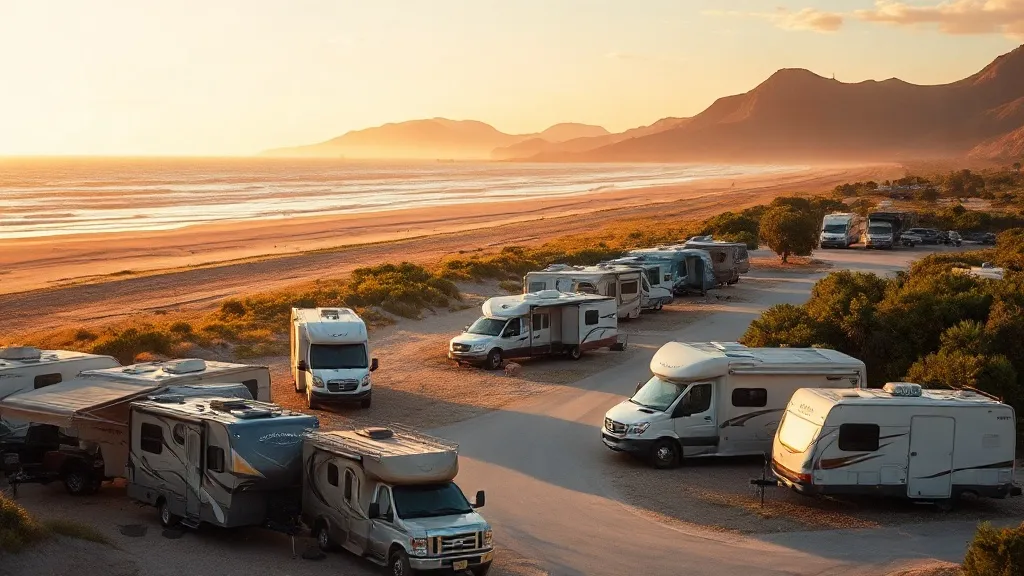
The best beachfront RV parks in the USA are Bahia Honda for tropical water, Fort De Soto for Gulf waterfront camping, Mustang Island for tires-on-the-sand adventure, San Elijo for Pacific bluff views, and Huntington Beach for full-hookup choices by the Atlantic. But “beachfront” is used loosely: Gulf State Park is about 1.5 miles inland, and Beverly Beach sits across Highway 101 despite direct pedestrian beach access.
We reviewed ten parks across six coastal states and classified each as on the sand, direct beach access, or near beach. Prices and facilities were checked against official park sources for 2026. Always confirm the selected site’s length, hookups, and total checkout price because those can vary inside one campground.
Related guides: Camping in Myrtle Beach: The Best RV Parks and Campgrounds on the Grand Strand · Gulf Coast RV Parks: The Best Campgrounds and Resorts From South Padre to Naples · Gulf Shores RV Parks and Campgrounds: Gulf State Park, Bella Terra and the Best Resorts · Jekyll Island Campground Review: Camping on Jekyll Island, Sites, Rates and Driftwood Beach · Topsail Hill Preserve State Park Camping Review: Florida’s Full-Hookup State Park RV Resort on 30A
The 10 parks at a glance
| Park | State | Honest beach classification | Hookups | Current price guidance |
|---|---|---|---|---|
| Bahia Honda State Park | Florida | Direct waterfront/beach access | Water + electric | About $36 base; fees extra |
| Fort De Soto Campground | Florida | Waterfront; beaches within park | Water + electric | $45.77–$53.68 |
| Grayton Beach State Park | Florida | Direct park beach access | Full or water + electric | Live state quote |
| Anastasia State Park | Florida | Direct dune-path access | Water + electric | Live state quote |
| Mustang Island State Park | Texas | On sand or 400 yards behind dunes | Water + 50 amp, or none | $25 / $13 + entry |
| Gulf State Park | Alabama | Near beach: about 1.5 miles | Full | Live state quote |
| Fort Pickens Campground | Florida | Barrier island; short beach access | Electric or none | $40 / $26 + entry |
| Huntington Beach State Park | South Carolina | Direct park beach access | Full or water + electric | Site-specific live quote |
| San Elijo State Beach | California | Bluff above beach | Selected full hookups | Site-specific live quote |
| Beverly Beach State Park | Oregon | Across Highway 101; direct path | Full or water + electric | $29–$70 by residency/site |
Florida: the deepest beachfront bench
Florida offers the widest mix of subtropical water, public park pricing, and beach-access camping. Its best sites are also among the country’s most competitive. Start with our full Florida beachfront RV parks guide when the state is your main destination.
1. Bahia Honda State Park — Florida Keys
Bahia Honda is the scenery-first choice: clear water, the old bridge, and campsites close to the shoreline. Buttonwood includes water/electric sites and the park publishes site-specific lengths, with some spaces accommodating large combinations. The base camping fee is about $36 before taxes, utility charges, and reservation fees.
The correct strategy is to pick by driveway length and waterfront position, not assume every campsite fits a 70-foot combination. Our Bahia Honda camping review explains which loops work for RVs and how the reservation system behaves.
- Beach class: Direct waterfront and beach access
- Hookups: Water/electric on RV sites; no sewer hookup
- Best for: Florida Keys scenery and paddling
2. Fort De Soto Campground — St. Petersburg
Fort De Soto has 236 campsites among waterfront islands and mangroves. Current county pricing spans $45.77–$53.68 by site class, with water and electric but no sewer at the campsite. Maximum length is site-specific, so do not apply an approximate 40-foot rule across all loops.
This is waterfront camping within a large beach park rather than every pad facing open Gulf surf. It excels for paddling, cycling, and reaching several beaches without leaving the park. Florida residents get an earlier booking window than nonresidents. See our Fort De Soto Campground review for the loop trade-offs.
- Beach class: Waterfront campground inside a beach park
- Hookups: Water/electric
- Price: $45.77–$53.68 before applicable fees
3. Grayton Beach State Park — Florida Panhandle
Grayton Beach combines a dune lake, Gulf beach, and a newer campground loop with full-hookup sites. Other spaces differ, so select the hookup type rather than treating the entire park as full hookup. The campground is within the coastal park, but most sites sit behind vegetation instead of on visible beachfront.
- Beach class: Direct access within the park
- Hookups: Full hookups in selected sites; other types vary
- Best for: Panhandle beach days with a full-hookup option
4. Anastasia State Park — St. Augustine
Anastasia has 139 campsites tucked behind dunes and maritime vegetation, with water and electric service. A dune path connects the campground area to the Atlantic beach; sites are shaded rather than ocean-view. The park is also useful for visiting historic St. Augustine without staying in a commercial resort.
Use the exact reservation record for length and total cost. Our Anastasia State Park camping review has the loop-level detail.
- Beach class: Direct dune-path access
- Hookups: Water/electric
- Best for: Atlantic beach plus St. Augustine
Texas: camping with tires on the sand
Texas is the clearest option for legally camping an RV directly on a Gulf beach. It is also the place where tide, soft sand, salt, and recovery planning matter most. Our Texas Gulf Coast RV parks guide compares developed resorts with state- and national-park options.
5. Mustang Island State Park — Port Aransas
Mustang Island’s official campsite list has 48 developed sites with water and 50-amp electricity for $25 per night, plus park entry. They sit about 400 yards behind the dunes. The park also has 50 primitive beach sites for $13, plus entry; those sites have no hookups, are not reservable, and may close for unsafe conditions.
- Beach class: On sand for primitive sites; behind dunes for hookups
- Hookups: Water/50 amp developed; none primitive
- Best for: The most literal public beach camping in this list
Padre Island National Seashore adds more dispersed beach camping nearby, but it is better treated as a self-sufficient expedition than a conventional RV park. Large-rig travelers should evaluate current sand conditions conservatively.
Alabama: full hookups near the Gulf
6. Gulf State Park — Gulf Shores
Gulf State Park’s main campground has 496 full-hookup sites, with back-ins averaging about 45 feet and pull-throughs about 65 feet. It also lists eight primitive sites and 11 bathhouses, with some bathhouse facilities under repair at the time of verification. A separate newer RV Resort has 104 full-hookup sites.
The honest qualifier: the main campground is approximately 1.5 miles from the beach. Trails and park transport make the shore accessible, but this is not a rig-beside-the-surf experience. Choose it when sewer hookups, a large pad, and resort infrastructure matter more than seeing the ocean from camp.
- Beach class: Near beach, not beachfront
- Hookups: Full at all main improved sites
- Best for: Big rigs and long full-hookup stays
Gulf Islands National Seashore
7. Fort Pickens Campground — Pensacola Beach
Fort Pickens sits on Santa Rosa Island inside Gulf Islands National Seashore. In 2026, official camping rates are $40 for an electric site and $26 for a non-electric site, plus the separate park entrance fee. Site lengths differ, so Recreation.gov’s selected-site record controls rig fit.
The park limits a stay to 14 consecutive nights followed by at least 48 hours away. During peak season, March 1 through Labor Day, campers may stay no more than 14 total nights in the designated peak area. Weather and road access can interrupt island operations, so check alerts before the final approach.
- Beach class: Barrier-island campground with short beach access
- Hookups: Electric or none; no campsite sewer
- Best for: Quiet Gulf beach access and historic Fort Pickens
South Carolina: Atlantic access with hookup choice
8. Huntington Beach State Park — Murrells Inlet
Huntington Beach State Park lists 107 water/electric sites, 66 full-hookup sites, and six tent sites. The campground connects directly to a long Atlantic beach and excellent marsh birding, while Myrtle Beach is close enough for a day trip.
Rates and driveway lengths are site-specific in the state booking system. Published sites include 30- and 40-foot classifications, so larger rigs should filter the live inventory rather than assume the whole campground accepts them.
- Beach class: Direct park beach access
- Hookups: Full or water/electric
- Best for: Atlantic beach walks, birding, and sewer-hookup choices
California: Pacific bluff camping
9. San Elijo State Beach — Cardiff-by-the-Sea
San Elijo places campsites on a bluff above the Pacific with stair access to the beach. Some sites have full hookups, but California coastal campsites vary sharply in length and service. The best-view spaces are not necessarily the best fit for a large motorhome or trailer.
Use our oceanfront RV parks in California guide for current site-by-site context, or narrow farther with the Southern California beach RV parks guide. California’s reservation policies can change, so verify the live ReserveCalifornia release date for the intended arrival rather than relying on a copied six-month rule.
- Beach class: Oceanfront bluff with stair access
- Hookups: Full hookups on selected sites
- Best for: Pacific views and San Diego County access
Oregon: forest shelter beside a wild coast
10. Beverly Beach State Park — Otter Rock
Beverly Beach State Park sits in forest across Highway 101 from the beach, connected by a pedestrian route. It has 53 full-hookup sites, 76 electric/water sites including 32 pull-throughs, 128 tent sites, and 21 yurts. The dump station costs $10.
Oregon’s 2026 base-rate ranges depend on residency and site type. Residents pay $31–$60 for full hookups and $29–$55 for electric/water; nonresidents pay $39–$70 and $36–$70 respectively. A $10 reservation fee applies. Check the exact space for length—there is no reliable park-wide 65-foot maximum.
- Beach class: Across the highway with direct pedestrian access
- Hookups: Full or water/electric
- Best for: Oregon Coast itineraries that need hookups and forest shelter
Build it into a longer route with our Oregon Coast RV parks guide.
How to choose the right coast
Choose the Gulf Coast for warmer water, winter travel, and the best odds of water/electric or full hookups. Choose Texas when camping directly on the sand matters. Choose the Atlantic for a developed park-plus-beach experience. Choose the Pacific for scenery, accepting colder water, tighter sites, and fewer sewer connections.
Then filter by the constraint that can actually ruin the trip:
- Rig fit: Check the exact campsite length, not a campground-wide average.
- Hookups: Confirm water, electric amperage, and sewer separately.
- Beach definition: Decide whether a boardwalk, highway crossing, trail, or shuttle is acceptable.
- Season: Gulf and South Florida shine in winter; the northern Atlantic and Pacific are easier in summer.
- Risk: Monitor hurricanes on Gulf/Atlantic routes and wildfire, slides, and storms on the Pacific coast.
State and county parks generally beat private beachfront resorts on price, but their booking rules and cancellation terms differ. Compare the total checkout price, set alerts for cancellations, and keep a backup campground away from the immediate shoreline. That backup matters when storms, erosion, nesting closures, or road damage temporarily remove coastal inventory.
Frequently asked questions
What is the best beachfront RV park in the United States?
Bahia Honda is the standout for tropical scenery, Fort De Soto for waterfront variety, Mustang Island for camping directly on sand, and San Elijo for Pacific bluff views. The best choice depends on rig length, hookup needs, season, and how literally you define beachfront.
What is the difference between beachfront and near-beach RV camping?
Beachfront means the campground touches the beach or reaches it directly by a short dune path or boardwalk. Near-beach means the campground requires a longer walk, bicycle ride, shuttle, or short drive. We label both because many parks marketed as beachfront are actually inland.
Which beachfront RV parks have full hookups?
Fort De Soto has water and electric rather than sewer. Gulf State Park, Huntington Beach, Beverly Beach, and selected loops at Grayton Beach offer full-hookup options, but some sit back from the water. Always verify the exact site because hookups vary within a campground.
Can I drive and camp directly on a beach with an RV?
Texas has the clearest options. Mustang Island State Park has primitive campsites on the sand, while Padre Island National Seashore permits primitive beach camping in designated areas. Beach and tide conditions can make access unsafe, especially for large towables.
How far ahead should I reserve a beachfront RV site?
Reserve as soon as the official window opens when the trip depends on one famous park, but also monitor cancellations and short-window releases. Booking windows vary by agency and may change, so use the live official booking page rather than an old universal rule.
About the author
Marisol ReyesCamping & Outdoors Editor
Marisol spent six years as an interpretive ranger in the California and Colorado state park systems before turning to writing full-time. She knows public-land camping from the inside — how reservation windows really work, why some loops fill before others, and which 'first-come, first-served' sites are worth gambling on.
More from Marisol →Keep reading
Mesa & Apache Junction RV Resorts: 12 Parks With 2026–27 Rates
The East Valley snowbird deep dive: Mesa Spirit, Viewpoint, Valle del Oro, Monte Vista, Towerpoint, Mesa Regal, Sun Life, Good Life, Val Vista Villages, the Mesa/Apache Junction KOA, Lost Dutchman State Park and Usery Mountain, with 2026–27 nightly, monthly and seasonal rates, 55+ rules and short-stay policies.
Quartzsite RV Parks: 10 Hookup Parks, La Posa LTVA and Free BLM (2026–27)
Park-by-park guide to RV camping in Quartzsite, Arizona for the 2026–27 snowbird season: full-hookup parks with verified nightly, monthly and seasonal rates, the La Posa LTVA permit, the five free 14-day BLM areas, and the January 2027 show dates.
Yuma RV Parks: 12 Best Snowbird Resorts and BLM Camps (2026–27)
Verified 2026–27 guide to RV parks in Yuma, Arizona: Sun Vista, Westwind, Fortuna de Oro, Caravan Oasis, Bonita Mesa, Villa Alameda, Cocopah Bend, Yuma Lakes, the River Front KOA, Winterhaven across the river, and BLM boondocking at Imperial Dam LTVA and Senator Wash, with nightly, monthly and seasonal rates, 55+ rules and the Los Algodones day trip.