Snowbird RV Parks: Where RVers Winter (2026 National Guide)
Where America's RV snowbirds spend the winter — a national overview of Arizona, Florida, Texas RGV, SoCal, and the Gulf Coast, with verified anchor parks.

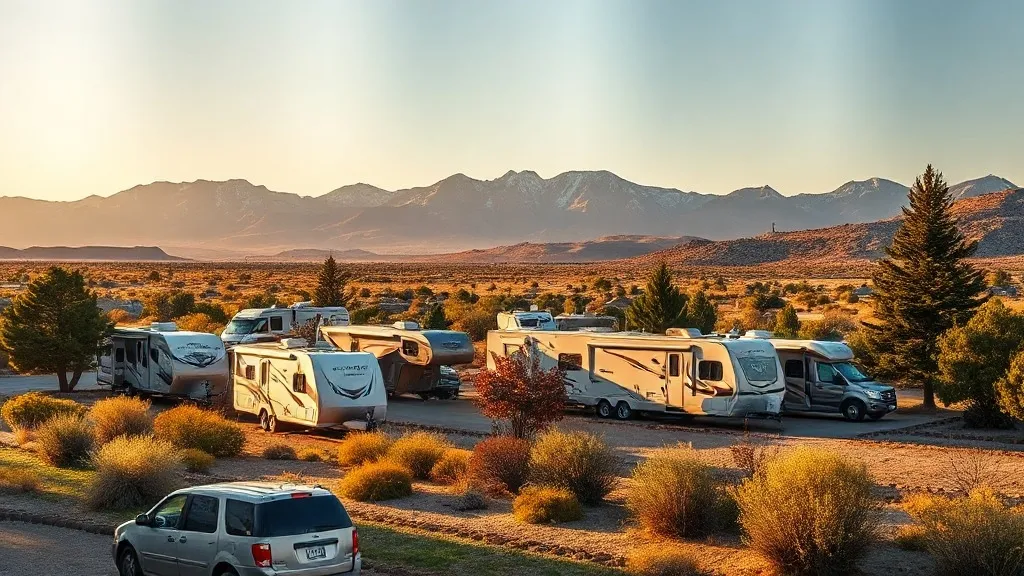
Every fall, one of the largest seasonal migrations in North America gets under way, and almost nobody outside the RV world notices it. Hundreds of thousands of rigs — retirees, full-timers, remote workers, Canadians escaping a brutal northern winter — point south and west toward the Sun Belt. By January they have formed temporary cities in the desert and packed the resorts of the Gulf Coast. This is the snowbird phenomenon, and it is the single biggest driver of long-term RV travel in the country.
This guide is the national map of it. Rather than a single region, we are stepping back to answer the question every prospective snowbird actually asks first: where should I go? Below we cover the five major wintering regions — Arizona, Florida, the Texas Rio Grande Valley, the Southern California desert, and the Gulf Coast — with honest trade-offs and a verified anchor park or two for each. Every park named here was confirmed real and operating as of 2026, and where monthly pricing is only available by phone quote (which is most of the snowbird world), we say so rather than invent a number.
Two honest themes run through the whole snowbird question. First, climate and budget pull in different directions: the cheapest wintering is in the dry desert, the prettiest is often the priciest, and the right answer depends on your tolerances. Second, the headline “monthly rate” almost always hides metered electric on top — a detail that matters more than any amenity. We will keep flagging it. For a deeper cost breakdown, see our cost of living in an RV park monthly guide, and for the full list of the best long-stay parks, the flagship best monthly and long-term RV parks roundup.
Related guides: Is Thousand Trails Worth It? Camping Pass Zones, Membership Levels & Who Should Buy (2026)
Arizona — the desert capital of snowbirding
If snowbirding has a capital, it is the Arizona desert. The dry winter warmth is close to perfect, the landscape is vast, and the cost of living can be lower here than anywhere else in the Lower 48. Arizona is where you will find both extremes of the lifestyle: dollar-a-day boondocking on public land, and full-amenity 55+ resorts with golf and pickleball.
The free and near-free public land is the draw that makes Arizona unique. The BLM operates Long Term Visitor Areas around Quartzsite and Yuma where, for a single flat fee, you can camp the entire winter season.
Anchor: La Posa Long Term Visitor Area — Quartzsite
- Hookups: None — fully self-contained living required (solar/generator, water hauling)
- Cost: $180 for the full season (Sept 15–Apr 15), or $40 for a 14-day permit
- Reservations: No reservations; first-come, permit on-site or via Recreation.gov
- Best for: Self-sufficient snowbirds chasing the cheapest winter in America
For those who want hookups and amenities, the Yuma, Mesa, and Casa Grande areas have a deep bench of resorts, and Quartzsite has the cheapest hookup sites in the state.
Anchor: Sun Ridge 55+ RV Park — Yuma
- Hookups: Full hookups, 30 and 50 amp
- Sites: 281 (55+)
- Cost: Transparent published $500–$550/month plus deposit — a rarity worth noting
- Reservations: Direct
- Best for: 55+ snowbirds who want an affordable full-hookup base with an on-site mail room
The honest catch with Arizona is summer: inland heat empties these parks from June through September. But for a November-to-April winter, it is hard to beat on value. For the complete picture, see our dedicated Arizona snowbird guide and the best RV parks in Arizona.
Florida — green, humid, and lively
Florida is the eastern half of the snowbird story, pulling the crowd that wants water and salt air over desert and dust. The state’s RV resorts become a parallel society every winter — shuffleboard leagues, French-Canadian happy hours, license plates from across the cold north. It is greener and livelier than the desert, and it costs more.
Florida’s range is wide. Inland — the Zephyrhills, Bushnell, Wauchula, and Okeechobee belt — offers genuine value, while the Gulf Coast resorts and the Keys are the splurge end.
Anchor: Encore Pioneer Village RV Resort — North Fort Myers
- Hookups: Full hookups, 30 and 50 amp, water, sewer, cable, WiFi
- Sites: 500+ (all-ages)
- Cost: Seasonal/monthly on stays of 27+ days quoted on request; metered electric (Encore standard)
- Reservations: Encore / Thousand Trails
- Best for: Snowbirds who want a big, busy, amenity-rich all-ages community on the Gulf side
The honest catch is cost and competition: the best Gulf Coast and Keys parks book out a year ahead and command real premiums. For the full state breakdown — Naples, the Heartland, the Keys, the Zephyrhills 55+ cluster — see our snowbird RV parks in Florida guide, the best RV parks in Florida, and the Florida state hub.
Texas Rio Grande Valley — the Winter Texans’ home
The third great hub is the Rio Grande Valley, the inland southern tip of Texas where snowbirds have wintered for generations under the name “Winter Texans.” It is warm, it is notably cheaper than the coasts, and it is built for long stays — large established parks with dance halls, free par-3 golf, and tight-knit returning communities.
Anchor: Bentsen Grove Resort — Palmview / Mission
- Hookups: Full hookups, 30 and 50 amp; cable, internet, AND electricity included in the daily rate
- Sites: 800+ lots (55+ / Winter Texans)
- Cost: Among the lowest verified in the Valley; monthly on permanent sites by quote
- Reservations: Direct
- Best for: Budget 55+ snowbirds who want bundled utilities (no metered surprise) and locked mailboxes
The Valley’s appeal is precisely this kind of value, with a social fabric that rivals anywhere. The trade-offs are an inland farm-country setting and older infrastructure at many parks. For more, see the best RV parks in Texas and the Texas state hub.
Field tip: The Rio Grande Valley is the most underrated snowbird value in the country. If your priority is stretching a fixed income across a long winter and you don’t need a beach, the RGV often beats both Arizona resorts and Florida on all-in cost.
Renting an RV for this trip? Compare rigs, prices, and pickup locations on RVshare and Outdoorsy — both let you filter by rig size, dates, and location.
Southern California desert — the high end
The Coachella Valley around Palm Springs is the premium snowbird region: manicured resorts, golf, and warm dry winters within reach of Los Angeles and San Diego. It is the most expensive of the major hubs, and the amenities and scenery are priced accordingly.
Anchor: Indian Wells RV Community — Indio
- Hookups: Full hookups, 20/30/50 amp, paved pads to ~45 ft
- Sites: 300+ (55+ HOPA community)
- Cost: Historically around $780/month (verify current; may have risen); electric typically metered
- Reservations: Sun Outdoors direct
- Best for: 55+ snowbirds who want Coachella Valley access with a genuine community feel
Some of the valley’s marquee resorts — Outdoor Resort Palm Springs, for instance — are condo-style, where you buy or rent a lot from an owner rather than book a month directly. For quieter desert options, The Springs at Borrego near Anza-Borrego offers spacious sites, golf, and dark skies at the eastern edge of the region.
Gulf Coast — the quiet alternative
Between Florida and Texas lies a quieter winter band along the Alabama and Mississippi coasts. It draws fewer snowbirds, which is part of the appeal, and ranges from a genuine public-land bargain to luxury motorcoach resorts.
Anchor: Gulf State Park Campground — Gulf Shores, Alabama
- Hookups: Full hookups, paved pads; back-ins ~45 ft, pull-throughs ~65 ft
- Sites: 496 full-hookup sites (all-ages)
- Cost: Monthly reservations available November–March at state-park rates (no partial-month reductions)
- Reservations: alapark.com / (251) 948-7275
- Best for: Snowbirds who want a well-run, near-beach winter base at public-land prices
The Gulf Coast won’t have the sprawling social scene of Arizona or the RGV, but for snowbirds who want beach access without Florida’s prices or crowds, it is an excellent, underused choice.
Comparison: snowbird regions at a glance
| Region | Anchor park | Cost (approx.) | Hookups | Max length | Reservations |
|---|---|---|---|---|---|
| Arizona (public land) | La Posa LTVA, Quartzsite | $180/season | None | Any | First-come |
| Arizona (resort) | Sun Ridge 55+, Yuma | $500–$550/mo (published) | Full, 30/50A | Big-rig | Direct |
| Florida | Encore Pioneer Village | On request + metered electric | Full, 30/50A | Big-rig | Encore / TT |
| Texas RGV | Bentsen Grove, Mission | Lowest RGV; electric bundled | Full, 30/50A | 35–90 ft | Direct |
| SoCal desert | Indian Wells, Indio | ~$780/mo (verify) | Full, 20/30/50A | ~45 ft | Sun Outdoors |
| Gulf Coast | Gulf State Park, AL | State-park monthly Nov–Mar | Full | 65 ft pull-thru | alapark.com |
Planning your snowbird winter
Choosing a region. Start with climate and budget. If you want the cheapest winter and don’t mind the desert, Arizona public land or an inland Arizona/RGV park wins. If you want green, water, and a lively social scene and can spend more, Florida’s Gulf Coast. If you want the premium desert-resort experience, the Coachella Valley. Many snowbirds spend a first winter sampling a couple of regions before committing.
Best months. November through March is the core season everywhere in the Sun Belt — warm, dry, and ahead of the summer heat that drives metered-electric bills up. Late October and April are excellent shoulder months with better availability and lower rates.
Reservation strategy. Book the popular parks in spring or early summer for the following winter; regulars rebook before they leave. Arizona public land, the RGV’s larger parks, and the Gulf Coast offer more flexibility for late planners.
Rig and budget notes. Most snowbird parks handle big rigs, but always confirm site length and whether the park is 55+ or all-ages. Above all, get the all-in monthly number including how electric is billed before you commit — the difference between bundled and metered electric can be a second small rent in a hot or cold month.
Wherever you land, the snowbird life rewards planning. For the deep dives, follow the links above to our Florida snowbird guide, the Arizona snowbird guide, the flagship best monthly and long-term RV parks roundup, and the cost of living breakdown. Or browse everything from the guides index and the home page.
Frequently asked questions
Where do most RV snowbirds go for the winter?
The two dominant destinations are Arizona (the desert Southwest, centered on Quartzsite, Yuma, Mesa, and Casa Grande) and Florida (especially the Gulf Coast and inland Heartland). The Texas Rio Grande Valley is the third major hub, drawing 'Winter Texans,' followed by the Southern California desert around Palm Springs and the quieter Gulf Coast of Alabama and Mississippi.
Is Arizona or Florida better for snowbird RVing?
It comes down to climate preference and budget. Arizona is dry, warm, and cheaper, with the country's most affordable long-term public-land camping near Quartzsite, but its desert landscape and dust are not for everyone. Florida is green, humid, and lively with easy beach access, but coastal resorts cost considerably more and book out far ahead. Many snowbirds try both before settling on a favorite.
How much does a winter of snowbird RVing cost?
It ranges enormously. A self-contained boondocker on a BLM long-term permit near Quartzsite can winter for about $180 plus fuel and propane. A couple in a mid-tier Sun Belt park typically spends $600 to $1,300 a month all-in including metered electric, while a peak-season Gulf Coast Florida or Palm Springs resort can run $1,500 to $2,500 a month or more.
When should I book a snowbird RV site?
For the best parks, book in spring or early summer for the following winter. Popular Gulf Coast Florida resorts, the Texas RGV's nicer parks, and the California desert fill for January and February months ahead, and many regulars rebook before they leave. Inland Arizona, the Texas Valley's larger parks, and BLM public land offer the most last-minute flexibility.
Do snowbird RV parks bill electric separately?
Most do on monthly and seasonal stays. The corporate resort chains — Cal-Am, Encore/Thousand Trails, and Sun Outdoors — almost universally meter electric on stays of 28 to 30 days or more. Budget an extra $40 to $200 a month depending on the climate and how much you run heating or cooling. A few parks bundle electric into a flat rate, which is worth seeking out.
About the author
Marisol ReyesCamping & Outdoors Editor
Marisol spent six years as an interpretive ranger in the California and Colorado state park systems before turning to writing full-time. She knows public-land camping from the inside — how reservation windows really work, why some loops fill before others, and which 'first-come, first-served' sites are worth gambling on.
More from Marisol →Keep reading
Mesa & Apache Junction RV Resorts: 12 Parks With 2026–27 Rates
The East Valley snowbird deep dive: Mesa Spirit, Viewpoint, Valle del Oro, Monte Vista, Towerpoint, Mesa Regal, Sun Life, Good Life, Val Vista Villages, the Mesa/Apache Junction KOA, Lost Dutchman State Park and Usery Mountain, with 2026–27 nightly, monthly and seasonal rates, 55+ rules and short-stay policies.
Quartzsite RV Parks: 10 Hookup Parks, La Posa LTVA and Free BLM (2026–27)
Park-by-park guide to RV camping in Quartzsite, Arizona for the 2026–27 snowbird season: full-hookup parks with verified nightly, monthly and seasonal rates, the La Posa LTVA permit, the five free 14-day BLM areas, and the January 2027 show dates.
Yuma RV Parks: 12 Best Snowbird Resorts and BLM Camps (2026–27)
Verified 2026–27 guide to RV parks in Yuma, Arizona: Sun Vista, Westwind, Fortuna de Oro, Caravan Oasis, Bonita Mesa, Villa Alameda, Cocopah Bend, Yuma Lakes, the River Front KOA, Winterhaven across the river, and BLM boondocking at Imperial Dam LTVA and Senator Wash, with nightly, monthly and seasonal rates, 55+ rules and the Los Algodones day trip.