KOA Journey vs Holiday vs Resort: KOA Campgrounds Compared, Prices & Rewards (2026)
KOA campgrounds explained for RVers: the difference between KOA Journey, Holiday and Resort with live 2026 RV site prices from 20 KOAs, what each tier includes, what KOA Rewards costs ($39 a year for 10% off), Patio Sites, booking tricks and the KOAs we've reviewed.

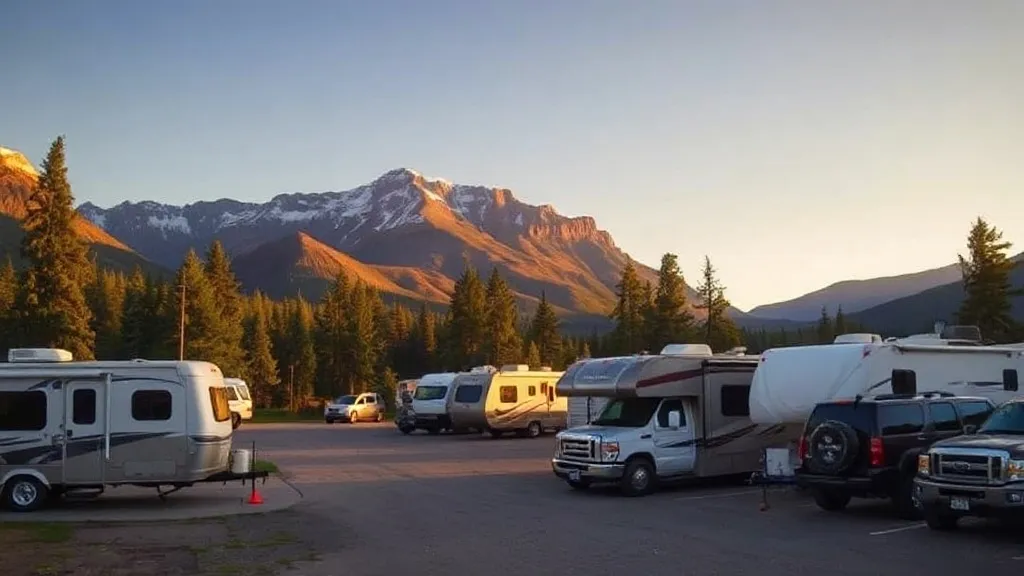
Kampgrounds of America is the largest branded campground network in North America, and for a lot of RVers it is the first name they learn. That familiarity cuts both ways. Some travelers use KOA as a default and never look further; others dismiss the yellow sign as overpriced parking lots. The truth is that “KOA” describes a franchise system spanning several hundred independently owned parks, and the difference between a highway-side KOA Journey and a lakeside KOA Resort is as large as the difference between a motel and a lodge. This guide explains how the system works so you can use it well.
We have stayed at KOAs from Montana to the Florida Keys, reviewed two of them in depth, and covered several more inside our regional guides. Below you will find the three tiers explained, what the KOA Rewards program costs and returns according to KOA’s own pages, how Patio Sites and Deluxe Cabins fit in, and the booking habits that save money.
Quick answer: KOA campgrounds come in three tiers. KOA Journey is a convenient overnight stop near the highway, KOA Holiday is a destination basecamp with Patio Sites and more amenities, and KOA Resort is the small top tier built for week-long stays. In live quotes we pulled on September 22, 2026 for October nights, RV sites ran $55–$95 at Journeys, $49–$175 at Holidays and $51–$232 at Resorts before tax. KOA Rewards costs $39 a year for 10 percent off the daily registration rate plus points, which pays back after about five nights.
KOA Journey vs Holiday vs Resort at a glance
| KOA Journey | KOA Holiday | KOA Resort | |
|---|---|---|---|
| KOA’s tagline | ”Gateway to Adventure" | "Basecamp for the Great Outdoors" | "The Destination for Recreation” |
| Built for | One-night stops on a long drive | 2–4 nights near a park, lake or town | Week-long family stays |
| Live RV site price, Oct 2026 (range across sites) | $55–$95 a night | $49–$175 a night | $51–$232 a night |
| What’s included | Long pull-thrus, 30/50 amp, restrooms, laundry, store, propane; often a pool | KOA lists RV sites with a KOA Patio, Deluxe Cabins with full baths, premium tent sites and group meeting space; usually pool, dog park, playground, bike rentals | Everything at a Holiday plus multiple pools or hot tubs, organized activities, food service and premium Patio Sites |
| Extra fees to watch | Rare | Occasional | Resort fee at some parks (West Glacier: $25 a night) |
| Rewards discount | 10% off the daily registration rate with KOA Rewards | 10% | 10%; resort fees typically excluded |
| Best for | Getting off the interstate at 9 p.m. | Most RV trips | Kids, pools, staying put |
How we got the prices. On September 22, 2026 we ran KOA’s own booking engine for a 35-foot motorhome, two adults, no slides, one night (Friday October 16 or Tuesday October 20, 2026) at 20 KOAs and recorded the lowest and highest RV site rate shown, before tax:
| Tier | KOA (live RV site range) |
|---|---|
| Journey | Yuma River Front $55–$70; Picacho/Tucson NW $58.99–$85; Fort Pierce Downtown $60.50–$64.50; Mesa/Apache Junction $64.85–$69; Lost Hills $69.87; Orlando NW/Orange Blossom $75–$95 |
| Holiday | Palm Springs $49–$141; Grand Canyon (Williams) $53–$97; Gulf Shores/Pensacola West $55–$90.29; Flagstaff $58–$113; Colorado Springs $70–$84; Santa Cruz/Monterey Bay $94.75–$174.75 |
| Resort | Port Huron $51–$144; Cape Hatteras/Outer Banks $60–$160; Watkins Glen/Corning $60.15–$147.60; Myrtle Beach $68.94–$232.02; San Francisco North/Petaluma $75–$120; Chesapeake Bay/Cape Charles $94–$144; San Diego Metro $95–$120; Sugarloaf Key/Key West $139–$230 |
October is shoulder season for most of these, so treat the ranges as a floor. Summer weekends near national parks and winter in Florida and the Keys run well above them, and the top of each range is a KOA Patio or waterfront site. Location moves price as much as tier does: the Santa Cruz Holiday’s cheapest site cost more than the cheapest site at all but one of the Resorts.
KOA Rewards in 2026 costs $39 a year and takes 10 percent off the daily registration rate at participating KOAs, earns 900 to 1,300 points a night, and waives the $20 cancellation fee once you reach VIP. On the rates above it pays for itself in four to seven nights. Details and the math are further down.
KOA publishes a short feature list for Holidays (Patio Sites, Deluxe Cabins with full baths, premium tent sites, group facilities) but describes Journeys and Resorts mainly through the taglines above, so treat the rest of the “What’s included” row as our field observations rather than official minimums. Individual owners exceed or fall short of these expectations, which is exactly why we review parks one at a time.
KOA Journey: the overnight stop
A KOA Journey is the modern version of what KOA was originally built for in the 1960s: a reliable place to sleep near the interstate. The pattern is consistent. Long pull-through sites so you can stay hooked to your tow vehicle, easy in-and-out access, a small store with propane and ice, restrooms and laundry, and usually a pool. Some Journeys have grown into pleasant parks in their own right, but the mission is convenience.
What that means for planning:
- Do not expect quiet. Journey parks are close to highways by design. Bring earplugs or accept the road noise as the price of a 9 p.m. arrival.
- Hookups are usually full. In our experience the pull-thrus at Journeys tend to be full-hookup with 30/50-amp service, since the whole point is a quick, complete overnight.
- Late check-in works. Most Journeys have after-hours check-in with your site packet at the office, which is exactly what you want when a drive runs long.
If you are on a multi-day push between destinations, a Journey is often the smartest choice: dependable, quick and priced below the destination parks.
KOA Holiday: the basecamp
KOA Holiday is the largest and most varied tier, and it is where most of the KOAs we cover fall. A Holiday sits near something worth visiting, whether that is a national park gateway town, a lake, or a theme-park corridor, and it adds amenities and site upgrades that make a two- to four-night stay comfortable.
Typical features we see at Holidays:
- Mix of back-in and pull-through sites, some full-hookup and some water/electric only
- KOA Patio Sites in the best positions
- Pool, playground, Kamp K9 dog park, camp store, propane, firewood
- Bike rentals, pedal karts, sometimes a snack bar or pizza service
- Deluxe Cabins alongside RV sites
Our Flagstaff KOA Holiday review is a good example. It publishes a 75-foot campground maximum, offers full-hookup pull-throughs and back-ins alongside water/electric-only sites, and adds Wi-Fi, a dog park, propane and bike rentals. It is not cheap for Flagstaff, but it is dependable pine-country camping with a real full-hookup option, which the nearby national-forest campgrounds cannot offer.
The main risk at a Holiday is assuming every site has sewer. Read the site category carefully; “water/electric” means you will use the dump station on your way out.
KOA Resort: the destination
A KOA Resort is built to keep you on the property. Expect multiple pools and hot tubs, organized activities, food service (a cafe, ice cream shop or pizza delivery), premium full-hookup sites with patios and fire pits, and a resort fee on top of the site rate. These are the parks that families book for spring break and summer weeks.
Our West Glacier KOA Resort review explains what you get for the money: two pools, hot tubs, full hookups and a location minutes from Glacier’s West Entrance, offset by a nightly resort fee and date-driven pricing that climbs in July and August. One reviewer called it “the Taj Mahal of RV Parks,” and while that is a stretch, it captures the tier’s ambition.
Resort tier is worth it when you will actually use the amenities. If your plan is to leave at 7 a.m. for a trailhead and return at dusk, a Holiday or even a Journey nearby will do the same job for less.
Site types: Patio Sites, pull-thrus, back-ins and Deluxe Cabins
KOA’s site vocabulary is consistent across the system, which is one of the real benefits of the brand.
| Site type | What KOA says | What to expect |
|---|---|---|
| Pull-thru RV site | ”Pull-thrus, back-ins, patio sites and great locations” | Drive in one end, out the other; ideal for towables and one-night stops |
| Back-in RV site | Same category, back-in orientation | Usually quieter and more private; requires backing skills |
| KOA Patio Site | ”Fully equipped” premium RV site | Full hookups plus patio, outdoor furniture, often fire pit and grill; highest RV rate on the property |
| Deluxe Cabin | ”Many…feature heat, air conditioning, gas grills, private bathrooms and kitchens” | A real small house; good for guests traveling with you who do not have an RV |
| Camping Cabin | ”A comfy bed, a roof overhead and porch swing on the deck” | No bathroom or kitchen; you use the campground bathhouse |
| Tent site | ”Tent camping gets even better with KOA amenities right down the path” | Standard tent pad, sometimes with electric |
The Patio Site is the upgrade most worth understanding. It exists at Holidays and Resorts and costs a premium over a standard full-hookup site. When you are staying three or more nights and plan to be outside in the evening, a Patio Site with a fire pit and real chairs turns a campground into a backyard. For a single overnight it is money better spent elsewhere.
Hookups. KOA describes its RV sites as offering 30- and 50-amp service and full sewer hookups where available. In practice, water/electric-only sites remain common at Holidays and older Journeys. If sewer matters, filter for full hookup on the KOA booking page rather than assuming.
Big rigs. The KOA booking form asks for equipment type, complete length and slideouts, then filters sites that fit. Many parks publish a campground maximum, such as Flagstaff’s 75 feet, but internal turns and tree placement still control. If you tow a 40-foot fifth-wheel, call the park after booking and ask them to confirm the site.
KOA Rewards: is it worth it?
KOA Rewards is the paid loyalty program, and you can add it in the booking flow for $39 before paying. The figures below come from KOA’s own rewards page, rechecked September 22, 2026; check the page before you enroll because programs change.
| KOA Rewards detail | As listed by KOA |
|---|---|
| Annual cost | $39 a year |
| Discount | 10 percent off the daily registration rate at 500+ participating KOAs |
| Points earned | 900 to 1,300 points per day at base level; 1,125 to 1,625 at VIP |
| Long-term stays (27+ consecutive days) | 75 points per day |
| Online booking bonus | 250 additional points |
| Redemption | 6,500 points = $10 off; 15,000 = $25 off; 25,000 = $50 off |
| VIP status | Reached at 20,000 points in your enrollment year; free renewal, 25 percent faster points, the $20 cancellation fee waived (with conditions) and 10 percent off a friend’s site for up to four nights |
| Extras | Free second night on KOA Rewards Appreciation Weekend (next: September 10–11, 2027) at participating campgrounds; partner discounts; $1 donation to Care Camps |
The math. At 10 percent off, the $39 fee is recovered after $390 of KOA registration charges. At the $55 to $120 site rates we pulled for October 2026, that is roughly four to seven nights. If you stay a week at any KOA in a year, the card pays for itself before the points are counted. The points are a bonus: a 10-night year at base level earns 9,000 to 13,000 points before booking bonuses, enough for a $10 or $25 redemption.
Who should skip it. If you stay at KOAs once a year for a single overnight, the discount will not cover the fee. Also note the discount applies to the daily registration rate; resort fees, extra-person charges and taxes are typically outside it.
Who benefits most. Long-term stayers get points at a lower daily rate but still receive the 10 percent, and VIP members get waived cancellation fees, which is a real benefit for anyone booking early and adjusting later. Snowbirds and full-timers who use KOAs as transit stops between seasonal bases are the obvious winners; see our snowbird RV parks guide for how KOAs fit into that pattern.
How KOA pricing works (and how to pay less)
KOA does not publish a universal rate card. Every park uses live, date-based pricing that changes with:
- Season and day of week. Summer weekends and holiday weeks are the peak; midweek in shoulder season is the trough.
- Site category. Water/electric back-in is the floor; Patio Site pull-thru is the ceiling.
- Rig length and slideouts. Longer combinations are routed to premium sites that cost more.
- Location tier. Resorts add a resort fee on top of the site rate.
Habits that consistently lower the total:
- Book online. KOA’s rewards page lists a 250-point bonus for online reservations, and online inventory shows every category so you can pick the cheapest that fits.
- Compare categories, not headlines. The difference between a full-hookup back-in and a Patio pull-thru at the same park can be substantial. Decide whether you need the extras.
- Use the Rewards discount on multi-night stays. Ten percent off five nights is real money; ten percent off one is not.
- Ask about weekly rates. Many KOAs offer a seventh night free or a weekly discount, though this is set by each owner.
- Shift your dates. Arriving Sunday instead of Friday at a Resort near a national park can change the rate noticeably.
- Consider Journeys near destinations. A Journey 20 minutes from the park is often the value play compared to the Holiday at the gate.
For a broader look at how full-time and seasonal RVers manage nightly costs, see what it costs to live in an RV park monthly and our best monthly RV parks roundup.
KOA vs membership camping
RVers who camp 40 or more nights a year often ask whether a KOA Rewards card or a camping membership is the better buy. They solve different problems. KOA Rewards is a discount card that works at 500+ pay-as-you-go campgrounds with no stay limits or zone rules. A membership such as the Thousand Trails Camping Pass replaces nightly fees with an annual fee at a fixed network of parks, with stay-length and waiting-period rules. We compare the two models in detail in is Thousand Trails worth it. The short version: KOA is flexibility, membership is volume.
KOAs we’ve reviewed and covered
We do not review every KOA, but these are the ones we know first-hand or have covered inside regional guides.
| KOA | Tier | Where we cover it | Our take |
|---|---|---|---|
| West Glacier KOA Resort, MT | Resort | Full review | Two pools, hot tubs, full hookups, minutes from Glacier’s West Entrance; nightly resort fee and peak-summer pricing |
| Flagstaff KOA Holiday, AZ | Holiday | Full review | 75-foot maximum, full-hookup and water/electric options, pine setting, live pricing |
| Yosemite Lakes / Mariposa KOA, CA | Holiday | RV parks near Yosemite | Roughly 25 miles from the Arch Rock entrance on Highway 140; full hookups, 30/50 amp, pool, YARTS bus stop nearby |
| Yellowstone Park / West Gate KOA, MT | Holiday | West Yellowstone RV parks | Full-service Holiday outside the West Entrance; date-driven pricing, use live inventory |
| Orlando SW KOA, FL | Holiday | Orlando RV parks | Davenport location south of Disney on US-27; the mid-tier value option in the Orlando corridor |
If you are choosing between a KOA and a national park campground at a place like Glacier or Yellowstone, our Yellowstone vs Glacier RV camping comparison and national parks with full-hookup RV sites explain the trade-off between location and hookups.
Booking tips that save headaches
- Book direct on koa.com or the park’s own page. Third-party listings do not always show the full category list, and rewards points require a direct booking.
- Enter your real length. Include the tow vehicle if you plan to stay hitched. Guessing short is how you end up in a site you cannot fit.
- Read the cancellation terms per park. Franchise owners set their own; VIP Rewards members get cancellation fees waived per KOA’s rewards page, everyone else should note the deadline.
- Check for resort fees. Resorts commonly add a nightly fee that is not in the headline rate. West Glacier is a documented example.
- Ask about quiet hours and generator rules. KOAs enforce quiet hours, which is a plus for sleep and a minus if you arrive after 10 p.m.
- Look at the satellite view. KOA site maps are stylized; a satellite image shows tree cover, distance from the highway and how tight the interior roads are.
Who KOA is right for
KOA works best for RVers who value predictability over discovery: families who want a pool and a playground within sight of the rig, first-timers who want a staffed office and clean bathhouses (see our first-time RV camping tips), and anyone crossing the country who needs a reliable overnight without research. It works less well for boondockers, for travelers who want to be inside a national park at dawn, and for anyone on a tight nightly budget in peak season, where state parks and public campgrounds often win on price and setting.
Used with intent, choosing the tier that matches the stay, booking the cheapest category that fits, and carrying the Rewards card once you cross four or five nights a year, KOA is a genuinely useful tool. Used by default, it is an expensive habit.
Facts reviewed September 22, 2026 against KOA’s rewards page, KOA’s Holiday campground description, KOA’s West Glacier general-information page (resort fee) and live RV site quotes from KOA’s booking engine at the 20 campgrounds listed above for October 16 or October 20, 2026 (35-foot motorhome, two adults, before tax). Tier amenity descriptions beyond KOA’s own lists are our field observations.
Frequently asked questions
What is the difference between KOA Journey, KOA Holiday and KOA Resort?
They are KOA's three campground classifications. Journey parks are highway-convenient overnight stops with long pull-thrus; in our September 2026 price check their RV sites ran about $55 to $95 a night. Holiday parks are destination basecamps that KOA says add RV sites with a KOA Patio, Deluxe Cabins with full baths, premium tent sites and group facilities; RV sites ran $49 to $175. Resorts are the smallest, top tier, built for multi-night stays with pools, activities and food service; RV sites ran $51 to $232, and some add a resort fee (West Glacier charges $25 a night). Every KOA carries one of the three labels in its name.
Is a KOA Holiday more expensive than a KOA Journey?
Usually, but the ranges overlap. In live quotes for a 35-foot motorhome on October 2026 dates, the Journeys we checked started at $55 to $75 and topped out at $95, while Holidays started at $49 to $95 and their top sites ran $84 to $175. Location matters as much as tier: the Santa Cruz Holiday cost more than several Resorts.
Is KOA Rewards worth it?
KOA Rewards costs $39 a year in 2026 and gives 10 percent off the daily registration rate at participating campgrounds, 900 to 1,300 points per night (1,125 to 1,625 at VIP), 250 bonus points per online booking and a free second night on KOA Rewards Appreciation Weekend (September 10–11, 2027). It pays for itself after $390 of camping, about five nights at the $70 to $90 rates we saw at most Journeys and Holidays, so it is worth it for anyone who stays five or more KOA nights a year.
How much does a KOA campsite cost per night?
KOA uses live, date-based pricing, so there is no single rate. In live quotes we pulled on September 22, 2026 for one-night October stays (35-foot motorhome, two adults, before tax), RV sites ran $55 to $95 at six KOA Journeys, $49 to $175 at six KOA Holidays and $51 to $232 at eight KOA Resorts, with most full-hookup sites between $60 and $120. Peak summer, holiday weekends and winter in Florida and the Keys run higher.
What is a KOA Patio Site?
A KOA Patio Site is an upgraded full-hookup RV site with a paved or gravel patio and outdoor furniture, and often a fire pit, grill and extra space. It costs more than a standard site and is the closest thing KOA has to a private backyard.
Do KOA campgrounds have full hookups?
Most do in at least some site categories. KOA describes its RV sites as offering pull-thrus, back-ins, patio sites and 30- and 50-amp service with full sewer hookups where available, but water-and-electric-only sites are common, so check the site category before you book.
Can big rigs stay at KOA campgrounds?
Generally yes. Many KOAs publish a campground maximum, such as the 75-foot limit at Flagstaff KOA Holiday, and the booking form asks for equipment type, complete length and slideouts so you are matched to a site that fits. Confirm the assigned category by phone if you tow long.
Are KOA campgrounds pet friendly?
In our experience nearly all KOAs allow dogs, and many have a fenced Kamp K9 dog park. Breed and count rules vary by location and are set by the individual franchise owner, so read the park's own page.
About the author
Marisol ReyesCamping & Outdoors Editor
Marisol spent six years as an interpretive ranger in the California and Colorado state park systems before turning to writing full-time. She knows public-land camping from the inside — how reservation windows really work, why some loops fill before others, and which 'first-come, first-served' sites are worth gambling on.
More from Marisol →Keep reading
RV Power Without Hookups: How to Actually Run Your Rig Off-Grid
The real math behind boondocking power — what your RV draws overnight, what your batteries actually give you, and why the furnace is the number that ruins most trips.
Best Free Camping Apps for Boondocking: 2026 Comparison
Compare the best free camping and boondocking apps in 2026, including Campendium, iOverlander, The Dyrt, onX Offroad, and Recreation.gov.
Central Texas RV Camping Guide: Seasons, Heat & Routing the Austin–San Antonio Loop
A planning guide to RV camping in Central Texas — best seasons, beating the summer heat, reservation strategy, and routing between Austin, San Antonio, and the Hill Country.