Is Thousand Trails Worth It? Camping Pass Zones, Membership Levels & Who Should Buy (2026)
An honest breakdown of Thousand Trails campgrounds and memberships: how the Camping Pass zones work, the 14-night and 4-out-of-7 rules, what the enhanced tiers add, and which RVers actually come out ahead.

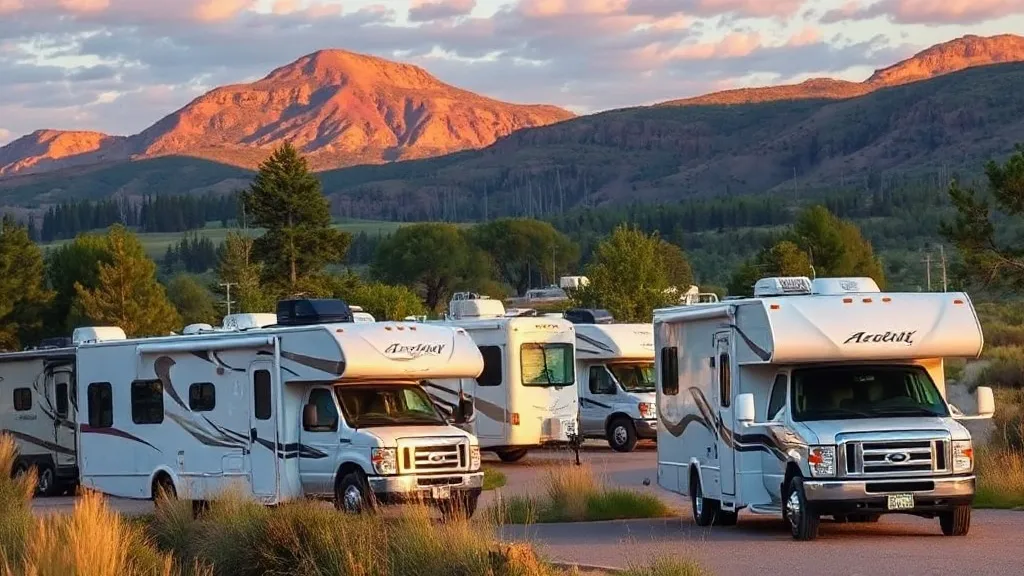
Thousand Trails is the biggest name in membership camping, and it inspires strong opinions. Some full-timers credit it with cutting their annual camping bill by thousands; others tried it for a year, fought with the reservation system and stay limits, and let it lapse. Both groups are describing the same product. Whether it is worth it depends almost entirely on how, where and how often you camp.
This guide explains the current structure as published on the operator’s own pages, translates the rules into plain English, and gives you a straightforward test for whether the math works for you. We are not affiliated with Thousand Trails and earn nothing if you buy.
Quick answer: The entry-level Thousand Trails Camping Pass lists at $775 a year for one region as of the operator’s page at this writing, frequently discounted, and covers roughly 200-plus campgrounds across five zones with no nightly fees. The catch is the rules: 14 nights maximum per stay, and any stay over four nights triggers seven nights out before you can return. If you camp 15 or more nights a year near a zone, it usually pays for itself; if you camp a few weekends far from the network, it usually does not.
How Thousand Trails works
Thousand Trails, part of Equity LifeStyle Properties, operates a network of member campgrounds and RV resorts. Instead of paying a nightly rate, members pay an annual fee (or monthly payments on a contract) and then camp within the rules of their membership level. The parks vary enormously in quality, from well-run resorts to older properties with narrow roads and dated bathhouses.
There are two broad ways in:
- The Camping Pass — the retail entry product sold by zone.
- Enhanced memberships — higher-priced tiers (currently marketed as Journey, Explore and Adventure) with longer stays, park-to-park travel and longer booking windows.
There is also a legacy market of resold older contracts with different terms, which we do not cover here beyond noting they exist.
Camping Pass zones and rules
| Camping Pass detail | As stated on thousandtrails.com at this writing |
|---|---|
| List price | $775 per year (promotional pricing frequently lower) |
| Monthly option | About $64.58 per month plus tax, 12 months, on a two-year commitment |
| Zones | Northwest, Southwest, Midwest, Northeast, Southeast |
| Additional zone | $140 per zone per year |
| Campgrounds | ”200+ campgrounds and RV resorts”; Trails Collection add-on adds “100+ more” |
| Maximum stay | 14 consecutive days |
| Waiting period | Stays over 4 consecutive nights require 7 nights out before the next stay |
| Park-to-park | Not included; enhanced memberships only |
| Nightly fees | None at member parks; same amenities as daily-rate guests |
| Covered guests | Purchaser, spouse and dependent children 23 and under |
| Guarantee | Money-back within 30 days if you have stayed no more than 2 consecutive nights |
The two rules that decide everything are the 14-night cap and the 4-then-7 rule. Read together: you can stay up to four nights and move on freely, or you can settle in for up to two weeks, but after any stay of five or more nights you must be out of the entire Thousand Trails system for a full week. For a snowbird who wants to park in one place for the winter, that means alternating two weeks in and one week out, with the “out” week spent at a non-member park, a boondocking spot or a Trails Collection property.
The zone system matters just as much. A Southeast pass does nothing for you in Oregon. Full-timers who migrate typically buy two zones or step up to an enhanced membership that covers the whole network.
Enhanced membership levels
The operator currently markets three enhanced tiers. Prices below are as listed on the membership page at this writing and are subject to change and promotions; the down payment and monthly figures require a two-year minimum.
| Tier | Listed price | Stay length | Booking window | Park-to-park | Notable extras |
|---|---|---|---|---|---|
| Journey | $163/month, $500 down | Up to 21 nights | 120 days | Yes | Trails Collection reciprocal program (100+ resorts) |
| Explore | $221/month, $700 down | Up to 21 nights | 150 days | Yes | Getaway Cabin Week |
| Adventure | $313/month, $900 down | Up to 21 nights | 180 days | Yes | Trails Collection Plus (90-day bookings, 21-night stays, park-to-park); six annual extension weeks |
The important differences from the Camping Pass are 21-night stays instead of 14, park-to-park travel (leave one member park and check straight into another with no waiting week), a longer booking window, and network-wide access rather than one zone. Whether those are worth several thousand dollars a year over the Camping Pass depends on volume: at 200-plus nights a year the enhanced tiers can still undercut nightly rates dramatically; at 40 nights they generally cannot.
The Trails Collection and Encore parks
The Trails Collection is a reciprocal add-on that opens 100-plus additional campgrounds, largely Encore RV resorts, to Thousand Trails members. It is bundled into the enhanced tiers and sold as an add-on to the Camping Pass. Rules for Trails Collection stays are separate from member-park rules and have historically included their own nightly fees at some properties, so read the current terms carefully rather than assuming those parks are “free.”
Who Thousand Trails is worth it for
Full-time RVers on a budget. This is the core customer. If you live in your rig year-round and are willing to route your travel around the network, an enhanced membership plus Trails Collection can replace most of your nightly fees. Combined with the boondocking and public-land options in our free RV camping and boondocking guide for the “out” weeks, some full-timers report annual site costs that would be impossible on nightly rates. See what it costs to live in an RV park monthly for the nightly-rate baseline you would be comparing against.
Snowbirds within a zone. A retiree who winters in Florida or Arizona and camps 60 to 100 nights a season in one region can do well on a single-zone Camping Pass, using the mandatory week out for a state park or a visit with family. Our snowbird RV parks guide explains how the alternating pattern compares with a straight monthly rental at a private park.
Regional weekenders. If you live within a couple of hours of several member parks and camp 15 to 25 nights a year, the Camping Pass math is favorable, especially at promotional pricing, and the four-night-and-under stays never trigger the waiting week.
Who Thousand Trails is not worth it for
Occasional campers far from a zone. If the nearest member park is three hours away and you camp a few weekends a year, you will not recover the fee.
Destination-driven travelers. Thousand Trails parks are where Thousand Trails parks are, which is often not adjacent to the national park or coastline you are heading for. If your trips are built around specific destinations, the network will frequently not have a park where you want to be.
Anyone who wants to stay put. The 14-night cap on the Camping Pass and 21-night cap on enhanced tiers make a fixed monthly site impossible. If you want to sit in one place for a season, a monthly rate at a private park is simpler; compare options in our best monthly RV parks for long-term stays roundup.
Travelers who expect resort quality everywhere. Some member parks are excellent, others are tired. Read recent reviews on the free camping apps we cover in best free camping apps before assuming a given park meets your standard.
Thousand Trails vs KOA Rewards vs paying nightly
| Thousand Trails Camping Pass | KOA Rewards | Pay as you go | |
|---|---|---|---|
| Model | Annual fee, no nightly fees at member parks in your zone | $39/year for 10% off daily rate at 500+ KOAs (per koa.com) | Nightly rates everywhere |
| Stay limits | 14 nights; 4-then-7 rule | None beyond each park’s own | None |
| Where | Fixed network, by zone | Any KOA | Anywhere |
| Best for | Volume campers near a zone; full-timers | Anyone staying 4+ KOA nights a year | Destination-driven travelers |
| Weakness | Rules, uneven park quality, location gaps | Still paying near-full price | Highest total cost at volume |
These are not exclusive. Many full-timers carry a Thousand Trails membership for volume, a KOA Rewards card for transit nights, and use public campgrounds for destinations. Our KOA campgrounds guide explains how the KOA tiers and Rewards program work in detail.
A simple break-even test
- Count your realistic nights. Not the nights you hope to camp; the nights you actually camped last year.
- Count how many of them could plausibly be at a member park in one zone. Pull up the map and be honest about detours.
- Multiply those nights by your typical nightly rate. For most private parks that is somewhere between a budget site and a resort site; use your own receipts.
- Compare with the pass price you were actually quoted, including any zone add-ons and the Trails Collection if you need it.
- Subtract a friction penalty. The 4-then-7 rule and reservation competition in peak season mean you will not use the pass for every night you planned. A conservative planner assumes they will use it for two-thirds of the nights they hoped to.
If the pass still wins after that discount, buy it, ideally on promotion. If it is close, try a single-zone Camping Pass first; the operator’s money-back guarantee window covers you if the reservation reality does not match the brochure.
Practical tips if you join
- Book early. Popular member parks fill for holidays and snowbird season the moment the booking window opens.
- Plan the out-week. Know where you will spend the seven nights before you commit to a 14-night stay. State parks, BLM land (see our BLM camping guide) and Trails Collection resorts are the usual answers.
- Read each park’s rig limits. Older member parks were built for smaller rigs; our big-rig friendly RV parks guide explains what to check before you tow a 40-footer into a 1970s campground.
- Track promotions. The operator runs frequent sales on both the Camping Pass and enhanced tiers, and the difference can be hundreds of dollars.
- Keep your receipts. The only way to know if the membership works is to compare a year of member nights against what those nights would have cost you.
Thousand Trails is neither a scam nor a miracle. It is a volume product with rules. RVers who camp a lot, plan ahead and stay near the network get their money’s worth many times over; RVers who want spontaneity and specific destinations are better off paying by the night.
Frequently asked questions
Is Thousand Trails worth it?
It is worth it if you camp roughly 15 or more nights a year inside one Thousand Trails zone and can live with the 14-night maximum and the rule that stays over four nights require seven nights out. Full-timers and snowbirds who route around the network usually break even quickly; occasional weekenders who camp far from a zone usually do not.
How much does the Thousand Trails Camping Pass cost?
As of the operator's page at this writing, the Camping Pass lists at $775 a year for one zone, with frequent promotional discounts, a monthly payment option of about $64.58 on a two-year commitment, and additional zones at $140 each per year. Prices change, so confirm on thousandtrails.com before you buy.
What are the Thousand Trails zones?
The Camping Pass is sold by region: Northwest, Southwest, Midwest, Northeast and Southeast. Your pass covers the campgrounds in your chosen zone, and you can add more zones for an annual fee.
How long can you stay at a Thousand Trails campground?
With the basic Camping Pass the operator states a maximum of 14 consecutive days per stay, and if a stay exceeds four consecutive nights you must wait seven nights before staying again. Enhanced memberships extend stays to up to 21 nights and add park-to-park travel.
What is park-to-park at Thousand Trails?
Park-to-park means checking out of one Thousand Trails campground and directly into another without the seven-night waiting period. It is not included in the basic Camping Pass and is a feature of the enhanced Journey, Explore and Adventure memberships.
Is Thousand Trails good for full-time RVers?
It can be the single biggest cost cutter for full-timers who are willing to plan around the network. Pair an enhanced membership with the Trails Collection reciprocal program and many full-timers report going months with little or no nightly camping fees, at the cost of flexibility and, at some parks, aging infrastructure.
About the author
Marisol ReyesCamping & Outdoors Editor
Marisol spent six years as an interpretive ranger in the California and Colorado state park systems before turning to writing full-time. She knows public-land camping from the inside — how reservation windows really work, why some loops fill before others, and which 'first-come, first-served' sites are worth gambling on.
More from Marisol →Keep reading
Are Luxury RV Resorts Worth It? Real 2026 Prices & Value Test
Decide if a luxury RV resort is worth it using real 2026 rates, required fees, amenity use, location, rig rules, and a simple all-in cost test.

Full Hookup vs Partial Hookup: Sewer, Cost & Best Choice
Full hookups include water, electric, and sewer; partial hookups usually omit sewer. Compare current campground prices and choose the right RV site.
Yellowstone National Park Campgrounds Compared for RVs (2026)
Compare Yellowstone campgrounds by 2026 price, dates, location, hookups, and official RV-plus-vehicle limits to choose the right base.