Free RV Camping & Boondocking in the USA: The Complete Guide
How to legally find free RV camping across the US — BLM land, national forest dispersed sites, Corps of Engineers, casinos, Harvest Hosts, plus the rules and off-grid basics.
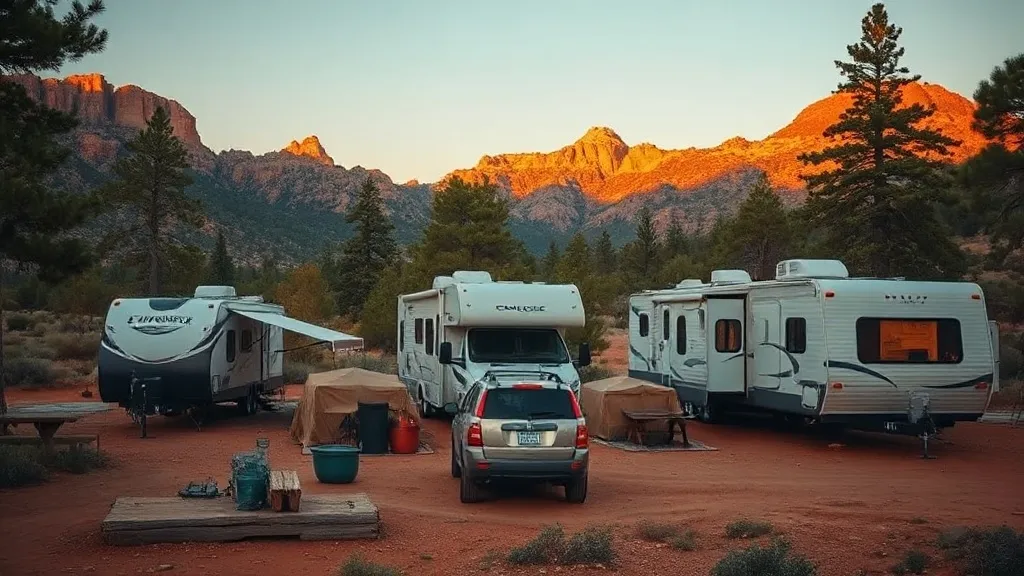
Somewhere along the line, RV camping stopped being cheap. Full-hookup resort sites now run $60 to $200 a night in popular regions, state parks book out months ahead, and even basic developed campgrounds creep past $40. For anyone living or traveling in an RV for more than a long weekend, those nightly fees add up fast enough to reshape the whole trip budget.
The good news is that the United States holds a staggering amount of public land where you can camp for free — legally, indefinitely (within stay limits), and often in scenery that puts the paid parks to shame. The Bureau of Land Management alone oversees roughly 245 million acres, most of it in the West and most of it open to dispersed camping at no cost. Add national forests, Wildlife Management Areas, and a network of businesses that welcome overnight RVers, and “free camping” stops being a fringe trick and becomes a genuine travel strategy.
The catch is that free camping is unmanaged camping. There are no reservations, no hookups, no host to point you to a site, and — critically — no signs telling you whether you’re allowed to be there. The skill is knowing which land is open, what the rules are, and how to live off-grid comfortably for a few days at a time. This guide walks through every major source of free RV camping in the US, the legal stay limits that govern them, and the water, power, and waste basics that make boondocking sustainable rather than miserable. We’ll keep it honest about the trade-offs, because free camping rewards preparation and punishes the unprepared.
What “free camping” and “boondocking” actually mean
These terms get used loosely, so it helps to be precise. Boondocking (also called dry camping or dispersed camping) means camping with no hookups — no shore power, no water connection, no sewer. Free camping means camping at no nightly cost. The two usually overlap, but not always: a developed Corps of Engineers campground can be cheap-but-not-free with hookups, while a Cracker Barrel lot is free but utterly dry.
For the purposes of this guide, we’re focused on the overlap most RVers want: places you can legally spend the night for $0, primarily on public land. The mechanics differ by land manager, so we’ll take them one at a time.
BLM land: the backbone of free camping in the West
Bureau of Land Management land is where most serious free camping happens. The default rule is refreshingly simple: on most BLM land you can camp for free, with no reservation, for up to 14 days within a 28-day period. After your 14 days are up, you move at least 25 miles away (the exact distance varies by district). There are no assigned sites — you pull onto an existing disturbed area, a pullout, or a flat spot that’s clearly been camped before, and you set up.
BLM land is concentrated in the West: Arizona, California, Nevada, Utah, Colorado, New Mexico, Oregon, Idaho, Montana, and Wyoming hold the lion’s share. East of the Rockies, BLM holdings thin out dramatically, which is the single biggest reason free camping is harder in the eastern half of the country.
A few things to know before you rely on it:
- Stay limits are enforced. Rangers do patrol popular areas and track how long rigs have been parked. Overstaying can draw a citation. Respect the 14-day rule.
- Some areas require permits or charge fees. High-use spots (Alabama Hills in California, for example) and designated recreation areas can have permits or seasonal fees. The big one is the Long-Term Visitor Area system around Quartzsite, Arizona — covered in detail in our BLM camping guide.
- You need to verify land ownership. This is the part beginners skip. A dirt road can cross from BLM to private to state land within a mile, and there’s rarely a sign. An app like onX Offroad color-codes the boundaries; the BLM’s own map at blm.gov is a free alternative.
Field tip: The best BLM sites are almost never the first pullout off the highway. Drive a half mile to a mile down an established dirt road and you’ll trade road noise for solitude — and usually a better view. Just match the road to your rig; washboard and sand strand more RVs than any ranger.
For the full rulebook, the 14-day mechanics, and how the Quartzsite LTVAs work, see our dedicated BLM camping guide.
National forest dispersed camping
The US Forest Service manages around 193 million acres across 154 national forests, and dispersed camping is allowed across most of it. The rules closely mirror BLM: free, no reservation, typically a 14-day limit, camp on already-disturbed sites, pack everything out. National forests fill a crucial gap because they exist all over the country — including the Southeast and Appalachians where BLM land is scarce.
The differences worth knowing:
- Forest roads are rougher and tighter. Tree cover, low branches, and narrow turnarounds mean big rigs need to scout carefully. Many forest roads suit vans and small trailers far better than a 40-foot fifth wheel.
- Fire restrictions are common and seasonal. From late spring through fall, much of the West bans campfires and sometimes generators. Check the forest’s alerts page before you go.
- Motor Vehicle Use Maps (MVUMs) govern where you can drive and camp. Each forest publishes one. Camping is often restricted to a set distance from an open road or to designated dispersed sites only. Use the forest’s current MVUM as the authoritative source; a commercial app can make it easier to read but does not replace it.
Field tip: At higher elevations, snow can close forest roads well into June and again as early as October. A free summer site at 9,000 feet is a frozen, impassable one in shoulder season — always check current road status, not just the calendar.
Army Corps of Engineers campgrounds
This one surprises people. The US Army Corps of Engineers operates roughly 994 campgrounds across 226 lake projects in 37 states — about 38,500 campsites, many right on the water. These are developed campgrounds, so most aren’t free, but the average nightly rate runs around $20 and roughly half of Corps campgrounds price their cheapest sites under $20. Compared to a $50 private park, that’s close enough to “free camping economics” to belong in any budget RVer’s playbook — and they exist across the South, Midwest, and East where BLM doesn’t.
You book Corps campgrounds through Recreation.gov, the federal reservation platform. Many sites offer electric and water hookups, lakefront views, and boat ramps. If you hold the America the Beautiful Senior or Access Pass, you typically get 50% off Corps campground fees, which can drop a site to $10.
Field tip: Corps campgrounds are wildly underbooked relative to national parks. If you want a cheap, scenic, hookup-equipped site on short notice — especially east of the Mississippi — search “army corps” on Recreation.gov before you settle for an expensive private park.
Wildlife Management Areas and state lands
State-managed Wildlife Management Areas (WMAs), state forests, and state trust lands offer free or low-cost camping in many states — but the rules are genuinely all over the map. Some WMAs allow dispersed camping year-round; others open only during hunting seasons, require a hunting or conservation license, or ban camping entirely. Arizona and some Western states sell inexpensive state trust land recreation permits that unlock large areas for dispersed use.
Because there’s no national standard, WMAs are the category where you most need to check the specific state agency’s regulations before counting on a site. Treat them as a bonus to research locally rather than a reliable default.
Renting an RV for this trip? Compare rigs, prices, and pickup locations on RVshare and Outdoorsy — both let you filter by rig size, dates, and location.
Casinos, Cracker Barrel, and other overnight courtesy parking
When you’re rolling between destinations and just need a safe place to sleep, the “free overnight parking” network fills the gap. None of these are scenic camping — they’re parking lots — but they’re free, legal (where allowed), and conveniently placed near highways.
- Casinos. Many casinos, especially in the West and Midwest, allow free RV overnight parking in the hope you’ll come inside. Some have dedicated RV lots; a few even offer hookups for a small fee. Always check in at the players’ club or security desk first.
- Cracker Barrel. Cracker Barrel’s overnight RV policy hasn’t changed — it remains a store-by-store, manager’s-discretion courtesy. Many locations offer two to eight marked RV/bus spaces, but it’s a one-night, first-come stay and you should go in, buy a meal, and ask permission. Local ordinances or lot size can mean no at any given store.
- Walmart, Bass Pro/Cabela’s, truck stops. Similar deal — many but not all allow one-night stays. Policies vary by location and local law. Park flat, stay one night, keep the slides in, and don’t “camp.”
The unwritten rules are the same everywhere: ask first, stay one night, buy something, keep a low profile (no slide-outs, awnings, or chairs), and leave the spot cleaner than you found it. Abuse is exactly why locations stop allowing it.
Harvest Hosts and membership networks
A step up from parking lots, paid membership networks unlock a different category of free overnight stays — free in the sense that there’s no per-night fee, though you pay an annual membership.
- Harvest Hosts connects RVers with farms, wineries, breweries, golf courses, and attractions that offer a free overnight spot in exchange for the expectation that you’ll patronize the business. Membership starts around $99/year for the Classic tier, with higher tiers (roughly $169–$179/year) adding Boondockers Welcome and premium locations. Stays are typically one night, self-contained (no hookups), and require advance contact with the host.
- Boondockers Welcome (now part of Harvest Hosts) is a network of 2,800-plus private hosts who invite RVers to park on their property, sometimes with electric or water hookups. Stays run one to five nights. It’s available as a standalone membership (around $79/year) or bundled with Harvest Hosts.
These networks won’t replace public-land boondocking for long stays, but they’re excellent for breaking up a cross-country drive with a memorable, secure overnight at a vineyard instead of a truck stop.
Free camping by region: where it’s easy and where it’s thin
Being honest about geography saves a lot of frustration:
- The Desert Southwest (AZ, NV, southern CA, southern UT, NM). The promised land of free camping. Vast BLM holdings, mild winters, and an established snowbird culture around Quartzsite. This is where free camping is easiest, especially October through April. See our Arizona snowbird RV parks guide for the winter scene and our Texas free camping guide for the southern edge.
- The Mountain West (CO, MT, WY, ID, OR). Abundant BLM and national forest land, spectacular summer camping, but high-elevation sites are snowbound much of the year. Our Montana boondocking guide and California free camping guide dig into specific spots.
- The Great Plains and Midwest. Sparse BLM, but Corps of Engineers lakes and national grasslands provide options. Free dispersed camping is more limited; cheap developed sites fill the gap.
- The Southeast and East Coast. The hardest region for free camping. Little to no BLM land, but national forests (Pisgah, Nantahala, Ocala, the Daniel Boone) and Corps lakes offer dispersed and cheap developed sites. Expect to lean more on $15–$25 Corps and forest campgrounds than on truly free dispersed camping.
If you’re new to all of this, start with our boondocking tips for beginners before committing to a long off-grid stay.
The rules that keep free camping free
Every restriction on public land — every gate, permit requirement, and shortened stay limit — traces back to people who abused the privilege. Following these isn’t just legal compliance; it’s what keeps the land open for the next rig.
- Respect stay limits. 14 days within 28 is the common standard. Move when your time’s up.
- Camp on durable, already-disturbed surfaces. Don’t create new sites or widen the footprint. Reuse existing pullouts and fire rings.
- Pack out everything. All trash, all gear. Leave no trace.
- Never dump tanks on the ground. This is the cardinal sin of boondocking and the fastest way to get an area closed. Use dump stations.
- Manage human waste properly. Use your RV toilet and dump it legally, or pack out solid waste where required. Bury cathole waste 6–8 inches deep and 200 feet from water if you must go outside.
- Observe fire restrictions. When in doubt, no fire. Wildfires born from a careless campfire have closed entire forests.
- Keep your distance and noise down. Part of why people boondock is solitude. Give other campers space and run generators only during reasonable hours.
Off-grid basics: water, power, and waste
Free camping is only comfortable if you can live off your own resources. Three systems matter.
Water. Your stay length is limited by your fresh-water tank as much as by the law. Carry your full fresh tank plus a few extra jugs (a 6-gallon jug per person per few days is a reasonable buffer). Refill at potable-water spigots, dump stations, RV parks (some charge a few dollars), or town sources. Conserve aggressively: navy showers, dishwashing in a tub, capturing and reusing greywater where legal. Most boondockers find their gray and black tanks fill before they run out of fresh water, so monitor all three.
Power. With no shore power, your house batteries run everything, and running out of battery — not water — is what ends most free-camping trips early. Our guide to RV power without hookups works through the daily watt-hour math in detail. Keep the batteries charged via:
- Solar panels — silent, fuel-free, ideal for desert sun; weak in forest shade or winter.
- A generator — reliable in any weather, but loud and fuel-hungry; respect quiet hours and fire bans.
- Driving — your alternator tops up the batteries as you move between sites.
Conserve with LED lighting, by minimizing the furnace fan (the biggest hidden battery drain in cold weather), and by running the inverter only when you actually need 120V power. A modest solar setup plus a lithium battery upgrade is the single best investment for extending boondocking stays.
Waste. Gray (sink/shower) and black (toilet) tanks have to go somewhere. Plan your moves around dump-station access — many are free at rest stops, RV parks, and some Corps and state campgrounds; apps like Campendium and Sanidumps map them. Never, ever dump on the ground. Use RV-safe toilet treatment, keep the black tank valve closed until you dump, and add water after dumping to keep solids from drying out.
Finding the actual sites
Knowing the land categories is half the job; finding a realistic candidate tonight is the other half. Campendium is our free first lookup, iOverlander helps with remote-road logistics, onX Offroad provides paid boundary and offline tools, and Recreation.gov covers reservable federal campgrounds. None of them makes a user-submitted campsite legal. We compare current free features, subscriptions, and offline limits in our guide to the best free camping apps.
Planning your first free-camping trip
A simple sequence keeps the first attempt low-stress:
- Pick a region with easy public land — the Desert Southwest in winter, the Mountain West in summer. Start where free camping is abundant, not where it’s a treasure hunt.
- Scout sites before you arrive. Use an app to find a couple of candidate spots and read recent reviews for road conditions and rig-size notes. Always have a paid backup nearby in case your spot is full or impassable.
- Arrive in daylight. You can’t read a dirt road’s washboard, mud, or low branches in the dark. Aim to be parked by mid-afternoon.
- Top off everything first. Full fresh tank, empty gray/black tanks, full fuel, charged batteries, food and water buffer. Treat it like provisioning a boat.
- Start short. Try two or three nights before committing to a full 14. You’ll learn your real water and power consumption fast.
- Have a comfort threshold. It’s fine to bail to a paid park for a hot shower and a battery charge. Free camping is a tool, not a test of endurance.
Done right, free camping transforms RV travel from a series of $50 transactions into something closer to actual freedom — waking up alone in a desert wash or a mountain meadow, owing no one a reservation. The land is there, it’s public, and it’s yours to use. The only price is doing it responsibly.
For the deep dive on the most important land manager, read our BLM camping guide next, and grab the right tools from our best free camping apps roundup before you roll out.
Frequently asked questions
Where can I camp for free in an RV?
The biggest sources of free RV camping are BLM land and national forest dispersed camping in the western states, where you can typically camp up to 14 days at no cost. Other free options include some Army Corps of Engineers day-use overflow, certain Wildlife Management Areas, and overnight courtesy parking at businesses like Cracker Barrel, Walmart, and casinos. Always confirm the specific site allows overnight stays before settling in.
How do I find free camping near me?
Start with Campendium for user-reported candidates, use iOverlander for remote-travel services, then check the official BLM or Forest Service map or a current mapping app such as onX Offroad. An app pin does not prove camping is legal, so confirm the land manager and current local restrictions. Recreation.gov covers developed, reservable federal campgrounds rather than dispersed sites.
Is boondocking legal?
Yes, when done on public land that allows it. Dispersed camping is legal on most BLM land and in most national forests, subject to stay limits (commonly 14 days) and local closures. It is not legal to camp just anywhere — private land, many city limits, and developed campground areas have their own rules. Always verify the land status and any posted restrictions.
How long can you stay when boondocking on public land?
The standard limit on BLM land and in national forests is 14 days within a 28-day period, after which you must move a set distance away (often 25 to 30 miles). Some districts use different windows, and high-use areas may post shorter limits, so check the local field office or ranger district rules for the exact spot.
Do you need a permit to boondock?
Most general dispersed camping on BLM and forest land requires no permit and no fee. Exceptions include designated Long-Term Visitor Areas like Quartzsite (which require a paid permit), some high-use areas such as Alabama Hills, and fee recreation areas. When a permit is required it is posted at the site or listed on the managing agency's website.
How do you get water and power when boondocking?
Most boondockers carry fresh water in their RV tank plus extra jugs, refilling at potable-water spigots, dump stations, or town sources. Power comes from house batteries topped up by solar panels, a generator, or driving. Conserve by using LED lighting, minimizing furnace use, and running the inverter only when needed. Plan your stay length around your fresh-water and battery capacity, not just the legal limit.
About the author
Marisol ReyesCamping & Outdoors Editor
Marisol spent six years as an interpretive ranger in the California and Colorado state park systems before turning to writing full-time. She knows public-land camping from the inside — how reservation windows really work, why some loops fill before others, and which 'first-come, first-served' sites are worth gambling on.
More from Marisol →Keep reading
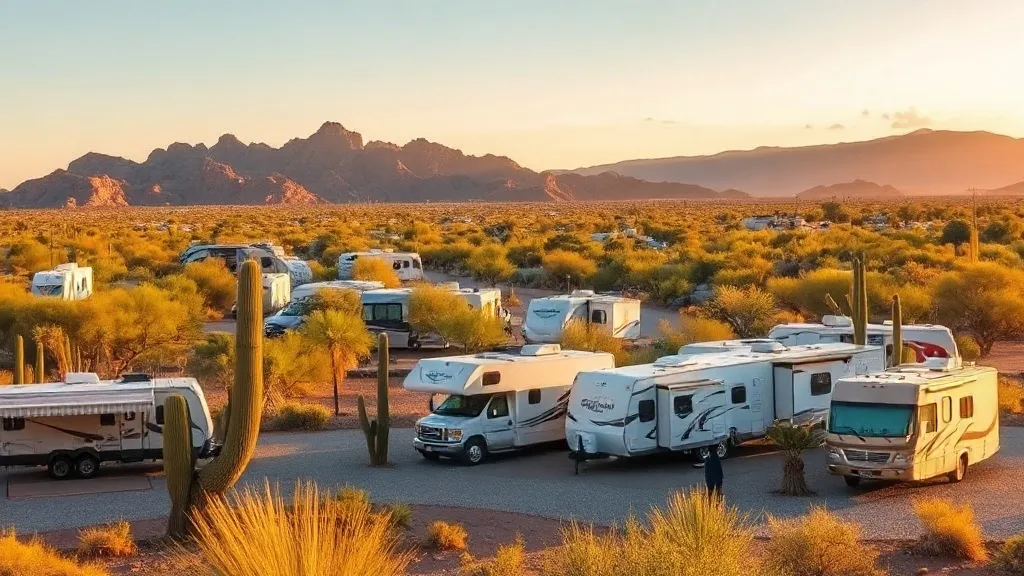
Mesa & Apache Junction RV Resorts: 12 Parks With 2026–27 Rates
The East Valley snowbird deep dive: Mesa Spirit, Viewpoint, Valle del Oro, Monte Vista, Towerpoint, Mesa Regal, Sun Life, Good Life, Val Vista Villages, the Mesa/Apache Junction KOA, Lost Dutchman State Park and Usery Mountain, with 2026–27 nightly, monthly and seasonal rates, 55+ rules and short-stay policies.
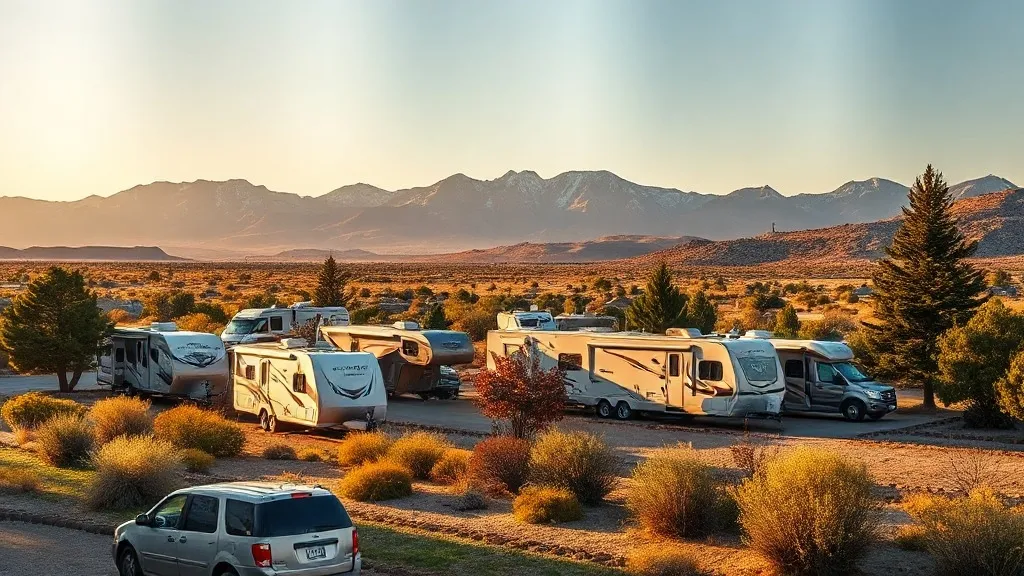
Quartzsite RV Parks: 10 Hookup Parks, La Posa LTVA and Free BLM (2026–27)
Park-by-park guide to RV camping in Quartzsite, Arizona for the 2026–27 snowbird season: full-hookup parks with verified nightly, monthly and seasonal rates, the La Posa LTVA permit, the five free 14-day BLM areas, and the January 2027 show dates.
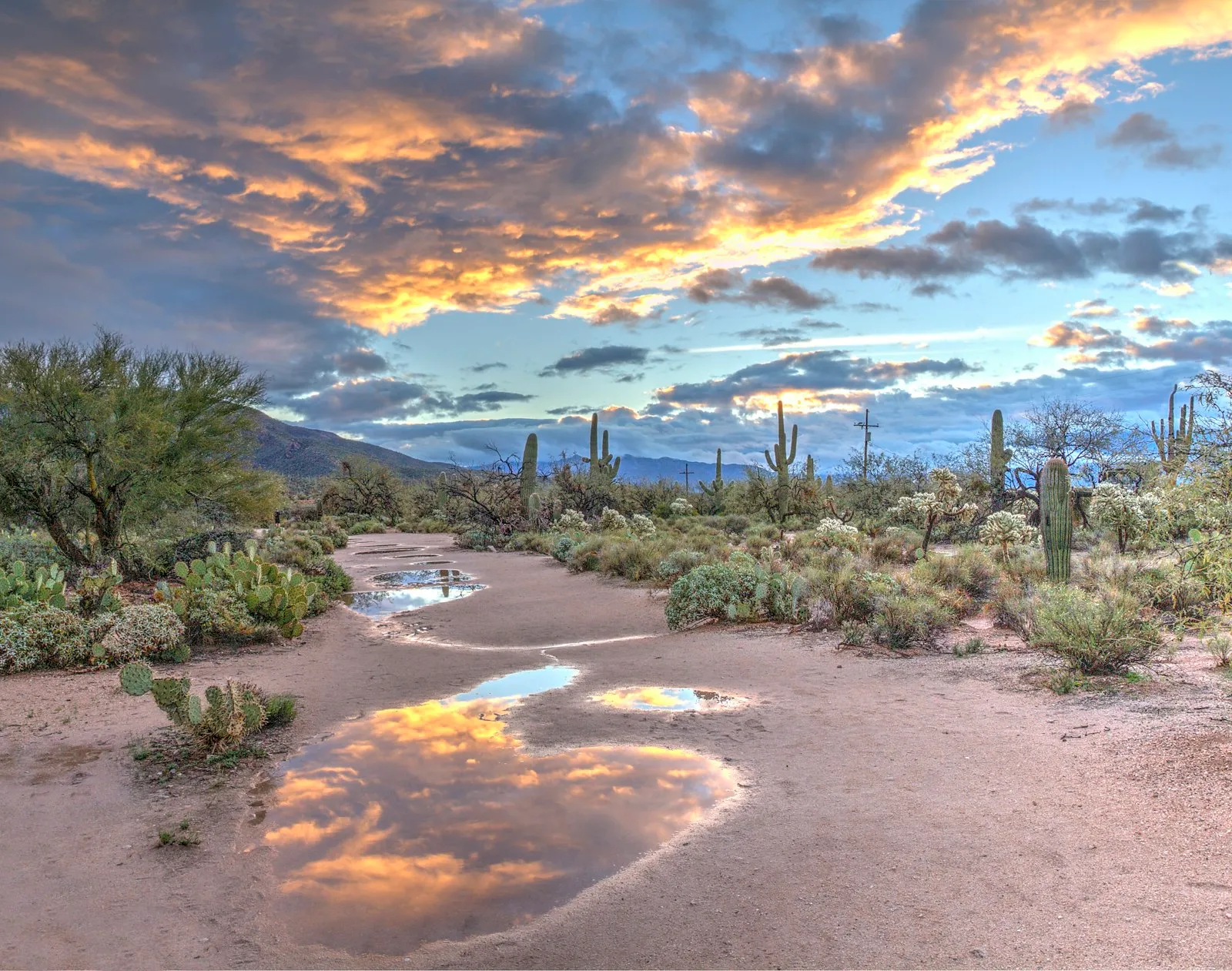
Yuma RV Parks: 12 Best Snowbird Resorts and BLM Camps (2026–27)
Verified 2026–27 guide to RV parks in Yuma, Arizona: Sun Vista, Westwind, Fortuna de Oro, Caravan Oasis, Bonita Mesa, Villa Alameda, Cocopah Bend, Yuma Lakes, the River Front KOA, Winterhaven across the river, and BLM boondocking at Imperial Dam LTVA and Senator Wash, with nightly, monthly and seasonal rates, 55+ rules and the Los Algodones day trip.