How Much Does It Cost to Live at a Campground? 2026 RV Monthly Budget
A current monthly RV-park cost breakdown for 2026 — published rate examples, metered electric, deposits, and a realistic all-in planning budget.

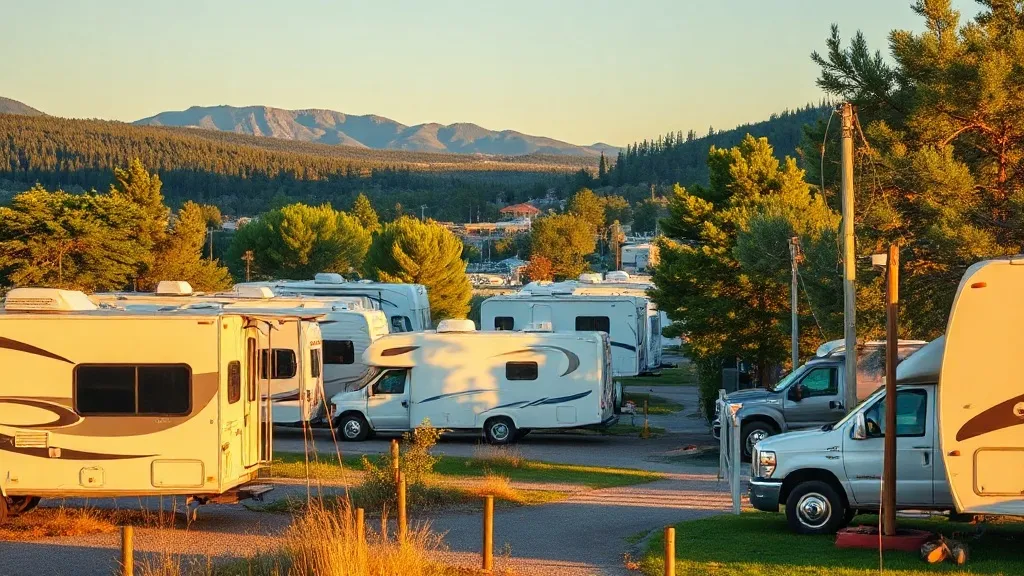
There is a number that gets quoted in RV Facebook groups and resort brochures: “You can live in an RV park for $500 a month.” It can be true, but it is incomplete in ways that matter. Advertised lot rent may exclude metered electricity, deposits, taxes, extra-person fees, mail service, and other charges, so the first bill can be materially higher than the headline rate.
This guide is the honest breakdown. We are going to separate lot rent from utilities, give you real 2026 ranges by region instead of one misleading national average, and name the fees that quietly change the total. The goal is simple: by the end, you should be able to call any park, ask the right four questions, and know your true all-in monthly cost before you ever back the rig in.
A quick orientation before the numbers. Monthly RV living splits into three rough tiers. At the bottom, budget parks and public-land long-term areas where you trade amenities and scenery for a low rate. In the middle, the broad band of solid private parks and 55+ communities where most long-termers actually live. At the top, destination resorts — golf, pickleball, waterfront, concrete pads — where you are paying for a lifestyle, not just a place to park. Your monthly cost depends far more on which tier and which region you choose than on the size of your rig.
Quick answer: living at a campground or RV park costs about $675–$1,305 per month all-in in 2026. Use that as a practical planning range for the site, metered power, propane, connectivity, and small recurring fees in an ordinary Sun Belt park. That is a budget scenario, not a national average: current published base rates in our sample run from $300 plus electric in Quartzsite to $900 plus electric on Florida’s Gulf Coast, while resort and peak-season sites can cost much more.
Related guides: Is Thousand Trails Worth It? Camping Pass Zones, Membership Levels & Who Should Buy (2026)
Current published rate examples
These July 2026 checks show why one nationwide average is misleading. They are examples, not a representative market survey, and availability is not guaranteed.
| Published example | Base price | What the headline excludes or includes |
|---|---|---|
| BLM La Posa LTVA, Arizona | $180 for Sep 15–Apr 15 | No site hookups; shared water, dump and trash facilities |
| Arizona Sun RV Park, Quartzsite | $300/month; $575 in January | Electric billed separately at $0.20/kWh |
| Arbor Ranch RV Park, Texas | From $425/month | Water/septic included; electric $0.13/kWh; $150 deposit |
| Frostproof Mobile Village, Florida | $450–$675/month by season/site | Full hookups; monthly electric metered; $150 electric deposit |
| Lone Pine RV Park, Florida | $640–$900/month | Full hookups and Wi-Fi included; electric separate |
The lesson is more useful than an “average”: compare the exact month, park tier, and all-in utility policy. BLM’s long-term area is a dry-camping product and should not be compared directly with a private full-hookup site.
Average cost of a campsite with hookups: nightly vs monthly
The question “what is the average cost of a campsite with hookups?” has two honest answers depending on how long you stay, and the gap between them is the whole reason people move into RV parks by the month.
| Stay length | Full-hookup private site (ordinary park) | How the price is built |
|---|---|---|
| Nightly | Around $60/night is a typical mid-tier example; public campgrounds with hookups can be lower, resort and coastal sites higher | Electric included; no deposit; highest per-night cost |
| Weekly | Usually a modest discount on the nightly rate | Electric still included at most parks |
| Monthly | $300–$900/month plus metered electric in our 2026 sample; $450–$850 is the common Sun Belt band | Electric metered separately; deposit common; lowest per-night cost |
Put differently: a park charging about $60 a night — roughly $1,800 for 30 nights — will often rent that same full-hookup site for $750 to $900 a month plus power. That is why the “average” nightly cost of a hookup site tells you very little about monthly living. Compare monthly rate against monthly rate, and always add metered electric.
Campgrounds in Florida with monthly rates
Florida gets its own note because “campgrounds in Florida with monthly rates” is a search we see constantly, and the state’s spread is wider than anywhere else. From our published examples and regional ranges:
| Florida area | Monthly rate example or range | Notes |
|---|---|---|
| Inland (Frostproof) | $450–$675/month by season and site | Full hookups; electric metered; $150 electric deposit |
| Inland/rural (Lone Pine RV Park example) | $640–$900/month | Full hookups and Wi-Fi included; electric separate |
| Rural and inland generally (Bushnell, Zephyrhills, Okeechobee) | Roughly $500–$850/month in season | Widest choice of monthly sites in the state |
| Gulf Coast resorts (Fort Myers, Naples) | Roughly $900–$1,800/month in peak winter | Resort amenities; book far ahead |
| The Keys | Often $1,800–$4,000+/month | Scarce; many parks limit monthly stays |
Nearly every Florida park outside the Keys offers a monthly rate in winter, and many drop sharply in summer. For named parks and how to book them, see our Florida snowbird RV parks guide and the best monthly RV parks roundup.
How monthly RV-park billing actually works
The single most important thing to understand is that monthly rates and nightly rates are billed differently. On a nightly or weekly stay, electricity is almost always baked into the price. On a monthly stay — typically defined as 28 or 30 nights and up — most parks switch to metered electric. They read the meter on your pedestal when you arrive and again at month’s end, and you pay for the kilowatt-hours you actually used, at the local utility rate plus a modest park markup.
This is not a scam. It is the only fair way to handle long stays, because a snowbird running two air conditioners in an Arizona September draws wildly more power than a solo traveler with a small rig in mild weather. But it means the advertised lot rent is a floor, not a ceiling.
Field tip: When you call a park, ask this exact question — “Is the monthly rate all-inclusive, or is electric metered separately?” If electric is metered, ask what a typical winter or summer month runs for a rig your size. Front-desk staff field this question constantly and will usually give you a straight answer.
So your real monthly cost is a stack:
- Lot rent — the base site fee (the number in the ad)
- Metered electric — what your rig draws, billed at month’s end
- Other utilities — sometimes a flat water/sewer/trash fee on top of rent
- Propane — for cooking, your water heater, and heating in parks where electric heat is impractical
- Connectivity — park WiFi (often weak), cable, or your own cellular data plan
- One-time and occasional fees — security deposit, pet fee, second-vehicle fee, guest fees
Lot rent ranges by region (2026)
These are planning ranges for full-hookup monthly sites at ordinary private parks — not the cheapest boondocking and not the top-tier resorts. Treat every number as approximate and seasonal, and use the published examples above to calibrate before booking.
The Southwest desert (Arizona, southern Nevada, inland Southern California)
This is the value heartland of monthly RV living, which is exactly why hundreds of thousands of snowbirds point their rigs here every winter.
- Inland Arizona budget parks (Yuma outskirts, Casa Grande, the Phoenix exurbs): roughly $450–$750/month plus metered electric
- Established Arizona 55+ resorts (Mesa, Apache Junction, Casa Grande): roughly $700–$1,200/month in peak snowbird season, often far less in summer
- BLM Long Term Visitor Areas (Quartzsite, Yuma): $180 for September 15 through April 15 under the current BLM permit — but no site hookups, so you must be fully self-contained
- Coachella Valley / Palm Springs resorts: the high end, frequently $1,200–$2,500/month in winter
The desert’s catch is summer. Inland Arizona and the California desert hit brutal heat from June through September, and metered electric for air conditioning can add $200–$350 to a summer month. Most snowbird parks empty out for exactly this reason.
Texas (Hill Country, Gulf Coast, and the Rio Grande Valley)
Texas is the other great snowbird value region, especially the Rio Grande Valley, where “Winter Texans” have wintered for generations.
- Rio Grande Valley parks (Mission, Mercedes, Alamo, Edinburg): roughly $400–$700/month plus metered electric — among the best monthly value in the country
- Hill Country and Central Texas: roughly $550–$900/month
- Gulf Coast / Corpus Christi area: roughly $600–$1,000/month, higher near the beach
Texas summers bring their own electric reality — sustained heat and humidity mean heavy AC use from May into October.
Florida
Florida is where monthly costs swing the hardest by season and location. Winter is peak; summer is cheap and sweaty.
- Inland and rural Florida (around Bushnell, Zephyrhills, Okeechobee): roughly $500–$850/month in season
- Gulf Coast resorts (Fort Myers, Naples area): roughly $900–$1,800/month in peak winter
- The Keys: the most expensive monthly RV real estate in the Lower 48 — often $1,800–$4,000+/month when sites are even available
Florida’s hidden cost is summer humidity and hurricane season (June through November), which is why winter commands such a premium.
The Gulf Coast (Alabama, Mississippi, Louisiana panhandles)
A quieter, often-overlooked winter band.
- Coastal Alabama and Mississippi parks: roughly $550–$1,000/month, with beachfront and resort sites at the top
Everywhere else
Outside the Sun Belt, monthly rates are driven less by snowbird demand and more by local housing costs and work-camper traffic. Rural Mountain West and Midwest parks can run $450–$800/month; anything near a national park, a boomtown, or a major metro climbs from there. Cold-climate parks that stay open through winter shift the cost burden onto propane and electric heat.
Metered electric, propane, and the utilities stack
Lot rent is the headline. Utilities are where budgets quietly blow up or come in under plan.
Electric. Ask for the park’s exact posted rate and your meter reading at check-in. Two current examples show the spread: Arbor Ranch publishes $0.13/kWh, while Arizona Sun publishes $0.20/kWh. For planning, a mild month might add $40–$90, while sustained air-conditioning or electric heat can push a much larger rig into the $150–$350 range. Those are usage scenarios, not quoted utility rates; your weather, insulation and equipment decide the bill.
Field tip: A smart thermostat, a second portable AC unit instead of running both rooftop units, and reflective window covers all cut metered-electric bills more than people expect. In the desert, evaporative (“swamp”) cooling where humidity allows can dramatically undercut AC power draw.
Propane. For most full-timers, propane handles cooking, the water heater, and the furnace. In mild months a 30-lb tank or two might last weeks; expect roughly $20–$60/month in moderate conditions. In a cold-climate winter where you are heating with propane, that can climb to $100–$200+/month, and it becomes the single biggest reason snowbirds go south rather than tough it out.
Water, sewer, and trash. Some parks fold these into lot rent; others add a flat monthly utility fee, commonly $25–$60/month. Always ask which model the park uses.
Connectivity. Park WiFi is famously unreliable and often unusable for video calls. Most long-termers run their own cellular data — a dedicated unlimited hotspot plan runs roughly $50–$120/month in 2026. Budget for this; it is effectively a fixed cost of working or streaming on the road.
A realistic monthly budget
Here is what the all-in number tends to look like for a couple in a mid-size rig staying a winter month at an ordinary Sun Belt park — not the cheapest boondocking, not a luxury resort. For a resort quote, compare the same cost stack with our luxury RV resort value test.
| Line item | Budget month | Comfortable month |
|---|---|---|
| Lot rent | $500 | $850 |
| Metered electric | $60 | $180 |
| Propane | $30 | $80 |
| Water/sewer/trash fee | $0 (included) | $45 |
| Internet (cellular) | $60 | $100 |
| Laundry / misc. | $25 | $50 |
| Approximate total | ~$675 | ~$1,305 |
The spread between those two columns is mostly choices: how nice a park, how hot or cold the month, and how much connectivity you need. Neither column includes the costs that have nothing to do with the park — your rig payment or depreciation, insurance, registration, fuel for trips, groceries, and healthcare. Those are real and often larger than lot rent itself, but they follow you whether you are parked or moving.
Renting an RV for this trip? Compare rigs, prices, and pickup locations on RVshare and Outdoorsy — both let you filter by rig size, dates, and location.
What actually drives the price
If you strip everything down, four factors move your monthly total far more than anything else:
- Region and season. A Rio Grande Valley park in January and a Naples resort in January are both “Florida-adjacent snowbird country,” yet one can cost three times the other. Inland beats coastal; shoulder season beats peak.
- Tier. Amenities are not free. Pickleball courts, golf, pools, planned activities, and waterfront views are all built into lot rent. A no-frills gravel park with clean hookups can cost less than half what the resort across the highway charges.
- Length of stay. Most parks step down their rate further at three- and six-month commitments, and annual leases drop the per-month figure again. If you know you are staying a season, ask about the seasonal rate, not the monthly one.
- Climate-driven utilities. Where you park determines whether your electric and propane bills are a rounding error or a second rent payment. The whole logic of snowbirding is to chase the months and places where utilities stay cheap.
How to lock in your real number before you commit
Before you reserve a monthly site, get these answers in writing or at least confirmed by phone:
- The exact lot rent for the months you want, and whether a longer commitment lowers it
- Whether electric is metered, and a typical bill for a rig your size in that season
- Any flat utility, trash, or resort fee on top of rent
- The deposit amount and whether it is refundable
- Pet, second-vehicle, and guest policies and fees
Do that, and the “$500 a month” promise stops being a surprise and becomes a starting point you can actually plan around.
Rate examples checked July 18, 2026 and re-reviewed August 18, 2026. Park prices, utility rates, deposits and availability can change; confirm the all-in quote directly before booking.
For where to actually go, see our companion guides: the flagship roundup of the best monthly and long-term RV parks, our national snowbird RV parks guide, and the deep dives on snowbird RV parks in Florida and the Arizona snowbird scene. For more planning help, browse all our RV guides or start from the home page.
Frequently asked questions
How much does it cost to live in an RV park per month?
A practical 2026 planning budget is about $675 to $1,305 per month for an ordinary Sun Belt RV-park stay once site rent, metered power, propane, connectivity, and small recurring fees are included. Current published base-rate examples range from $300 plus electric in Quartzsite to $900 plus electric on Florida's Gulf Coast, while peak-season and resort sites can cost much more.
Is electricity included in monthly RV park rent?
Usually not. Most parks include electric in nightly and weekly rates but switch to metered electric on stays of 28 to 30 days or longer. You pay the local utility rate plus a small park markup for exactly what your rig draws. This is normal and generally fair, but it means a summer in Texas or a cold-snap winter can add a meaningful amount to your bill.
What is the cheapest way to live in an RV long term?
The cheapest legitimate options are BLM Long Term Visitor Areas in the Southwest (a few hundred dollars for an entire winter season, but no hookups) and budget monthly parks in inland Arizona, Texas, and rural Florida that run $400 to $600 with metered electric. Costs climb fast once you want full resort amenities, a coastal location, or a peak-season snowbird spot.
Why is monthly RV rent so much cheaper than nightly rates?
Monthly rates spread a park's fixed costs across a guaranteed long stay, so the per-night math drops sharply. A park charging $60 a night might offer a month for $750 to $900 plus metered electric. The trade-off is that you typically pay your own power, you may face a non-refundable deposit, and the cheapest monthly sites are often the least scenic spots in the park.
What is the average cost of a campsite with hookups?
On a monthly basis, ordinary full-hookup private sites in our 2026 sample run about $300 to $900 a month plus metered electric, with most Sun Belt parks landing in the $450 to $850 band. Nightly full-hookup rates at the same kind of park usually run several times the monthly per-night figure — a park charging around $60 a night will often rent the same site for $750 to $900 a month plus power.
Which campgrounds in Florida have monthly rates?
Most Florida RV parks outside the Keys offer monthly rates in season. Two published 2026 examples are Frostproof Mobile Village in inland Florida at $450 to $675 a month by season and site, and Lone Pine RV Park at $640 to $900 a month, both with electric metered separately. Gulf Coast resorts near Fort Myers and Naples run roughly $900 to $1,800 a month in peak winter.
About the author
Marisol ReyesCamping & Outdoors Editor
Marisol spent six years as an interpretive ranger in the California and Colorado state park systems before turning to writing full-time. She knows public-land camping from the inside — how reservation windows really work, why some loops fill before others, and which 'first-come, first-served' sites are worth gambling on.
More from Marisol →Keep reading
KOA Journey vs Holiday vs Resort: KOA Campgrounds Compared, Prices & Rewards (2026)
KOA campgrounds explained for RVers: the difference between KOA Journey, Holiday and Resort with live 2026 RV site prices from 20 KOAs, what each tier includes, what KOA Rewards costs ($39 a year for 10% off), Patio Sites, booking tricks and the KOAs we've reviewed.
RV Power Without Hookups: How to Actually Run Your Rig Off-Grid
The real math behind boondocking power — what your RV draws overnight, what your batteries actually give you, and why the furnace is the number that ruins most trips.
Best Free Camping Apps for Boondocking: 2026 Comparison
Compare the best free camping and boondocking apps in 2026, including Campendium, iOverlander, The Dyrt, onX Offroad, and Recreation.gov.