Central Texas RV Camping Guide: Seasons, Heat & Routing the Austin–San Antonio Loop
A planning guide to RV camping in Central Texas — best seasons, beating the summer heat, reservation strategy, and routing between Austin, San Antonio, and the Hill Country.

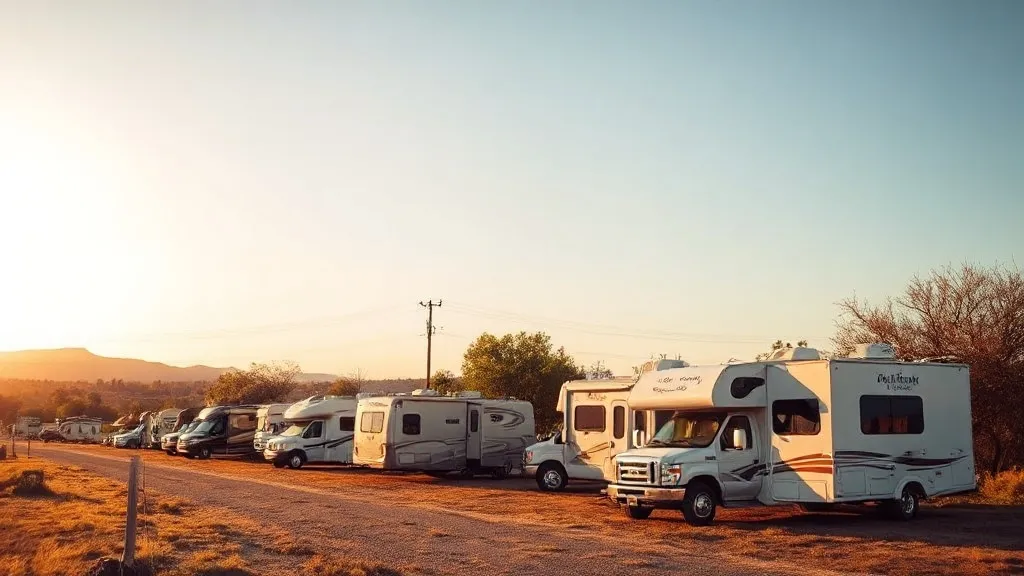
Central Texas is one of the most rewarding regions in the state to tour by RV, and also one of the easiest to plan badly. The ingredients are excellent: two distinct cities 80 miles apart, the Hill Country’s wine trails and spring-fed rivers in between, and a string of lakes that turn the whole area into a warm-weather playground. What trips people up isn’t the destinations — it’s the timing and the heat. Get the season right and Central Texas is close to perfect. Get it wrong and you’re sweating through a 100-degree afternoon wondering why your single rooftop AC can’t keep up.
This is a planning guide rather than a list of parks. It covers when to go, how to handle the summer, how far ahead to book, and how to route a trip so you’re not burning half your days driving. For the parks themselves, lean on our companion guides: RV parks near Austin, RV parks near San Antonio, the lakeside Lake Travis and Canyon Lake guide, and the broader Texas Hill Country RV parks guide. For the statewide picture, see best RV parks in Texas, and for trip mechanics across the whole state, our Texas RV trip planning guide.
When to Go: Reading the Central Texas Calendar
Central Texas has a clear seasonal rhythm, and matching your trip to it is the single biggest factor in how much you enjoy it.
Spring (March-May) is the best overall window. Days are warm without being punishing, nights are cool enough to sleep with the windows open, and the bluebonnets and other wildflowers peak in late March and April — the Hill Country is genuinely spectacular then. The catch is that March brings South by Southwest to Austin, which spikes demand and prices, and the wildflower weekends draw crowds to the Hill Country. Book early.
Fall (October-November) is the quieter twin of spring. The heat breaks, the light softens, and the crowds thin once the Austin City Limits festival (two October weekends) passes. October weekdays are about as pleasant and uncrowded as Central Texas RV camping gets.
Summer (June-September) is hot and humid. July and August highs run around 95-100°F in both Austin and San Antonio, with overnight lows still in the mid-70s and frequent afternoon thunderstorms. This isn’t a reason to avoid summer — it’s the season for the lakes and rivers — but it changes how you plan. Summer trips should be built around water and shade, not long midday hikes or sightseeing on asphalt.
Winter (December-February) is mild, cheap, and underrated. Daytime temperatures are often comfortable for sightseeing, the cities’ indoor attractions shine, and snowbirds passing through find good monthly rates. Some seasonal amenities (pools especially) close, and the occasional hard freeze does happen, so keep your water hoses freeze-protected.
Surviving — and Enjoying — the Summer Heat
If your trip lands in summer, plan around the heat deliberately. The difference between a miserable trip and a great one is mostly preparation.
- Insist on shade and 50-amp. A shaded site runs noticeably cooler, and reliable 50-amp service lets you run two air conditioners if your rig has them. When you book a summer site, ask specifically about tree cover and amp service rather than assuming.
- Base near water. This is the whole strategy. Lake Travis, Canyon Lake, and the Guadalupe River let you be in the water during the hottest hours instead of hiding in the rig. A lakeside or riverside base in July beats a downtown parking-lot park every time.
- Flip your schedule. Do your hiking, biking, and sightseeing in the early morning and after about 6 p.m. Reserve the midday hours for the pool, the lake, or a long lunch somewhere air-conditioned.
- Pre-cool and manage the rig. Close shades on the sun side, run the AC before the afternoon peak rather than trying to catch up, and watch your power draw. Afternoon thunderstorms are common and can knock out park power briefly — a small comfort buffer helps.
Field tip: When you call a summer park, ask two questions: “Which sites have real shade?” and “Is the 50-amp reliable park-wide in July?” The honest parks will tell you straight, and the answer tells you whether you’ll sleep well.
Reservation Strategy
Central Texas has two booking universes, and they behave differently.
Public campgrounds — the Corps of Engineers parks on Canyon Lake (Potters Creek, Cranes Mill) and Texas state parks like McKinney Falls in Austin — are the value play and the first to vanish. They book through Recreation.gov and the Texas State Parks system, often months ahead for summer weekends and holidays, and weekends at the popular parks can be gone within minutes of the booking window opening. If your trip depends on a specific public site for a peak date, set a calendar reminder for the day reservations open.
Private resorts hold inventory better and you can often book them a few weeks out — but the close-in city parks fill during events. Austin’s SXSW (March) and ACL (October) and San Antonio’s Fiesta (April) all tighten availability and push prices up. For those windows, treat private parks like public ones and book early or plan to stay farther out and commute in.
Renting an RV for this trip? Compare rigs, prices, and pickup locations on RVshare and Outdoorsy — both let you filter by rig size, dates, and location.
Routing the Loop: Austin, San Antonio & the Hill Country
The geography of Central Texas makes for an unusually tidy loop. Austin and San Antonio sit about 80 miles apart on I-35 — roughly 90 minutes by RV, though traffic in and between both cities can stretch that, especially on Friday and Sunday afternoons. The Hill Country fills the wedge to the west, and Canyon Lake and New Braunfels sit almost exactly between the two cities, which makes them the natural pivot point for a loop.
A classic, low-stress route looks like this:
- Start in Austin. Base near the city for music, food, and Barton Springs, or out at Lake Travis for the water. See the RV parks near Austin guide.
- Head west into the Hill Country. Fredericksburg and the Highway 290 wine trail are the heart of it; Enchanted Rock and the Pedernales River are close by. The Hill Country RV parks guide covers the parks.
- Swing south toward the Frio. If you have the days, the Garner State Park area and the crystal-clear Frio River are worth the detour — see our Garner State Park and Frio River camping guide.
- Drop into San Antonio. River Walk, the Missions, and (for families) SeaWorld. The RV parks near San Antonio guide has the parks.
- Return north via Canyon Lake. Base at a Corps park or a Guadalupe River resort, tube the river, and you’re an easy hour back to Austin to close the loop — details in the Lake Travis and Canyon Lake guide.
The beauty of this loop is that no single leg is long. You can run it in a week at a relaxed pace or stretch it to two, and because Canyon Lake sits in the middle, you can also just park there and day-trip both cities if you’d rather not move the rig much.
A few routing realities. Avoid driving I-35 through the Austin-to-San Antonio corridor at rush hour or on holiday Sundays — it backs up badly. The Hill Country roads west of the cities are scenic but include low-water crossings that can flood after heavy rain, so check conditions in spring storm season. And if you’re extending beyond Central Texas, the Texas Gulf Coast RV parks guide covers the coastal run south and east, a natural add-on from San Antonio.
Rig-Size and Budget Notes
Rig size. Central Texas is generally accommodating for big rigs, especially at the private resorts around both cities and out toward Castroville. The tighter spots are the urban parks (close-in Austin sites), some county lake parks, and Hill Country roads with low-water crossings. Match your route to your rig: a 40-foot coach is happiest on the resort-and-interstate version of the loop, while a smaller rig opens up the county parks and backroads.
Budget. Expect a split between roughly $20-30 a night at public parks (water and electric, dump station) and $45-75 at private full-hookup resorts. The cost-effective approach is to mix the two — public lake and state parks for the scenery and value, a resort night or two when you want full hookups, a pool, and a break from the dump station. Federal Interagency Senior and Access passes meaningfully discount the Corps campgrounds on Canyon Lake, so bring yours if you have one. For longer stays, ask every private park about weekly and monthly rates; the per-night savings are often large.
Plan the season first, the reservations second, and the route third, and Central Texas becomes one of the most enjoyable RV regions in the country — a week of cities, wine, rivers, and lakes with short, easy drives between them.
Frequently asked questions
When is the best time to RV in Central Texas?
Spring (March-May) and fall (October-November) are the best windows — warm days, cool nights, and wildflowers in spring. Summer is hot, with July and August highs around 95-100°F in both Austin and San Antonio, so it suits water-focused trips with shade and strong air conditioning. Winters are mild and good for snowbirds.
How do you handle the Central Texas summer heat in an RV?
Book sites with mature shade, insist on reliable 50-amp power for your air conditioning, and run two AC units if your rig has them. Base near water — Lake Travis, Canyon Lake, or the Guadalupe River — so you can be swimming or tubing during the hottest hours, and plan outdoor activities for early morning and evening.
How far apart are Austin and San Antonio for RV travel?
About 80 miles, roughly 90 minutes by RV on I-35, though traffic through both cities and the corridor between them can stretch that. Canyon Lake and New Braunfels sit almost exactly in the middle, which makes them a natural central base for visiting both cities without long daily drives.
Do I need reservations for Central Texas campgrounds?
For peak dates, yes. Corps of Engineers lake parks and Texas state parks book out months ahead for summer weekends and holidays through Recreation.gov and the state system. Private resorts hold inventory better but still fill during events like SXSW, ACL, and Fiesta. Spring and fall weekdays are the most flexible.
What's the best RV loop through Central Texas?
A classic loop runs Austin, then west into the Hill Country (Fredericksburg and the Highway 290 wineries), south to Kerrville or the Frio River, over to San Antonio, then back north via Canyon Lake and New Braunfels to Austin. It keeps daily drives short and threads together cities, wine country, rivers, and lakes.
About the author
Marisol ReyesCamping & Outdoors Editor
Marisol spent six years as an interpretive ranger in the California and Colorado state park systems before turning to writing full-time. She knows public-land camping from the inside — how reservation windows really work, why some loops fill before others, and which 'first-come, first-served' sites are worth gambling on.
More from Marisol →Keep reading
Free Camping in Texas: Boondocking Without BLM Land
Yes, you can camp free in Texas — national forests, grasslands, and beach dispersed camping, even without BLM land. Here's where and how.
Planning a Texas RV Trip: Seasons, Routes & Survival Tips
How to plan a Texas RV road trip — four tested routes, seasonal strategies, heat survival tips, and the distances you need to plan for in America's biggest RV state.
RV Camping in Texas Heat: A Summer Survival Guide
How to RV camp in Texas at 105°F — the 50-amp question, water and tank management, which parks actually have shade, and the altitude escapes that beat the heat outright.