National Parks With Full-Hookup RV Sites: The Complete List
The handful of national park campgrounds with actual full RV hookups — Fishing Bridge, Trailer Village, Furnace Creek, and Rio Grande Village — verified site by site.

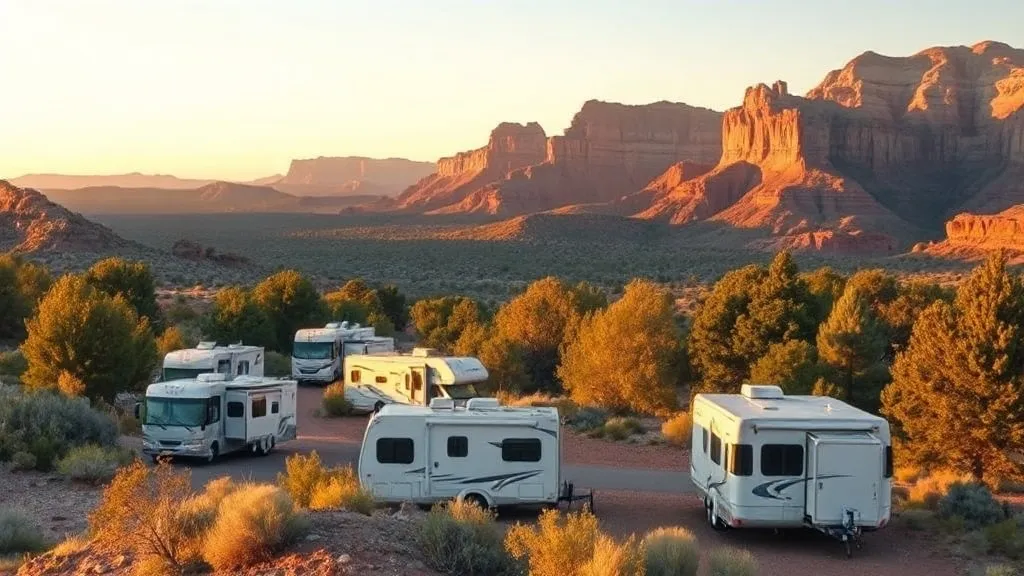
Here’s the fact that surprises most new RVers planning a national park trip: the great national park campgrounds almost never have hookups. You picture pulling your rig up to a forest site, plugging into shore power, filling the fresh tank, and dumping the gray — and at the vast majority of NPS campgrounds, none of that exists. No electric. No water at the site. No sewer. Just a gravel or paved pad, a fire ring, a picnic table, and a communal dump station you’ll visit on the way out.
The National Park Service built its campgrounds for self-sufficiency, not for plugged-in comfort, and it has largely kept them that way. Out of hundreds of campgrounds across the system, the number with true full hookups — electric, water, and sewer at the individual site — can be counted on one hand. Those few campgrounds are, predictably, the hardest reservations to get in the entire system, because every RVer who wants to run an air conditioner, fill a fresh tank without rationing, or dump without breaking camp ends up competing for the same tiny pool of sites.
This guide is the complete, verified list of national park campgrounds with full hookups inside park boundaries, current as of June 2026. We name every one, tell you exactly how many sites have hookups (often a small fraction of the campground), and explain how to actually get one. We also cover the honest alternative — gateway-town full hookups just outside the gates — because for most trips that’s the realistic answer. For the broader picture of the best in-park camping including the great dry campgrounds, see our flagship best national park campgrounds for RVs, and for the dimensional gotchas, our national park RV rig-size limits guide.
Related guides: Colter Bay RV Park Review: Grand Teton’s Only Full-Hookup Campground · Olympic National Park RV Camping: Kalaloch, Hoh, Mora & Sol Duc (2026)
What “full hookup” actually means in a national park
A quick definition, because the parks use the words loosely. Full hookup means electric, water, AND sewer at your individual site. Partial usually means electric and water but no sewer. Many campgrounds advertise “amenities” like a dump station and a water fill — those are communal, not at your site, and do not count as hookups. Throughout this guide, “full hookup” means all three utilities at the pad.
The reason it matters so much in national parks comes down to two things: air conditioning (Death Valley, Big Bend, and the Grand Canyon in summer are genuinely punishing without shore power) and tank management (long stays in remote parks with no nearby dump get old fast). When you need either, a hookup site stops being a luxury and becomes the thing that makes the trip work.
The four in-park full-hookup campgrounds
1. Fishing Bridge RV Park — Yellowstone (Wyoming)
Fishing Bridge is the only campground in all of Yellowstone with full hookups, and it’s purpose-built for RVs — hard-sided rigs only, no tents or pop-ups, because of heavy grizzly activity in the Lake area. A multi-year renovation modernized the upper loop into paved sites that handle very large rigs.
- Hookups: Full — 30/50-amp electric, water, sewer at all sites
- Sites: ~310 (hard-sided RVs only)
- Cost: $94/night plus tax for 2026
- Max RV length: Up to ~95 feet combined on the renovated upper loop; lower-loop gravel back-ins fit ~30–35 feet
- Season: NPS stay dates May 8–October 17, 2026; operator closing day October 18
- Reservations: Yellowstone National Park Lodges for 2026; moving to Recreation.gov for the 2027 season
- Best for: Big rigs that need full hookups in central Yellowstone; anyone uncomfortable dry camping in grizzly country
The trade-offs are real: sites are tight and close together with little privacy, there are no views to speak of, and cell signal in the Lake area is weak to nonexistent. But it is the only in-park hookup option and is centrally located near Yellowstone Lake. Every other Yellowstone campground — Bridge Bay, Madison, Canyon, Grant — is dry camping. See our complete Fishing Bridge review for the hard-sided rule and upper/lower-loop fit, the Yellowstone campground reservations guide for the correct 2026 and 2027 booking systems, and the Yellowstone vs. Glacier comparison for choosing between the two.
2. Trailer Village RV Park — Grand Canyon South Rim (Arizona)
Closed as of August 31, 2026: an August 29 flash flood broke the South Rim water line, and NPS closed Trailer Village. On September 19 the park said it hopes to reopen to overnight guests around Thanksgiving, but that is a projection. Until then the nearest full hookups are at Grand Canyon Camper Village in Tusayan, and Mather Campground is open for dry camping. See our Trailer Village review for the latest status.
Trailer Village is the only full-hookup campground on either rim of the Grand Canyon, and it holds that monopoly position with confidence. Every site is a paved pull-through with all three utilities, and it can take big rigs that fit almost nowhere else on the rim.
- Hookups: Full — 30/50-amp electric, water, sewer at all 123 sites; most add cable and a grill
- Sites: 123 paved pull-throughs
- Cost: ~$70–$90/night (varies by season)
- Max RV length: Up to ~50 feet
- Season: Year-round (plowed in winter)
- Reservations: Operated by Delaware North (not the NPS, and not Xanterra) — book direct at visitgrandcanyon.com or via Recreation.gov, up to ~13 months out
- Best for: Big rigs needing hookups inside the park; anyone wanting to run AC at 7,000 feet in summer
Field tip: Don’t confuse Trailer Village with neighboring Mather Campground. They’re a half-mile apart, but Mather is NPS-run dry camping at ~$30/night in a beautiful ponderosa forest, while Trailer Village is a paved, parking-lot-feel full-hookup park at two to three times the price. Pick Mather if you’re self-contained and want shade and quiet; pick Trailer Village if you need the plugs.
The honest knocks on Trailer Village: it has a parking-lot aesthetic with no shade, sites are cramped, the aging electrical has produced summer power complaints, and it’s pricey for what it is. But it’s walkable to the rim shuttle, elk wander through camp, and it’s the only place inside the park you can plug in. Full context is in our Grand Canyon RV camping guide, the Trailer Village review, and the Arizona state hub.
3. Furnace Creek Campground — Death Valley (California)
Furnace Creek is the only campground inside Death Valley — and inside any California national park — with full hookups. But here’s the catch that trips people up: only 18 of its ~136 sites have hookups. The rest are dry. Those 18 sites are the most coveted RV real estate in the park, because shore power for air conditioning isn’t a comfort in Death Valley — it’s a safety system.
- Hookups: Full (30/50-amp electric, water, sewer) at 18 designated sites only — nine pull-throughs and nine back-ins; all other sites are dry
- Sites: ~136 in peak season (reduced to ~41 first-come, first-served in summer)
- Cost: ~$44/night for hookup sites ($30 base + $14 utility fee); ~$30/night standard dry sites
- Max RV length: No hard park-wide cap; hookup pull-throughs handle large rigs — verify per site
- Season: Year-round. Reservations required roughly Oct 15 – Apr 15; first-come, first-served the rest of the year
- Reservations: Recreation.gov, up to 6 months ahead
- Best for: RVers who can win one of the 18 hookup sites and want a powered base in winter
At $44/night for full hookups inside a national park, those 18 sites are genuinely excellent value — comparable hookup sites in gateway towns run $80–$150. The campground itself is flat, exposed, and austere, sitting at 190 feet below sea level near the park’s main hub. Win the hookup lottery and it becomes the best base camp in Death Valley; miss it and you’re dry camping in the desert. Note the separate 14 hookup sites at Stovepipe Wells Village (~$33/night) as a backup. Summer camping here is genuinely dangerous without AC — the NPS reduces the campground and discourages it. Details in our Death Valley RV camping guide, the Furnace Creek review, and the California state hub.
4. Rio Grande Village RV Park — Big Bend (Texas)
Big Bend has two campgrounds with similar names, and only one has hookups — a distinction that catches a lot of RVers. The Rio Grande Village RV Park (concessioner-run) has full hookups at all 25 sites. The separate, larger Rio Grande Village Campground (NPS-run, ~100 sites) has none.
- Hookups: Full — electric, water, sewer at all 25 sites; the only full-hookup campground in Big Bend
- Sites: 25 back-in sites (you must use all three hookups to stay)
- Cost: roughly $40s/night — confirm with the concessioner
- Max RV length: Up to ~65 feet; back-in only
- Season: Roughly mid-April through mid-November (seasonal); confirm 2026 dates
- Reservations: Booked through the park concessioner directly (not Recreation.gov); the concession has been transitioning operators — verify the current booking channel
- Best for: The few RVers who can grab one of 25 sites in one of the remotest parks in the lower 48
Big Bend is a five-hour drive from any major city, with Gold Tier dark skies and almost no cell signal at Rio Grande Village in the park’s far southeast corner. The RV park has a parking-lot feel, but it’s the only place in the park to plug in, and it’s adjacent to the village store. The big no-hookup Rio Grande Village Campground next door is far more scenic and shaded at ~$16/night if you’re self-contained. Full planning is in our Big Bend RV camping guide and the Texas state hub.
The full-hookup national park campgrounds at a glance
| Park | Campground | Hookup sites | Cost | Max length | Reservations |
|---|---|---|---|---|---|
| Yellowstone | Fishing Bridge RV Park | All ~310 | $94 + tax | ~95 ft combined | Yellowstone Lodges for 2026 |
| Grand Canyon | Trailer Village | All 123 | ~$70–90 | ~50 ft | Delaware North / Rec.gov |
| Death Valley | Furnace Creek | 18 of ~136 | ~$44 | Large rigs (per site) | Recreation.gov |
| Big Bend | Rio Grande Village RV Park | All 25 | ~$40s | ~65 ft | Concessioner direct |
How to actually get one of these sites
Full-hookup national park sites are the scarcest popular inventory in the entire system, and they don’t go to people who book casually.
- Know the release date and time to the minute. Recreation.gov releases on rolling windows (6 months for Furnace Creek); Fishing Bridge and Trailer Village open ~13 months out through their concessioners. Set a calendar alarm and be logged in before the window opens.
- Be flexible on dates first, then sites. A weekday arrival or a shoulder-season week (May/September for the northern parks, November or March for the desert parks) dramatically improves your odds.
- Work the cancellation game. Plans change, and cancellations surface constantly — especially in the two weeks before a date. Check daily if you struck out on the initial release.
- Have a gateway-town backup ready (next section). Don’t let a missed hookup site sink the whole trip.
Field tip: For Furnace Creek’s 18 hookup sites and Rio Grande Village’s 25, the math is brutal — a few dozen sites against thousands of RVers per season. Treat the booking like buying concert tickets: be ready at the exact release moment, know your target site numbers in advance, and have a second tab open for a backup date.
Renting a rig for a hookup trip?
If you’re choosing a rental specifically to use these sites, size it to the campground — a 30-footer fits everywhere, a 50-footer fits Trailer Village and Fishing Bridge’s upper loop but few dry campgrounds.
Renting an RV for this trip? Compare rigs, prices, and pickup locations on RVshare and Outdoorsy — both let you filter by rig size, dates, and location.
The honest alternative: gateway-town hookups
For most trips, the realistic full-hookup answer isn’t inside the park at all — it’s the cluster of private RV parks just outside the gates. West Yellowstone and Gardiner for Yellowstone; Tusayan and Williams for the Grand Canyon; Springdale for Zion; Moab for the Utah parks; Estes Park for Rocky Mountain; Pahrump or Beatty for Death Valley. These run roughly $50–$150/night with full hookups, far more availability than the in-park sites, and amenities the parks don’t offer (pools, laundry, reliable cell). The cost is a daily commute through the entrance — typically 10 to 60 minutes.
Our best national park campgrounds for RVs flagship weighs the in-park-versus-gateway decision park by park. The short version: book the in-park dry site for the experience, and the gateway hookup site for comfort — and on a long trip, plenty of RVers split the difference, spending a few nights inside the gates and a few plugged in just outside them.
Frequently asked questions
Which national parks have full-hookup RV sites?
Only a tiny handful. Inside park boundaries, full hookups (electric, water, and sewer at the site) exist at Fishing Bridge RV Park in Yellowstone, Trailer Village at Grand Canyon South Rim, 18 designated sites at Furnace Creek in Death Valley, and the 25-site Rio Grande Village RV Park in Big Bend. Almost every other national park campground is dry camping with no hookups.
Does Yellowstone have full hookups for RVs?
Only at one campground: Fishing Bridge RV Park, which has full hookups (30/50-amp electric, water, sewer) at all of its roughly 310 sites. It is hard-sided RVs only because of grizzly activity, and it is the single full-hookup option anywhere in Yellowstone. Bridge Bay, Madison, and the park's other campgrounds have no hookups.
Is Trailer Village the only full-hookup option at the Grand Canyon?
Yes. Trailer Village RV Park on the South Rim is the only campground on either rim with full hookups — 30/50-amp electric, water, and sewer at all 123 paved pull-through sites. It is operated by Delaware North and booked separately from the National Park Service. Neighboring Mather Campground has no hookups.
How far ahead do I need to book a national park full-hookup site?
As far ahead as the system allows. Full-hookup sites are the scarcest, most-wanted inventory in the park system. Fishing Bridge and Trailer Village open roughly 13 months out and fill peak dates fast. Furnace Creek's 18 hookup sites and Rio Grande Village's 25 sites can sell out within minutes of release on peak winter dates. Set a calendar reminder for the exact release date and time.
Can I get full hookups just outside a national park instead?
Almost always, yes, and often more easily. Gateway-town RV parks in places like West Yellowstone, Tusayan, Springdale, Moab, and Estes Park offer full hookups, usually at $50 to $150 a night, and frequently with more availability than the in-park sites. The trade-off is a daily commute into the park.
About the author
Marisol ReyesCamping & Outdoors Editor
Marisol spent six years as an interpretive ranger in the California and Colorado state park systems before turning to writing full-time. She knows public-land camping from the inside — how reservation windows really work, why some loops fill before others, and which 'first-come, first-served' sites are worth gambling on.
More from Marisol →Keep reading
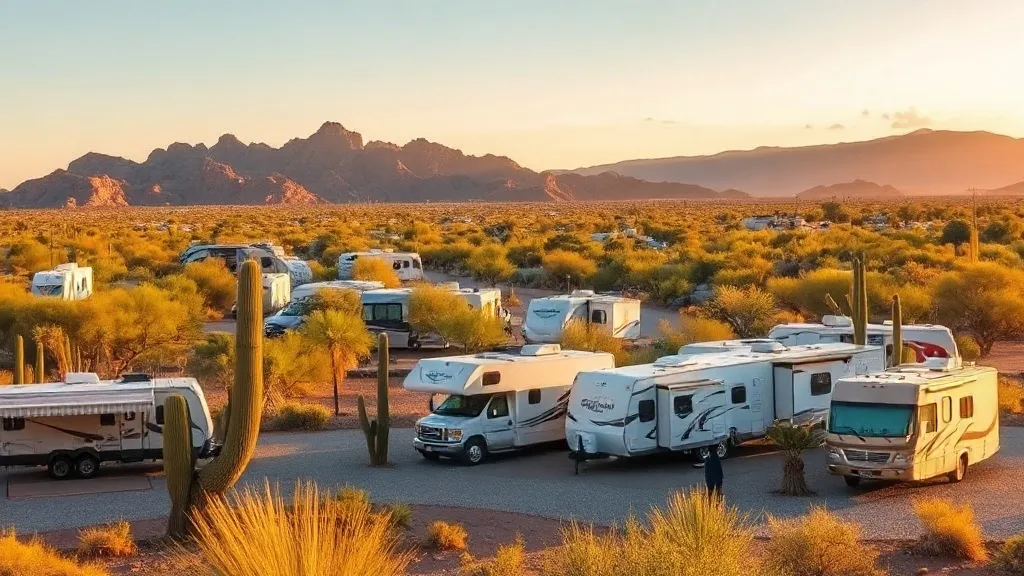
Mesa & Apache Junction RV Resorts: 12 Parks With 2026–27 Rates
The East Valley snowbird deep dive: Mesa Spirit, Viewpoint, Valle del Oro, Monte Vista, Towerpoint, Mesa Regal, Sun Life, Good Life, Val Vista Villages, the Mesa/Apache Junction KOA, Lost Dutchman State Park and Usery Mountain, with 2026–27 nightly, monthly and seasonal rates, 55+ rules and short-stay policies.
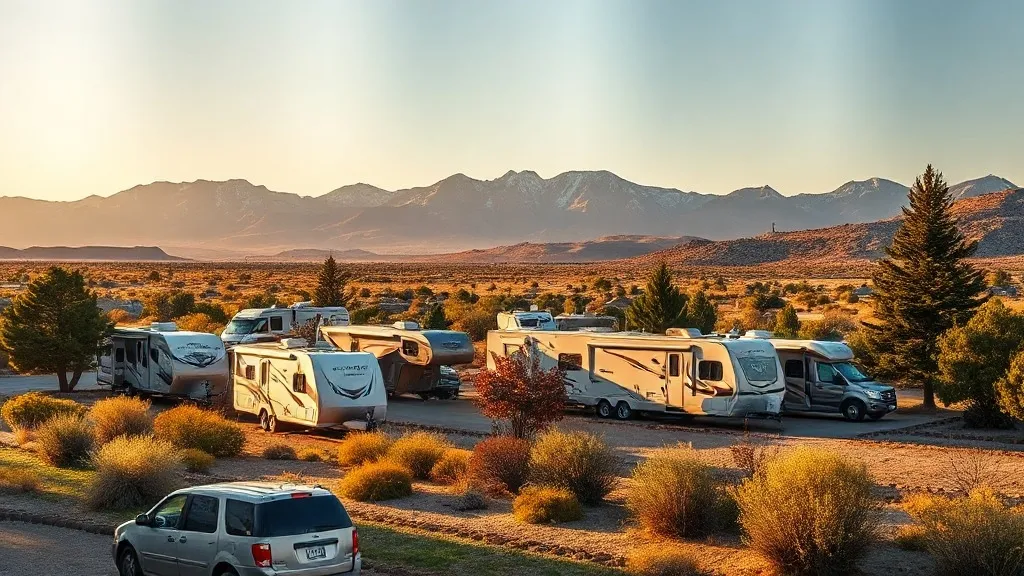
Quartzsite RV Parks: 10 Hookup Parks, La Posa LTVA and Free BLM (2026–27)
Park-by-park guide to RV camping in Quartzsite, Arizona for the 2026–27 snowbird season: full-hookup parks with verified nightly, monthly and seasonal rates, the La Posa LTVA permit, the five free 14-day BLM areas, and the January 2027 show dates.
Yuma RV Parks: 12 Best Snowbird Resorts and BLM Camps (2026–27)
Verified 2026–27 guide to RV parks in Yuma, Arizona: Sun Vista, Westwind, Fortuna de Oro, Caravan Oasis, Bonita Mesa, Villa Alameda, Cocopah Bend, Yuma Lakes, the River Front KOA, Winterhaven across the river, and BLM boondocking at Imperial Dam LTVA and Senator Wash, with nightly, monthly and seasonal rates, 55+ rules and the Los Algodones day trip.