Furnace Creek Campground Review: RV Hookups & Booking
Furnace Creek Campground has 136 sites, including 18 full-hookup RV sites. Compare current fees, site types, reservation rules and summer risks.

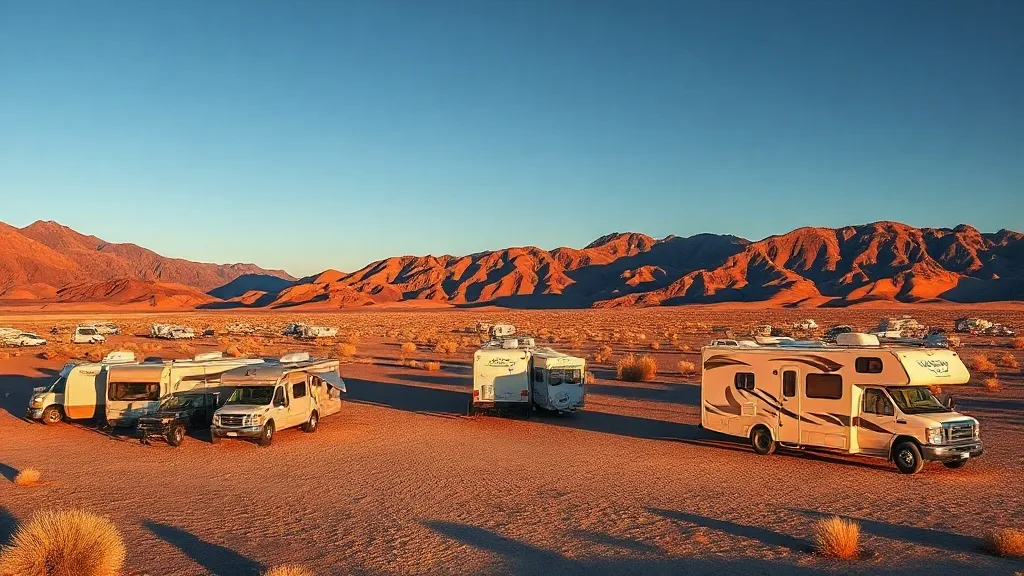
Furnace Creek Campground is the most practical in-park RV base in Death Valley if you can reserve one of its 18 full-hookup sites. The campground has 136 sites total, costs $30 for a standard site or $44 for a full-hookup site, and accepts reservations for October 15 through April 15. It is open year-round, but the National Park Service does not recommend camping during the extreme summer heat.
That is the short answer to whether Furnace Creek is worth booking. It is not a landscaped RV resort, and most sites have little or no shade. What it offers is harder to replace: a central location on the valley floor, drinking water, flush toilets, a dump station and the only reservable NPS campground in Death Valley.
This review uses the current Recreation.gov Furnace Creek listing, NPS Death Valley camping rules and live park conditions. Check those pages again immediately before travel because heat alerts, road access and campground operations can change.
Furnace Creek at a Glance
| Detail | Current information |
|---|---|
| Total campsites | 136 |
| Full-hookup RV sites | 18: nine pull-through and nine back-in |
| Standard-site fee | $30/night |
| Full-hookup fee | $44/night ($30 site fee + $14 utility fee) |
| Reservations | October 15–April 15, up to six months ahead |
| Outside reservation season | Limited first-come, first-served inventory |
| Longest published fit | Up to 100 feet total length on selected sites; exact site controls |
| Facilities | Drinking water, flush toilets, dump station, picnic tables, fire ring or grill |
| Showers | None in the NPS campground |
| Maximum stay | 14 days per calendar year |
| Generator hours | 7 a.m.–7 p.m. unless posted otherwise |
| Checkout | Noon |
The Verdict
Choose Furnace Creek when your priority is sleeping inside Death Valley with the strongest RV infrastructure the NPS provides. A full-hookup site is the clear first choice for an RV because it removes the daily battery, fresh-water and holding-tank calculations that define dry camping. A standard site still works well for a genuinely self-contained rig in cool weather.
Look elsewhere if you want shade, privacy, a shower at the campground or a resort-style site. Furnace Creek is an open desert campground, not a destination RV resort. Recreation.gov describes sparse vegetation and says most campsites are unshaded. The value is access and utility, not campsite scenery.
The decisive variable is season. From mid-October to mid-April, reservations turn the campground into a realistic trip anchor. In summer, the equation changes completely: NPS says midnight temperatures can remain above 100°F and explicitly states that camping is not recommended during extreme heat.
Site Types: Which Furnace Creek Site Should You Book?
Full-Hookup Pull-Through Sites
The nine official pull-through hookup sites are 67, 68, 69, 72, 73, 74, 75, 76 and 77. They provide electric, water and sewer. These are the simplest choice when you do not want to disconnect a trailer or maneuver a longer combination into a back-in pad.
Do not assume every pull-through fits every combination. Recreation.gov calculates total equipment length as the RV plus tow vehicle, or the trailer plus tow vehicle. The park requires every wheel to fit on the paved parking area. Enter the real combined length when filtering inventory and open the individual site record before paying.
Full-Hookup Back-In Sites
The nine official back-in hookup sites are 39, 41, 43, 45, 47, 49, 50, 51 and 52. They have the same core utility advantage as the pull-through sites but require more care with the exact pad and approach.
These sites are not merely “electric” sites. Recreation.gov identifies them as full hookups, while also warning that power surges can occur at any outlet. Bring and use appropriate surge protection for the RV; the campground makes campers responsible for protecting their own appliances.
Standard Nonelectric Sites
Standard sites are dry camping at $30 per night. They include a picnic table and either a campfire ring or grill, and guests share the campground’s drinking-water points, toilets and dump station. They are a reasonable value in cool weather for an RV with enough battery, propane and tank capacity.
The dry-site decision should be based on conditions rather than price alone. Saving $14 is not useful if warm nights force continuous generator use or make the rig uncomfortable. Generator hours end at 7 p.m., so a dry site is not a substitute for shore power when overnight cooling is essential.
Tent-Only Inventory RVers Must Avoid
Furnace Creek has inventory that may appear in the same booking interface but does not permit campervans, pop-ups or RVs:
- Drive-in tent sites 100–110
- Walk-in tent sites 115–150
- Walk-in group sites 1–4
People reserving walk-in sites 115–150 may not sleep in their vehicles, and that area is generator-free. Filter for your actual equipment type instead of choosing a site from price or availability alone.
Fees: What the Stay Actually Costs
The current NPS campground price is straightforward:
- Standard site: $30 per night
- Full-hookup site: $44 per night, consisting of the $30 camping fee plus a $14 utility charge
- Park entrance: separate from the campsite fee
Do not compare the $44 hookup rate directly with a private RV resort without accounting for what is absent. Furnace Creek has no campground shower, laundry room, pool, cable television or advertised campground Wi-Fi. What the price buys is an in-park location and full utilities on 18 sites.
The park entrance pass is separate. Recreation.gov currently identifies a seven-day private-vehicle entrance pass, while annual and qualifying interagency passes can also satisfy entry. Because federal entrance fees can change independently of camping fees, confirm the current amount during checkout instead of relying on an old article total.
Reservations: How to Book Furnace Creek
Furnace Creek is the only NPS campground in Death Valley that takes reservations. The reservable season runs from October 15 through April 15, and NPS releases sites up to six months ahead through Recreation.gov.
The booking workflow is simple:
- Calculate the full length of the RV combination, not only the trailer or motorhome.
- Filter for RV-compatible inventory and the hookup type you need.
- Open the individual campsite record and verify equipment length, driveway type and accessibility details.
- Confirm the separate park-entry requirement.
- Save the reservation information for kiosk check-in.
Reservations are strongly recommended. Recreation.gov says first-come availability is rare around weekends, holidays and the edges of the reservation season. If the preferred date is unavailable, monitor cancellations but build a real fallback using the park’s other first-come campgrounds rather than assuming a same-day Furnace Creek site will appear.
Arrival and No-Show Rules
Guests must check in at the campground kiosk even with a reservation. If the kiosk is closed, Recreation.gov directs campers to go to the assigned site and check in the following morning.
If arrival will be delayed by one night or more, contact campground staff. A reservation can be marked as a no-show if the party has not arrived by noon on the second reservation day. Checkout is noon.
Rig Fit and Road Planning
NPS says Furnace Creek has selected sites capable of accommodating up to 100 feet in total length, but this is not a campground-wide promise. Site-level dimensions are the authority. A 100-foot maximum on one record does not mean the neighboring back-in has the same pavement or turning room.
The campground is one-half mile north of the Furnace Creek Visitor Center on California Highway 190. Death Valley itself is remote: Recreation.gov places it approximately 130 miles west-northwest of Las Vegas and 106 miles east of Lone Pine.
The most useful road advice is not a universal “big-rig route.” It is to check the NPS conditions map immediately before departure and match every optional side road to the vehicle. Flood damage, soft shoulders and temporary closures can change access faster than an evergreen guide can track. As checked August 5, 2026, the conditions page still showed flood-recovery closures and cautions, including a 25-foot vehicle restriction on Lower Wildrose Road.
Leave the RV at camp for sightseeing roads that publish lower limits. A campsite that fits a long combination does not make every Death Valley road suitable for that same vehicle.
Facilities and Daily Practicalities
Water, Toilets and Dump Station
Recreation.gov lists drinking water, flush toilets and an RV dump station. Each site has a picnic table and either a fire ring or grill. That is a stronger facility package than the park’s primitive campgrounds, but it remains a national park campground rather than a commercial resort.
Fill the fresh-water tank before a long drive into the park even when the campground lists drinking water. Carry extra potable water in case of a mechanical problem or a temporary service interruption. Desert self-sufficiency begins before the campsite hookup.
No Campground Showers
There are no showers at Furnace Creek Campground. Private shower or laundry access may sometimes be available at nearby commercial facilities, but availability and pricing are not part of the NPS campground service. Confirm directly rather than making a stay depend on an old third-party report.
Fire and Generator Rules
Ash-producing fires are allowed only in NPS metal fire pits, subject to current restrictions. Gathering vegetation or firewood is prohibited. Gas stoves and grills must have an on/off switch.
Generator hours are 7 a.m.–7 p.m. unless the campground posts a different rule. The walk-in tent area and its group sites are generator-free. These limits matter most when comparing a standard site with a hookup site: plan the evening power load before booking dry inventory.
Pets, Food and Wildlife
NPS permits no more than four pets per campsite. Pets must remain on a leash no longer than six feet and cannot be left unattended. Coyotes and ravens frequent the area, so food must remain in a hard-sided container or vehicle and trash must be disposed of correctly.
Summer Heat: The Non-Negotiable Warning
The campground being open does not mean every season is equally reasonable. NPS says summer daytime temperatures can average at least 100°F, midnight readings can remain above 100°F, and camping is not recommended during that period.
A full hookup reduces one risk because it can power the RV’s cooling equipment, but it does not eliminate the consequences of a power failure, air-conditioner fault, flat tire, road closure or medical problem. Do not make a summer plan whose only safety layer is one electrical pedestal.
For most RV travelers, the defensible window is the reservation season. Even then, check the forecast, park alerts and the selected site’s utility status before the cancellation deadline. Our California desert stargazing guide compares Furnace Creek with cooler or differently serviced dark-sky bases.
What Works
- Eighteen real full-hookup sites: electric, water and sewer simplify an otherwise demanding desert stay.
- A reservable in-park base: October–April inventory can anchor the itinerary instead of forcing a first-come gamble.
- Useful shared infrastructure: drinking water, flush toilets and a dump station support both hookup and standard sites.
- Site-level options for long combinations: selected records publish very large total lengths, provided the exact equipment fits the pavement.
- Central trip planning: the visitor center is close enough to make current road and safety information easy to obtain.
What Does Not Work
- Most sites are exposed: Recreation.gov says most campsites are unshaded.
- Only 18 sites have hookups: the best RV inventory is a small fraction of the campground.
- No shower in the campground: any private alternative needs separate confirmation and payment.
- Summer conditions are dangerous: NPS explicitly advises against camping in the extreme heat.
- No universal big-rig guarantee: fit varies by site, and surrounding roads can impose separate restrictions.
Who Should Book Furnace Creek?
Furnace Creek best serves RV travelers visiting between mid-October and mid-April who want to stay inside Death Valley and can book the correct site for their equipment. It is especially compelling for a longer or power-hungry rig when one of the 18 full-hookup sites is available.
A standard site suits experienced dry campers during genuinely cool conditions. Tent campers have substantial dedicated inventory, but those sites are governed by strict vehicle and generator rules.
Travelers who need a shower, shade or resort amenities should compare private alternatives using live operator information. Travelers considering summer should reconsider the timing before comparing campsites at all.
Booking Checklist
- Check the official Furnace Creek listing.
- Enter the complete vehicle-and-trailer or RV-and-tow length.
- Confirm whether the site is full hookup, standard nonelectric or tent only.
- Verify that every wheel fits the published parking area.
- Review the separate entrance-pass requirement.
- Read the current Death Valley road and weather alerts.
- Save the reservation and check in at the kiosk.
- Carry extra water and offline navigation.
- Build a first-come fallback before driving into the park.
FAQ
Does Furnace Creek Campground have full hookups?
Yes. It has 18 full-hookup sites with electric, water and sewer: nine pull-throughs and nine back-ins. The other RV-compatible sites are dry camping, so the precise site type matters.
How much does Furnace Creek Campground cost?
Standard sites cost $30 per night. A full-hookup site adds a $14 utility fee, bringing the campground charge to $44 per night. Park entrance is separate.
When can I reserve a site?
The reservation season is October 15 through April 15, with dates available up to six months ahead. Furnace Creek is first come outside that window, and the summer inventory is limited.
Can a large RV fit?
Potentially. NPS says selected sites fit a total length up to 100 feet, but the individual campsite record controls. The measurement includes the complete combination, and all wheels must fit on the pavement.
Are there showers?
No. Furnace Creek Campground has flush toilets but no showers. Verify any nearby private shower or laundry option directly before relying on it.
Is Furnace Creek a good summer campground?
Not for a normal leisure trip. NPS does not recommend summer camping because both daytime and midnight temperatures can remain extreme. Plan for the cooler reservation season whenever possible.
For the wider park comparison, continue with our Death Valley RV camping guide. For another rare national-park hookup option, see the national park full-hookup RV guide.
Frequently asked questions
Does Furnace Creek Campground have full hookups?
Yes. Furnace Creek has 18 full-hookup sites with electric, water and sewer: nine pull-throughs and nine back-ins. The other RV-capable sites are dry camping, so verify the exact site type before booking.
How much is Furnace Creek Campground?
The current NPS rate is $30 per night for a standard site. Full-hookup sites add a $14 utility fee, making them $44 per night before the separate Death Valley entrance fee.
When can I reserve Furnace Creek Campground?
Furnace Creek accepts reservations for stays from October 15 through April 15, with dates released up to six months ahead on Recreation.gov. Outside that season, its limited open inventory is first come, first served.
Can a large RV fit at Furnace Creek?
Some Furnace Creek sites can accommodate a combined vehicle length up to 100 feet, but dimensions vary. Recreation.gov counts the RV plus tow vehicle, or the tow vehicle plus trailer, and all wheels must fit on the selected site's pavement.
Is summer RV camping at Furnace Creek safe?
NPS does not recommend summer camping because daytime temperatures average at least 100°F and midnight temperatures can remain above 100°F. If you visit in warm weather, check current warnings and never treat an electrical hookup as a complete heat-safety plan.
About the author
Marisol ReyesCamping & Outdoors Editor
Marisol spent six years as an interpretive ranger in the California and Colorado state park systems before turning to writing full-time. She knows public-land camping from the inside — how reservation windows really work, why some loops fill before others, and which 'first-come, first-served' sites are worth gambling on.
More from Marisol →Campgrounds in this guide
Facts pages for each park — hookups, rig limits, rates and booking, plus every guide that covers it.
Keep reading
Azalea Campground, Kings Canyon: Sites & RV Limits (2026)
A verified 2026 Azalea Campground review covering all 110 sites, the $32 fee, site 93's 47-foot RV record, 30-foot trailer limit, reservations, winter camping, and bear rules.
Tahoe Valley Campground Review: Sites, Rules & Booking (2026)
Is Tahoe Valley Campground worth it? Verified 2026 review of its 439 sites, year-round operation, live rates, paid Wi-Fi, fire rules, cancellation policy, and South Lake Tahoe trade-offs.
Upper Pines Campground Review: RV Camping in the Heart of Yosemite Valley
An honest review of Upper Pines Campground in Yosemite Valley — 238 sites, no hookups, brutal reservations, and the best location in American camping. Site picks, booking strategy, and RV limits.