Big Bend RV Camping: Desert Solitude and Dark Skies
Complete guide to RV camping at Big Bend National Park — from Rio Grande Village's hookup sites to private parks in Terlingua, plus the latest on the cancelled Chisos Basin closure.
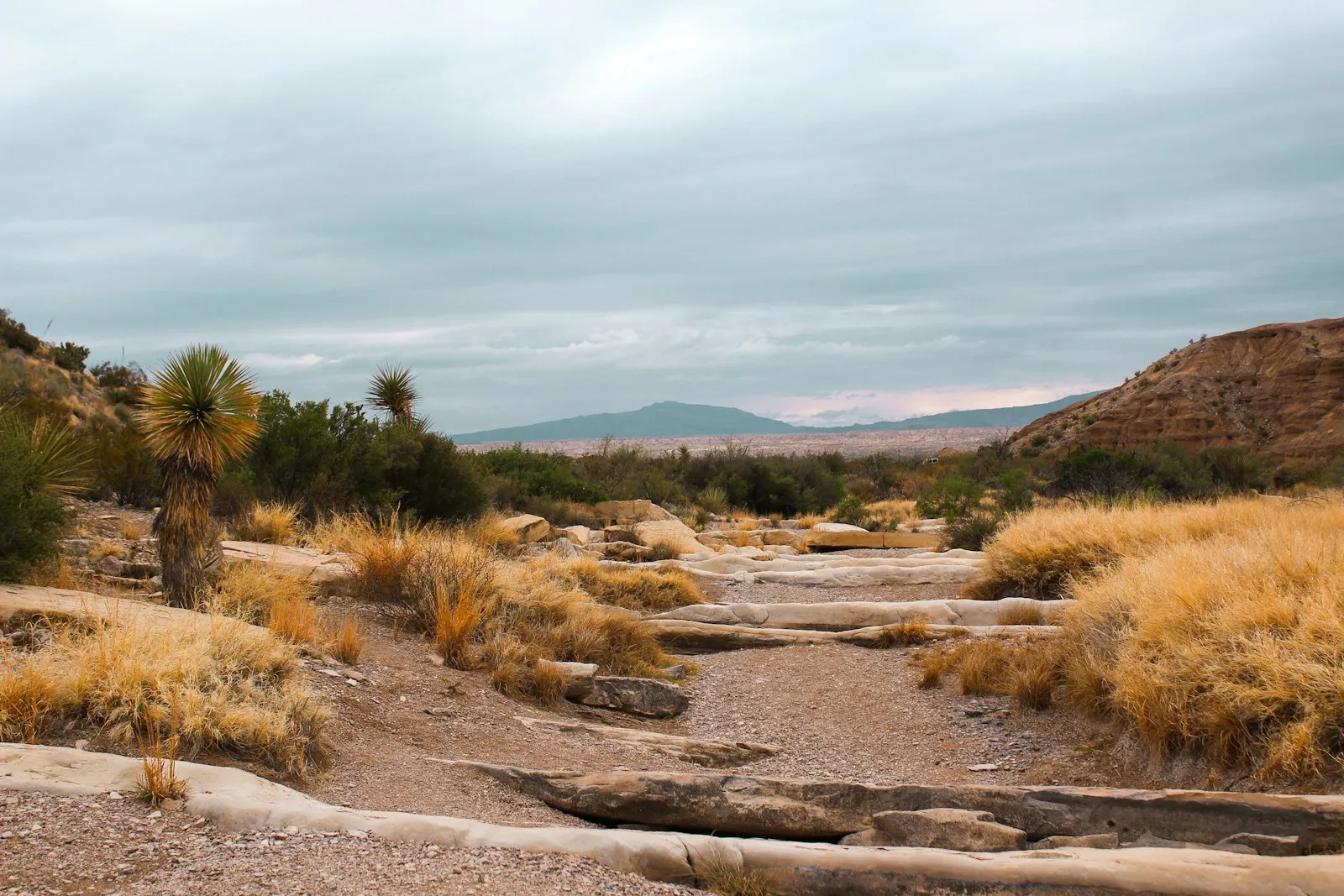
Big Bend National Park occupies 801,163 acres of Chihuahuan Desert along the Rio Grande in far West Texas, and it is one of the least visited major national parks in the lower 48. Roughly 400,000 people come here each year — fewer than Grand Canyon sees in a single busy month. That scarcity of humans is the entire point. Big Bend offers something most national parks cannot: genuine solitude, real darkness, and the kind of silence where you can hear your own heartbeat at night.
The park earned its International Dark Sky Park designation in 2012, and it remains one of the darkest measured places in North America. On a clear winter night, the Milky Way casts visible shadows on the ground. The park’s remoteness — the nearest town with a real grocery store is Alpine, 108 miles north — is both the gift and the logistical challenge.
If you’re planning a 2026 or 2027 visit, read this carefully: the long-announced two-year closure of Chisos Basin — campground, lodge, road, and trails, originally set to begin May 2026 — was halted in April 2026 when rising construction costs blew past the project budget. As of mid-2026, the Chisos Basin Campground, visitor center, Basin Road, and all Basin trails are fully open. The NPS still plans a smaller project focused on the Basin’s water system, so check the park’s construction updates page before you book. Our full Chisos Basin Campground review has the details.
This guide covers every RV-viable campground inside and around Big Bend, from the only hookup sites in the park to the private operations scattered along Route 170 and the Terlingua corridor. For the full Texas RV picture, see our best RV parks in Texas guide.
Inside the Park
Big Bend has three developed campgrounds: Rio Grande Village, Chisos Basin, and Cottonwood. None of them have cell service. None of them have WiFi. Two of the three have no hookups. The park’s infrastructure reflects its desert isolation — you need to arrive prepared, or the desert will remind you that it doesn’t care about your comfort.
Rio Grande Village — The Only Hookups in Big Bend
Rio Grande Village is the largest campground in Big Bend and the only one with hookups. It sits at the eastern end of the park along the Rio Grande, at roughly 1,850 feet elevation. The setting is riparian — cottonwood trees line the river, and the contrast between the green river corridor and the surrounding desert is striking. Mexico is directly across the water. You can stand at the river’s edge and look into the village of Boquillas del Carmen.
The campground operates as two distinct areas. The main campground has 100 dry camping sites — no hookups, no electric, no water at the site. These are basic NPS sites with picnic tables, fire rings, and access to shared restrooms with flush toilets. Many sites accommodate RVs up to 40 feet, though the back-in sites vary in length and levelness. The campground has a dump station and potable water fill station.
The separate RV hookup section has 25 full-hookup sites with 30-amp electric, water, and sewer — a rarity in the national park system. These sites are managed through a concessionaire and book through recreation.gov. They fill fast during the peak season (November through April), and you should book as early as the reservation window allows. The hookup sites are paved pull-throughs that can handle rigs up to 40 feet.
The hookup section exists because Big Bend’s summer heat makes dry camping dangerous without climate control. Daytime temperatures at Rio Grande Village regularly exceed 110 degrees Fahrenheit from June through August. Even with full hookups and a 30-amp connection, your AC will be working hard. This is not a summer destination for anyone without serious heat tolerance and a well-equipped rig.
The Hot Springs trail, a 6-mile round trip to natural hot springs along the Rio Grande, starts near the campground and is one of the park’s most rewarding short hikes. The hot springs themselves — a stone-walled pool at the river’s edge, maintained at roughly 105 degrees by geothermal activity — are best enjoyed in the cooler months. Soaking at dawn with the canyon walls turning orange above you is a Big Bend experience that alone justifies the drive.
There is a small camp store at Rio Grande Village that carries basic supplies, firewood, and limited groceries. Do not rely on it for serious provisioning. Stock up in Alpine or Marathon before entering the park.
Cell signal is effectively zero. Verizon, AT&T, and T-Mobile all fail here. Download offline maps, tell someone your itinerary, and accept that you’re off-grid.
- Hookups: 25 sites with full hookups (30 amp, water, sewer) — the only hookup sites in Big Bend; 100 additional dry sites
- Sites: 125 total
- Cost: $18/night (dry) / $40/night (hookup) + $30 park entrance fee (valid 7 days)
- Season: Year-round, but summer temperatures above 110F make June–August inadvisable for most
- Reservation: Recreation.gov for hookup sites; dry sites are first-come, first-served Nov–Apr and reservable May–Oct
- Cell signal: None
- Amenities: Flush toilets, potable water, dump station, camp store (limited hours/stock), fire rings, picnic tables
- Max RV: 40 feet
- Best for: RVers who need hookups inside the park, hot springs access, birding (Rio Grande Village is Big Bend’s best birding area)
Chisos Basin Campground — The Mountain Bowl (Open Again After the Cancelled Closure)
Chisos Basin is the campground everyone wants — and for two years, everyone thought nobody could have it. The NPS planned a major infrastructure project — lodge replacement, water system rehabilitation, and facility upgrades — that would have closed the Basin to camping for roughly two years starting May 2026. That project was halted in April 2026 over a budget shortfall, and the campground, Basin Road, and trails remain fully open. A smaller water-system project is expected eventually; check the NPS Big Bend alerts page for the current status, and read our full Chisos Basin Campground review before booking.
Chisos Basin is extraordinary. The campground sits at 5,400 feet in a volcanic basin ringed by the Chisos Mountains — the southernmost mountain range in the continental US. The elevation means temperatures run 15 to 20 degrees cooler than the desert floor, making it the only campground in Big Bend where summer camping is genuinely pleasant. The iconic Window View — a V-shaped notch in the basin wall that frames the desert below — is visible from many sites and is one of the most photographed scenes in Texas.
The practical limit for Chisos Basin is 24 feet for RVs and 20 feet for trailers. The Basin Road climbs grades of up to 15% with sharp switchbacks, and the NPS states oversized rigs are not recommended and will not be accommodated. Treat this as a hard rule, not a suggestion — there is no easy place to turn a big rig around once you’re committed. Trailers, fifth wheels, and most Class A and Class C motorhomes are simply excluded.
- Hookups: None
- Sites: 60
- Cost: $16/night + $30 park entrance fee
- Season: Year-round — the planned May 2026 closure was cancelled
- Reservation: Recreation.gov — reservation only, no first-come sites
- Cell signal: Usable LTE near the visitor center/lodge; spotty at sites
- Max RV: 24 feet (trailers 20 feet) — steep, winding access road with tight switchbacks
- Best for: Small camper vans, truck campers, pop-ups, and hikers
Cottonwood Campground — The Quiet Western Option
Cottonwood sits near the western edge of the park, close to the Santa Elena Canyon trailhead and the old Castolon settlement. It’s a small, 31-site campground with no hookups and no reservations — first-come, first-served only. The sites are shaded by old cottonwood trees along Alamo Creek, and the campground has a quieter, more remote character than Rio Grande Village.
The Santa Elena Canyon trail, a 1.7-mile round trip that ends at a dramatic slot where the Rio Grande cuts through 1,500-foot limestone walls, is one of the park’s best short hikes and starts a few miles from the campground. Ross Maxwell Scenic Drive, which runs south through the park’s western district to Castolon, is some of the most dramatic road scenery in Texas.
Cottonwood has pit toilets only — no flush facilities, no showers, no dump station. Potable water is available but can be intermittent; fill your tanks before arriving. The campground accommodates RVs, but the access road and site layouts favor smaller rigs. Anything over 30 feet will find maneuvering tight.
- Hookups: None
- Sites: 31 (first-come, first-served only)
- Cost: $16/night + $30 park entrance fee
- Season: Year-round
- Cell signal: None
- Amenities: Pit toilets, potable water (intermittent), fire rings, picnic tables
- Max RV: 30 feet practical limit
- Best for: Solitude seekers, Santa Elena Canyon access, photographers working the western district
Private Parks Outside Big Bend
The Terlingua–Lajitas corridor along Route 170 (the River Road) is where most RV infrastructure lives. These private parks offer what the national park cannot: full hookups, hot showers, laundry, and at least some cell signal. With Chisos Basin offline for two years, these parks will see increased demand — book early for peak season (November through April).
Maverick Ranch RV Park, LajitasPark details →
Maverick Ranch is the most full-featured RV park in the Big Bend region, and it’s the one I’d point most full-size RV travelers toward. It sits adjacent to the Lajitas Golf Resort and Spa on Route 170, about 25 miles west of the park’s Maverick Junction entrance. The setting is high-desert river valley — the Rio Grande is nearby, the Chisos Mountains visible to the east, and Big Bend Ranch State Park directly accessible from the resort.
The park has 30 pull-through sites with full hookups (30/50-amp electric, water, and sewer), accommodating rigs up to 65 feet. Sites are level, paved, and spaced well enough that you don’t feel stacked on top of your neighbors. The resort amenities — pool, restaurant, bar, golf course — are available to RV guests, which makes this feel more like a base camp with civilization than a bare-bones desert lot.
Cell signal at Lajitas is usable but not strong — enough for email and basic browsing, unreliable for video calls. The resort does have WiFi.
Big Bend Ranch State Park, Texas’s largest state park at 311,000 acres, is accessible from Lajitas and offers additional hiking, mountain biking, and scenic drives along the River Road. If the national park campgrounds are full, basing at Maverick Ranch and day-tripping into both Big Bend NP and Big Bend Ranch SP gives you access to over a million acres of Chihuahuan Desert.
- Hookups: Full (30/50 amp, water, sewer)
- Sites: 30 pull-through
- Cost: $40–$50/night
- Season: Year-round
- Cell signal: Weak but functional (Verizon best)
- Amenities: Pool, restrooms, showers, laundry, resort restaurant and bar, golf course access
- Max RV: 65 feet
- Best for: Full-size rigs, travelers wanting resort amenities, Big Bend Ranch State Park access
Terlingua Ranch Lodge RV ParkPark details →
Terlingua Ranch sits on a vast private ranch between Big Bend National Park and Big Bend Ranch State Park, about 10 miles south of Route 118 on a well-maintained gravel road. The lodge and RV park occupy a high-desert plateau with sweeping views in every direction. This is one of those places where the term “middle of nowhere” is not hyperbole — it is a precise geographic description.
The RV park offers full hookup sites with electric, water, and sewer. The lodge has a restaurant and bar that serves as the social hub for a wide radius of desert residents, seasonal workers, and travelers. The food is solid ranch-country fare — nothing fancy, but welcome after days of camp cooking.
The remoteness here is the feature, not the bug. The night sky from Terlingua Ranch is as dark as anything inside the national park, and you can sit outside your rig with a drink and watch the Milky Way arc overhead without another artificial light visible in any direction. For dark sky enthusiasts, this may be the single best RV camping location in the region.
- Hookups: Full hookups
- Sites: Limited — call ahead to confirm availability
- Cost: Call for current rates
- Season: Year-round
- Cell signal: Minimal to none
- Amenities: Lodge restaurant and bar, restrooms, showers
- Best for: Dark sky enthusiasts, travelers wanting a remote ranch experience between both parks
Stillwell Store and RV ParkPark details →
Stillwell sits on Ranch Road 2627, about 8 miles north of Big Bend’s Persimmon Gap entrance — the park’s northern gateway on Route 385 from Marathon. If you’re approaching Big Bend from the north (I-10 at Marathon or Alpine), Stillwell is the last stop before entering the park.
The operation is basic and honest about it. Hallie Stillwell, a legendary Big Bend rancher, established the store decades ago, and the family tradition continues. The RV sites have full hookups and can accommodate large rigs. There’s a small store selling basic supplies, snacks, and cold drinks. The Stillwell family also operates a separate primitive camping area on their ranch land with spectacular views.
Don’t expect resort amenities. Do expect friendly people who know the Big Bend region intimately and will tell you where to go, what to avoid, and whether the river crossings are passable. That local knowledge is worth more than a swimming pool.
- Hookups: Full hookups
- Sites: Multiple RV sites — call for current count and availability
- Cost: Budget-friendly — call for current rates
- Season: Year-round (check winter hours for the store)
- Cell signal: Minimal
- Amenities: Small store, basic facilities
- Max RV: Large rigs accommodated
- Best for: North approach staging, budget-conscious travelers, anyone wanting old-school Texas ranch hospitality
Roadrunner Travelers, Terlingua
Roadrunner Travelers sits near the Terlingua Ghost Town, putting you within easy reach of both the national park and the peculiar social scene that Terlingua cultivates. The ghost town — a former mercury mining settlement now populated by artists, musicians, desert eccentrics, and a few excellent restaurants — is one of the more interesting communities in Texas. The Starlight Theatre and the Terlingua Trading Company are worth an evening.
The RV park offers sites with hookups in a no-frills desert setting. Terlingua is the closest thing to a “town” near the western entrance to Big Bend, and having restaurants, a gas station, and a few shops within reach is a meaningful amenity when you’ve been in the desert for days.
- Hookups: Available — call for details
- Sites: Limited
- Cost: Call for current rates
- Season: Year-round
- Cell signal: Weak but present in Terlingua area
- Best for: Terlingua Ghost Town access, travelers wanting nightlife (by Big Bend standards) and dining options nearby
Quick Comparison Table
| Park | Sites | Hookups | Max RV | Cost/Night | Cell Signal |
|---|---|---|---|---|---|
| Rio Grande Village (in park) | 25 hookup / 100 dry | Full (30A) at 25 sites | 40 ft | $18–$40 + $30 entry | None |
| Chisos Basin (in park) | 60 | None | 24 ft | $16 + $30 entry | None |
| Cottonwood (in park) | 31 | None | ~30 ft | $16 + $30 entry | None |
| Maverick Ranch, Lajitas | 30 pull-through | Full (30/50A) | 65 ft | $40–$50 | Weak |
| Terlingua Ranch Lodge | Limited | Full | Varies | Call | Minimal |
| Stillwell Store | Multiple | Full | Large rigs OK | Budget | Minimal |
| Roadrunner Travelers | Limited | Available | Varies | Call | Weak |
Note: All in-park campgrounds require a $30 park entrance fee (valid 7 days). Annual America the Beautiful pass ($80) covers entrance.
Planning Your Big Bend RV Trip
When to Go
Big Bend has two seasons: the one that’s pleasant and the one that might kill you. The practical camping window runs from late October through mid-April. November through February offers the best combination of comfortable daytime temperatures (60s to 70s at lower elevations), cold but manageable nights (30s to 40s), and the fewest crowds. March and early April bring spring wildflowers — the desert bloom in Big Bend is brief but spectacular, carpeting the flats with bluebonnets, ocotillo flowers, and prickly pear blossoms.
Summer at Big Bend is serious. Rio Grande Village and Cottonwood, both below 2,000 feet, regularly see temperatures above 110 degrees. The exposed desert ground radiates heat well into the night. Even with full hookups and air conditioning, summer camping at lower elevations is an endurance test, not a vacation. Chisos Basin, at 5,400 feet, is the one exception — 15 to 20 degrees cooler than the desert floor — but its rig limits mean the cool option is only available to small rigs.
Fuel and Supplies
Fill your fuel tank before entering the park. The nearest reliable fuel stops are Alpine (108 miles north), Marathon (70 miles north on Route 385), Study Butte/Terlingua (just outside the west entrance), and Lajitas (25 miles west of Maverick Junction). There are no fuel stations inside Big Bend National Park. The distances between fuel stops in this region can exceed 100 miles, and running out of gas on a remote West Texas road is a genuine emergency, not an inconvenience.
Stock up on groceries, water, and supplies in Alpine or Marathon. The camp store at Rio Grande Village and the Terlingua Trading Company carry basics, but selection is limited and prices reflect the remoteness. If you need propane, get it before you arrive — options in the immediate area are inconsistent.
Fill your freshwater tank completely before entering the park. While potable water is available at Rio Grande Village and Cottonwood, supply can be intermittent, especially during dry periods. In the desert, water is not a convenience — it is survival infrastructure.
The Remoteness Factor
Big Bend is remote in a way that most national parks are not. The nearest hospital is in Alpine, over 100 miles from Rio Grande Village. Cell service is nonexistent inside the park and unreliable in the surrounding area. Emergency response times are measured in hours, not minutes. If you have a medical emergency, a mechanical breakdown, or a flat tire deep in the park, you are genuinely on your own until help arrives.
This is not meant to discourage you — it’s meant to prepare you. Carry a basic tool kit, a tire repair kit, extra water (minimum one gallon per person per day beyond your planned needs), and a first aid kit. Tell someone outside the park your itinerary and expected return date. Consider a satellite communicator (Garmin inReach, SPOT, or similar) if you plan to hike or explore backcountry roads. The $15/month subscription is cheap insurance in country this empty.
Dark Skies
Big Bend is one of the darkest places in the continental United States, and the park’s International Dark Sky Park designation is not ceremonial — it reflects measured darkness levels that are vanishingly rare east of the Rocky Mountains. The Bortle scale readings here hover around Class 1 to 2, meaning you can see the zodiacal light, the gegenschein, and structure in the Milky Way that most Americans have never witnessed.
The best dark sky viewing happens during new moon periods from November through March, when the air is dry, the skies are typically clear, and the ecliptic sits high enough to show the zodiacal band. Rio Grande Village and Cottonwood both offer excellent sky viewing from the campgrounds themselves. The park occasionally hosts star parties and ranger-led astronomy programs — check the NPS event calendar.
If you’re a photographer, bring a sturdy tripod and a lens that opens to f/2.8 or wider. The Milky Way core is visible to the naked eye here, and long exposures reveal detail that will ruin every other night sky you photograph for the rest of your life.
Getting There
From the east (Houston, San Antonio): Take I-10 west to Marathon, then south on Route 385 to the Persimmon Gap entrance. Marathon to the park boundary is about 70 miles. The total drive from San Antonio is approximately 450 miles (7+ hours). From Houston, add another 4 hours.
From the west (El Paso): Take I-10 east to Van Horn or Alpine, then south to the park. El Paso to Big Bend is roughly 330 miles (5 hours).
From the north (Midland-Odessa, DFW): I-20 to I-10 to Route 385, or via Fort Stockton and Alpine on Route 118 to the park’s western entrance at Maverick Junction.
Route 170 (the River Road) between Lajitas and Presidio is one of the most scenic drives in Texas, hugging the Rio Grande through dramatic canyon country. It’s paved and RV-navigable, but includes steep grades and sharp curves — take it slow and enjoy the views rather than trying to make time.
Frequently Asked Questions
Can I drive my big Class A motorhome in Big Bend? Yes, but with limitations. Rio Grande Village handles rigs up to 40 feet. Maverick Ranch at Lajitas takes rigs up to 65 feet. But Chisos Basin has a strict 24-foot limit, and Cottonwood gets tight above 30 feet. The park’s main roads — Route 385 from the north and Route 118 from the west — are paved two-lane highways that accommodate large RVs without issues. It’s the campground-level access that limits your options.
Is there cell service in Big Bend? No. Not inside the park, not reliably. Verizon and AT&T may show a faint signal at a few high points, but do not plan on having phone service, data, or the ability to make calls anywhere inside Big Bend. Study Butte and Terlingua have weak but functional cell coverage. Lajitas has marginal coverage. Alpine has normal service. Download offline maps, download entertainment, and notify someone of your plans before you go dark.
How far in advance should I book Rio Grande Village hookup sites? For peak season (November through March), book as soon as the reservation window opens on recreation.gov — typically six months in advance. The 25 hookup sites are the only ones in the park, and demand for them outstrips supply all season. Weekdays are easier to book than weekends. If the hookups are full, the 100 dry camping sites at Rio Grande Village are first-come, first-served during some periods and reservable during others — check recreation.gov for the current policy.
Is Big Bend safe? Yes, with common-sense precautions. The park borders Mexico along the Rio Grande, but the international boundary area within the park is peaceful and well-patrolled. The real safety concerns are environmental: heat, dehydration, and remoteness. Carry more water than you think you need, don’t hike in the middle of the day during warm months, watch for rattlesnakes (especially on rocky trails), and respect the desert’s indifference to human comfort. Javelinas and mountain lions are present but rarely a concern for campground-based visitors.
My rig is too big for Chisos Basin — is there an alternative for cool, high-elevation camping? The only other high-elevation camping near Big Bend is in the Davis Mountains, about 150 miles north. Davis Mountains State Park has RV sites with hookups at around 5,000 feet elevation, and the nearby McDonald Observatory offers world-class stargazing programs. It’s not Big Bend, but it scratches the same itch of dark skies, desert scenery, and mountain air. Within Big Bend itself, there’s no substitute for the basin’s elevation — Rio Grande Village and Cottonwood are both low-elevation desert campgrounds.
Can I cross into Mexico from Big Bend? Yes. The Boquillas Crossing, near Rio Grande Village, is an official port of entry that allows day trips to the village of Boquillas del Carmen, Mexico. You need a passport. The crossing operates on a limited schedule (typically Wednesday through Sunday, 9 AM to 5 PM, though hours vary seasonally). You row across the river in a small boat, walk or ride a burro to the village, have lunch, buy handicrafts, and return the same day. It’s a genuinely unique border crossing experience — informal, friendly, and unlike any other international port of entry in the US.
About the author
Marisol ReyesCamping & Outdoors Editor
Marisol spent six years as an interpretive ranger in the California and Colorado state park systems before turning to writing full-time. She knows public-land camping from the inside — how reservation windows really work, why some loops fill before others, and which 'first-come, first-served' sites are worth gambling on.
More from Marisol →Campgrounds in this guide
Facts pages for each park — hookups, rig limits, rates and booking, plus every guide that covers it.
Keep reading
Amarillo RV Parks: I-40 Overnights, Big-Rig Resorts and Palo Duro Canyon Camping
Five Amarillo, Texas RV parks compared — Amarillo KOA Journey, Oasis RV Resort, Fort Amarillo RV Resort, Big Texan RV Ranch and Palo Duro Canyon State Park — with hookups, I-40 access, big-rig fit and the Cadillac Ranch stop.
Galveston RV Parks: Island State Park, Seawall Resorts and Bayside Value Compared
Six Galveston Island RV parks compared — Galveston Island State Park's verified 2026 fees, Jamaica Beach RV Resort, Stella Mare, Dellanera, Sandpiper and Bayou Shores — with hookups, beach access and booking notes.
Port Aransas RV Parks: The Best of Mustang Island, From Beachfront Resorts to $12 Beach Camping
Every RV park in Port Aransas, Texas, honestly reviewed — beachfront resorts, in-town parks, Mustang Island State Park, and camping right on the sand with a $12 permit.