National Park RV Rig-Size Limits: Tunnels, Roads & Campgrounds to Know
The rig-size limits that actually matter at major national parks — the Zion tunnel, Going-to-the-Sun Road, Old Fall River Road, and which campgrounds turn big rigs away.

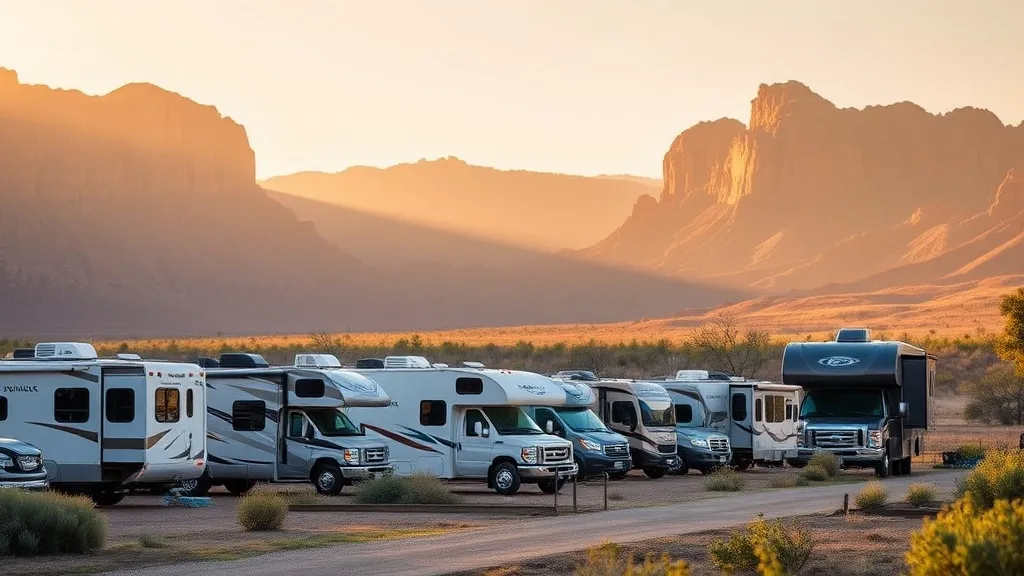
Quick answer: There is no single maximum RV length for all US national parks. A rig around 30 feet preserves the most campground options, choices narrow above 35 feet, and rigs over 40 feet require careful site-by-site planning. Road restrictions can be much tighter: Glacier’s Going-to-the-Sun Road prohibits vehicles over 21 feet on its alpine section, while Zion now bars vehicles over 35 feet 9 inches—and applies separate width, height, weight, and combined-rig limits—on the Zion–Mount Carmel Highway. Use the national park RV size-limit chart below as a starting point, then verify the exact road and campsite before booking.
Arriving at a tunnel, switchback, or campground entrance with an oversized rig can force a long detour or invalidate a reservation. Many park roads and campgrounds predate modern 40- to 45-foot motorhomes, so parks enforce hard length, width, height, and weight limits. Once you know your rig’s true dimensions, planning around those published restrictions is straightforward.
This guide covers the restrictions that actually catch people out: Zion’s 2026 replacement for the former tunnel escort, the alpine bans on Going-to-the-Sun Road and Trail Ridge, the scenic spurs that prohibit trailers entirely, and the campground length caps that quietly turn big rigs away. Every figure here was checked against NPS publications and refreshed in August 2026. Where a 2026 rule change is in play — and there are a couple of significant ones this year — we flag it. This is the companion to our guides on the best national park campgrounds for RVs and national park full-hookup RV sites.
Related guides: Grand Teton RV Camping: Every Campground in the Tetons (2026) · Mount Rainier RV Camping: Every Campground on the Mountain (2026) · Olympic National Park RV Camping: Kalaloch, Hoh, Mora & Sol Duc (2026)
First, measure your rig honestly
Every limit below is measured at the worst case, and parks do not care about your brochure.
- Length is bumper to bumper, including a tow vehicle in front or a towed car (a “toad”) behind. A 32-foot Class A towing a Jeep is a 50-foot combination for the purpose of a tunnel or a campground.
- Width includes your extended mirrors, awnings, and any slide-out hardware. The Zion tunnel cares about width to the inch.
- Height includes roof-mounted air conditioners, satellite domes, and antennas — not the floor-to-roofline number on the spec sheet.
Field tip: Write your true measured length, width, and height on a card and tape it inside a cabinet door near the driver’s seat. When a ranger or an entrance sign asks, you answer in seconds — and you never guess wrong on a number that decides whether you’re allowed through.
The Zion–Mount Carmel Tunnel (the famous one)
The 1.1-mile Zion–Mount Carmel Tunnel, opened in 1930, is the most consequential rig-size chokepoint in the park system — and as of June 7, 2026, the rules changed fundamentally.
- The old $15 escorted-passage permit is gone. For decades, oversized rigs paid $15 at the entrance station and rangers stopped oncoming traffic to walk them through one-way. The NPS eliminated that program entirely in June 2026.
- The new rule is a hard ban: NPS prohibits vehicles larger than 35 feet 9 inches long, 7 feet 10 inches wide (mirrors included), 11 feet 4 inches high, or 50,000 pounds on the Zion–Mount Carmel Highway between Canyon Junction and the East Entrance. That captures many Class A motorhomes, longer Class C motorhomes, and numerous truck-and-trailer combinations.
- Combined vehicles get their own numbers: a truck-and-trailer combination cannot exceed 26 feet from hitch to rear axle or 50 feet overall.
- You can still visit Zion Canyon in a big rig — just not via that highway. Enter through the South Entrance at Springdale and use the large-vehicle lot beside the Zion Canyon Visitor Center, then ride the shuttle up the canyon. The restriction closes a through-route, not the park.
- If your rig exceeds any of those limits, there is no fee, no escort, and no workaround on that road — you route around the park. Between Zion Canyon and Bryce/the east side that means Highway 9 west to I-15 and around, a significant detour. See our Zion RV camping guide for the canyon-side logistics. Bicycles and pedestrians remain banned in the tunnel at all times.
Glacier — Going-to-the-Sun Road
Going-to-the-Sun Road is one of the great drives in America, and large RVs cannot do its best part.
- Between Avalanche Campground and Rising Sun — the alpine middle section climbing over Logan Pass — NPS prohibits vehicles or combinations longer than 21 feet (bumpers included) or wider than 8 feet (mirrors included).
- There’s also a height advisory above 10 feet west of Logan Pass to The Loop, where rock overhangs crowd the road. It’s an advisory, not a ban, but tall rigs scrape.
- You can reach Apgar at the west end and Rising Sun at the east in a big rig — you just can’t connect the two over the pass. Plan to tow a smaller vehicle, ride the park shuttle, or drive the long way around via US 2.
One 2026 update worth noting: Glacier does not require vehicle reservations this season. The timed-entry system that governed the Going-to-the-Sun corridor in previous years is not in effect. In its place the park runs a ticketed, reservation-only Logan Pass shuttle from July 1 and limits Logan Pass parking to three hours. None of that changes the 21-foot size limit, which is a permanent road restriction rather than a crowding measure. Our Glacier National Park RV camping guide covers the campground side, including Apgar and Fish Creek, both of which sit below the restricted zone.
Rocky Mountain National Park
- Old Fall River Road: the park’s historic one-way gravel climb prohibits any vehicle pulling a trailer and anything over 25 feet. It’s 9.4 miles of narrow switchbacks with no guardrails — this is a genuine no-go for RVs, not a cautious advisory.
- Trail Ridge Road: the paved high road over the Continental Divide has no posted length limit. RVs drive it routinely. The challenge is grade and altitude (it tops 12,000 feet), not dimensions — run your engine cool and your nerves cooler.
- A park-wide timed-entry permit applies in peak season, separate from any size rule.
Yosemite
- Glacier Point Road: vehicles longer than 30 feet, and any vehicle towing a trailer, are not allowed past the Sentinel Dome parking lot. Drop the trailer at your campground and drive the tow vehicle up.
- Tioga Road (the high crossing to the east side): the NPS posts no hard length limit, but it’s steep, winding, and not recommended for very large rigs. If you’re over 35 feet, scout it before committing.
- Valley campground length caps (verify the exact figure per site on Recreation.gov before booking):
- Upper Pines: RVs to about 35 feet, trailers to about 24 feet
- Lower Pines and North Pines: RVs to about 40 feet, trailers to about 35 feet
2026 note: All three Yosemite Valley Pines campgrounds were closed May 26–June 8, 2026 for road construction, and a separate park-entry reservation system is in effect for 2026. Confirm both before planning. Our Yosemite RV parks guide covers nearby alternatives.
Sequoia & Kings Canyon — Generals Highway
The steep, narrow ~16-mile climb from the Highway 198 (Ash Mountain) entrance up to Giant Forest carries a strong 22-foot advisory for RVs, trailers, and any vehicle over 22 feet. It’s not an absolute ban, but the NPS routes longer rigs in through the Highway 180 (Big Stump) entrance instead, which is far more forgiving. If you’re over 22 feet, take 180. See our Yosemite vs. Sequoia RV comparison for how the two parks differ for RVers.
Great Smoky Mountains
- Roaring Fork Motor Nature Trail: RVs, trailers, and buses are prohibited. It’s a narrow one-way corridor that swallows oversized vehicles whole. Leave the rig at your campground.
- Cades Cove Loop Road: no posted RV/trailer length limit, and RVs do drive the 11-mile loop — slowly, in heavy congestion. Note the seasonal vehicle-free days (Wednesdays in summer) when the loop closes to all motor traffic.
- Great Smoky has no entrance fee but now requires a parking tag for any stop over 15 minutes.
Acadia
- Cadillac Summit Road: vehicles over 21 feet (bike racks and hitch attachments count), and all RVs and trailers, are prohibited. A vehicle reservation ($6, booked on Recreation.gov) is also required mid-May to mid-October just to drive up — separate from your park pass.
- Park Loop Road: no length restriction and no vehicle reservation; RVs may drive it, though some pull-offs are tight for big rigs.
Death Valley
Most of Death Valley’s main roads — Badwater Road, CA-190 — have no RV length limits. The restriction to know is Artists Drive, the 9-mile one-way scenic loop, which has a 25-foot vehicle length limit because of sharp dips and tight turns. Larger rigs and anything towing simply can’t do it. Our Death Valley RV camping guide and the Furnace Creek campground review cover basing here, where the main approaches handle big rigs fine.
Grand Canyon
The South Rim’s roads are big-rig friendly with no tunnels or tight turns — the limits here are at the campgrounds, not on the roads.
- Mather Campground: no hookups, sites commonly capped around 30 feet. Built for tents and smaller RVs. (See the Mather review.)
- Trailer Village: full-hookup pull-throughs that accommodate rigs up to about 50 feet — the big-rig answer on the rim. (See the Trailer Village review.)
- On the North Rim, combined vehicle/trailer length can’t exceed 30 feet beyond the North Kaibab Trailhead parking, and the North Rim Campground caps at 40 feet.
One 2026 caveat for the North Rim: after the 2025 Dragon Bravo Fire it reopened with the campground running June 1 to October 15 and no water and no hookups at any site. Size limits are the least of your planning there this season — arrive with full fresh tanks.
Our full Grand Canyon RV camping guide covers both rims, and the broader picture is in the best RV parks in Arizona hub.
Yellowstone — the most big-rig friendly of the marquee parks
Yellowstone is the counterexample to everything else on this page. Its roads take large rigs, and one campground takes almost anything.
- Fishing Bridge RV Park: 95 feet — the most generous limit at any national park campground in this guide, and the only one inside Yellowstone or Glacier with full hookups. Hard-sided RVs only, due to grizzly activity.
- Bridge Bay and Madison: 60 feet. Grant Village: 50 feet. Canyon: 40 feet.
- The Park Service campgrounds booked on Recreation.gov are much tighter — 25 to 35 feet. Mammoth allows 45 feet in winter but drops to 30 feet from May to mid-October.
If you run a 40-foot-plus rig and want a marquee national park that will actually accommodate it, Yellowstone is the answer and Glacier is not. Our Yellowstone vs Glacier comparison works through that decision in full.
Coastal state parks — where the limits get genuinely tight
National parks get the attention, but California’s coastal state beaches enforce some of the strictest limits an RVer will meet, and the best ocean-view sites are often the smallest.
- San Elijo State Beach: 24 feet on hookup sites.
- Carpinteria State Beach: 35 feet park-wide cap, with individual sites running 18 to 30 feet.
- Morro Strand State Beach: 40 feet on hookup sites but only 24 feet on non-hookup sites — the reverse of what most people assume.
Read the individual site record on the reservation system rather than the park average. Our oceanfront RV parks in California guide has the full breakdown.
Renting for a tight-clearance trip?
If your own rig is too big for the park you want, a smaller rental can open up roads and campgrounds a 40-footer can’t touch.
Renting an RV for this trip? Compare rigs, prices, and pickup locations on RVshare and Outdoorsy — both let you filter by rig size, dates, and location.
National park RV size-limit chart
| Park / road | Restriction | What it means for RVers |
|---|---|---|
| Zion–Mt. Carmel Tunnel | Banned since June 2026 if >35’9” long, >7’10” wide, >11’4” tall, or >50,000 lbs; escort permit eliminated | Most RVs must route around via Springdale/I-15 |
| Glacier — Going-to-the-Sun | No vehicles >21 ft or >8 ft wide, Avalanche–Rising Sun | Can’t cross Logan Pass; tow or shuttle |
| RMNP — Old Fall River Rd | No trailers; nothing >25 ft | Genuine no-go for RVs |
| Yosemite — Glacier Point Rd | No trailers; nothing >30 ft past Sentinel Dome | Drop the trailer; drive the tow car |
| Sequoia — Generals Hwy (Hwy 198) | 22-ft advisory | Enter via Hwy 180 instead if longer |
| Great Smoky — Roaring Fork | No RVs, trailers, or buses | Leave the rig at camp |
| Acadia — Cadillac Summit Rd | No RVs/trailers; nothing >21 ft; $6 reservation | Drive up in the tow car only |
| Death Valley — Artists Drive | 25-ft length limit | Big rigs and towed setups can’t do the loop |
The pattern is consistent across the system: the main approach roads and large valley campgrounds handle rigs up to 35–40 feet, while alpine drives, historic one-way roads, and scenic spurs ban anything substantial. If you tow a car, your real number is the combined length, and that’s what crosses you over most thresholds. When in doubt, leave the big vehicle at the campground and explore in the toad, the bike, or the park shuttle — which is how the best national park trips work anyway.
Frequently asked questions
What size RV is prohibited on the Zion–Mount Carmel Highway?
Zion no longer offers the old oversized-vehicle tunnel permit. Since June 7, 2026, vehicles over 35 feet 9 inches long, 7 feet 10 inches wide, 11 feet 4 inches high, or 50,000 pounds are prohibited on the Zion–Mount Carmel Highway between Canyon Junction and the East Entrance. Combined rigs also cannot exceed 26 feet from hitch to rear axle or 50 feet overall.
Can I drive my RV on Going-to-the-Sun Road in Glacier?
Only part of it. Between Avalanche Campground and Rising Sun — the alpine stretch over Logan Pass — vehicles or combinations longer than 21 feet or wider than 8 feet are prohibited. You can reach Apgar at the west end in a big rig, but you cannot continue over the pass. Glacier does not require a vehicle reservation in 2026, though its ticketed Logan Pass shuttle requires advance booking.
Which national park roads ban trailers and RVs completely?
Several scenic spurs ban them outright: Rocky Mountain's Old Fall River Road (no trailers, nothing over 25 feet), Great Smoky's Roaring Fork Motor Nature Trail (no RVs, trailers, or buses), Acadia's Cadillac Summit Road (no RVs or trailers, nothing over 21 feet), and Yosemite's Glacier Point Road past Sentinel Dome (no trailers, nothing over 30 feet).
What is the biggest RV I can take into most national park campgrounds?
It varies wildly by campground and even by individual site. A 30-foot rig fits almost everywhere; a 35-foot rig fits most large valley campgrounds; over 40 feet your options narrow sharply to a handful of pull-through campgrounds like Trailer Village at the Grand Canyon or Fishing Bridge at Yellowstone. Always check the specific site's listed length on Recreation.gov before booking.
How do I measure my rig for national park limits?
Measure total length bumper to bumper including any tow vehicle or towed car, width including extended mirrors and awnings, and height including roof-mounted AC units and antennas. Parks measure the worst case, not the brochure spec. When a limit is close, round up and assume the stricter reading.
About the author
Marisol ReyesCamping & Outdoors Editor
Marisol spent six years as an interpretive ranger in the California and Colorado state park systems before turning to writing full-time. She knows public-land camping from the inside — how reservation windows really work, why some loops fill before others, and which 'first-come, first-served' sites are worth gambling on.
More from Marisol →Keep reading
KOA Journey vs Holiday vs Resort: KOA Campgrounds Compared, Prices & Rewards (2026)
KOA campgrounds explained for RVers: the difference between KOA Journey, Holiday and Resort with live 2026 RV site prices from 20 KOAs, what each tier includes, what KOA Rewards costs ($39 a year for 10% off), Patio Sites, booking tricks and the KOAs we've reviewed.
RV Power Without Hookups: How to Actually Run Your Rig Off-Grid
The real math behind boondocking power — what your RV draws overnight, what your batteries actually give you, and why the furnace is the number that ruins most trips.
Best Free Camping Apps for Boondocking: 2026 Comparison
Compare the best free camping and boondocking apps in 2026, including Campendium, iOverlander, The Dyrt, onX Offroad, and Recreation.gov.