RV Camping in Yellowstone National Park: Every In-Park Campground for 2026
The complete guide to RV camping inside Yellowstone — every campground that takes rigs, with verified hookups, rig-length limits, seasons, and the two different reservation systems.
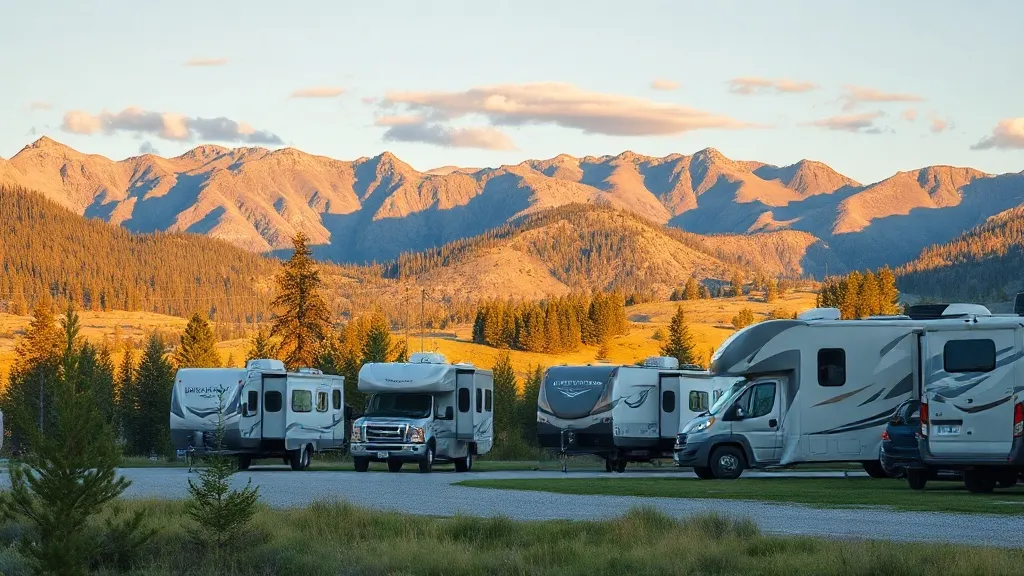
Camping inside Yellowstone in an RV is one of the great American road-trip experiences and one of the most misunderstood. The park has twelve campgrounds, but only a handful genuinely work for RVs, exactly one has hookups, and they are not all booked through the same website. Get those three facts wrong and you can spend months refreshing the wrong reservation page while your dates quietly sell out.
This is the honest, current picture for the 2026 season. We will walk through every Yellowstone campground that takes RVs, with verified rig-length limits, hookup status, season windows, and which of the two reservation systems handles it. We will be blunt about which campgrounds suit a 40-foot fifth wheel and which will physically not fit one. And we will flag the campgrounds that are closed for 2026, because two of them are, and outdated guides still list them.
The single most important thing to understand up front: with one exception, camping inside Yellowstone means dry camping. No electric, no water hookup, no sewer at your site. The park sits at 6,000 to 8,000 feet, nights are cold even in July, and you are running on batteries, solar, propane, and whatever your fresh and gray tanks hold. The one exception is Fishing Bridge RV Park, and it is the only full-hookup campground in the entire park. If hookups are non-negotiable, that is your only in-park option, and from 2027 forward even its booking system is changing.
If you would rather have hookups, showers, and laundry every night, the private parks just outside the West Entrance are covered in our West Yellowstone RV parks guide, and many RVers split a trip between the two. This guide is about getting you inside the park.
Related guides: Mammoth Campground Review: Yellowstone’s Only Year-Round Campground · Grand Teton RV Camping: Every Campground in the Tetons (2026)
The two reservation systems (read this first)
Yellowstone campgrounds are split between two operators, and which one you use depends entirely on the campground. This trips up first-timers constantly.
Yellowstone National Park Lodges (operated by Xanterra Travel Collection under a National Park Service concession) handles the five developed campgrounds with the most RV-friendly infrastructure: Fishing Bridge RV Park, Bridge Bay, Canyon, Grant Village, and Madison. You book these at yellowstonenationalparklodges.com or by phone, and their booking window runs up to 13 months ahead, with reservations opening on the 5th of each month for the same month the following year.
Recreation.gov (the National Park Service system) handles the smaller, mostly dry campgrounds: Indian Creek, Lewis Lake, Mammoth, Slough Creek, and Tower Fall. These open roughly six months in advance.
Field tip: Beginning with the 2027 season, the five Lodges-operated campgrounds — Bridge Bay, Canyon, Grant, Madison, and Fishing Bridge RV Park — move to Recreation.gov. If you are planning a 2027 or later trip, do not assume the 13-month Lodges window still applies; check which system is live before you build your calendar around it.
For 2026, every campground requires an advance reservation except Mammoth, which is first-come, first-served only from October 15 to April 1. The rest of the year, even Mammoth takes reservations.
Fishing Bridge RV Park: the only full hookups in the park
If you want to plug in inside Yellowstone, this is the one and only place. Fishing Bridge RV Park sits near Yellowstone Lake on the eastern side of the park, well positioned for Hayden Valley wildlife and the eastern loop. It is the most developed campground in Yellowstone, with a registration building, public showers, laundry, a dump station, and a recycling area.
- Hookups: Full — electric (30/50 amp), water, and sewer at every site. The only full-hookup campground in Yellowstone.
- Sites: About 310, hard-sided RVs only (no tents, no pop-ups, no tent trailers).
- Cost: Roughly $90–$120/night for 2026 (premium for the only hookups in the park; verify current rates at booking).
- Max RV length: Upper loop has 172 renovated, paved sites from 40 to 95 feet; lower loop has gravel back-in sites for rigs 30 to 35 feet. Largest rig capacity in the park.
- Season: May 8 – October 18, 2026.
- Reservations: Yellowstone National Park Lodges (Recreation.gov from 2027).
- Best for: Big rigs, anyone who needs hookups, travelers who want showers and laundry on site.
Because of frequent grizzly activity, Fishing Bridge enforces a strict hard-sided rule. All food, coolers, grills, toiletries, and even pet supplies must stay inside your RV at all times. This is not a campground where you leave a cooler out on the picnic table.
Field tip: Fishing Bridge is the hardest in-park site to land in summer precisely because it is the only one with hookups. Book the day your window opens, and if you miss it, set a reminder to check daily for cancellations.
Bridge Bay, Canyon, Grant, and Madison: the big developed dry campgrounds
These four are the Lodges-operated dry campgrounds. They have no hookups, but they take mid-to-large RVs and put you in prime locations.
Madison CampgroundPark details →
Closest in-park campground to the West Entrance, 14 miles in, along the Madison River where the Gibbon and Firehole rivers meet. Elk and bison wander through; the fly fishing from camp is legitimate. This is the natural choice if you are entering from West Yellowstone.
- Hookups: None (dry). Dump station and potable water available.
- Sites: Roughly 278 individual sites plus group sites.
- Cost: Around $35–$45/night (verify at booking).
- Max RV length: Up to 40 feet.
- Season: Summer season, roughly late April/May into October.
- Reservations: Yellowstone National Park Lodges (Recreation.gov from 2027).
- Best for: West Entrance arrivals, anglers, rigs up to 40 feet that can dry camp.
Bridge Bay CampgroundPark details →
The largest campground in the park, on Yellowstone Lake near the marina. Open, busy, and central for the eastern loop and lake activities.
- Hookups: None (dry). Dump station nearby.
- Sites: Around 430 — the most sites of any Yellowstone campground.
- Cost: Around $35–$45/night.
- Max RV length: Up to 40 feet.
- Season: Summer season (a brief early-season first-come window can precede full reservations).
- Reservations: Yellowstone National Park Lodges (Recreation.gov from 2027).
- Best for: Lake access, boaters, larger groups, central-park positioning.
Canyon CampgroundPark details →
Near Canyon Village in the center of the park, the most convenient base for the Grand Canyon of the Yellowstone and Hayden Valley wildlife. Wooded sites, a village with showers, laundry, and supplies nearby.
- Hookups: None (dry). Showers and laundry at Canyon Village; dump station available.
- Sites: Roughly 270.
- Cost: Around $40–$50/night.
- Max RV length: Up to 40 feet.
- Season: Summer season, roughly late May into September.
- Reservations: Yellowstone National Park Lodges (Recreation.gov from 2027).
- Best for: Central location, Hayden Valley wildlife watchers, rigs up to 40 feet.
Grant Village CampgroundPark details →
On the southwest shore of Yellowstone Lake near the South Entrance, the best base if you are pairing Yellowstone with Grand Teton. Grant Village has a developed area with showers, laundry, and a store.
- Hookups: None (dry). Showers, laundry, and dump station in the village.
- Sites: Roughly 430.
- Cost: Around $40–$50/night.
- Max RV length: Up to 50 feet — the most generous limit among the dry developed campgrounds.
- Season: Summer season, roughly June into September.
- Reservations: Yellowstone National Park Lodges (Recreation.gov from 2027).
- Best for: South Entrance / Grand Teton trips, rigs in the 40–50 foot range, lakeside positioning.
Renting an RV for this trip? Compare rigs, prices, and pickup locations on RVshare and Outdoorsy — both let you filter by rig size, dates, and location.
The smaller campgrounds: Indian Creek, Lewis Lake, Mammoth
These Recreation.gov campgrounds are quieter, more rustic, and far better suited to smaller RVs, vans, and truck campers than to big rigs.
Mammoth CampgroundPark details →
In the northwest near the North Entrance, the only year-round campground in Yellowstone. Lower elevation, sagebrush and juniper terrain, and a reliable spot for elk in town.
- Hookups: None (dry). Dump station seasonally; flush toilets.
- Sites: Around 85.
- Cost: Around $25–$30/night.
- Max RV length: Up to about 40 feet, though larger combined-length sites exist; most sites favor mid-size rigs.
- Season: Open year-round; first-come, first-served only from October 15 to April 1, reservations the rest of the year.
- Reservations: Recreation.gov (or walk-up in the off-season window).
- Best for: Off-season and shoulder-season camping, North Entrance arrivals, mid-size rigs.
Indian Creek CampgroundPark details →
A small, rustic, wooded campground between Mammoth and Norris. Genuinely peaceful, but tight for big rigs.
- Hookups: None (dry). Vault toilets, no showers.
- Sites: Around 70.
- Cost: Around $20–$25/night.
- Max RV length: 35 sites take rigs up to 30 feet; about 10 sites take up to 35 feet. Not a big-rig campground.
- Season: Roughly mid-June to mid-September.
- Reservations: Recreation.gov.
- Best for: Smaller RVs and vans, travelers who want quiet over convenience.
Lewis Lake CampgroundPark details →
Near the South Entrance on Lewis Lake, popular with paddlers. The most rustic developed option and the tightest for RVs.
- Hookups: None (dry). Vault toilets, no showers.
- Sites: Around 80.
- Cost: Around $20–$25/night.
- Max RV length: About 25 feet — best for vans, truck campers, and small trailers.
- Season: Summer season, roughly mid-June into early November as conditions allow.
- Reservations: Recreation.gov.
- Best for: Paddlers, small rigs, South Entrance arrivals who want quiet.
The northeast campgrounds and what’s closed for 2026
Two of the park’s small campgrounds in the northeast, Slough Creek and Tower Fall, are booked on Recreation.gov and sit in prime Lamar Valley wildlife country. Both are small and best for shorter rigs — Slough Creek in particular has a rough access road and is not suited to large RVs. Tower Fall traditionally was first-come but now takes reservations. If wolf and bison watching in the Lamar is your priority and you have a compact rig, these are worth a look, but verify current road and rig-length conditions before committing.
Two campgrounds are closed for the 2026 season, and outdated guides still list them:
- Norris Campground — closed for several years and remaining closed for the foreseeable future, citing staffing limits for emergency response and maintenance at its remote location.
- Pebble Creek Campground — remaining closed for 2026 to complete flood-recovery work, and likely closed beyond that.
Do not build a plan around either. If a third-party site shows availability at Norris or Pebble Creek for 2026, treat it as out of date.
Comparison: Yellowstone campgrounds for RVers
| Park | Region | Cost/night | Hookups | Max length | Reservations |
|---|---|---|---|---|---|
| Fishing Bridge RV Park | Yellowstone Lake (east) | $90–$120 | Full (E/W/S) | 40–95 ft | Lodges (Rec.gov from 2027) |
| Grant Village | South Entrance | $40–$50 | None | 50 ft | Lodges (Rec.gov from 2027) |
| Madison | West Entrance | $35–$45 | None | 40 ft | Lodges (Rec.gov from 2027) |
| Bridge Bay | Yellowstone Lake | $35–$45 | None | 40 ft | Lodges (Rec.gov from 2027) |
| Canyon | Canyon Village (central) | $40–$50 | None | 40 ft | Lodges (Rec.gov from 2027) |
| Mammoth | North Entrance | $25–$30 | None | ~40 ft | Recreation.gov |
| Indian Creek | Mammoth–Norris | $20–$25 | None | 30–35 ft | Recreation.gov |
| Lewis Lake | South Entrance | $20–$25 | None | 25 ft | Recreation.gov |
Prices are researched 2026 ranges and approximate; confirm current rates at booking.
Planning your Yellowstone RV trip
Best months. July and August are warmest and busiest — book months ahead. Late May, June, and September are the sweet spot for RVers: smaller crowds, easier reservations, and active wildlife, though nights are cold and some campgrounds open mid-June or later. Most in-park campgrounds close by mid-October; only Mammoth stays open through winter.
Reservation strategy. Decide first whether you need hookups. If yes, Fishing Bridge is your only in-park option and you should book the moment your window opens. If you can dry camp, you have far more choices. Know which system your target campground uses — Lodges (13-month window, opening the 5th of each month) for the five developed campgrounds in 2026, or Recreation.gov (six months out) for the rest. From 2027, everything is on Recreation.gov.
Rig size. Be honest about your length. A 40-foot fifth wheel fits Fishing Bridge, Grant, and the upper limits of Bridge Bay, Canyon, Madison, and Mammoth, but will not fit Indian Creek, Lewis Lake, or the northeast campgrounds. Posted limits often reflect total combined length including a tow vehicle.
Power and water. Outside Fishing Bridge, you are dry camping. Arrive with full fresh tanks and empty gray and black tanks, plan for solar or battery, and learn each campground’s generator hours — generators are allowed only in designated loops during set daytime hours, and many sites are generator-free. Dump stations are available at the developed campgrounds.
Cancellation strategy. Summer sites, especially Fishing Bridge, sell out, but cancellations are constant. Check your reservation system every morning. Same-day and next-day openings appear regularly, and a flexible itinerary can land you a site that looked impossible weeks earlier.
For a deeper how-to on booking, including the cancellation tactics that actually work, see our guide to Yellowstone campground reservations. For a head-to-head on which of the big developed campgrounds suits your rig, see Yellowstone campgrounds compared. And if you want the full rundown on Fishing Bridge specifically, read our Fishing Bridge RV Park guide.
How Yellowstone fits a wider Montana trip
Most RVers reach Yellowstone through the West Entrance and the gateway town of West Yellowstone, where the full-hookup private parks live — including the well-located Grizzly RV Park a few blocks from the gate. A common rhythm is a few nights in-park (dry, immersive) followed by a hookup reset in town.
If you are building a bigger loop, Yellowstone pairs naturally with Glacier to the north. We compare the two in Yellowstone vs Glacier for RV camping, and you can plan the northern half with our Glacier National Park RV camping guide. For the statewide picture, start at the Montana RV parks hub and our guide to the best RV parks in Montana.
Frequently asked questions
Which Yellowstone campground has full hookups for RVs?
Fishing Bridge RV Park is the only campground inside Yellowstone with full hookups (electric, water, and sewer). It is also the only in-park campground restricted to hard-sided RVs only, due to grizzly bear activity. Every other Yellowstone campground is dry camping with no hookups of any kind.
Do you book Yellowstone campgrounds on Recreation.gov or somewhere else?
For 2026 it is split. Fishing Bridge RV Park, Bridge Bay, Canyon, Grant Village, and Madison are booked through Yellowstone National Park Lodges (the Xanterra concessionaire). Indian Creek, Lewis Lake, Mammoth, Slough Creek, and Tower Fall are booked on Recreation.gov. Starting in 2027, all of them move to Recreation.gov.
What is the biggest RV that can camp inside Yellowstone?
Fishing Bridge RV Park has paved upper-loop sites from 40 to 95 feet, so it takes the biggest rigs in the park. Grant Village handles up to 50 feet. Bridge Bay, Canyon, Madison, and Mammoth top out around 40 feet. Indian Creek, Lewis Lake, and the northeast campgrounds are best for rigs under 30 to 35 feet.
Can you camp in Yellowstone in an RV without a reservation?
Rarely in summer. For 2026 every campground requires an advance reservation except Mammoth, which is first-come, first-served only from October 15 to April 1. In peak summer, plan to reserve months ahead. Same-day cancellations do open up, so checking Recreation.gov or the Lodges site each morning is the realistic walk-up strategy.
Are generators allowed in Yellowstone campgrounds?
Generators are allowed only in designated loops at certain campgrounds and only during set daytime hours, typically a mid-morning to early-evening window. Many sites are generator-free. Because every campground except Fishing Bridge is dry, plan your power around solar, deep-cycle batteries, and limited generator windows rather than shore power.
Is it better to camp inside Yellowstone or in West Yellowstone?
Inside the park you wake up to wildlife and skip the morning entrance line, but only Fishing Bridge has hookups and sites book out far ahead. West Yellowstone, just outside the West Entrance, has full-hookup private parks with showers and laundry. Many RVers split the difference: a few nights in-park, then a hookup reset in town.
About the author
Marisol ReyesCamping & Outdoors Editor
Marisol spent six years as an interpretive ranger in the California and Colorado state park systems before turning to writing full-time. She knows public-land camping from the inside — how reservation windows really work, why some loops fill before others, and which 'first-come, first-served' sites are worth gambling on.
More from Marisol →Campgrounds in this guide
Facts pages for each park — hookups, rig limits, rates and booking, plus every guide that covers it.
Keep reading
Fishing Bridge RV Park Prices, Full Hookups & Review: Yellowstone's Only RV Park (2026)
Fishing Bridge RV Park prices ($94 plus tax per night in 2026), 310 full-hookup hard-sided sites, the 95-foot maximum, showers, laundry, reservation rules, and the 2027 move to Recreation.gov.
Best RV Parks in Montana: Glacier Country to Yellowstone Gateway
From Glacier National Park to West Yellowstone, these are Montana's best RV parks — with real prices, hookup details, and the honest reviews you need before booking.
Bozeman RV Parks: Mountain Town Camping Done Right
The best RV parks and campgrounds in and around Bozeman, Montana — from hot springs resorts to national forest sites, with real rates and honest reviews.