Upper Pines Campground Review: RV Camping in the Heart of Yosemite Valley
An honest review of Upper Pines Campground in Yosemite Valley — 238 sites, no hookups, brutal reservations, and the best location in American camping. Site picks, booking strategy, and RV limits.
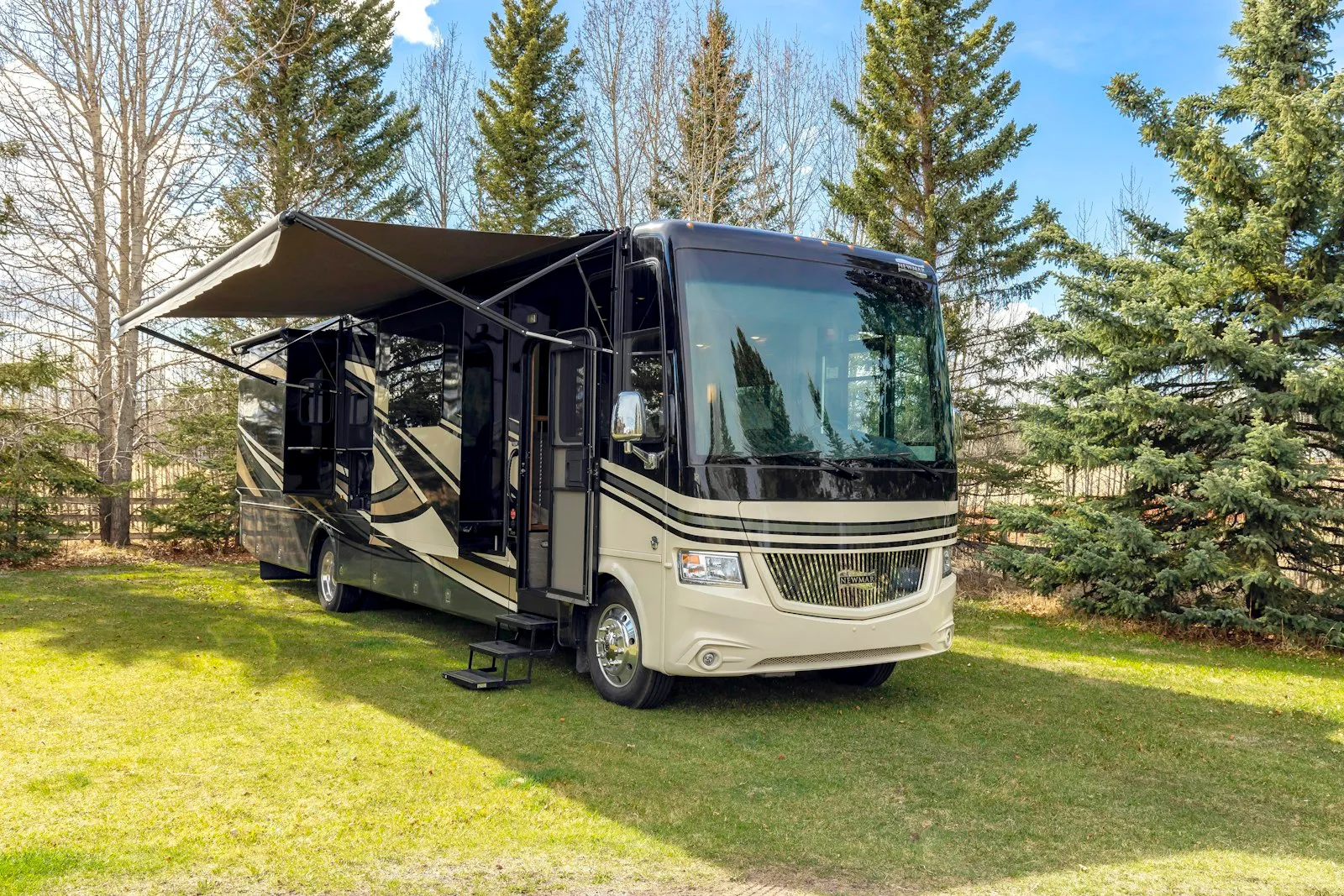
There is no campground in America with a better address than Upper Pines. You wake up on the floor of Yosemite Valley, granite walls rising three thousand feet on either side, with Half Dome looming over the trees and the Merced River sliding past the eastern edge of the campground. The Mist Trail — arguably the best day hike in the national park system — starts a short walk from your site. So does the Valley shuttle. So does everything.
That is the entire pitch, and it is enough. Because here is the honest verdict up front: Upper Pines is a mediocre campground in a location so extraordinary that the campground itself barely matters. The 238 sites are packed close together with minimal privacy. There are no hookups. Getting a summer reservation is one of the most competitive booking exercises in American camping — sites vanish within seconds of release. Your neighbors will be ten feet away, and by 7 a.m. the campground hums like a small village waking up.
And none of that will stop you from wanting to come back. Campers rate it 4.4 stars across thousands of reviews, and the pattern in those reviews is remarkably consistent: the sites are tight, the location is unbeatable, we would book it again tomorrow if we could get a site.
This review covers what Upper Pines actually delivers for RVers — the real size limits (both at the site and on the roads getting there), the reservation system and how to beat it, which sites to target and which to avoid, and how it compares to Lower Pines, North Pines, and the RV parks outside the gates. If you are still deciding whether to camp inside the park at all, start with our full Yosemite RV camping guide, which covers every campground in the park.
Getting There: Yosemite Valley With an RV
Upper Pines sits at the far eastern end of Yosemite Valley, past Curry Village, about 20 minutes’ drive from the Arch Rock entrance. Driving an RV into the Valley is very doable — thousands of rigs do it every season — but you need to pick your entrance carefully, because Yosemite’s historic tunnels were not built with 12-foot-tall motorhomes in mind.
The tunnel clearances that matter:
| Route | Restriction | Verdict for RVs |
|---|---|---|
| Arch Rock entrance (Hwy 140 / El Portal Rd) | Tunnel clears 12’10”; max 45 ft single vehicle | Best RV route. Gentlest grades, follows the Merced River |
| Big Oak Flat entrance (Hwy 120 from the west) | Tunnel clears 13’8” inbound to the Valley, 10’3” at the curb outbound | Good inbound; watch your line in the tunnels |
| South entrance (Hwy 41, Wawona Tunnel) | Wawona Tunnel clears only 10’2” at the curb heading into the Valley | Avoid with most RVs. Tall rigs must hold the centerline or skip it entirely |
If you are coming from the Bay Area or the Central Valley, Highway 140 through Mariposa to the Arch Rock entrance is the standard RV route — it has the lowest elevation, the gentlest grades, and it is usually the last road to require chains when snow hits. Coming from the south (Fresno), Highway 41 works for shorter rigs, but anything tall should route around to 140 rather than gamble on the Wawona Tunnel’s curbside clearance. For a deeper dive on what rigs fit where across the park system, see our guide to national park RV size limits.
Arrival timing matters more than you think. Yosemite Valley traffic on summer weekends is genuinely bad — the final few miles into the east Valley can crawl for an hour or more between late morning and late afternoon. Aim to roll through the entrance station before 9 a.m. or after 5 p.m. Check-in at Upper Pines is straightforward: stop at the kiosk at the campground entrance, get your tag, find your loop. If you arrive before check-in time, there is no big staging area, so plan to park at a day-use lot and explore rather than idling at the kiosk.
One more note on driving: once you are parked at your site, plan to leave the RV there for your entire stay. Valley parking is scarce, the free shuttle covers everything, and maneuvering a motorhome through Yosemite Village traffic is nobody’s idea of a vacation. This is a destination campground, not a basecamp you drive out of daily.
The Campground: 238 Sites Under the Pines
Upper Pines is the largest campground in Yosemite — 238 sites arranged in a series of numbered loops under a canopy of ponderosa pines and incense cedars on the Valley floor. The Merced River runs along its eastern boundary, Curry Village sits just to the northwest, and the trailhead for Vernal and Nevada Falls is a ten-minute walk from the far loops.
The layout is classic old national park: loops of paved pull-through and back-in sites, each with a picnic table, fire ring, and steel bear locker, with shared flush-toilet buildings scattered through the campground. Sites are mostly level and mostly shaded. What they are not is private. This is the single most consistent complaint in years of reviews: sites are close together, screening vegetation is thin, and in summer you will hear your neighbors’ conversations, smell their bacon, and see their headlamps. If you want solitude, Upper Pines will disappoint you. If you can reframe it — a friendly, low-key village of people who all fought hard to be here — it has a genuinely good communal energy. Reviewers repeatedly describe a “great family vibe.”
Picking a site
Not all 238 sites are equal, and because you will likely be booking a specific site the second the window opens, it pays to have a target list ready.
What to aim for, based on review consensus:
- River-adjacent sites on the eastern edge. Sites backing toward the Merced are the campground’s best real estate — reviewers describe being “lulled to sleep by the sound of the Merced,” and note the riverside sites tend to be shadier and roomier than the interior ones. Site 200 gets specific praise for combining river proximity with an easy walk to Curry Village and the Mist Trail.
- Outer-edge sites generally. Any site on the outside of a loop, facing forest rather than another site, buys you meaningfully more privacy than an interior site.
- Half Dome glimpses. The tree canopy limits big views from most sites, but the campground as a whole looks up at Half Dome, and sites near loop edges and clearings catch it. Do not book Upper Pines for a view — book it for location and take the view as a bonus on your walk to the bathroom.
What to avoid:
- Sites adjacent to the restroom buildings. Doors bang, lights glow, and foot traffic passes all night. On the campground map, give the toilet buildings a two-site buffer if you can.
- Sites along the main campground road and near the entrance kiosk. These take all the arrival-day traffic, plus the early-morning parade of vehicles heading out for trailhead parking.
- Interior sites in the middle of loops, which are boxed in on all sides.
Critical RV caveat: the 35-foot/24-foot limits are campground maximums, not guarantees. Individual sites list their own maximum equipment lengths on Recreation.gov, and many are far shorter — some sites take trailers of only 12 feet. When the booking window opens you will not have time to read site details, so do that research before the 15th: filter the campground map by your rig length and build a ranked shortlist of three to five site numbers that actually fit you.
For accessibility needs, Upper Pines has designated wheelchair-accessible sites: 6, 7, 21, 26, 27, 28, 29, 39, 42, and 43, located near accessible restrooms.
Amenities: What $36 Gets You (and What It Doesn’t)
Set your expectations at “1970s national park campground” and you will be calibrated correctly.
There are no hookups — none, anywhere in Yosemite. No electric, no water, no sewer at any site in the park. You are dry camping, full stop. Solar is marginal under the pine canopy, so healthy batteries matter, and generator use is limited to three strictly enforced windows: 7–9 a.m., noon–2 p.m., and 5–7 p.m. Because RV and tent sites are intermingled throughout the loops, rangers take generator hours seriously — do not test them.
What you do get:
- A free dump station with potable water fill, open year-round. This is quietly one of Upper Pines’ biggest RV assets. The two-lane station at the campground entrance has separate positions for dumping and fresh-water filling, and it is the only year-round dump station in the Valley. Arrive with empty tanks, fill your fresh water on the way in, and a 5–7 day dry-camping stay is comfortable.
- Flush toilets and drinking water throughout the campground. The bathrooms are aging and get hammered in peak season — cleanliness reviews range from “fine” to “rough by Sunday afternoon” — but they are real flush toilets, cleaned daily.
- A steel bear locker at every site, roughly 43″ wide × 35″ deep × 28″ high. This is not decorative. Yosemite Valley has active black bears, and campers report bear sightings in and around Upper Pines regularly. Everything scented — food, coolers, toothpaste, sunscreen, dish soap — goes in the locker, not your tent and not your vehicle. Rangers patrol nightly and can cite you for violations. Measure your cooler before you go; the locker fits a large cooler plus a couple of bins, but not much more.
- Picnic table and fire ring at every site. Firewood is sold in the Valley; gathering wood is prohibited.
What you don’t get:
- Showers. There are none in the campground. The nearest are at Curry Village, a short walk away — public showers available year-round, with non-guests paying a small fee at the Curry Village registration office. Housekeeping Camp also has showers seasonally (closed in winter). Expect lines on summer evenings; mid-morning is the quiet window.
- Laundry. Housekeeping Camp has the Valley’s laundromat, seasonally.
- Reliable connectivity. Cell coverage in Yosemite Valley is real but temperamental. Verizon is the consensus best carrier in the Valley, with AT&T and T-Mobile present but patchier, and the eastern Valley — where Upper Pines sits — tends to be more reliable than the west end. Under the trees at your site, expect a bar or two of usable-for-texts signal that collapses under peak-season load. There is no campground Wi-Fi; paid/guest internet exists at Curry Village and the Valley lodges. Plan as if you will be offline and treat anything more as a bonus.
Groceries, ice, and camp supplies are covered better than at almost any other national park campground: the Curry Village store is walking distance, and the larger Village Store in Yosemite Village is a shuttle ride away. You genuinely do not need to leave the Valley for anything short of a hardware store.
What’s Nearby: Everything
This section is short because the answer is “the reason Yosemite exists.”
- The Mist Trail to Vernal and Nevada Falls starts at Happy Isles, roughly a ten-minute walk from the campground’s eastern loops. Being able to hit this trail at 6:30 a.m., before the day-tripper wave arrives, is by itself worth the reservation fight.
- Half Dome cable-route hikers use the same trailhead — if you hold a Half Dome permit, Upper Pines is the single best place in the park to sleep the night before your 4 a.m. start.
- Mirror Lake is a flat stroll away via the Valley Loop trail.
- The free Valley shuttle stops near the campground and Curry Village, connecting you to Yosemite Village, the visitor center, Yosemite Falls, and El Capitan Meadow without ever moving your rig.
- Curry Village (pizza deck, coffee, store, showers, bike rentals) is a five-minute walk. The pizza-and-beer-after-a-hike ritual on the Curry deck is a legitimate Yosemite tradition.
- Glacier Point and Tuolumne Meadows are the classic drive-days — do them in your toad or leave early, because Valley-exit traffic builds by mid-morning in summer.
No commercial campground within 40 miles can offer any version of this. That is the entire trade you are making when you accept the tight sites and the booking pain.
The Honest Details
What works:
- The location is the best in American camping. Walking distance to the Mist Trail, Curry Village, and the shuttle; Half Dome overhead; the Merced alongside.
- $36 a night for real estate that would be priceless if it were priced by the market.
- Year-round operation with a year-round free dump station — the only Valley campground that can say either.
- Bear lockers, flush toilets, potable water, and a functional layout that handles enormous volume better than it has any right to.
- The community feel. Most reviewers leave charmed rather than annoyed.
What doesn’t:
- The reservation system is a bloodbath. Summer sites sell out in seconds. There is no realistic walk-up option — reservations are required year-round.
- Site spacing. Ten to twenty feet from your neighbors, thin screening, constant low-level noise from 7 a.m. onward.
- No hookups and tight generator windows make this a test of your dry-camping setup, especially in hot weather when you cannot run air conditioning outside generator hours.
- The 35/24-foot limits (often shorter per site) simply exclude big rigs. If you are over 35 feet, stop reading and pick a park outside the gates — our RV parks near Yosemite guide covers the full-hookup options in El Portal, Groveland, and Oakhurst.
- Peak-season bathroom wear, dust, and crowding are real. This campground runs at 100% occupancy for months at a time and looks like it.
Who it’s for: RVers under 35 feet (honestly, under 30 is more comfortable) with self-contained rigs and decent batteries, who care more about location than elbow room, and who are willing to play the Recreation.gov game — or camp in the shoulder seasons and winter, when both the crowds and the booking pressure drop dramatically.
Who should skip it: Big rigs, hookup-dependent travelers, light sleepers who need privacy, and anyone who cannot commit to a 7:00 a.m. booking sprint five months before their trip.
How to Actually Get a Reservation
This deserves its own section because it is the hardest part of the entire trip.
The system: Upper Pines is reservation-only, year-round, through Recreation.gov. Sites release on a 5-month rolling window: on the 15th of each month at 7:00 a.m. Pacific, one new month of arrival dates opens. Example: on February 15 at 7:00 a.m., arrival dates from June 15 through July 14 become bookable. Peak-summer blocks are typically gone within seconds to minutes.
The playbook:
- Do your site research in advance. Build a ranked shortlist of site numbers that fit your rig (check each site’s equipment-length limit on Recreation.gov).
- Log in early. You must be signed in to complete a booking. Save your payment method and equipment profile beforehand.
- Be on the site at 6:55 a.m. Pacific with the campground page open. At 7:00:00, select your dates and top-choice site immediately. Have backups ready — you will likely lose your first choice.
- Book something imperfect if you must. A less-ideal site inside the Valley beats a perfect site an hour away.
- Hunt cancellations. People cancel constantly, especially 1–3 weeks before arrival dates. Manual checking works; availability-alert services work better.
- Consider the shoulder seasons. April, October, and November dates are dramatically easier to get, and the Valley is arguably better then anyway. From December to mid-February only the first two loops (~50 sites) stay open, and winter Valley camping is a quiet, spectacular experience for well-equipped rigs.
Note the 7-day camping limit in Yosemite Valley from May 1 through September 15 — you cannot chain a summer-long stay.
Full Specs & Booking
- Hookups: None (no electric, water, or sewer anywhere in Yosemite)
- Sites: 238 — tent, RV, and trailer sites intermingled across pine-shaded loops
- Cost: $36/night standard site (park entrance fee separate)
- Season: Year-round — only the first two loops (~50 sites) open December to mid-February
- Reservation: Required year-round via Recreation.gov; 5-month rolling window, released the 15th of each month at 7:00 a.m. PT; 7-day Valley limit May 1–Sept 15
- Cell signal: Usable but inconsistent; Verizon strongest in the Valley, eastern Valley better than west; no campground Wi-Fi
- Max RV length: 35 ft RV / 24 ft trailer campground maximum — many individual sites shorter (some as short as 12 ft); check per-site limits
- Amenities: Flush toilets, drinking water, free year-round dump station with potable fill, bear locker + picnic table + fire ring at every site, generator hours 7–9 a.m. / 12–2 p.m. / 5–7 p.m.; showers and laundry nearby at Curry Village / Housekeeping Camp (fee)
- Elevation: ~4,000 ft (Yosemite Valley floor)
Upper Pines vs. the Alternatives
Upper Pines vs. Lower Pines: Lower Pines is the smaller sibling (about 60 sites) just across the way, open roughly spring through fall, with the same $36 price, same no-hookup reality, and the same booking war — arguably worse, since fewer sites mean fewer chances. Lower Pines sits closer to the Merced and Mirror Lake trail side and some sites have better Half Dome sightlines, but its RV limits are slightly tighter overall. If both are available, pick on specific site quality, not campground name. If you camp in winter, Upper Pines is the only option anyway.
Upper Pines vs. North Pines: North Pines (about 80 sites) sits on a small peninsula between Tenaya Creek and the Merced — many campers consider it the prettiest of the three Pines, with more sites near water. It opens later in spring, closes in fall, and its RV limits and demand are comparable. Same verdict: chase the best specific site you can get across all three, with Upper Pines offering the most inventory and the only year-round and dump-station access.
Upper Pines vs. staying outside the park: Full-hookup RV resorts in El Portal, Midpines, Groveland, and Oakhurst offer everything Upper Pines lacks — 50-amp power, sewer, showers, big-rig sites, easy booking — at the cost of a 45-minute to 2-hour daily commute each way into the Valley, plus summer entrance-line and parking roulette. If your rig fits and you can win a reservation, inside the park wins decisively for a Yosemite-focused trip. If you are over 35 feet or booking late, the outside-park options are genuinely good; we break them down in our RV parks near Yosemite guide. And if you are weighing Yosemite against other Sierra options entirely, see Yosemite vs. Sequoia for RV camping.
The Bottom Line
Upper Pines is not a great campground. It is a decent, tired, tightly packed campground occupying the greatest campsite location in the country — and that math works out heavily in its favor. For $36 a night you sleep under Half Dome, walk to the Mist Trail before the crowds, and never move your rig for a week. Accept the dry camping, do your site homework, set your alarm for the 15th of the month, and go.
For the full picture of camping options across the park — Wawona, Hodgdon Meadow, Tuolumne, and the rest — see our complete Yosemite RV camping guide, or zoom out to our statewide roundup of the best RV parks in California.
Frequently asked questions
What is the maximum RV length at Upper Pines Campground?
Upper Pines accommodates RVs up to 35 feet and trailers up to 24 feet, but those are the campground maximums — many individual sites are shorter, and some fit trailers of only 12 feet. Always check the equipment length listed on your specific site at Recreation.gov before booking. Getting to the campground is a separate constraint: the tunnel on El Portal Road (Arch Rock entrance) clears 12 feet 10 inches, and the Wawona Tunnel on Highway 41 clears only 10 feet 2 inches at the curb, so most RVers should enter via Arch Rock or Big Oak Flat.
How do Upper Pines reservations work?
Upper Pines requires reservations year-round, booked through Recreation.gov on a 5-month rolling window. On the 15th of each month at 7:00 a.m. Pacific, a new one-month block of arrival dates opens — for example, on February 15 you can book arrivals from June 15 through July 14. Summer dates sell out within seconds to minutes. Log in beforehand, have your equipment details saved, target a specific site, and click the moment the clock turns. Cancellations do appear, so checking back regularly (or using an availability alert service) is a legitimate backup strategy.
Are there bears at Upper Pines Campground?
Yes — Yosemite Valley has active black bears, and campers report regular bear activity in and around Upper Pines. Every site has a steel bear locker (roughly 43 inches wide, 35 deep, 28 high), and food storage rules are strictly enforced: all food, coolers, toiletries, and anything scented must go in the locker, not in your tent or vehicle. Rangers patrol and can fine violations. Follow the rules and bears are a highlight, not a problem.
Does Upper Pines have showers or hookups?
No hookups of any kind — no electric, water, or sewer anywhere in Yosemite. Upper Pines has flush toilets and drinking water, plus a free two-lane dump station with potable water fill that operates year-round. There are no showers in the campground; the nearest public showers are at Curry Village, a short walk away, available to non-guests for a small fee paid at the registration office (Housekeeping Camp also has showers but closes in winter).
Is Upper Pines open in winter, and can you camp there in an RV?
Upper Pines is the only Yosemite Valley campground open year-round, and it keeps its dump station running through winter. From December to mid-February the park typically opens only the first two loops — roughly 50 sites — and reservations are still required. Winter camping means freezing nights, possible snow and tire-chain requirements on park roads, and no hookups to run a heater from, so come with a full propane tank and good batteries. The reward is Yosemite Valley with a fraction of the crowds.
How much does Upper Pines Campground cost per night?
Standard sites at Upper Pines cost $36 per night, booked through Recreation.gov (plus the park entrance fee to enter Yosemite). There is a 7-day camping limit in Yosemite Valley from May 1 through September 15.
About the author
Dale HartmanLead RV Park Reviewer
Dale has lived on the road full-time since 2014, when he sold the house in Boise and moved into a 34-foot fifth wheel with his wife and a stubborn beagle named Otis. In the years since, he's parked at more than 400 campgrounds across 41 states — from boondocking sites with no hookups to luxury resorts with concrete pads and pickleball courts.
More from Dale →Campgrounds in this guide
Facts pages for each park — hookups, rig limits, rates and booking, plus every guide that covers it.
Keep reading
Azalea Campground, Kings Canyon: Sites & RV Limits (2026)
A verified 2026 Azalea Campground review covering all 110 sites, the $32 fee, site 93's 47-foot RV record, 30-foot trailer limit, reservations, winter camping, and bear rules.
Tahoe Valley Campground Review: Sites, Rules & Booking (2026)
Is Tahoe Valley Campground worth it? Verified 2026 review of its 439 sites, year-round operation, live rates, paid Wi-Fi, fire rules, cancellation policy, and South Lake Tahoe trade-offs.
Campland on the Bay Review: 2026 Rates, Fees & Noise
A researched Campland on the Bay review — official 2026 summer and winter rates, extra fees, cancellation terms, Mission Bay amenities, density, noise, and other San Diego bay camping options.