RV Camping in Yosemite National Park: The In-Park Campground Guide
RV parks near Yosemite are great — but if you want to sleep inside the park, here's the honest guide to every Yosemite campground that takes RVs.

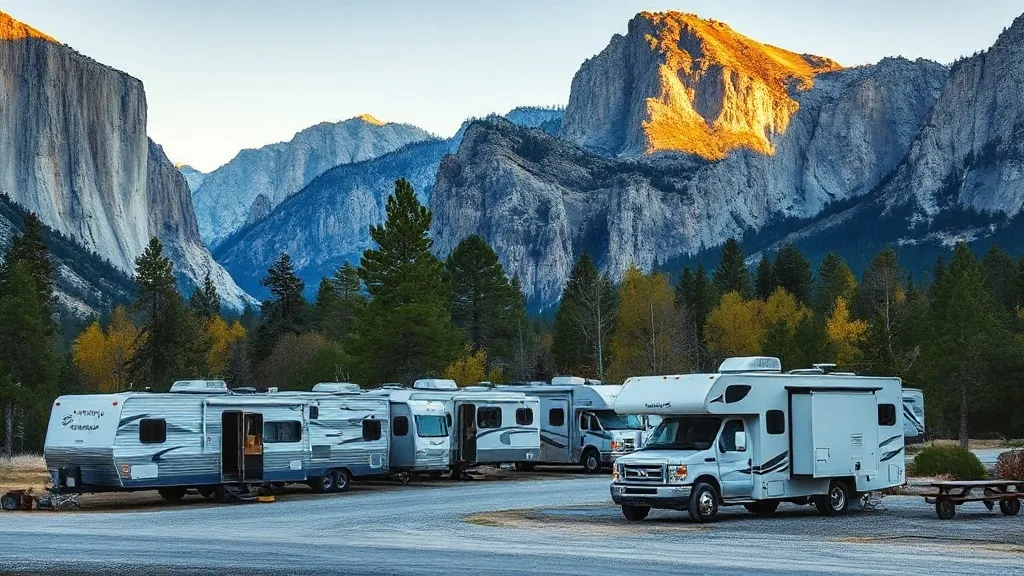
Most RV travelers who research Yosemite end up at the same crossroads: do you sleep inside the park, or do you base yourself in a comfortable full-hookup resort in a gateway town and commute in? Both are legitimate. We cover the gateway-town option in depth in our RV parks near Yosemite guide, and for many big-rig owners that is genuinely the smarter call. This guide is the other half of the decision — the in-park reality for travelers who want to wake up beneath the granite walls and are willing to dry camp to do it.
Here is the honest headline: Yosemite has no hookups anywhere. Not a single electric pedestal, water connection, or sewer hookup exists in any of its campgrounds. Every in-park site is dry camping. The roads enforce real length limits, the reservation system is brutally competitive, and generator hours are restricted so the Valley stays quiet. None of this is a reason to skip in-park camping. It is a reason to plan it carefully, pick the right campground for your rig, and arrive with full fresh tanks and realistic expectations.
We will walk through every Yosemite campground that accepts RVs — the three Valley pine campgrounds, Wawona and Hodgdon Meadow in the lower elevations, Crane Flat, and the high-country option at Tuolumne Meadows — with real rig limits, the no-hookup logistics, dump-station locations, and the 2026 Recreation.gov reservation windows. We will be direct about which campgrounds suit which rigs, and where the trade-offs bite.
The In-Park Rules Every RV Camper Needs to Know
Before the campground-by-campground breakdown, three rules shape everything.
No hookups, period. You are dry camping. Bring full fresh-water tanks, run conservative on power, and know your battery and gray/black capacity. Most RV campers manage 3–5 nights comfortably with careful use; longer stays mean a dump-and-fill run.
Strict rig limits, strictly enforced. Yosemite caps motorhomes at 40 feet and trailers at 35 feet park-wide, but individual campgrounds and even individual sites are tighter. The Tioga Road and the approach to the Valley are not the place to discover your rig is too long. Measure honestly, including the hitch and any overhang, and book a site rated for your actual length.
Generator hours are limited. Across the park, generators are typically permitted only during set midday and early-evening windows — commonly 7:00 AM–9:00 AM, 12:00 PM–2:00 PM, and 5:00 PM–7:00 PM, with the Valley campgrounds often holding to the stricter morning-and-evening pattern. Confirm the posted hours on your campground’s Recreation.gov page, because they vary and are enforced by rangers and neighbors alike.
Field tip: Dump and fill at Upper Pines or Tuolumne on the way in, not just on the way out. Arriving with full fresh and empty gray/black buys you an extra night or two before you have to break camp for a service run.
The Reservation Window — How 2026 Actually Works
Yosemite campground reservations release through Recreation.gov on a rolling five-month window. Sites open at 7:00 AM Pacific on the 15th of each month, and each release covers roughly one calendar month, five months out. February 15 releases mid-July through mid-August; March 15 releases mid-August through mid-September; and so on. The Valley pine campgrounds, Wawona, and Hodgdon Meadow all run on this window.
Peak-season Valley sites — especially weekends in May through September — sell out in minutes, sometimes under a minute. Have a free Recreation.gov account created and logged in well before 7:00 AM, know your exact dates and the campgrounds you want, and be ready to click. Weekday availability is slightly less savage but still hard in summer. If you miss the window, set up availability alerts and watch for cancellations, which surface constantly.
Field tip: Build a backup plan into your booking morning. Have a second-choice campground (Hodgdon Meadow and Crane Flat are less frantic than the Valley) and a gateway-town full-hookup park ready to book if the Valley shuts you out.
Yosemite Valley: The Three Pines Campgrounds
The Valley campgrounds put you on the floor of Yosemite Valley at roughly 4,000 feet, within walking distance or a short shuttle ride of the major trailheads, Curry Village, and the visitor services. This is the most coveted — and most competitive — RV camping in the park.
Upper Pines CampgroundPark details →
Upper Pines is the largest Valley campground and the most reliable RV option, with views of the surrounding granite through the pines and easy access to the Mist Trail, Vernal and Nevada Falls, and the Valley shuttle. It also has the Valley’s main RV dump station, which makes it the logistical hub for in-park RVers.
- Hookups: None — dry camping
- Sites: ~238 (reservable)
- Max RV length: 35 ft motorhomes; trailers ~24 ft
- Cost: ~$36/night
- Reservations: Recreation.gov, five-month rolling window
- Dump station: Yes, on site (serves the Valley)
- Best for: Mid-size rigs wanting the most central Valley base
Lower Pines CampgroundPark details →
Lower Pines sits right on the Merced River and accommodates some of the longest rigs in the Valley — this and North Pines are the spots to look at if you run a larger Class A. It is small and books out fast, but the riverside setting and central location are hard to beat.
- Hookups: None — dry camping
- Sites: ~60 (reservable)
- Max RV length: up to 40 ft motorhomes; trailers up to 35 ft (site dependent)
- Cost: ~$36/night
- Reservations: Recreation.gov, five-month rolling window
- Dump station: Use nearby Upper Pines
- Best for: Larger rigs that still want a Valley site
North Pines CampgroundPark details →
North Pines is tucked between the Merced and Tenaya Creek near the stables, a touch quieter than its neighbors while still fully central. Like Lower Pines, it takes some of the bigger rigs in the Valley.
- Hookups: None — dry camping
- Sites: ~81 (reservable)
- Max RV length: up to 40 ft motorhomes; trailers up to 35 ft (site dependent)
- Cost: ~$36/night
- Reservations: Recreation.gov, five-month rolling window
- Dump station: Use nearby Upper Pines
- Best for: Big rigs wanting a slightly calmer Valley loop
Wawona and Hodgdon Meadow: Lower-Elevation Alternatives
If the Valley shuts you out — or you simply want a calmer base — Wawona and Hodgdon Meadow are the smart fallback. They are less frantic to book and still inside the park, though both are a drive from the Valley floor.
Wawona CampgroundPark details →
Wawona sits in the park’s southern reach near the Mariposa Grove of giant sequoias and the Wawona Hotel, at about 4,000 feet along the South Fork of the Merced. It is a relaxed, forested campground and a strong base for the south end of the park. Seasonal dump access is available nearby in summer.
- Hookups: None — dry camping
- Sites: ~90+ (reservable in season)
- Max RV length: ~35 ft (site dependent)
- Cost: ~$36/night
- Reservations: Recreation.gov, five-month rolling window
- Best for: South-park focus (Mariposa Grove), quieter nights
Hodgdon Meadow CampgroundPark details →
Hodgdon Meadow is just inside the Big Oak Flat (Highway 120 West) entrance at about 4,900 feet, making it the natural choice if you are coming from the Bay Area or San Francisco side and want to be inside the gate without fighting Valley demand. Wooded and mellow, it is one of the easier in-park reservations to land.
- Hookups: None — dry camping
- Sites: ~100 (reservable; first-come in shoulder season)
- Max RV length: ~35 ft (site dependent)
- Cost: ~$36/night
- Reservations: Recreation.gov, five-month rolling window
- Best for: Arrivals from the west, easier booking
Renting an RV for this trip? Compare rigs, prices, and pickup locations on RVshare and Outdoorsy — both let you filter by rig size, dates, and location. For Yosemite’s length limits, a rig under 35 feet opens up far more sites.
The High Country: Crane Flat and Tuolumne Meadows
Higher up, the camping gets cooler, quieter, and more seasonal — and the rig limits tend to shrink.
Crane Flat CampgroundPark details →
Crane Flat sits at about 6,200 feet on Highway 120, roughly a 30–45 minute drive above the Valley, in a forested setting near the Tuolumne and Merced Grove trailheads. It is a large campground that opens for the summer season and offers a cooler alternative to the Valley heat, though it has no dump station of its own.
- Hookups: None — dry camping
- Sites: ~160 (reservable, summer season)
- Max RV length: ~27–35 ft (site dependent; verify per site)
- Cost: ~$36/night
- Reservations: Recreation.gov, five-month rolling window
- Best for: Cooler summer camping, sequoia-grove access
Tuolumne Meadows CampgroundPark details →
Tuolumne Meadows, at about 8,600 feet along Tioga Road, is the park’s high-country crown — sweeping subalpine meadows and granite domes. It completed a major multi-year rehabilitation and is expected back for the 2026 season, snowpack permitting. It is a short summer window (typically opening only once Tioga Road clears, often July, and closing with the first snows), and it has its own dump station — valuable up here.
- Hookups: None — dry camping
- Sites: large campground (reduced/phased post-rehab; confirm 2026 count)
- Max RV length: ~35 ft (site dependent; high-elevation access via Tioga Road)
- Cost: ~$36/night
- Reservations: Recreation.gov, five-month rolling window (confirm 2026 opening)
- Dump station: Yes, on site
- Best for: High-country summer trips, cooler weather, Tioga Pass access
Field tip: Tioga Road’s opening date swings wildly year to year — anywhere from late May to early July depending on snow. Never bank a Tuolumne reservation without a Valley or gateway backup, because a late-melt year can delay or shorten the high-country season.
At a Glance: Yosemite’s RV Campgrounds
| Campground | Region | Cost | Hookups | Max length | Reservations |
|---|---|---|---|---|---|
| Upper Pines | Yosemite Valley | ~$36/night | None | 35 ft (trailers ~24) | Recreation.gov |
| Lower Pines | Yosemite Valley | ~$36/night | None | up to 40 ft | Recreation.gov |
| North Pines | Yosemite Valley | ~$36/night | None | up to 40 ft | Recreation.gov |
| Wawona | South (Mariposa Grove) | ~$36/night | None | ~35 ft | Recreation.gov |
| Hodgdon Meadow | Big Oak Flat (Hwy 120 W) | ~$36/night | None | ~35 ft | Recreation.gov |
| Crane Flat | High country (~6,200 ft) | ~$36/night | None | ~27–35 ft | Recreation.gov |
| Tuolumne Meadows | High country (~8,600 ft) | ~$36/night | None | ~35 ft | Recreation.gov |
Planning Your In-Park Yosemite Trip
Best months. Late spring through early fall is the practical window. May and June bring the biggest waterfalls and the fiercest reservation competition. July through September is reliably warm and open across the high country once Tioga Road clears. October offers cooler, quieter Valley camping. The high-country campgrounds (Crane Flat, Tuolumne) are summer-only.
Reservation strategy. Treat the 7:00 AM Pacific, 15th-of-the-month release as a hard appointment. Book the Valley pines if you want central access and your rig fits; pivot to Hodgdon Meadow or Wawona if the Valley is gone; use Crane Flat or Tuolumne for cooler summer nights. Keep a gateway-town full-hookup park as a backstop.
Rig size. This is the single biggest filter. Under 27 feet, almost everything is open to you. Around 35 feet, you are fine in most campgrounds but watch per-site limits. Over 35 feet, you are looking at Lower Pines and North Pines in the Valley and little else — and at that size, basing in a gateway town and day-tripping is often the better experience.
Budgeting. In-park sites run about $36/night, which is a bargain for the location, but factor in no hookups: you will spend on a dump-and-fill cadence, generator fuel within the allowed hours, and the time cost of breaking camp to service the rig. Many travelers find a hybrid trip — a few nights inside, a few nights at a full-hookup gateway park — gives the best of both.
Inside the Park vs. the Gateway Towns
To decide between camping inside Yosemite and basing outside it, weigh comfort against location. Inside means dry camping at $36/night with the Valley at your doorstep and no hookups, limited generator hours, and a brutal booking race. Outside means full hookups, 50-amp power, hot showers, and easy big-rig sites in Groveland, Mariposa, El Portal, or Oakhurst — at the cost of a daily drive in. Our RV parks near Yosemite guide covers those gateway options in full. If you are also weighing the southern Sierra, see our Sequoia and Kings Canyon RV camping guide and the head-to-head in Yosemite vs. Sequoia RV camping. For the bigger picture, our best RV parks in California guide and the California state hub tie it all together — and if you are heading to the southern half of the state, our Southern California RV parks guide picks up from there.
Frequently asked questions
Can you camp in an RV inside Yosemite National Park?
Yes, but with limits. Several Yosemite campgrounds accept RVs — Upper Pines, Lower Pines, North Pines, Wawona, Hodgdon Meadow, Crane Flat, and Tuolumne Meadows — but none have any hookups. Every site inside the park is dry camping, and rig-length limits are strict, typically 35 to 40 feet for motorhomes and shorter for trailers.
Do any Yosemite campgrounds have hookups?
No. There are zero electric, water, or sewer hookups at any campground inside Yosemite National Park. If you need hookups, you stay at a full-hookup RV park in a gateway town like Groveland, Mariposa, or Oakhurst and drive into the park for the day.
What is the biggest RV allowed in Yosemite?
The park caps motorhomes at 40 feet and trailers at 35 feet overall, but most campgrounds are stricter. Lower Pines and North Pines accommodate the longest rigs in the Valley. High-country campgrounds like Crane Flat and the smaller loops cap out much shorter, often around 27 to 35 feet.
When do Yosemite campground reservations open for 2026?
Reservations release at 7:00 AM Pacific on the 15th of each month on Recreation.gov, covering one calendar month roughly five months out. Peak-summer Valley sites sell out within minutes, so log in early with your account ready.
Where can I dump and fill water inside Yosemite?
Upper Pines and Tuolumne Meadows have on-site dump stations. Valley campers at Lower Pines and North Pines use the nearby Upper Pines dump area in summer, and Wawona has seasonal dump access. Carry enough fresh water, because spigots are shared and not at every site.
About the author
Marisol ReyesCamping & Outdoors Editor
Marisol spent six years as an interpretive ranger in the California and Colorado state park systems before turning to writing full-time. She knows public-land camping from the inside — how reservation windows really work, why some loops fill before others, and which 'first-come, first-served' sites are worth gambling on.
More from Marisol →Campgrounds in this guide
Facts pages for each park — hookups, rig limits, rates and booking, plus every guide that covers it.
Keep reading
RV Camping in Sequoia National Forest: Campgrounds, Kern River & Free Dispersed Sites
The National Forest, not the National Park — where to RV camp around Hume Lake, the Western Divide, and the Kern River, plus the free dispersed camping the park can't offer.
Oceanfront RV Parks in California: Where You Can Park With a Pacific View
Seven verified California oceanfront RV parks with 2026 rates, hookup types, and rig-length limits — from Morro Strand and Pismo to Jalama, Carpinteria, San Elijo, and Doheny.
Palm Springs RV Parks and Resorts: 6 Desert Parks Compared (Hot Tubs, Pools, Hot Springs)
Compare six verified Palm Springs RV resorts and RV parks by hookups, pools, hot tubs, mineral hot springs, fitness facilities, rig fit, age rules and fees — including the Desert Hot Springs mineral-pool resorts.