Mammoth Campground Review: Yellowstone's Only Year-Round Campground
Mammoth Campground in Yellowstone: 82 dry sites at $25 a night, 45-foot summer and 30-foot winter limits, Recreation.gov in season and first-come Oct 15–Apr 1. What it's like and who it fits.

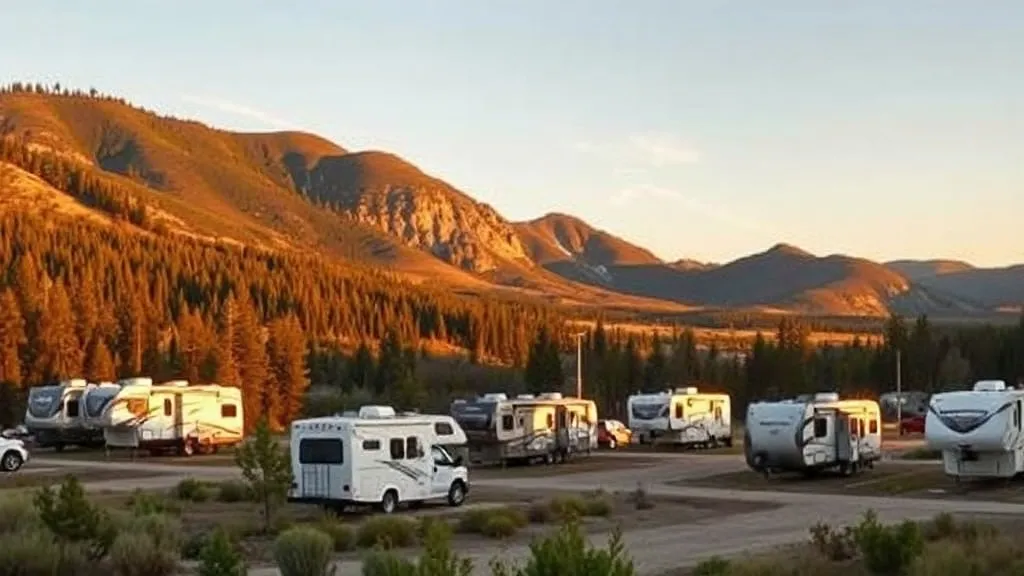
Mammoth Campground is Yellowstone’s only year-round campground: 82 dry sites at $25 a night, no hookups, a 45-foot combined length limit from May through mid-October and 30 feet in winter, booked on Recreation.gov in season and first-come, first-served from October 15 through April 1. It sits just below Mammoth Hot Springs near the North Entrance at roughly 6,200 feet, the lowest and mildest campground in the park.
That low elevation is the reason it can stay open when Canyon and Grant are under snow, and it is also why Mammoth is the campground we send early-season and late-season RVers to. This review covers what the campground is actually like, who fits, and how it compares to Yellowstone’s other options.
We verified sites, fee, season, limits and reservation rules against the NPS Yellowstone campground table for 2026. For the park-wide picture, our Yellowstone RV camping guide covers all twelve campgrounds.
Quick answer: Mammoth is a $25, no-hookup, 82-site campground open all year. Rigs up to 45 feet combined fit in season, 30 feet in winter. Book on Recreation.gov six months out for April through mid-October; from October 15 to April 1 just show up. Elk walk through the loops most days, and it is the closest in-park camping to Gardiner, Lamar Valley and the northern range.
Mammoth Campground at a glance
| Spec | Detail (NPS 2026 table) |
|---|---|
| Sites | 82 (some accessible; limited hiker/biker) |
| Fee | $25 per night |
| Hookups | None (dry camping) |
| Max length | 45 ft combined May–mid-Oct; 30 ft mid-Oct–April |
| Reservations | Recreation.gov (6-month window); first-come Oct 15–Apr 1 |
| Season | Year-round |
| Elevation | About 6,200 ft |
| Toilets | Flush and pit toilets listed |
| Dump station | Yes |
| Generators | Allowed, posted daytime hours |
| Showers | Not on site; Mammoth Hot Springs Hotel when operating |
What Mammoth is like
Mammoth is a hillside campground on the north side of the Mammoth Hot Springs developed area, five miles from the North Entrance at Gardiner, Montana. Instead of the lodgepole forest that surrounds most Yellowstone campgrounds, you get open sagebrush, scattered juniper and Douglas fir, and views across the Gardner River canyon. It feels more like high desert than mountain forest, which some campers love and others find exposed.
The loop is compact and sloped, with a mix of back-in and a few pull-through pads. Elk are the defining feature: the Mammoth herd wanders through the campground and the hotel lawns constantly, and in the September and October rut a bull elk bugling between the sites at 5 a.m. is the standard wake-up. Give them room; rangers close sections of the area during the rut when bulls get aggressive.
The developed area up the hill has the Albright Visitor Center, a general store, the Mammoth Hot Springs Hotel and its dining room (seasonal), a gas station, and the terraces themselves. Gardiner, five miles down the road, has groceries, restaurants, fuel and a handful of private RV parks with hookups.
Hookups, water and power
There are no hookups at Mammoth. Every site is dry, like every campground in Yellowstone except Fishing Bridge RV Park. What the campground does have:
- Potable water and flush toilets (the NPS table also lists pit toilets); expect reduced services in winter and confirm water availability before a cold-season stay.
- A dump station, so you can arrive with empty tanks and leave clean.
- Generator use during posted daytime hours. Yellowstone’s park-wide rule is roughly 8 a.m. to 8 p.m. with a 60-decibel limit at 50 feet; check the posted hours at the loop.
If you are dry camping for more than a couple of nights, our RV power without hookups guide covers solar and battery sizing for exactly this kind of stay. Mammoth’s lower elevation means less overnight furnace load than Canyon or Grant, which helps.
Rig size: 45 feet in summer, 30 in winter
The NPS lists a 45-foot combined length limit from May through mid-October and a 30-foot combined limit from mid-October through April. In practice, the campground is small and sloped, and not every site fits 45 feet; Recreation.gov will only offer you sites that match the equipment length you enter, so enter your true combined length. Older references to a “40-foot” limit at Mammoth are the previous figure; the current table says 45.
For a big fifth wheel or Class A with a toad, Mammoth is workable in summer but not roomy. If you are over 40 feet and want easier maneuvering, Bridge Bay, Madison or Fishing Bridge are more comfortable, and our national park RV rig size limits guide shows how the Yellowstone campgrounds stack up.
Reservations: two systems, one campground
Mammoth is on Recreation.gov, not the Yellowstone National Park Lodges system, which for 2026 handles Fishing Bridge, Bridge Bay, Canyon, Grant and Madison. Two things follow:
- April through mid-October: reserve on Recreation.gov, rolling six-month window. Summer weekends sell out; shoulder weeks in May and October are usually available.
- October 15 through April 1: first-come, first-served, and the only walk-up camping in the park. Arrive by early afternoon on autumn weekends; winter weekdays are wide open.
Our Yellowstone campground reservations guide explains the 2026 split and the 2027 move of every campground onto Recreation.gov.
Winter camping at Mammoth
From November through March, Mammoth is the only place to sleep in an RV inside Yellowstone. The road from Gardiner to Mammoth and on to Cooke City through Lamar Valley is the only park road plowed for wheeled vehicles all winter, so a winter stay at Mammoth means Lamar wolf-watching at dawn without a snowcoach. Expect:
- Reduced services: assume limited toilets and no reliable running water, so bring full fresh tanks and do not count on the dump station in freezing weather.
- A 30-foot combined limit; the winter loop is small.
- Nighttime lows well below zero Fahrenheit in January. A four-season rig, heated tank pads and a serious propane budget are not optional.
- Sites are $25 and first-come; you will rarely need to compete for one.
This is a niche use, but for photographers and wolf-watchers it is one of the best winter RV bases in any national park.
What to do from Mammoth Campground
Mammoth is the northern range’s campground, and its geography favors a specific set of days.
- Mammoth Hot Springs Terraces. The travertine terraces are a five-minute drive or a stiff walk up the hill; the Upper Terrace Drive is a short one-way loop and the boardwalks are best in early morning light. Do this the evening you arrive.
- Lamar Valley. Leave the campground before dawn, drive east through Tower Junction and into Lamar for bison, wolves and grizzlies. It is about an hour to the heart of the valley, and the pullouts fill with spotting scopes by first light. This is the reason wildlife-focused campers pick Mammoth over anything else.
- Boiling River area and the Gardner River. The Mammoth-to-Gardiner road follows the river canyon; the roadside pullouts are reliable spots for bighorn sheep and pronghorn.
- Norris and the geyser basins. Norris Geyser Basin is about 21 miles south via Indian Creek and Sheepeater Cliff. Old Faithful is roughly 50 miles and a full day out and back.
- Gardiner. Five miles north through the Roosevelt Arch, with restaurants, groceries, fuel, and rafting on the Yellowstone River. It is the easiest resupply town for any in-park campground.
Wildlife rules that are specific to Mammoth
The elk herd is a daily presence in the campground and the developed area. In the fall rut, roughly mid-September through October, bulls charge people who get close, and rangers cordon off areas of the hotel lawns and campground. Stay 25 yards from elk and bison and 100 yards from bears and wolves, and never walk between a bull and his cows. Mammoth is also grizzly country; food, coolers, stoves and toiletries go inside the RV or vehicle at all times when not in use.
Site tips
- The loop is sloped and sites are back-in with limited pull-through inventory; bring leveling blocks.
- Sites at the outer edge of the loop face the sagebrush hillside and are quieter; inner sites are closer to the road and toilets.
- Shade is scarce compared with the forested campgrounds, which is welcome in a cool May and hot in an August afternoon; an awning matters here.
- The lower elevation and open terrain mean better solar exposure than at Canyon or Madison, which helps for a dry-camping stay.
How Mammoth compares to Yellowstone’s other campgrounds
| Campground | Hookups | Sites | Max length | Season | Booking (2026) |
|---|---|---|---|---|---|
| Mammoth | None | 82 | 45 ft summer / 30 ft winter | Year-round | Recreation.gov; FCFS Oct 15–Apr 1 |
| Fishing Bridge RV Park | Full | 310 | Up to 95 ft | May–Oct | Yellowstone NP Lodges |
| Madison | None | See NPS table | 60 ft | May–Oct | Yellowstone NP Lodges |
| Indian Creek | None | ~70 | 35 ft | June–Sept | Recreation.gov |
| Tower Fall | None | 31 | 30 ft | May–Sept | Recreation.gov |
Mammoth’s edge is season length and the northern range. Its weakness is that it is in the far northwest corner: Old Faithful is about 50 miles and 90 minutes away, and the lake and canyon are similar. If you want to see the whole park from one campground, Madison or Canyon are more central; see our Yellowstone campgrounds compared guide for that ranking. If you mainly want Lamar Valley wildlife, the Mammoth terraces and the northern loop, Mammoth is the right base and Tower Fall (30 feet, hairpin approach) is the only alternative closer to Lamar.
Nearby with hookups: Gardiner and West Yellowstone
If you need shore power for part of the trip, the private parks in Gardiner, five miles north of the campground, are the closest full-hookup sites to Mammoth. West Yellowstone, at the West Entrance, has more choices and a bigger town but is a 90-minute drive; our West Yellowstone RV parks guide covers those. A common pattern is two dry nights at Mammoth for the northern range, then a hookup reset in Gardiner or West Yellowstone before Madison or Fishing Bridge.
Verdict
Mammoth Campground is Yellowstone’s most useful odd one out: low, mild, cheap, open all year, and full of elk. Book it for shoulder-season and winter trips, for Lamar Valley access, and for the days you cannot get anything else. Do not book it expecting hookups, showers or a central location. At $25 a night with a dump station and a 45-foot summer limit, it is one of the best-value RV sites in any national park, provided your rig can go without power. For more Wyoming camping, start at our Wyoming hub.
Frequently asked questions
Is Mammoth Campground open year-round?
Yes. Mammoth is the only campground in Yellowstone that stays open all year. Every other campground closes for winter, most by mid-October.
Does Mammoth Campground have hookups?
No. Mammoth is dry camping with no water, sewer or electric at the sites. Fishing Bridge RV Park is the only Yellowstone campground with hookups. Mammoth does have flush toilets, potable water and a dump station, and generators are allowed during posted hours.
What is the RV length limit at Mammoth Campground?
The NPS 2026 table lists a 45-foot combined limit from May through mid-October and a 30-foot limit in winter, from mid-October through April. Combined means RV plus tow or towed vehicle.
How much does Mammoth Campground cost?
The NPS 2026 campground table lists $25 per night. Standard federal Senior and Access pass discounts on campsites should apply; confirm on Recreation.gov at booking.
How do you reserve Mammoth Campground?
Through Recreation.gov, on a rolling six-month window, for stays from April through mid-October. From October 15 through April 1 the campground is first-come, first-served and is the only walk-up camping in the park.
How many sites does Mammoth Campground have?
82 sites, including wheelchair-accessible sites and a limited number of hiker-biker sites, in a sagebrush-and-juniper hillside loop just below Mammoth Hot Springs.
Are there showers at Mammoth Campground?
Not in the campground itself. Showers are available at Mammoth Hot Springs Hotel for a fee when the hotel is operating; check current availability before relying on it.
About the author
Marisol ReyesCamping & Outdoors Editor
Marisol spent six years as an interpretive ranger in the California and Colorado state park systems before turning to writing full-time. She knows public-land camping from the inside — how reservation windows really work, why some loops fill before others, and which 'first-come, first-served' sites are worth gambling on.
More from Marisol →Campgrounds in this guide
Facts pages for each park — hookups, rig limits, rates and booking, plus every guide that covers it.
Keep reading
Colter Bay RV Park Review: Grand Teton's Only Full-Hookup Campground
Colter Bay RV Park, Wyoming: 112 full-hookup sites on Jackson Lake in Grand Teton National Park, 45-foot pull-throughs, 20/30/50 amp, no generators, booked on Recreation.gov.
Grand Teton RV Camping: Every Campground in the Tetons (2026)
Camping in Grand Teton National Park: Colter Bay RV Park full hookups, Gros Ventre, Signal Mountain, Lizard Creek and Headwaters compared by hookups, length limits and Recreation.gov booking.
Anchor Down RV Resort Prices, Map & Review: Douglas Lake, Dandridge TN (2026)
An honest Anchor Down RV Resort review: 2026 prices and fees, the site map and lakefront site numbers, what the operator publishes, what to ask before booking, and how it compares with the Gatlinburg and Pigeon Forge parks 30-plus minutes away.