Stargazing Camping in California: 4 Dark-Sky RV Bases
Compare four California stargazing camping areas by current 2026 fees, hookups, reservations, RV access, viewing rules, and the best seasonal tradeoffs.
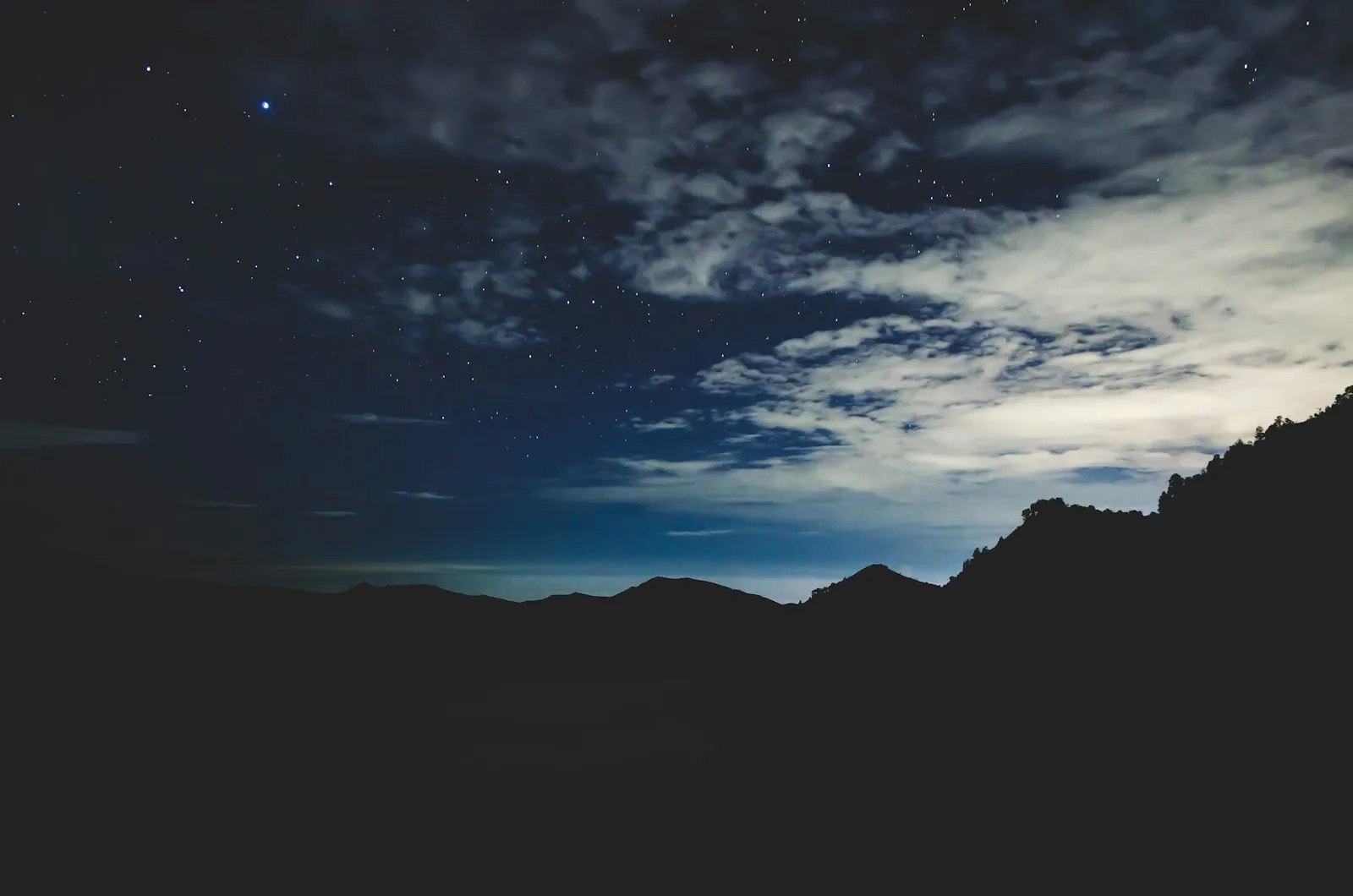
For the darkest California RV trip, choose Death Valley; for the easiest reservable national-park base, choose Joshua Tree; for public full hookups, choose Anza-Borrego; and for free designated camping below the Sierra, choose Alabama Hills. All four can deliver an excellent night sky, but their fees, heat, road access, and overnight rules are very different.
This guide uses official information checked August 5, 2026. It does not assign unsupported Bortle numbers or promise that a campsite will be dark on a cloudy or moonlit night. Check the moon, weather, smoke, wind, park alerts, and the exact campsite before driving into the desert.
California dark-sky camping at a glance
| Area | Recommended RV base | Hookups | Current price | Booking | Best reason to choose it |
|---|---|---|---|---|---|
| Joshua Tree | Cottonwood Campground | None; water and dump station available | $35 | Recreation.gov, up to 6 months | NPS identifies it as the park’s darkest campground |
| Death Valley | Furnace Creek Campground | Dry or limited full hookup | $30 dry; $44 full hookup | Reservable Oct 15–Apr 15 | Dark-sky destination with the most official viewing locations |
| Anza-Borrego | Borrego Palm Canyon | Full hookup available | $45 RV hookup | ReserveCalifornia | Hookups inside a Dark Sky Park near services |
| Alabama Hills | Designated BLM sites | None | Free permit required | First come | Sierra foreground and no campsite fee |
There is no universal winner. A small solar-equipped rig may prefer Cottonwood or Alabama Hills. A traveler who needs shore power can compare Borrego Palm Canyon with Furnace Creek’s limited hookup inventory. A large rig should treat every individual pad and access road as a separate fit decision.
1. Joshua Tree: best reservable national-park option
Joshua Tree is a designated International Dark Sky Park, but not every part of it has the same horizon or surrounding light. The National Park Service stargazing page specifically calls Cottonwood Campground the park’s darkest campground and identifies the Pinto Basin Road between Cholla Cactus Garden and Cottonwood as the least-trafficked, darkest road corridor.
Cottonwood CampgroundPark details →
Cottonwood is the first site to price for a trip organized around the sky. It sits on the park’s southern side, farther from the brighter gateway communities than Black Rock.
- Sites: 62
- Price: $35/night
- Hookups: None
- Facilities: Water, flush toilets, tables, fire grates, dump station
- Elevation: 3,000 feet
- Booking: Recreation.gov, from same day up to six months ahead
- Best for: RVers who want the park’s officially identified darkest campground
Cottonwood is dry camping despite the water and dump station. Confirm the selected site’s equipment length on Recreation.gov; a campground total does not prove that every pad fits the same RV.
Jumbo Rocks CampgroundPark details →
Jumbo Rocks puts the campsite among the park’s signature boulders and is a strong choice when landscape and convenient access to the park interior matter as much as maximum darkness.
- Sites: 124
- Price: $30/night
- Hookups: None
- Facilities: Pit toilets, tables, fire grates; no water
- Elevation: 4,400 feet
- Booking: Reservation required
- Best for: A central park base and boulder foregrounds
The higher elevation can mean a colder night than expected. Fill the fresh-water tank before entering and do not count on cell service to retrieve a reservation or map at the campground.
Black Rock CampgroundPark details →
Black Rock is more developed and easier for tank management, but its western location is closer to Yucca Valley’s light. It remains a practical compromise for an RVer who values facilities.
- Sites: 99
- Price: $35/night
- Hookups: None
- Facilities: Water, flush toilets, tables, fire grates, dump station
- Elevation: 4,000 feet
- Booking: Reservation required
- Best for: Water and dump access on the park’s west side
Joshua Tree’s first-come campgrounds are Hidden Valley, White Tank, and Belle, currently $25 per night. The NPS says first-come sites are highly competitive on weekends from September through May. A stargazing trip should not depend on finding one after dark.
Where to view after camp is set
The park designates the parking lots at Quail Springs, Hidden Valley, Cap Rock, and Ryan Mountain as stargazing areas. Stay awake and within 20 feet of the vehicle. Roadside pullouts may be used for awake viewing, but overnight camping in pullouts or parking lots is prohibited.
The park also prohibits light painting. Use a dim red light for safety and photography setup, not a bright flashlight swept across other visitors’ exposures.
For a broader campground comparison, use our Joshua Tree RV camping guide.
2. Death Valley: best overall darkness
Death Valley’s scale and distance from major cities make it the strongest pure dark-sky destination in this comparison. NPS ranger recommendations include Mesquite Flat Sand Dunes, Harmony Borax Works, Badwater Basin, and Ubehebe Crater. The best viewing location is often away from a developed campground’s lights, provided the road is open and the viewing area is legal after dark.
Furnace Creek CampgroundPark details →
Furnace Creek is the most predictable RV base because it is the only NPS campground in Death Valley that accepts reservations. It is also the only option in this guide with both a national-park location and limited full-hookup inventory.
- Standard price: $30/night
- Full-hookup price: $30 campsite fee plus $14 utility fee, or $44
- Hookups: Site-specific; most are dry, limited sites have full hookups
- Facilities: Potable water and flush toilets; no campground showers
- Booking: Recreation.gov up to six months ahead, for Oct 15–Apr 15 stays
- Season: Open year-round with limited summer capacity
- Rig fit: Some sites accommodate up to 100 feet, but the selected pad controls
Paid showers and laundry may be available at nearby private facilities, but they are not campground amenities and should be reconfirmed at the time of the trip.
Furnace Creek has more developed light than a remote viewing point. That is not a reason to avoid it; it is a reason to use camp as the sleeping and power base, then drive to a legal open viewing area for the main session.
Stovepipe Wells and Mesquite Spring
All other NPS campgrounds in Death Valley are first come. Stovepipe Wells normally opens in late fall and closes April 15, while Mesquite Spring can provide a higher and cooler alternative. The current NPS rules list a 35-foot total-length maximum at Mesquite Spring and no campground-wide RV maximum at Stovepipe Wells.
Do not publish or plan around an old static nightly price for either. Use the current NPS fee information and automated kiosk total when available. An open campground also does not mean every road or facility nearby is open.
Heat is the decisive safety factor
Lower Death Valley campgrounds regularly close in mid-April as temperatures rise. NPS warns that summer midnight temperatures can remain above 100°F. Air conditioning and shore power do not make a summer roadside breakdown safe.
For lower-elevation RV camping and long night sessions, November through March is the sensible window. Always check Death Valley campground status and rules plus current road conditions before entering.
Our Furnace Creek Campground review covers the individual RV base in more depth, while the Death Valley RV camping guide compares the wider park.
3. Anza-Borrego: best public full-hookup base
Anza-Borrego Desert State Park has held Dark Sky Park status since 2018. Borrego Springs, inside the park, has been a designated Dark Sky Community since 2009. That pairing gives RVers something unusual: desert darkness near groceries and a campground with published full-hookup pricing.
Borrego Palm Canyon CampgroundPark details →
The current state fee schedule lists:
- RV full-hookup site: $45/night
- Tent site: $35/night
- Extra vehicle: $10/day or night
Confirm the booking total, exact utility service, pad length, cancellation terms, and any reservation fee in ReserveCalifornia. Do not assume that every campsite is an RV hookup site.
The main benefit is straightforward: air conditioning, battery charging, water, and sewer can all be managed at the site category designed for RVs. That makes a multi-night stay easier than dry camping at Joshua Tree or in Alabama Hills.
The tradeoff is developed-campground light and activity. Preserve everyone’s night vision by extinguishing unnecessary exterior lights, closing the RV shades, and using a red headlamp. For a dedicated observing session, ask park staff about the current legal viewing areas and night-access rules rather than improvising a turnout.
Summer heat is severe. The dark-sky designation is year-round, but comfortable RV stargazing is primarily an autumn-through-spring activity.
For regional routing and other Southern California bases, see our RV parks near Palm Springs and Southern California RV parks guides.
4. Alabama Hills: best free designated option
Alabama Hills trades national-park infrastructure for a dramatic Sierra Nevada foreground. The important 2026 correction is that this is no longer accurately described as open-ended dispersed camping anywhere a rig can pull off Movie Road.
The Bureau of Land Management Alabama Hills page says:
- Camping outside developed campgrounds is limited to designated sites
- A free camping permit is required
- The permit does not reserve or guarantee a site
- All designated sites are first come
- Campers must use the six portable toilets or pack out solid human waste
The free permit can be completed online or obtained at the Eastern Sierra Visitor Center and information kiosks. Download the current camping map before losing service and use only a site marked for camping. Do not expand a site, move rocks, or drive off the established route to make an RV fit.
BLM itself recommends nearby Tuttle Creek, Lone Pine, and Portuguese Joe campgrounds for RVs and trailers. Those developed options provide a more predictable fallback when a large rig, bathroom access, or a guaranteed legal parking layout matters.
Alabama Hills nights can be cold and windy because the terrain sits below the Sierra escarpment. Check the Lone Pine forecast, then account for exposed-site wind rather than relying on temperature alone.
Our California boondocking guide covers responsible public-land camping beyond this single area.
How to choose among the four
Choose Joshua Tree if
- You want a reservable national-park campground
- A no-hookup stay is comfortable for your rig
- You want several designated viewing areas and a wider park trip
- Cottonwood’s water and dump station meet your tank needs
Choose Death Valley if
- Darkness is the main purpose of the trip
- You can travel in the cool season
- You want limited in-park full hookups or a reservable dry site
- You are prepared for long distances, limited service, and changing road conditions
Choose Anza-Borrego if
- Full hookups are more important than maximum isolation
- You want a town nearby for supplies
- You are traveling between San Diego, Palm Springs, and the desert
- A $45 published RV-site price fits the budget
Choose Alabama Hills if
- Free camping is a priority
- Your rig fits an existing designated site without modifying it
- You can operate without hookups and pack out waste
- Sierra night photography matters more than campground amenities
The moon, season, and timing
Moon phase matters more than an area’s reputation. A full or nearly full moon illuminates the landscape beautifully, but hides faint stars and much of the Milky Way’s detail. A new-moon trip gives the longest period without moonlight. A partial moon can still work if it sets before the planned session.
Check both phase and moonrise/moonset. “Twenty percent illuminated” is not enough information: that moon may be below the horizon during the hours you are outside.
Season changes what is visible and whether camping is safe:
- November–February: long nights and the safest lower-desert temperatures; winter constellations dominate.
- March–April: a good balance for the Milky Way core before dawn, with rising daytime heat.
- May–September: the core is visible at more convenient hours, but lower deserts can be dangerously hot. Favor higher elevations or a different region.
- October: cooling temperatures and a useful shoulder month, though late-season heat remains possible.
Smoke, dust, high cloud, and wind can degrade a forecast that otherwise says “clear.” Check current air quality and visibility, not only the chance of rain.
RV dark-sky etiquette
One rig can spoil a campground’s dark adaptation. Before nightfall:
- Turn off awning, porch, marker, and decorative lights that are not needed for safety.
- Close shades so indoor LEDs and screens do not illuminate neighboring sites.
- Use a dim red headlamp and point it at the ground.
- Disable motion-triggered exterior lighting where legal and safe.
- Avoid starting a generator during the viewing session; follow posted hours regardless.
- Arrive before dark so backing lights and headlights do not sweep across observers.
- Never light-paint rocks, trees, or another person’s campsite.
If you need white light for a safety issue, use it. Etiquette never outranks avoiding a fall, snake, cactus, moving vehicle, or medical emergency.
What to bring
You do not need a telescope. A practical RV kit is:
- A reclining chair or ground pad
- A red-light headlamp with a dedicated red mode
- Warm layers, hat, and gloves—even after a hot desert day
- Closed-toe shoes
- Water and a hot drink
- Binoculars for star fields and bright deep-sky objects
- Offline sky map or downloaded NPS map
- Paper campsite and emergency information
- A tripod and manual-control camera if photographing
- Wheel chocks and a site light used only while setting up
Dark adaptation takes roughly 20–30 minutes. Put the phone away or switch it to a dim red display before that period begins. A single bright screen can reset your eyes and everyone standing nearby.
A simple two-night plan
Night one is reconnaissance. Arrive in daylight, level the RV, locate bathrooms, identify hazards, and confirm the legal viewing location. After sunset, stay out for an hour to learn the horizon and understand where campground lights appear.
Day two is recovery and preparation. Rest, check the current forecast, charge gear, fill water, and decide whether driving away from camp is necessary. Reach the viewing area before sunset and remain until after full astronomical darkness if conditions allow.
Do not schedule a long pre-dawn session immediately before a demanding RV drive. Fatigue is a more immediate risk than missing one hour of stars.
Official sources checked
- National Park Service: Joshua Tree campgrounds
- National Park Service: Joshua Tree stargazing
- National Park Service: camping in Death Valley
- National Park Service: Death Valley night exploration
- California State Parks: Anza-Borrego fees
- DarkSky International: Anza-Borrego Desert State Park
- Bureau of Land Management: Alabama Hills
Frequently asked questions
Where is the best stargazing camping in California?
Death Valley offers the darkest overall setting and several official viewing locations, while Joshua Tree is easier to combine with reservable national-park camping. Anza-Borrego is the strongest full-hookup public option, and Alabama Hills offers free designated camping with a required permit.
Which Joshua Tree campground is best for stargazing?
The National Park Service identifies Cottonwood as Joshua Tree's darkest campground. It has 62 reservable sites, water, flush toilets, and a dump station for $35 per night, but no RV hookups.
Where can I get full hookups while stargazing in California?
Borrego Palm Canyon Campground in Anza-Borrego publishes full-hookup RV sites at $45 per night. Furnace Creek in Death Valley has a limited number of full-hookup sites at $44 before any applicable additional charges.
Is Alabama Hills still free for RV camping?
Designated Alabama Hills camping remains free, but a free permit is required, sites are first come and the permit does not guarantee one. Camping is limited to marked designated sites; BLM recommends nearby developed campgrounds for larger RVs and trailers.
Does a full moon ruin stargazing?
Bright moonlight hides many faint stars and much of the Milky Way's detail. Plan around the moon's rise and set times; a new-moon window gives the longest dark period, while a partial moon can still work after it sets.
About the author
Marisol ReyesCamping & Outdoors Editor
Marisol spent six years as an interpretive ranger in the California and Colorado state park systems before turning to writing full-time. She knows public-land camping from the inside — how reservation windows really work, why some loops fill before others, and which 'first-come, first-served' sites are worth gambling on.
More from Marisol →Keep reading
Azalea Campground, Kings Canyon: Sites & RV Limits (2026)
A verified 2026 Azalea Campground review covering all 110 sites, the $32 fee, site 93's 47-foot RV record, 30-foot trailer limit, reservations, winter camping, and bear rules.
Tahoe Valley Campground Review: Sites, Rules & Booking (2026)
Is Tahoe Valley Campground worth it? Verified 2026 review of its 439 sites, year-round operation, live rates, paid Wi-Fi, fire rules, cancellation policy, and South Lake Tahoe trade-offs.
RV Camping in Sequoia National Forest: Campgrounds, Kern River & Free Dispersed Sites
The National Forest, not the National Park — where to RV camp around Hume Lake, the Western Divide, and the Kern River, plus the free dispersed camping the park can't offer.