Chisos Basin Campground Review: Big Bend's Mountain Bowl
An honest review of Chisos Basin Campground in Big Bend — the mountain campground with the famous Window view, the strict rig-size limits, and what the 2026 construction news means for your trip.
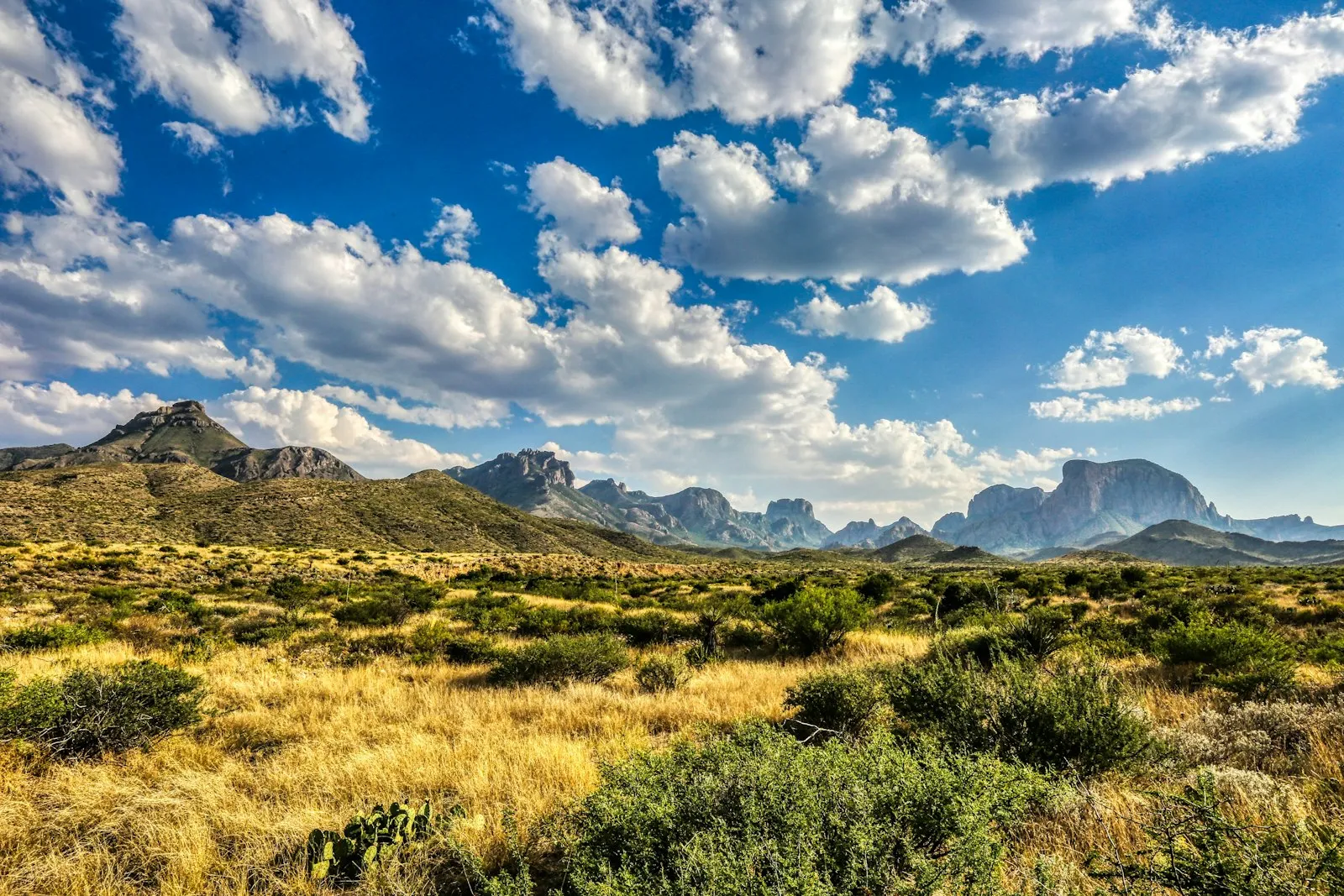
There are national park campgrounds with better facilities than Chisos Basin, and plenty with easier roads. There are none in Texas — and few anywhere — with a view like this. You camp inside a bowl of volcanic rock at 5,400 feet, ringed by the Chisos Mountains, with a V-shaped notch called the Window framing the desert two thousand feet below. At sunset the notch catches fire. That view alone puts Chisos Basin on most Big Bend campers’ must-do list, and it is why the campground’s 60 sites are among the hardest reservations in Texas from October through April.
Here is the short version: if your rig is small enough to get up the Basin Road, camp here. The catch is that “small enough” is genuinely restrictive — the National Park Service does not recommend trailers over 20 feet or RVs over 24 feet, and this is one of the rare NPS length advisories you should treat as a hard rule rather than a suggestion. More on that below, because it is the single most important fact about this campground.
2026 status — the closure that didn’t happen: Big Bend spent two years telling visitors that the entire Chisos Basin — lodge, campground, Basin Road, and trails — would close for roughly two years of construction beginning May 1, 2026, to rebuild the aging 1964 lodge and rehabilitate the Basin’s water system. In April 2026, that project was halted before it started. Construction costs had climbed so far past the 2019 estimates that the budget could no longer cover both the lodge rebuild and the water system work. As of mid-2026, the campground, visitor center, Basin Road, and all Chisos Basin trails are fully open. The lodge is running with limited room availability (full capacity anticipated by September 2026), the restaurant is closed with a food trailer serving burgers and snacks in its place, and the NPS plans to re-issue a smaller contract focused only on the water system. Translation for campers: you can book Chisos Basin right now, but check the park’s Chisos Basin construction updates page before finalizing plans, because the water system work will eventually happen in some form.
If you are planning a broader trip, start with our Big Bend RV camping guide for the full picture of every campground in and around the park, and see where Big Bend fits in our best RV parks in Texas rankings.
Getting There: The Basin Road Talk
Every review of Chisos Basin eventually arrives at the road, so let’s do it properly.
The Chisos Basin Road is a paved, well-maintained 6-mile spur that climbs from the desert floor near Panther Junction up into the mountain bowl. It gains serious elevation fast, with grades as steep as 15% and a sequence of sharp curves and switchbacks near the top — including hairpins where a long rig will need both lanes to make the turn, assuming nothing is coming the other way. Something is usually coming the other way.
This is why the NPS posts the advisory: trailers over 20 feet and RVs over 24 feet are not recommended. Recreation.gov goes further and states oversized rigs “will not be accommodated.” In practice, here is how to read that:
- Vans, truck campers, and Class Bs: No problem. This campground was practically made for you.
- Small Class Cs (under 24 feet): Fine, but drive it in low gear both directions and expect your brakes to earn their keep on the way down.
- Trailers up to 20 feet: Doable with an experienced driver. The switchbacks are the test, and the small, often-sloped sites are the second test.
- Anything bigger: Don’t. This is not a “the ranger will look the other way” situation. It is a physics situation. The curves are tight enough that overlength rigs cross the centerline on blind corners, and the campground has almost nowhere to turn a big rig around once you realize your mistake. Book Rio Grande Village instead and drive up to the Basin in your toad or tow vehicle for the day — the day-use parking handles regular vehicles fine.
Big Bend is one of the parks where rig length genuinely determines your options, and it is worth understanding the pattern before you buy or book — our guide to national park RV size limits covers which parks punish big rigs and which don’t.
Beyond the road itself, remember the West Texas math: the park headquarters at Panther Junction is about 30 minutes from the Basin turnoff area, the nearest real towns are Marathon (about 70 miles from the north entrance) and Study Butte/Terlingua (just outside the west entrance), and serious provisioning means Alpine, over 100 miles away. Fuel up at Panther Junction or before you enter the park. Nothing about Big Bend rewards improvisation.
The Campground: Camping Inside the Bowl
The campground sits in the lower portion of the Basin, below the lodge and visitor center complex, arranged in loops that step down the slope among oaks, junipers, and pinyon pines. This is not desert camping — the vegetation, the temperatures, and the wildlife all belong to the mountains, which is disorienting in the best way after driving through hours of Chihuahuan Desert to get here.
There are 60 individual sites, all reservation-only through recreation.gov. Each comes with a picnic table, a charcoal grill, and a bear-proof food storage locker. Note the grill: wood and ground fires are prohibited throughout Big Bend, so there are no campfire rings anywhere in the park. Charcoal in the provided grills (or a contained camp stove) is your cooking and ambiance budget. If a crackling wood fire is non-negotiable for you, Big Bend will disappoint you at every campground, not just this one.
A few honest notes on the sites themselves:
- They are small and close together. This campground was laid out decades ago for tents and small rigs, and it shows. Privacy varies enormously site to site — some are stacked near neighbors along the loop road, while a handful (campers consistently praise sites tucked below road level, like site 30’s tree-canopied clearing) feel genuinely secluded.
- Many pads are sloped. Bring leveling blocks and patience. The whole campground is built on the side of a mountain bowl; flat is relative.
- Wind is a real factor, especially in winter and spring. The Basin funnels it. Tent campers should bring serious stakes, and awnings should live rolled up unless you are sitting under them.
- The views are democratic. Almost every site looks up at Casa Grande, Emory Peak, or the ridgelines, and many catch the Window. Even the mediocre sites here out-view the best sites at most campgrounds.
Wildlife: This Is Bear and Lion Country
The Chisos Mountains hold Texas’s only resident black bear population, and mountain lions live here too — the Basin trails are among the most likely places in the park to encounter either. This is not theoretical. Bears wander through the campground, and the food storage rules are mandatory, enforced, and genuinely important: everything with a scent goes in the bear box or a hard-sided vehicle, always, including coolers. Campers who treat this casually are the reason bears get relocated or killed. Don’t be that camper.
For most people this adds to the experience rather than detracting from it. Hearing that a lion was spotted on the Window Trail that morning recalibrates your sense of where you are. Keep kids close on trails, hike in groups at dawn and dusk, and read the trailhead signage.
Amenities: What You Get and What You Don’t
Chisos Basin is a classic NPS dry campground, with one unusual advantage — it sits a short walk from the most developed spot in the entire park.
In the campground: drinking water, flush toilets, the dump station, bear boxes, tables, and grills at each site. No hookups of any kind — no electric, no water, no sewer at sites. Generators are restricted to designated sites during limited hours, and the campground skews strongly toward tents, vans, and small rigs that don’t run them, so the soundscape stays quiet. No showers.
Up the hill at the lodge complex (walkable, though it is a climb): the Chisos Basin Visitor Center, the camper store with basics, ice, and souvenirs, and — in 2026’s post-cancellation limbo — a food trailer serving burgers and snacks where the lodge restaurant used to be. The restaurant closed ahead of the construction project that then didn’t happen; the food trailer is the interim answer, and it is honestly a fine one after a day on the South Rim. The lodge itself is renting rooms again at reduced capacity, with full capacity expected by fall 2026.
Cell service is the quiet surprise: campers consistently report usable Verizon and AT&T LTE around the visitor center and lodge, which makes the Basin one of the only connected spots in a park famous for having none. Signal at individual campsites is hit-or-miss depending on which fold of the bowl you’re in. Treat connectivity as a bonus, not a plan.
What’s Nearby: The Best Trailheads in Texas Are in the Campground
This is the other half of the Chisos Basin argument. The campground isn’t near the best hiking in Big Bend — it is in it.
| Hike | Distance (RT) | The Point |
|---|---|---|
| Window Trail | ~5.6 miles | Starts from the campground itself. Descends Oak Creek canyon to the Window pouroff, where the drainage ends in a polished-rock slot with a 200-foot drop framing the desert. Remember: it’s downhill out, uphill back. |
| Window View Trail | 0.3 miles | Paved, flat, wheelchair-accessible sunset viewpoint. Do it every evening. |
| Lost Mine Trail | ~4.8 miles | The park’s best effort-to-reward ratio. Trailhead is on the Basin Road just below the campground; parking fills by mid-morning, which is exactly why staying in the Basin wins. |
| Emory Peak | ~10.5 miles | The Chisos high point at 7,825 feet, with a short scramble at the summit. Full day. |
| South Rim | 12–14.5 miles | The famous one — a rim of cliffs looking 2,000+ feet down into Mexico. As a day hike it’s a beast; from the Basin campground you can start at first light, which is the whole trick. |
Day trips by vehicle: Santa Elena Canyon via the Ross Maxwell Scenic Drive is the classic — about an hour and a half each way from the Basin, ending at the short trail into the 1,500-foot canyon walls. The hot springs near Rio Grande Village and the ghost-town-and-tacos scene in Terlingua round out a week easily.
Staying in the Basin means you start every one of these trails before the day-trippers arrive from Terlingua and the desert campgrounds. In March, that’s the difference between a parking spot at Lost Mine and a ranger waving you past a full lot.
The Honest Details
What works:
- The setting. There is no view from a campsite in Texas that beats the Window at sunset, and the Basin’s rock walls make every hour of changing light an event.
- The temperature. At 5,400 feet, the Basin runs 15 to 20 degrees cooler than the desert floor. In April, when Rio Grande Village bakes at 95, the Basin sits in the upper 70s. It stretches Big Bend’s comfortable season by a solid two months on each end.
- Trailhead access. Window, Lost Mine, Emory Peak, and the South Rim, all from your campsite or a two-minute drive.
- The price. $16 a night for one of the great campsite views in the national park system.
- Bear boxes, flush toilets, potable water, a dump station, and a camper store within walking distance — well-equipped by dry-camping standards.
What doesn’t:
- The rig limits exclude most RVers, full stop. If you tow anything substantial, this campground is not for you, and pretending otherwise on the Basin Road endangers other drivers.
- Sites are small, sloped, and close together. This is not a campground you hang around all day; it’s a basecamp.
- No hookups and restricted generator use means real battery management in a campground where you’ll want your fridge working (see: bears).
- Wind. Winter and spring gusts in the Basin are legitimately punishing for tents and awnings.
- Booking pressure. Sixty sites, reservation-only, no first-come line to wait in. Miss the booking window for spring break or the holidays and you are simply not staying here.
- The 2026 facilities limbo: restaurant closed, food trailer instead, and a water-system construction project still coming eventually in some form.
Who it’s for: van campers, truck campers, small Class Cs, short trailers, and tent campers who hike. If that’s you, this is arguably the best campground in Texas and one of the best in the entire park system. Who it’s not for: anyone in a big rig (go to Rio Grande Village), anyone who needs hookups, and anyone whose ideal camping evening involves a wood fire and a long, level pull-through.
Full Specs & Booking
- Hookups: None at any site. Dump station in the campground. Drinking water available.
- Sites: 60 individual sites (plus a separate group campground). Picnic table, charcoal grill, and bear-proof food locker at every site. Many sites sloped; bring leveling blocks.
- Cost: $16 per night for standard sites, plus the park entrance fee ($30 per vehicle, good for 7 days). Interagency pass holders get the standard camping discount.
- Season: Open year-round. Prime months October–April; summer is viable thanks to the elevation but expect afternoon heat and monsoon-season storms.
- Reservation: Required — 100% reservation, no first-come, first-served. Book at recreation.gov (campground 234038). A portion of sites open 6 months ahead; the remainder open 14 days ahead — the two-week window is your rescue plan for a sold-out spring weekend.
- Cell signal: Usable Verizon/AT&T LTE near the visitor center and lodge; variable to weak at individual sites. The best coverage in the park, which is a low bar.
- Max RV length: RVs over 24 feet and trailers over 20 feet not recommended on the Basin Road (grades to 15%, sharp switchbacks); recreation.gov states they will not be accommodated.
- Amenities: Flush toilets, potable water, dump station, bear boxes, generator use limited to designated sites/hours, no showers, no wood fires (charcoal grills only). Visitor center, camper store, and food trailer at the lodge complex up the hill.
Chisos Basin vs. Rio Grande Village vs. Cottonwood
Big Bend has three developed frontcountry campgrounds, and they sort themselves by rig size and season more than by preference.
| Chisos Basin | Rio Grande Village | Cottonwood | |
|---|---|---|---|
| Elevation / climate | 5,400 ft — coolest in the park | ~1,850 ft — hottest | ~2,170 ft — hot, some shade |
| Sites | 60, no hookups | 100 dry (NPS) + 25 full-hookup 50-amp (concession RV park) | 28 standard, no hookups |
| Cost | $16 | $16 dry / ~$46 hookups | $16 |
| Max rig | 24 ft RV / 20 ft trailer | Generous in dry loops; 38 ft in hookup park | Medium rigs fine |
| Generators | Designated sites, limited hours | Allowed (dry area, designated) | Prohibited |
| Season | Year-round | Year-round (hookup park); dry campground seasonal closures possible | Closed May–October |
| The draw | The Window, trailheads, cool air | Hookups, hot springs, dark-sky flats | Quiet, birding, Santa Elena access |
The practical decision tree: big rig or need hookups → Rio Grande Village (read our full Rio Grande Village review — it’s the park’s only hookup option and its own kind of great, especially for stargazing). Small rig and you want to hike → Chisos Basin. Seeking maximum quiet in the cool season on the park’s west side → Cottonwood, the generator-free sleeper near Santa Elena Canyon.
And if everything inside the park is booked — a regular occurrence in March — Big Bend is surrounded by some of the best free camping in Texas. Terlingua Ranch roads, Black Gap WMA, and other options are covered in our Texas boondocking and free camping guide.
The Bottom Line
Chisos Basin Campground is the best reason to own a small rig in Texas. For $16 a night you camp at 5,400 feet inside a volcanic bowl, cooler than the desert by 20 degrees, with black bears in the oaks, the park’s best trails out your door, and the Window burning orange every evening. The road up is genuinely restrictive and the sites are genuinely cramped — the campground makes no apologies for either, and after a sunset here, neither will you.
And in 2026, the story has a twist ending: the two-year closure that loomed over every Big Bend trip plan was called off before it began. The Basin is open. The water system project will return in a smaller form eventually, so check the park’s construction updates page when you book — but for now, the mountain bowl is yours. Book the six-month window, bring leveling blocks and a bear-box discipline, and go.
Frequently asked questions
What is the RV size limit at Chisos Basin Campground?
The National Park Service does not recommend trailers over 20 feet or RVs over 24 feet on the Chisos Basin Road, which climbs grades of up to 15% with sharp switchbacks. Recreation.gov states oversized rigs will not be accommodated. Sites themselves are small and often sloped. If your rig exceeds the limits, book Rio Grande Village instead — it takes RVs up to 38 feet in the hookup loop and larger rigs in the dry campground.
Is Chisos Basin Campground closed for construction in 2026?
No. The planned two-year closure of the Chisos Basin — which would have shut the Basin Road, campground, lodge, and trails starting May 2026 — was halted in April 2026 due to rising construction costs and a budget shortfall. As of mid-2026, the campground, visitor center, Basin Road, and all Chisos trails are fully open. The lodge is operating with limited rooms, the restaurant is closed (a food trailer is running instead), and NPS plans to re-bid a smaller project focused on the Basin water system. Check the park's Chisos Basin construction page before you book.
Are there bears and mountain lions at Chisos Basin?
Yes. The Chisos Mountains are home to black bears and mountain lions, and both are seen in and around the Basin regularly. Every campsite has a bear-proof food storage locker, and using it is mandatory — all food, coolers, trash, and scented items go in the box or a hard-sided vehicle. Bear and lion activity is one of the defining features of camping here; treat the rules seriously.
When is the best time to camp at Chisos Basin?
October through April is prime season. At 5,400 feet the Basin runs roughly 15 to 20 degrees cooler than the desert floor, so even summer camping is tolerable — highs in the upper 80s instead of 110-plus at Rio Grande Village. Winter nights can dip below freezing and can be very windy. Spring break (March) and Thanksgiving through New Year are the hardest weeks to book.
Is there cell service at Chisos Basin Campground?
Better than almost anywhere else in Big Bend, but don't stake your livelihood on it. Campers report usable Verizon and AT&T LTE near the visitor center and lodge complex, a short walk from the campground; signal at individual sites varies with terrain. Most of the rest of the park — including Rio Grande Village — has essentially zero coverage.
Does Chisos Basin Campground have hookups?
No. There are no electric, water, or sewer hookups at any site. The campground has drinking water, flush toilets, bear boxes, picnic tables, charcoal grills, and a dump station. Generators are only allowed in designated sites during limited hours. The only hookups inside Big Bend are the 25 concession-run full-hookup sites at Rio Grande Village RV Park.
About the author
Dale HartmanLead RV Park Reviewer
Dale has lived on the road full-time since 2014, when he sold the house in Boise and moved into a 34-foot fifth wheel with his wife and a stubborn beagle named Otis. In the years since, he's parked at more than 400 campgrounds across 41 states — from boondocking sites with no hookups to luxury resorts with concrete pads and pickleball courts.
More from Dale →Campgrounds in this guide
Facts pages for each park — hookups, rig limits, rates and booking, plus every guide that covers it.
Keep reading
Inks Lake State Park Camping Prices, Sites & Review (2026)
An honest review of camping at Inks Lake State Park — 2026 campsite prices and entrance fees, hookup classes, the best loops, Devil's Waterhole, summer crowds, and how it stacks up against Garner and the rest of the Hill Country.
Mustang Island State Park Review: Texas Beach Camping with Hookups
A researched Mustang Island State Park review — $25 water/50-amp sites behind the dunes, $13 primitive beach camping, fees, wind, and rig tradeoffs — plus the other RV parks and resorts on the island.
Pioneer Beach RV Resort Review: Prices, Sites & Beach Access (Port Aransas)
Pioneer Beach RV Resort review with published rate table, verified hookups, premium vs standard back-in and pull-thru sites, beach boardwalk, amenities and the trade-offs to check before booking in Port Aransas.