Inks Lake State Park Camping Prices, Sites & Review (2026)
An honest review of camping at Inks Lake State Park — 2026 campsite prices and entrance fees, hookup classes, the best loops, Devil's Waterhole, summer crowds, and how it stacks up against Garner and the rest of the Hill Country.

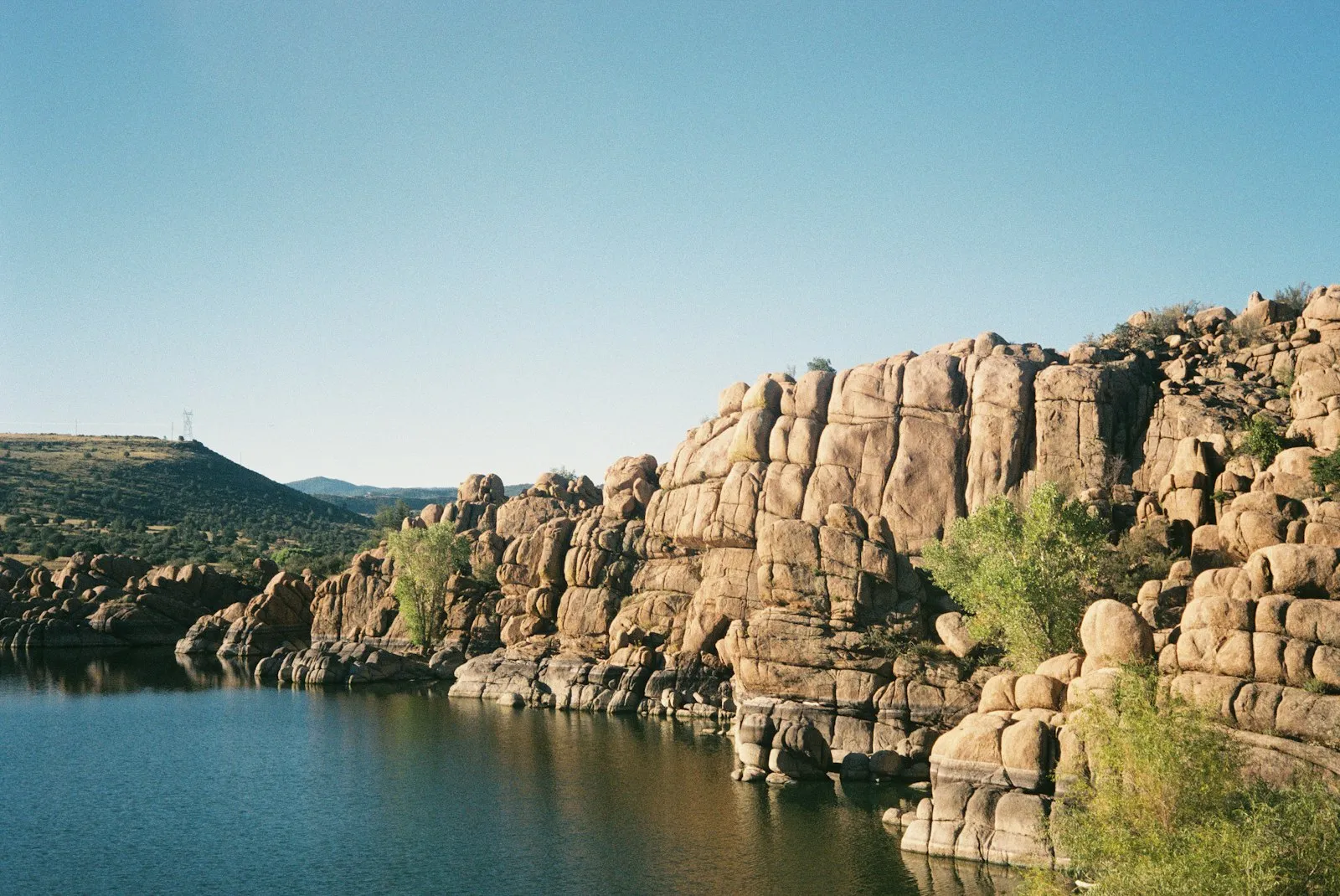
Verified September 9, 2026: TPWD’s Inks Lake campsites page lists 114 campsites with water and 30/50-amp electric at $23/night ($138/week, $552/month), 42 water-only sites (#300–349) at $16, 4 tent-only electric sites (#219–222) at $21, 9 hike-in primitive sites at $11 and excess vehicles at $6/night. The entrance fee page sets day use at $7 per adult 13+, free 12 and under; the lodging page lists 22 limited-use cabins at $55/night. Change and cancellation penalties come from the TPWD reservation policy.
Quick answer: Inks Lake State Park camping costs $23 per night for a water/electric RV site (30- or 50-amp, no sewer), $16 for a water-only site, $21 for a tent-only electric site and $55 for a limited-use cabin, plus a $7 daily entrance fee per adult (12 and under free; waived with the $70 Texas State Parks Pass). There are 114 RV sites, about 22 of them 50-amp, and the park fills every warm-weather weekend, so book the moment the 5-month window opens.
Inks Lake State Park at a glance
| Inks Lake State Park | |
|---|---|
| Prices | $23 water/electric, $16 water-only, $21 tent electric, $11 primitive, $55 cabin, plus $7/adult/day entrance |
| Sites | 114 water/electric, 42 water-only (#300–349), 4 walk-in tent (#219–222), 9 hike-in primitive, 22 cabins |
| Hookups | Water and 30/50-amp electric; no sewer; two-lane dump station |
| Max RV length | No park-wide cap; water-only loop under 26 ft; check per-site length in the reservation system |
| Season | Year-round; peak March–September; weekly/monthly rates December–February |
| Reservations | texasstateparks.reserveamerica.com or (512) 389-8900; 5-month window; day passes also reservable |
| Cell signal | Verizon best (25–50 Mbps reported), T-Mobile hit-or-miss, AT&T mixed; terrain dead spots |
Inks Lake State Park prices and fees (2026)
All rates are per night from TPWD’s fee pages as of September 2026, and every adult in the party pays the entrance fee on each day of the stay in addition to the site fee.
| Site type | Sites | Hookups | Nightly | Weekly / monthly |
|---|---|---|---|---|
| Campsite with electricity (RV) | 114 | Water, 30/50-amp | $23 | $138 / $552 |
| Campsite with electricity, tent only (#219–222) | 4 | Water, 20-amp outlet | $21 | — |
| Campsite with water only (#300–349) | 42 | Water spigot; rigs under 26 ft; no generators | $16 | — |
| Primitive hike-in | 9 | None; no water, no fires, no pets | $11 | — |
| Limited-use cabin | 22 | A/C, ceiling fan, bunks for 4, water spigot | $55 | $330 |
Fees and policies:
| Item | Amount |
|---|---|
| Daily entrance, adult 13+ | $7 per person per day |
| Daily entrance, child 12 and under | Free |
| Texas State Parks Pass (waives entrance) | $70 per year |
| Excess vehicle | $6 per night |
| Cabin cleaning deposit | $25; 2-night minimum on weekends and holidays; no pets in the cabin area |
| Boat rental (kayak, canoe, SUP, paddle boat) | About $20 first hour, $10 each additional hour; confirm at the park store |
| Change or cancel 5+ days before arrival | $10 or amount paid (excluding entrance), whichever is less |
| Cancel inside 5 days | $25 per night, max $50 |
| No-show | All fees forfeited except entrance; reservation cancelled at noon the day after arrival |
A family of four adults on a three-night water/electric stay therefore pays $69 in site fees plus $84 in entrance fees, which is why the $70 annual pass pays for itself on the first long weekend.
There are two kinds of lakes in the Texas Hill Country. There are the big reservoirs — Buchanan, Travis — that ride the boom-and-bust cycle of Texas rainfall, where the “lakefront” campsite you booked in April can overlook a hundred yards of cracked mud by August. And then there’s Inks Lake.
Inks is the smallest of the Highland Lakes chain, a ribbon of green water on the Colorado River just four miles below Buchanan Dam, and it’s operated as a pass-through lake: what flows in from Buchanan flows out through Inks Dam, so under normal operations the water level barely moves. When drought empties half of Lake Buchanan next door, Inks stays full. That single fact of hydrology is why Inks Lake State Park is one of the most reliably bookable-out state parks in Texas — the swimming, paddling, and lakefront campsites actually deliver what the photos promise, in almost any year.
The short verdict: Inks Lake is the best lake camping in the Hill Country, full stop — about 170 campsites and 22 cabins, a genuinely swimmable constant-level lake, pink gneiss shoreline that looks imported from another planet, and Devil’s Waterhole ten minutes’ walk from the campground. The trade-offs are real, though: no sewer hookups, tightly packed RV loops with limited shade, brutal summer heat, and weekend crowds that turn the park into a small city from March through September. Book five months out, aim for a waterfront site, and know what you’re signing up for.
Getting There
Inks Lake State Park sits about 9 miles west of Burnet in the heart of the Highland Lakes region. From Burnet, take State Highway 29 west, then turn south on Park Road 4 — the headquarters is about 3 miles down. Park Road 4 itself is a piece of history: the Civilian Conservation Corps built sections of it in the 1930s, along with the park’s original boathouse and stonework, and it’s one of the prettier park approach roads in Texas, winding through granite-and-gneiss hill country with Longhorn Cavern along the way.
Drive times are what make Inks a weekend-crowd magnet:
| From | Distance / Time |
|---|---|
| Austin | ~60 miles, about 1 hr 20 min |
| Burnet | 9 miles, 15 min |
| Marble Falls | ~15 miles, 25 min |
| San Antonio | ~100 miles, about 2 hrs |
| Dallas–Fort Worth | ~200 miles, 3.5 hrs |
That hour-and-twenty from Austin is the whole story of the park’s popularity. It’s close enough for a Friday-after-work arrival, far enough to feel like you left. If you’re staging a longer Central Texas trip, our RV parks near Austin guide covers the private-park options closer to the city.
One practical note for big rigs: Park Road 4 is narrow and winding, and the interior campground roads are narrower still. Nothing here is impossible for a 35-footer, but campers in reviews consistently mention taking the loops slowly and scouting sites before committing.
The Campground: Loop by Loop
Inks Lake has 169 campsites plus 22 limited-use cabins, strung along several miles of shoreline and organized into loops that behave very differently from one another. This is a park where which site you book matters more than almost any other factor in your trip.
The water/electric loops (the RV zone)
114 sites carry water and electric hookups, and this is where nearly all RVs end up. The powered loops occupy the central stretch of the park, and a healthy share of them are genuine waterfront — your back window opening onto the lake, kayak launchable from your site.
Here’s the honest part: the powered loops are also the most tightly packed area of the park. Sites sit close together, shade is thin (this is burned-over granite country, not pine forest), and several reviewers on Campendium and The Dyrt call out unlevel pads and narrow interior roads as the park’s biggest RV annoyances. Bring your full arsenal of leveling blocks. The waterfront rows are worth the elbow-to-elbow trade; the inland rows in the same loops are where you land when you book late, and they’re serviceable but unremarkable.
Site-picking intel from the review consensus:
- 50-amp sites are scarce — about 22 in the whole park (TPWD lists sites 41, 42, 44, 47–49, 54, 56, 62, 66, 70, 74, 75, 77, 81, 83, 84, 86, 88, 93, 206, and 207). If you run two air conditioners, these are your only real option, and they’re the first sites to vanish when the booking window opens.
- Everything else with power is 30-amp (with standard outlets) — fine for most rigs, tight for big Class A’s in July.
- The waterfront sites in the 40s through 80s are the most requested in the park. Several of the 50-amp sites in that range back directly onto the water.
The 300 loop: water-only, and quietly the best camping in the park
The 42 sites numbered 300–349 have a water spigot, no electricity, and a rule that changes everything: no generators allowed. The result is the calmest, shadiest, most genuinely campground-feeling part of Inks Lake, with more tree cover and more buffer between sites than the powered loops — and a number of true lakefront tent pads. The catch for RVers: these sites are limited to rigs under 26 feet, and without hookups in Texas heat you’re committing to a very specific kind of trip. From October through April, though, a small trailer in the 300 loop might be the single best campsite experience in the Hill Country.
Walk-in tent sites and primitive camping
Sites 219–222 are walk-in tent sites (about a 100-foot carry from parking) with water and a 20-amp outlet, $21/night — sites 219 and 220 are wheelchair-accessible. Beyond that, nine $11 primitive hike-in sites (no water, no fires, no pets) sit along the hiking trail on the far side of the park for those who want to leave the RV crowd behind entirely.
Terrain: about that pink rock
The whole park sits on outcrops of Valley Spring gneiss — a pink, banded metamorphic rock over a billion years old that most visitors mistake for granite (nearby Enchanted Rock is the actual granite). It’s gorgeous, it defines the shoreline and the Devil’s Waterhole cove, and it also means many campsites are set among rock shelves and slopes. It’s part of why pads run unlevel and why this park photographs like nowhere else in Texas.
Hookups & Amenities
- Hookups: Water and electric only — no sewer at any site. Choose between 30-amp (most powered sites) and 50-amp (~22 sites).
- Dump station: A two-lane dump station near the park exit, which campers praise for keeping checkout mornings moving even on packed weekends.
- Restrooms and showers: Multiple restroom/shower buildings distributed so most loops have one within a short walk. Review consensus is consistently positive — clean and plentiful by state-park standards.
- Park store: A genuinely well-stocked store near headquarters selling firewood, ice, camping basics, and ice cream, and running the boat rental operation: paddle boats, canoes, kayaks, and stand-up paddleboards at $20 for the first hour, $10 each additional hour, life vests included.
- Cell signal: Inconsistent and carrier-dependent. Campers report Verizon working reasonably well (some measure 25–50 Mbps) and T-Mobile ranging from usable 5G to nothing, depending on where in the park you’re parked. AT&T reports are mixed. If you must work remotely, bring a booster and a backup plan — the terrain creates dead pockets.
- Other: Playground, fishing pier (no fishing license required from shore in a Texas state park), beach volleyball, and about 9 miles of short but geologically interesting hiking trails.
What’s Nearby
Devil’s Waterhole is technically inside the park, but it deserves its own billing — it’s the reason half the day-use crowd shows up. It’s a rock-walled cove on the northeast end of the lake where pink gneiss ledges drop into deep, clear water, with modest jumps for kids and a paddling route that’s one of TPWD’s designated Inks Lake Paddling Trails. From the campground it’s a short hike or an easy kayak. Go at 9 a.m. on a summer Saturday or don’t go at all; by noon it’s a scene.
Longhorn Cavern State Park is 10 miles up Park Road 4, about 15 minutes away — a CCC-developed show cave with guided walking tours that hold a constant cool temperature year-round. It’s the standard rainy-day (or 105-degree-day) escape valve for Inks Lake campers, and pairing the two parks makes an easy two-night itinerary.
Lake Buchanan, immediately upstream, is the big-water counterpart — vast, open, and the place to book a Vanishing Texas River Cruise in winter to see bald eagles. Seeing Buchanan’s fluctuating shoreline right next to full-pool Inks is the clearest possible demonstration of why constant-level matters.
Wineries: Perissos Vineyard and Winery sits right on Park Road 4 a few minutes from the park entrance, and the broader Highway 29 corridor between Burnet and Llano has become a legitimate wine trail. Burnet itself (15 minutes) covers groceries, fuel, and barbecue.
For the wider region, our Hill Country RV parks guide maps out how Inks fits into a longer loop through Fredericksburg, Marble Falls, and the Frio Canyon.
The Honest Details
What works:
- The lake itself. Full, clear, swimmable, paddleable, nearly every day of nearly every year. No other Hill Country lake camping offers that reliability.
- Waterfront density. An unusually high share of sites are on or near the water. At most lake parks, “waterfront” means a handful of sites; at Inks it’s whole rows.
- The 300 loop. Generator-free, shaded, lakefront tent and small-trailer camping that feels like a different park.
- Facilities. Clean showers, a real store, boat rentals, a two-lane dump station — this is one of TPWD’s best-run high-volume parks.
- Devil’s Waterhole and the gneiss country. Scenery that punches far above the park’s modest size.
What doesn’t:
- Summer weekends are a crush. The park fills essentially every warm-weather weekend, day-use crowds pour in for the swimming, and the powered loops feel like an RV parking lot with a great view. Reviewers are nearly unanimous on this. If you can come Sunday–Thursday, or in April, May, or October, you’ll experience a different park.
- Heat. July and August routinely hit triple digits, shade is scarce in the RV loops, and there’s no sewer hookup to support long AC-heavy stays without tank discipline. Our Texas summer RV survival guide applies here in full.
- Unlevel, tight sites. The billion-year-old rock doesn’t care about your trailer. Bring blocks, take the narrow roads slowly, and check site photos on the reservation system before booking.
- No sewer, scarce 50-amp. Big rigs with residential fridges and double AC units will feel the infrastructure limits.
- “Constant-level” has an asterisk. Normal fluctuation is minimal, but the LCRA does occasionally lower the lake for maintenance — about 8 feet for eight weeks starting October 2025, and previously in 2020. A drawdown transforms the shoreline, so check LCRA’s Hydromet lake levels before booking a fall trip in a maintenance year.
Who it’s for: Families with kids who want swimming and paddling out the back of the campsite; tent campers and small-trailer owners who can snag the 300 loop; Austin weekenders; winter Texans passing through the Hill Country who’ll have the place blissfully to themselves in January. Who should look elsewhere: anyone needing full hookups and space between rigs — a private park will serve you better, and our state parks vs. private RV parks breakdown walks through exactly that trade.
Full Specs & Booking
- Hookups: Water/electric only — 30-amp at most powered sites, ~22 sites with 50-amp. No sewer. Two-lane dump station.
- Sites: 169 campsites — 114 water/electric, 42 water-only sites 300–349 (rigs under 26 ft, no generators), walk-in tent sites 219–222, primitive backpacking area — plus 22 limited-use cabins.
- Cost: Water/electric sites $23/night (same price for 30- and 50-amp), water-only $16, tent-only electric $21, primitive $11, cabins $55, plus $7/day entrance per adult (12 and under free). The $70 Texas State Parks Pass waives entrance fees. Verified on TPWD’s fee pages September 2026 — fees change.
- Season: Open year-round. Peak: March (wildflowers/spring break) through September. Weekly and monthly rates offered December–February.
- Reservation: Texas State Parks reservation system — texasstateparks.reserveamerica.com or (512) 389-8900. Window opens 5 months in advance; waterfront and 50-amp sites on warm-season weekends require booking at or near the opening.
- Cell signal: Verizon best (reports of 25–50 Mbps at some sites), T-Mobile hit-or-miss, AT&T mixed. Terrain-dependent dead spots.
- Max RV length: No single park-wide limit, but water-only sites cap at 26 ft, roads are narrow, and the most comfortable big-rig sites are the 50-amp waterfront row. Check per-site length limits when booking.
- Amenities: Showers/restrooms, park store, boat/kayak/SUP rentals ($20 first hour), fishing pier, playground, ~9 mi of trails, Devil’s Waterhole.
Inks Lake vs. the Other Hill Country State Parks
The natural comparison is Garner State Park on the Frio — the most-visited camping park in Texas and the other titan of Hill Country summer tradition. They’re different animals. Garner is a river park: clear, cold, spring-fed water, giant cypress trees, the famous summer dance pavilion, and a canyon setting that Inks can’t match for drama. But the Frio’s flow varies with drought, Garner’s scale (300+ sites across multiple areas) makes it even more of a summer madhouse, and it’s nearly three hours from Austin versus Inks Lake’s eighty minutes. If your trip is about swimming in moving water under cypress trees, it’s Garner — see our full Garner State Park camping review. If it’s about lake life — paddling, fishing, swimming off your campsite — Inks wins, and it wins on reliability in dry years.
Against the rest of the region: Pedernales Falls has better hiking and solitude but only pool-and-riffle river swimming; Enchanted Rock is a day-use icon with minimal camping and no water at all; South Llano River is the sleeper pick for shade and quiet but a much longer drive. Inks Lake is the one that combines real water, real facilities, and real proximity to Austin — which is precisely why you’re setting a calendar reminder five months before your trip.
For the statewide picture of where Inks ranks, start with our best RV parks in Texas guide and the full Hill Country RV parks roundup.
Bottom line: Inks Lake State Park is the most dependable lake camping in the Hill Country — a full lake in a state where lakes go empty, with the sites, store, and swimming holes to back it up. Book the five-month window, chase a waterfront or 300-loop site, come midweek if you possibly can, and let the pink rock and green water do the rest.
Facts reviewed September 9, 2026 against TPWD’s Inks Lake campsites, entrance fee and lodging pages. Fees change; confirm in the reservation system before booking.
Frequently asked questions
How much does Inks Lake State Park camping cost?
Per TPWD's 2026 fee page, campsites with 30/50-amp electric and water are $23 per night ($138 weekly, $552 monthly), water-only sites are $16, tent-only electric sites are $21 and hike-in primitive sites are $11. Add the $7 daily entrance fee for every adult 13 and older; children 12 and under are free.
Does Inks Lake State Park have RV camping with full hookups?
Inks Lake has 114 RV campsites with water and 30/50-amp electric but no sewer hookups at any site. A two-lane dump station near the exit handles tanks. Water-only sites 300–349 are limited to rigs under 26 feet and prohibit generators.
Do I need a day pass or tickets for Inks Lake State Park?
Yes. Day-use entry is $7 per adult (13 and older) and free for children 12 and under, and the park sells out on warm-weather weekends, so reserve a day pass in advance on the Texas State Parks reservation system. Overnight campers pay the same entrance fee per adult per day on top of the site fee; a $70 Texas State Parks Pass waives it.
Can you swim at Inks Lake State Park?
Yes, and it is the park's biggest draw. Because Inks Lake is operated as a constant-level lake, the swimming is reliable year-round. Devil's Waterhole, a rock-walled cove on the northeast end of the park, is the signature swimming hole, with modest cliff jumps and deep, clear water. There is no lifeguard anywhere in the park, so swim at your own risk.
How far in advance should I book Inks Lake campground reservations?
Reservations open 5 months in advance through the Texas State Parks reservation system (texasstateparks.reserveamerica.com or 512-389-8900), and for waterfront sites on spring and summer weekends you genuinely need to book close to that 5-month mark. The park routinely fills every warm-weather weekend.
What are the best campsites at Inks Lake State Park?
For RVs, the 50-amp waterfront sites in the 40s–80s range (sites like 47, 48, 62, 66, and 77) are the prize — many back right up to the water. Tent campers consistently rate the water-only 300 loop as the quietest and shadiest area, with genuine lakefront pads and no generator noise.
Does Inks Lake ever get drained like other Highland Lakes?
Rarely, but yes. Inks Lake is operated as a pass-through lake with minimal normal fluctuation — unlike Lake Buchanan next door, which rises and falls dramatically. But the LCRA does occasionally draw it down for maintenance; it was lowered about 8 feet for eight weeks starting October 2025, and before that in 2020. Check LCRA lake levels before a fall trip.
About the author
Dale HartmanLead RV Park Reviewer
Dale has lived on the road full-time since 2014, when he sold the house in Boise and moved into a 34-foot fifth wheel with his wife and a stubborn beagle named Otis. In the years since, he's parked at more than 400 campgrounds across 41 states — from boondocking sites with no hookups to luxury resorts with concrete pads and pickleball courts.
More from Dale →Campgrounds in this guide
Facts pages for each park — hookups, rig limits, rates and booking, plus every guide that covers it.
Keep reading
Chisos Basin Campground Review: Big Bend's Mountain Bowl
An honest review of Chisos Basin Campground in Big Bend — the mountain campground with the famous Window view, the strict rig-size limits, and what the 2026 construction news means for your trip.
Mustang Island State Park Review: Texas Beach Camping with Hookups
A researched Mustang Island State Park review — $25 water/50-amp sites behind the dunes, $13 primitive beach camping, fees, wind, and rig tradeoffs — plus the other RV parks and resorts on the island.
Pioneer Beach RV Resort Review: Prices, Sites & Beach Access (Port Aransas)
Pioneer Beach RV Resort review with published rate table, verified hookups, premium vs standard back-in and pull-thru sites, beach boardwalk, amenities and the trade-offs to check before booking in Port Aransas.