Cherry Creek State Park Campground Review: Camping Inside Metro Denver
An honest review of Cherry Creek State Park Campground in Aurora — full-hookup sites, loop-by-loop shade reality, highway noise, fees, and whether Denver's in-city state park is worth booking.
Let’s get one thing straight before we talk about hookups and shade: Cherry Creek State Park is not a wilderness experience, and it isn’t trying to be one. You will hear traffic. You will see the Denver skyline from the dam road. You may share your morning coffee with a delegation of Canada geese that clearly believe they own the place.
And none of that is a reason to skip it — because what Cherry Creek offers is something almost no other campground in America can: a 4,200-acre state park with a swim beach, a marina, 35 miles of trails, and roughly 100 full-hookup RV sites sitting entirely inside the Denver metro area. You can be at Coors Field in half an hour. You can be at your kid’s graduation at DU without paying $200 a night for a hotel. You can stage here for two days, restock at any of a dozen grocery stores within ten minutes, and then roll west into the mountains.
Our verdict: Cherry Creek is the best base camp in metro Denver, judged as a base camp. Judged as a nature escape, it’s a solid urban park with real wildlife and real water — and a soundtrack of I-225. Book it for what it is and you’ll be happy. Book it expecting the Rocky Mountains and you’ll wonder what all the fuss is about.
Getting There
The park sits in Aurora, on the southeast side of the metro, one mile south of I-225 on Parker Road (CO-83). There are two entrances — the east entrance off Parker Road and the west entrance off Yosemite Street via Union Avenue — and the campground is most easily reached from the east side.
Drive times from the places you’re likely coming from:
| From | Distance / Time |
|---|---|
| Downtown Denver | ~14 miles, 20-30 min via I-25 and I-225 |
| Denver International Airport (DIA) | 30-40 min via E-470 or I-225, traffic depending |
| Denver Tech Center | 10-15 min |
| Colorado Springs | ~1 hr 15 min via I-25 |
| Estes Park / RMNP | ~1 hr 45 min |
Navigation is trivially easy by RV standards — you’re on interstates and six-lane arterials the whole way, with no grades, no tunnels, and no propane restrictions to think about. The one thing to respect is Denver rush hour: I-225 between 4 and 6 p.m. on a weekday is a parking lot, and arriving with a 35-footer in stop-and-go traffic is nobody’s idea of a vacation. Aim for a midday arrival if you can.
That ease of access is exactly why this park earns its keep in a Colorado RV trip plan. Flying into DIA and picking up a rental rig? Cherry Creek is the logical first night — close to the airport, close to provisioning, and a gentle shakedown before you point the rig at the high country.
The Campground
The campground occupies rolling prairie on the east side of the reservoir, and the numbers are a little slippery depending on who’s counting: CPW and the major camping directories list between 125 and 135 sites, the variance mostly coming down to whether group areas get included. What matters for planning: roughly 100 sites have full hookups (water, sewer, and electric), the rest are electric-only or tent sites, and everything is reservation-only.
Sites are spread across a handful of named loops — Abilene, Buffalo, Coyote, and Gold Rush among them — plus three group camping loops (Arapahoe, Cherokee, and Chief Ouray) that together handle groups of up to 72 people.
Loop-by-loop reality
Here’s where the honest part comes in, because the loops are not created equal:
- Gold Rush is all full-hookup sites — the easy button for big rigs — but it sits on open prairie with minimal tree cover. In July, that means your air conditioner earns its keep and your awning is doing structural work. The trade-off is easy satellite and Starlink sky.
- Coyote has the best shade in the campground, particularly along its south side, where mature cottonwoods actually shade a site rather than gesturing at the idea. These sites book first, and deservedly.
- Buffalo is a mix — some sites with decent tree cover, some open. Reviewers note you can often find a spot with partial shade and a clear patch of sky for a dish.
- Abilene matters for one big reason: it’s the only loop open for winter camping (November 1 - March 31). If you’re wintering through Denver — traveling nurses, family visits, snowbirds repositioning — Abilene is your option, and yes, you still need a reservation.
Site spacing is generous by urban-campground standards. This is a state park laid out on prairie, not a private park squeezing rigs onto a grid, so you’re not staring into your neighbor’s slide-out. Pads are level or close to it, and most sites take large rigs without drama — directory listings put the maximum RV length at up to 80 feet, which in practice means even a big fifth-wheel with a truck stays connected.
The noise question
Every honest review of Cherry Creek has to deal with this, so here it is: you can hear the highway. Parker Road runs along the park’s east edge and I-225 passes just north, and the hum carries across open prairie, especially in the loops that sit higher and closer to the road. Reviewer consensus is more nuanced than “it’s loud,” though — many campers report less noise than they braced for, and the loops closer to the reservoir side are noticeably quieter than the upper loops near Parker Road. It’s steady white-noise traffic hum, not truck-stop jake brakes. Light sleepers should pack earplugs and pick a westerly site; everyone else stops noticing by the second night.
The geese question
Cherry Creek’s resident Canada geese are a genuine feature of the park — along with mule deer wandering through the loops, coyotes calling at night, magpies working the picnic tables, and even white pelicans on the reservoir in late September. The geese are the ones you’ll interact with, mostly in the form of what they leave on the grass. Watch your step near the water, keep the dog leashed in camp, and consider it part of the urban-wildlife bargain. Deer in the campground at dusk, skyline over the dam — it’s a strange and honestly charming mix.
Hookups & Amenities
- Electric: 20/30/50-amp service at hookup sites. Power is reliable — this is a metro grid, not a generator at the end of a rural line.
- Water & sewer: Full-hookup sites have both at the pad. About $41/night buys you the complete set.
- Dump station: On-site for electric-only campers and anyone flushing tanks on the way out.
- Showers & laundry: The campground has shower and laundry facilities — a real differentiator versus most Colorado state parks, where laundry is a rarity. Reviews rate the facilities as clean and well-kept, with the usual summer-weekend caveats.
- Firewood is sold on-site; fires in provided rings only, subject to whatever fire restrictions Arapahoe County has going.
- Cell signal: Excellent, as you’d expect eight-tenths of a mile from a six-lane road in a major metro. All major carriers run full-strength LTE/5G here, and remote workers report this as one of the easiest camps in Colorado to hold a video call from. If your trip has a “I need to work Thursday and Friday” clause, this is your park.
One recurring reviewer gripe worth passing along: in the open loops, summer afternoon sun is relentless — the campground sits at about 5,600 feet and Colorado sun at altitude does not negotiate. Shade structures, awnings, and a plan for the dog’s paws on hot gravel all apply from June through August.
What’s Nearby
This is where Cherry Creek quietly embarrasses campgrounds twice as scenic.
Inside the park, the star is the 880-acre Cherry Creek Reservoir. There’s a sandy swim beach (open Memorial Day through Labor Day, with a bathhouse), a full-service marina with boat ramps, and water open to powerboats, sailboats, jet skis, and paddleboards. Anglers work the reservoir for walleye, trout, and bass. Around the water, 35 miles of multi-use trails — a substantial chunk of them paved — serve hikers, cyclists, and equestrians, and the paved Cherry Creek Trail connects all the way toward downtown Denver if your legs are ambitious. Dog owners get one of the region’s great perks: a 107-acre off-leash dog area ($3 daily dog pass or $25 annual) in the 12 Mile area of the park, complete with creek access. For a lot of Front Range dogs, this is the best day of their year.
Outside the park, you’re in the city, and that’s the point. Groceries, RV supply stores, breweries, and every service imaginable sit within a 10-15 minute radius. Downtown Denver — Coors Field, the museums, Union Station — is a half-hour drive or a rideshare away, which means you can actually have a night out and not worry about driving the toad back. DIA is close enough to pick up arriving family without blowing a whole day.
And when you’re done with the city, the park’s position works in every direction: south to Colorado Springs and the Pikes Peak region, northwest to Estes Park and Rocky Mountain National Park, or west on I-70 into the high country covered in our Rocky Mountains RV guide.
When to Go
Late May through September is prime season — the swim beach and marina run Memorial Day to Labor Day, the reservoir is warm enough by July, and the cottonwoods are in full leaf doing their shade work. It’s also when demand peaks: set a calendar reminder for exactly six months before a summer weekend, because the shaded Coyote sites and the full-hookup Gold Rush loop go quickly once cpwshop.com opens the window.
Shoulder seasons are the sleeper pick. April, May, September, and October bring cooler prairie temperatures, thinner crowds, easier bookings, and some of the best wildlife watching of the year — migrating pelicans hit the reservoir in late September, and mule deer move through the loops daily. Front Range weather is famously moody in spring, so pack for a 40-degree swing and the occasional late-season snow squall that melts by lunch.
Winter works, with expectations set. The Abilene loop stays open November through March, and a Denver winter at 5,600 feet is milder than the mountains — sunny 45-degree days are common between cold snaps. Just confirm what services are actually running at your site when you book: winter hookup availability can be limited, and campground water systems follow freeze protocol. For travelers repositioning through Denver in January, it’s one of the few real options anywhere on the Front Range.
The Honest Details
What works:
- Location, unapologetically. Full hookups inside the Denver metro, 20-30 minutes from downtown. Nothing else offers this combination at this price.
- Real park amenities. Swim beach, marina, 35 miles of trails, and a 107-acre dog park — you’re camping in a destination, not just near one.
- Big-rig friendly. Level pads, 50-amp, generous spacing, sites that take rigs far larger than most state parks allow.
- Showers and laundry on-site, plus year-round availability via the Abilene loop.
- Bulletproof connectivity for remote workers.
- Price. Around $52-53/night all-in (site plus daily pass) for a full-hookup site in a major metro is a genuine bargain — comparable private parks in Denver run higher with a fraction of the elbow room.
What doesn’t:
- Highway noise. It’s real, it varies by loop, and it never fully goes away. This is the tax you pay for the location.
- Shade is a lottery. Gold Rush and other open-prairie sites bake in summer. If shade matters, you need the right loop and an early booking.
- Summer weekend demand. The closest campground to a metro of three million books out fast; the reservation game (6 months ahead, cpwshop.com) is not optional for July weekends. Day-use crowds at the beach and boat ramps are heavy too.
- The fee stack. Camping fee + $11/day vehicle pass + $3/day dog park pass adds up and surprises first-timers. Do the math before you compare prices.
- Geese. Charming from a distance. Less charming underfoot.
Who it’s for: Anyone visiting Denver itself — family in town, graduations, games at Coors Field or Empower Field, medical appointments, remote-work weeks. Fly-in RV renters staging out of DIA. Road-trippers who want one comfortable, well-connected night of provisioning before the mountains. Locals who want a water-and-trails weekend without leaving town.
Who should skip it: Anyone whose trip is about the campground. If you have three Colorado nights and you want alpine views and silence, spend them in the high country — Cherry Creek is the means, not the end.
Full Specs & Booking
- Hookups: Full hookups (water/sewer/electric, 20/30/50-amp) at ~100 sites; remaining sites electric-only or tent
- Sites: 125-135 total (sources vary on the count), across the Abilene, Buffalo, Coyote, and Gold Rush loops plus three group loops (up to 72 people)
- Cost: ~$41/night full hookup, ~$28 basic; plus $11/day vehicle pass (or $83 annual pass / $29 Keep Colorado Wild Pass with CO vehicle registration); $3/day dog off-leash area pass
- Season: Main campground roughly April-October; winter camping Nov 1 - Mar 31 in the Abilene loop only
- Reservation: Required for all sites — no first-come sites. Book at cpwshop.com or 1-800-244-5613, up to 6 months in advance; 14-day limit per 45-day period
- Cell signal: Excellent, all carriers (metro Denver)
- Max RV length: Up to 80 feet listed; effectively any rig
- Amenities: Showers, laundry, dump station, firewood sales, swim beach (Memorial Day-Labor Day), marina and boat ramps, 35 miles of trails, 107-acre dog off-leash area
- Address: 4201 S. Parker Rd., Aurora, CO — 1 mile south of I-225
Cherry Creek vs. the Other Denver-Area Options
Chatfield State Park (Littleton, southwest metro) is the head-to-head rival, and it’s a genuinely close call. Chatfield is bigger on the camping side — 197 sites across four loops, most with full hookups and the rest electric-only — with the same state-park formula: showers, laundry, dump station, big reservoir open to powerboats. The difference is feel: Chatfield sits at the base of the foothills on the metro’s edge and reads as a calmer, greener, more “away” park, with more consistently shaded, concrete-pad sites. Cherry Creek counters with position — it’s meaningfully closer to downtown, DIA, and the central metro. Rule of thumb: visiting the city, pick Cherry Creek; wanting a camping weekend that happens to be near the city, pick Chatfield. Both book on cpwshop.com with the same 6-month window and the same daily-pass math.
Golden-area options — private parks like Dakota Ridge RV Resort and Clear Creek RV Park on the west side — trade the state-park space for foothills views and instant I-70 access. They’re the better staging choice if your trip is pure mountain-bound and Denver is just in the way; expect tighter sites and higher nightly rates, offset by no vehicle-pass surcharge. For the full rundown of how the metro parks stack up against the rest of the state, start with our best RV parks in Colorado guide.
Bottom Line
Cherry Creek State Park Campground is honest about what it is, and you should be too when you book it. It’s the most convenient real campground to Denver, period — full hookups, big sites, a swimmable reservoir, and a dog paradise, all wrapped in a park that’s genuinely pleasant despite the traffic hum on its edges. As a wilderness experience it’s a non-starter; as a base camp for the city and a launch pad for the mountains, it’s the smartest $52 a night you’ll spend on the Front Range. Book the Coyote loop’s south side six months out, pack earplugs, mind the geese, and use it for exactly what it’s built for.
Frequently asked questions
Does Cherry Creek State Park have full hookup RV sites?
Yes. Roughly 100 of the campground's sites have full hookups — water, sewer, and 20/30/50-amp electric — at about $41 per night. The Gold Rush loop is entirely full-hookup sites. The remainder of the campground's 125-135 sites are electric-only or tent sites.
Is Cherry Creek State Park campground open year-round?
Yes, but with a catch. The full campground operates roughly April through October. From November 1 through March 31, winter camping is limited to the Abilene loop only, and reservations are still required. Hookups in winter can be limited, so check your specific site details on cpwshop.com before booking a cold-season stay.
How far is Cherry Creek State Park from downtown Denver?
About 14 miles, which works out to 20-30 minutes by car depending on traffic. The park sits in Aurora, one mile south of I-225 on Parker Road, so you're inside the metro area — closer to downtown Denver than many hotels in the suburbs.
Do I need a park pass in addition to my camping reservation?
Yes. Camping fees do not include park entry. You'll need either an $11 daily vehicle pass for each day of your stay, an $83 annual Colorado State Parks pass, or the $29 Keep Colorado Wild Pass added when you renew a Colorado vehicle registration. Budget for it — a week of camping adds up.
Which loop is best at Cherry Creek State Park campground?
It depends on your rig and priorities. Gold Rush is all full hookups but sits on open prairie with little shade. The south side of the Coyote loop has the best tree cover. Abilene is the only loop open in winter. If you want shade and quiet, study the site photos on cpwshop.com before booking — the difference between loops is bigger than the map suggests.
How do I make reservations for Cherry Creek State Park?
All camping at Colorado state parks requires a reservation — there are no first-come, first-served sites. Book at cpwshop.com or call 1-800-244-5613. The window opens 6 months in advance, and summer weekends at Cherry Creek go fast because it's the closest campground to Denver. Stays are capped at 14 days in any 45-day period.
About the author
Dale HartmanLead RV Park Reviewer
Dale has lived on the road full-time since 2014, when he sold the house in Boise and moved into a 34-foot fifth wheel with his wife and a stubborn beagle named Otis. In the years since, he's parked at more than 400 campgrounds across 41 states — from boondocking sites with no hookups to luxury resorts with concrete pads and pickleball courts.
More from Dale →Campgrounds in this guide
Facts pages for each park — hookups, rig limits, rates and booking, plus every guide that covers it.
Keep reading
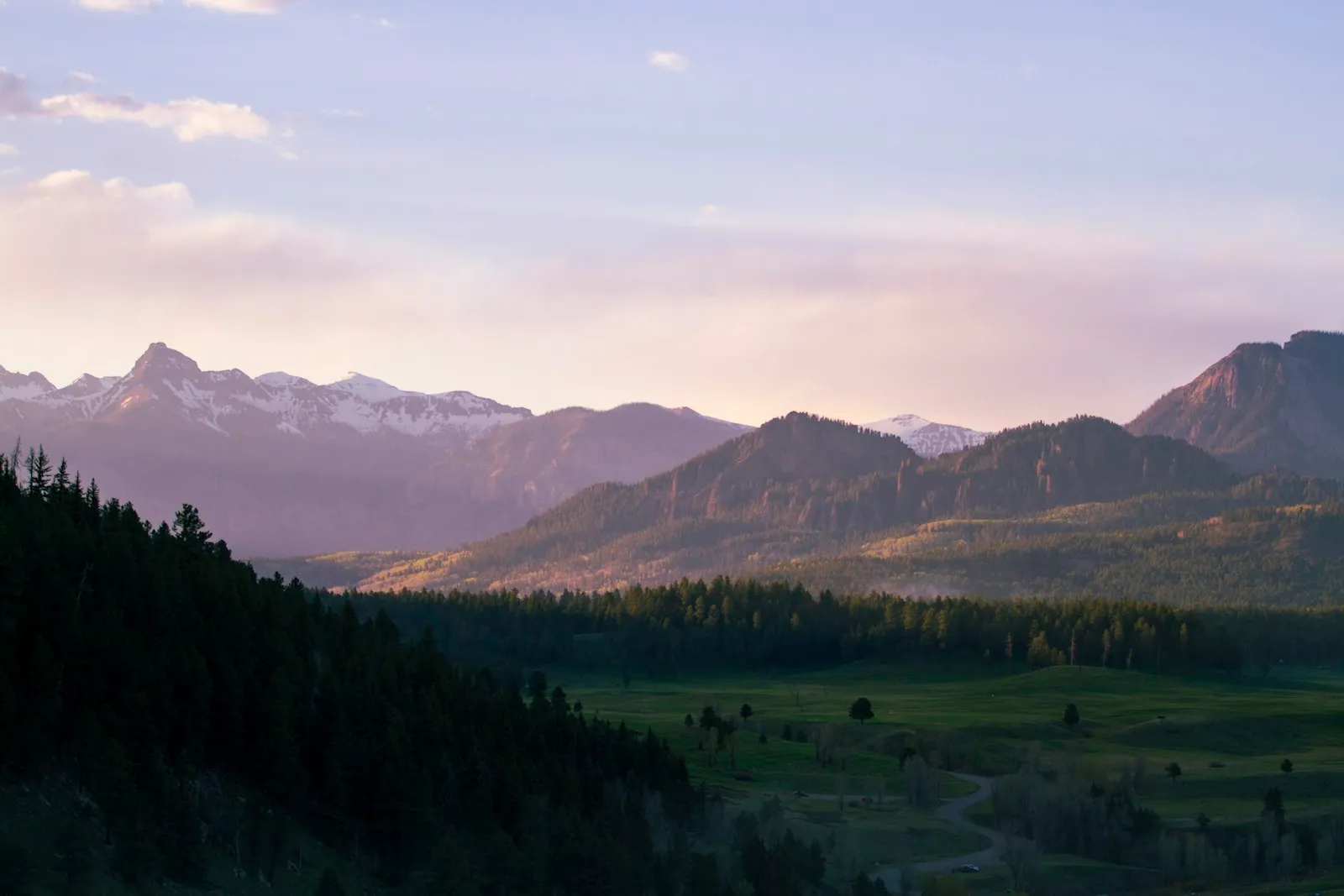
Cheyenne Mountain State Park Camping Prices, Sites & Review (2026)
Cheyenne Mountain State Park camping guide: 51 full-hookup RV sites at $41/night, 10 walk-in tent sites, 2 cabins at $120, the $10–$15 daily vehicle pass, reservations, seasonal showers, and honest trade-offs.
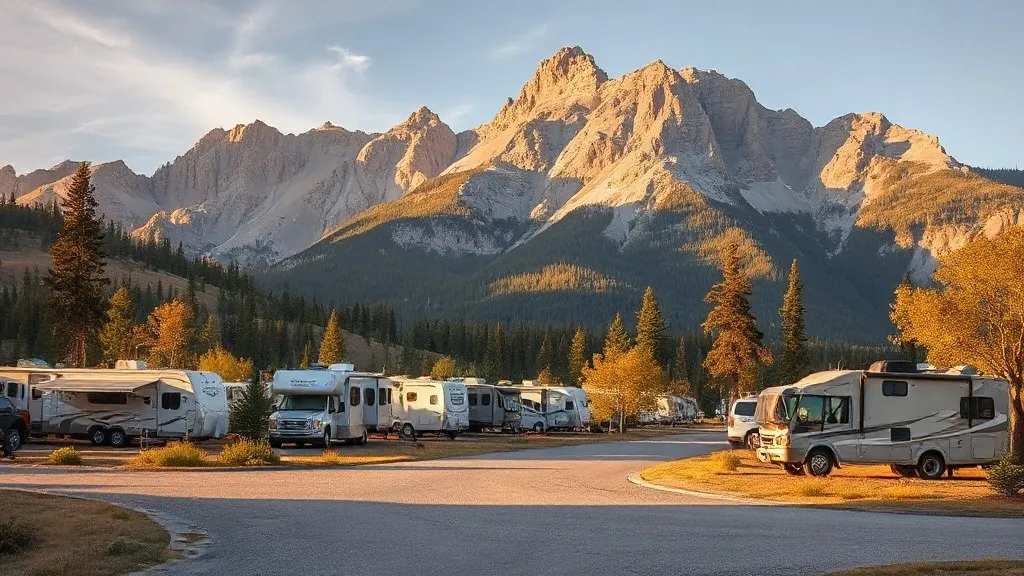
Moraine Park Campground Elevation, Prices & RV Review (2026)
Moraine Park Campground review with its 8,160-foot elevation, 244 sites, 49 electric hookups, 40-foot limit, 2026 fees and reservation rules.
Morefield Campground Review: Mesa Verde's Only In-Park Campground (2026)
A researched Morefield Campground review — verified 2026 prices ($38 dry, $51 full hookup), address, 7,800-foot elevation, 267 sites, 15 full hookups, 46-foot RV limit, fees and season dates.