Best RV Parks in Colorado: A Region-by-Region Guide for 2026
The best RV parks in Colorado, organized by region — Rocky Mountain NP, Pikes Peak, Durango, the Front Range, and the Western Slope, with real rates and hookup details.
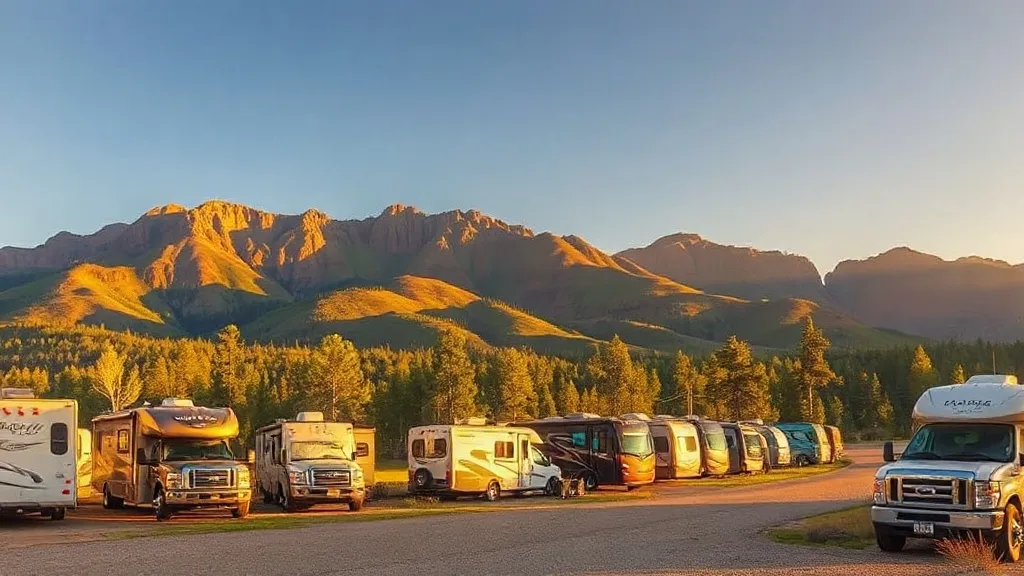
Colorado is one of the great RV states, and also one of the most misunderstood. People picture endless alpine meadows and forget that the same trip can take you from 4,500-foot high desert near the Great Sand Dunes to a campground at 9,000 feet where July nights drop into the 30s. The state isn’t a single destination — it’s at least five distinct RV regions, each with its own elevation, season, and personality. Trying to “do Colorado” in one loop without understanding those regions is how people end up driving a 38-foot rig over Wolf Creek Pass in a hailstorm.
We’ve organized this guide the way we think you should actually plan a Colorado trip: by region. The Rocky Mountain National Park corridor around Estes Park is the classic, and the busiest. Colorado Springs and Pikes Peak country make the easiest first stop, low enough to acclimate and dense with attractions. Durango and the southwest are the long-haul reward — Mesa Verde, the narrow-gauge railroad, and the San Juans. The Front Range gives you Denver-adjacent basecamps that stay open longer into the shoulder seasons. And the Western Slope, the quieter side of the divide, hides some of the best value in the state around Ridgway, Palisade wine country, and Black Canyon.
A word on honesty: Colorado’s public campgrounds are excellent value but small and competitive, and its private resorts are good but increasingly expensive — $70 to $100 a night is now normal in the gateway towns. Altitude is real, mountain passes demand respect, and a lot of the best high-country camping is only open four or five months a year. We’ll flag the trade-offs as we go. For deeper dives, this guide links down to our regional guides and individual park reviews; start here, then follow the links into the area you’re actually visiting. You can also browse everything from the Colorado state hub.
Renting an RV for this trip? Compare rigs, prices, and pickup locations on RVshare and Outdoorsy — both let you filter by rig size, dates, and location.
Rocky Mountain National Park & Estes Park
This is the region most people mean when they say they want to RV in Colorado, and it earns the reputation. Estes Park is the eastern gateway to Rocky Mountain National Park, sitting at 7,500 feet with elk wandering the streets and Trail Ridge Road — the highest continuous paved road in the US, topping out above 12,000 feet — climbing out of town toward the alpine tundra. The catch is that the park’s own campgrounds (Moraine Park, Glacier Basin) have no hookups and book months ahead, so most RVers with anything to plug in stay in the private parks around Estes and day-trip into the park.
For the in-park experience and the full breakdown of national-park campgrounds, see our Rocky Mountain RV parks guide, our dedicated Estes Park RV camping guide, and our review of Moraine Park Campground inside RMNP.
Elk Meadow Lodge & RV Resort (Estes Park)Park details →
The most polished full-hookup option right at the edge of town, with a big-rig-friendly layout, mountain views, and a pool. It’s a comfortable, well-run resort — and priced accordingly.
- Hookups: Full (30/50 amp, water, sewer)
- Sites: ~169 full-hookup RV sites, plus cabins
- Cost: $67–74/night peak season (approximate)
- Max RV length: Big rigs accommodated on pull-through sites
- Reservations: Direct; books out for summer weekends
- Best for: RVers who want full hookups and resort amenities as an Estes basecamp
Jellystone Park of EstesPark details →
A family-focused camp-resort closer to the budget end of Estes pricing, with activities aimed squarely at kids. Note the relatively modest rig limit.
- Hookups: Full hookups available (water seasonal); 30/50 amp
- Sites: RV sites plus cabins and tent sites
- Cost: Roughly $50–90/night depending on season and hookups (approximate)
- Max RV length: About 35 feet — measure before you book
- Season: Roughly March–October; full-hookup season May–late September
- Reservations: Direct
- Best for: Families with kids; smaller-to-mid-size rigs
Field tip: Estes Park sits at 7,500 feet, and Trail Ridge Road climbs to over 12,000. If you’re coming from sea level, spend a night lower (Colorado Springs or the Front Range) first, and don’t be surprised if your generator and engine feel sluggish up high — that’s normal, not a malfunction.
Colorado Springs & Pikes Peak Country
If you only acclimate in one place, make it here. Colorado Springs sits at roughly 6,000 feet — low enough that altitude sickness is rare — and it’s loaded with attractions: free-to-enter Garden of the Gods, the Pikes Peak toll road and cog railway, and the quirky town of Manitou Springs. It’s also the best provisioning stop on the Front Range before you head into the higher mountains. Our full Colorado Springs RV parks guide covers the area in depth.
Cheyenne Mountain State ParkPark details →
Our public-park pick in the region, reviewed in detail in our Cheyenne Mountain State Park camping review. Colorado Parks and Wildlife lists 61 campsites total, full hookups at all RV sites, and a current $21–$41 campsite range plus a park pass.
- Hookups: Full (20/30/50 amp, water, sewer)
- Sites: 61 total; full-hookup RV and tent inventory
- Cost: $21–$41/night (plus CPW park pass)
- Max RV length: Site-specific; verify the reservation record
- Reservations: Colorado Parks & Wildlife (cpwshop.com), 6 months ahead
- Best for: Best value and setting in the Springs area; book early
Garden of the Gods RV Resort (Colorado Springs)Park details →
A large, big-rig-friendly private resort with long pull-throughs and full hookups, well placed for the namesake park. Sites are close together in the way resort parks tend to be, but the convenience and the pull-through length are the draw.
- Hookups: Full (30 amp, some 30/50 amp, water, sewer, Wi-Fi)
- Sites: ~200 sites, around 185 full-hookup
- Cost: From roughly $100/night peak season (approximate)
- Max RV length: 38 pull-throughs averaging ~70 feet — excellent for big rigs
- Reservations: Direct
- Best for: Big rigs and travelers who want full amenities near Garden of the Gods
Mueller State Park (Divide)Park details →
West of the Springs and up at about 9,000 feet, Mueller is a high, quiet, beautiful state park with electric hookups and serious wildlife. It’s the high-country counterpoint to Cheyenne Mountain — bring layers, and expect cold nights even in summer.
- Hookups: Electric (20/30 amp); water and dump station seasonal, no sewer at site
- Sites: 132 sites
- Cost: $36/night electric (plus CPW vehicle pass)
- Max RV length: Up to 40 feet
- Reservations: Colorado Parks & Wildlife, 6 months ahead
- Best for: Higher, cooler, wilder camping near Pikes Peak; not for the biggest rigs
Durango & the Southwest
The long-haul reward. Durango is a historic railroad town in the far southwest corner of the state, base for Mesa Verde National Park’s cliff dwellings and the Durango & Silverton Narrow Gauge Railroad. It’s a haul from the Front Range — count on the better part of a day’s drive over mountain passes — but the payoff is some of Colorado’s most distinctive scenery and history. See our Durango RV parks guide and Mesa Verde RV camping guide.
United Campground of DurangoPark details →
An in-town classic on the Animas River, and our pick for first-timers to the area — the steam train actually passes through the property. Covered in depth in our United Campground review.
- Hookups: Full (water, electric, sewer); 39 sites with 50 amp
- Sites: 57 full-hookup sites
- Cost: $55–70/night (approximate, two-person base)
- Max RV length: Up to 60 feet
- Reservations: Direct; season roughly May–mid-October
- Best for: Train fans and anyone wanting a walkable, riverside in-town base
Morefield Campground (Mesa Verde National Park)
The only campground inside Mesa Verde, four miles in from the entrance, with a small number of full-hookup sites among hundreds of standard ones. Reviewed in full in our Morefield Campground review.
- Hookups: Most sites no hookups; limited full-hookup sites available
- Sites: 250+ total
- Cost: Standard sites and full-hookup sites priced separately (approximate; check current rates)
- Max RV length: Generous, but the entrance road is steep and winding
- Reservations: Concessioner-run; reserve ahead in summer
- Best for: Maximizing time inside Mesa Verde without a daily drive in
Field tip: The drive into Mesa Verde climbs and switchbacks hard for the first several miles past the entrance. It’s paved and safe, but it’s slow going in a big rig — budget extra time and watch your transmission temperature on the climb.
Front Range
The Front Range is the urban corridor east of the mountains — Denver, Boulder, Fort Collins — and it’s underrated for RVers. The state parks here sit at lower elevations (around 4,800–5,000 feet), which means longer open seasons, easier acclimation, and reliable access when high country is still snowbound. These make excellent first or last nights on a Colorado loop.
St. Vrain State Park (Firestone)Park details →
Between Denver and Fort Collins, just off I-25, with ponds for fishing and a surprising sense of calm given how close it is to the interstate. Open year-round with both electric and full-hookup sites.
- Hookups: 41 electric-only sites; 46 full-hookup (water/sewer/electric, 30/50 amp)
- Sites: 87 total
- Cost: $36 electric / $41 full hookup (plus CPW vehicle pass)
- Max RV length: Up to 40 feet on level concrete pads
- Reservations: Colorado Parks & Wildlife, 6 months ahead
- Best for: Convenient first/last night, easy interstate access, year-round availability
Western Slope
The quiet side of the Continental Divide, and where we think the savviest Colorado RVers spend their time. The Western Slope trades crowds for value: Ridgway and the San Juans, Palisade’s wine and peach country along the Colorado River, and Black Canyon of the Gunnison’s vertiginous gorge. Seasons run longer than in the high mountains, and the parks are emptier.
Ridgway State Park (Ridgway)Park details →
A genuinely excellent reservoir park in the northern San Juans with three campgrounds and nearly 300 sites — including rare full-hookup sites at the Pa-Co-Chu-Puk loop that handle very large rigs.
- Hookups: 30-amp electric (Dakota Terraces, Elk Ridge); full hookup 50-amp at Pa-Co-Chu-Puk
- Sites: ~300 across three campgrounds
- Cost: $32 electric / $36 full hookup summer (plus CPW vehicle pass)
- Max RV length: Up to 65 feet at Elk Ridge; up to 90 feet at Pa-Co-Chu-Puk
- Reservations: Colorado Parks & Wildlife, 6 months ahead
- Best for: Big rigs, reservoir recreation, San Juan basecamp
Palisade Basecamp RV Resort (Palisade)Park details →
A modern resort on the Colorado River in the heart of wine-and-peach country, off the Fruit and Wine Byway. Full hookups on every site and an easy walk-or-pedal to the tasting rooms.
- Hookups: Full (20/30/50 amp, water, sewer, Wi-Fi)
- Sites: 100+ camping options
- Cost: Roughly $80–100/night (approximate)
- Max RV length: Big rigs accommodated
- Reservations: Direct
- Best for: Wine country, lower-elevation comfort, riverside sites
Black Canyon of the Gunnison — South Rim Campground (note the closure)Park details →
A spectacular national park with a sheer 2,000-foot gorge, and a small campground on the South Rim. We include it for completeness, with an important caveat: as of mid-2026, Loop B (the electric loop) and Loop C have been closed due to wildfire damage — check the National Park Service status before planning around it.
- Hookups: Electric (20/30/50 amp) in Loop B when open; Loops A and C no hookups
- Sites: Small; Loop B for larger rigs, Loops A/C for shorter rigs
- Cost: ~$34/night electric, ~$20/night non-electric
- Max RV length: Up to 55 feet combined in Loop B; ~23 feet in A/C
- Reservations: Recreation.gov
- Best for: Dramatic scenery — but confirm loop closures first
Comparison table
| Park | Region | Cost/night | Hookups | Max length | Reservations |
|---|---|---|---|---|---|
| Elk Meadow Lodge & RV Resort | RMNP / Estes | $67–74 | Full (30/50) | Big rigs | Direct |
| Jellystone Park of Estes | RMNP / Estes | ~$50–90 | Full (seasonal water) | ~35 ft | Direct |
| Cheyenne Mountain State Park | Colorado Springs | $21–41 + pass | Full at RV sites | Site-specific | CPW |
| Garden of the Gods RV Resort | Colorado Springs | From ~$100 | Full (30/50) | ~70 ft pull-thrus | Direct |
| Mueller State Park | Pikes Peak / Divide | $36 | Electric | Up to 40 ft | CPW |
| United Campground | Durango / SW | $55–70 | Full (50 amp) | Up to 60 ft | Direct |
| Morefield Campground | Mesa Verde / SW | Varies | Limited full | Generous | Concessioner |
| St. Vrain State Park | Front Range | $36–41 | Electric / full | Up to 40 ft | CPW |
| Ridgway State Park | Western Slope | $32–36 | Electric / full 50 | Up to 90 ft | CPW |
| Palisade Basecamp RV Resort | Western Slope | ~$80–100 | Full (20/30/50) | Big rigs | Direct |
Planning a Colorado RV trip
Best months. Mid-June through mid-September is the reliable window: Trail Ridge Road is open (typically late May to mid-October, weather permitting), passes are clear, and the high parks are in full season. September is gorgeous — golden aspens, thinning crowds — but nights get cold fast above 8,000 feet, and many private parks and national park campgrounds begin closing in October. For spring and late-fall trips, lean on the lower Front Range and Western Slope parks that stay open longer.
Reservations. Colorado Parks and Wildlife parks (Cheyenne Mountain, Mueller, St. Vrain, Ridgway) open bookings six months ahead, and that window is decisive for summer weekends. They also require an applicable park pass on top of the camping fee. Compare the current daily and annual pass options for your trip rather than relying on an old flat price. Private gateway-town resorts book direct and fill summer weekends weeks out.
Rig size and the mountains. Be honest about your rig before you commit to a route. The big private resorts on the Front Range and Western Slope handle 60-foot rigs comfortably; the mountain state parks generally cap around 40 feet; and national park campgrounds (and the road into Mesa Verde) reward shorter, more maneuverable setups. Mountain passes like Wolf Creek and the approach to the San Juans demand low gears, working brakes, and patience — drive them in good weather and early in the day.
Altitude and budget. Plan to acclimate around 6,000 feet for a night or two before sleeping above 8,000. Drink more water than feels necessary and expect reduced engine and generator performance up high. On budget: state parks run $32–41 plus the pass and are the clear value play; private resorts in the gateway towns now commonly run $70–100 a night in peak season, so mixing public and private stays keeps a Colorado trip affordable.
For the deeper regional picture, follow the links above into our Rocky Mountain, Colorado Springs, Durango, Mesa Verde, and Estes Park guides — and our companion guides to Colorado hot springs RV parks and RV camping near Great Sand Dunes.
Frequently asked questions
What is the best RV park in Colorado for first-timers?
Cheyenne Mountain State Park near Colorado Springs is hard to beat for a first Colorado trip. It sits at a manageable 6,000 feet, has full-hookup sites with 50-amp service, easy access to Garden of the Gods and Pikes Peak, and costs far less than a private resort. The roads in are paved and gentle, which matters when you're still getting comfortable with mountain driving.
Do I need reservations for Colorado RV parks in summer?
Yes. From Memorial Day through Labor Day, the popular state parks and gateway-town private parks routinely book out weeks ahead, and Rocky Mountain National Park area sites can fill the moment the booking window opens. Colorado Parks and Wildlife campgrounds open reservations six months in advance, and that window matters for summer weekends.
How high are Colorado campgrounds, and does altitude matter for RVers?
Colorado RV parks range from about 4,500 feet on the eastern plains to over 9,000 feet at parks like Mueller State Park. Altitude affects engine power, generator output, and how you feel — most people benefit from spending a night or two around 6,000 feet (Colorado Springs or the Front Range) before heading higher. Drink extra water and expect cool nights even in July.
Which Colorado region is best for big rigs over 40 feet?
The Front Range and Western Slope private resorts are the most big-rig friendly. Garden of the Gods RV Resort near Colorado Springs has long pull-throughs averaging around 70 feet, Pa-Co-Chu-Puk at Ridgway State Park takes rigs up to 90 feet, and United Campground in Durango handles rigs up to 60 feet. Mountain state parks like Mueller cap out around 40 feet.
When is the best time of year for an RV trip to Colorado?
Mid-June through mid-September is the sweet spot — Trail Ridge Road is open, mountain passes are clear, and high campgrounds are in full season. September brings golden aspens and thinner crowds but cold nights. Many higher private parks and national park campgrounds close from October through April, so spring and fall trips favor the lower Front Range and Western Slope.
About the author
Marisol ReyesCamping & Outdoors Editor
Marisol spent six years as an interpretive ranger in the California and Colorado state park systems before turning to writing full-time. She knows public-land camping from the inside — how reservation windows really work, why some loops fill before others, and which 'first-come, first-served' sites are worth gambling on.
More from Marisol →Campgrounds in this guide
Facts pages for each park — hookups, rig limits, rates and booking, plus every guide that covers it.
Keep reading
Colorado Hot Springs RV Parks: Where to Camp Near the Soaks
RV parks near Colorado's best hot springs — Pagosa Springs, Glenwood Springs, Mount Princeton, and Steamboat — with verified hookups, rates, and rig limits.
RV Camping Near Great Sand Dunes: 5 Campgrounds Compared
Compare five RV camping options near Great Sand Dunes, including Piñon Flats' 2026 limits, the Oasis' $55 full-hookup sites, and KOA pull-throughs.
RV Parks Near Mesa Verde National Park: Where to Camp (2026)
The best RV parks near Mesa Verde — from the only in-park campground to full-hookup resorts in Mancos and Cortez, with real rates, hookups, and the cliff-dwelling logistics RVers need to know.