Cheyenne Mountain State Park Camping Prices, Sites & Review (2026)
Cheyenne Mountain State Park camping guide: 51 full-hookup RV sites at $41/night, 10 walk-in tent sites, 2 cabins at $120, the $10–$15 daily vehicle pass, reservations, seasonal showers, and honest trade-offs.
Verified September 9, 2026: Colorado Parks and Wildlife’s Cheyenne Mountain camping page lists 61 campsites at $21–$41 per night, 2 cabins at $120 ($10/night pet fee, 2-night minimum, 3 on holidays), daily vehicle passes at $10–$15 and an individual pass at $4, check-in 1 PM (cabins 3 PM), checkout noon, showers and laundry April–November, and a 14-day maximum in any 28-day period. CPW’s statewide camping page gives the six-month window and the cancellation schedule; Campendium’s most recent user-reported rate is $41 (May 31, 2026) for a full-hookup site.
Quick answer: Cheyenne Mountain State Park camping costs $41 per night for a full-hookup RV site (electric, water, sewer; 51 sites), $21–$28 for one of 10 walk-in tent sites, and $120 for a cabin, plus a $10 daily vehicle pass ($15 with out-of-state plates). Reservations are required, open six months out, and stays cap at 14 days in 28. Showers and laundry run April through November only.
Cheyenne Mountain State Park is a strong Colorado Springs base for RV travelers who value full hookups, trail access, and a public-park setting. Colorado Parks and Wildlife lists 61 campsites total (51 full-hookup RV sites and 10 walk-in tent sites) plus 2 cabins, publishes campsite fees of $21–$41 per night with full-hookup sites at $41, and says all RV sites have electric, water, and sewer hookups. A park pass is additional.
The main limitations are equally clear: reservations are required, campground Wi-Fi is not provided, and the showers and laundry building closes from November through April. Winter camping remains available with reduced services.
For most RV trips, the decision is simple: book Cheyenne Mountain if a correctly sized full-hookup site is available and you are comfortable driving to city attractions. Choose a private park if campground Wi-Fi, resort amenities, or a Manitou Springs location matters more. Our Colorado Springs RV parks guide compares those alternatives.
Cheyenne Mountain State Park at a glance
| Detail | Current published information |
|---|---|
| Prices | $41 full hookup, $21–$28 walk-in tent, $120 cabin, plus $10/$15 daily vehicle pass |
| Sites | 61: 51 full-hookup RV sites in Gobbler Grove, Raptor Glen and Swift Puma Heights, 10 walk-in tent sites, 2 cabins |
| Hookups | Electric (30/50-amp), water, and sewer at all RV sites |
| Max RV length | Set per site in the reservation system; 40 ft reported by Campendium users |
| Season | RV and tent camping year-round, with reduced winter availability/services |
| Reservations | Required; up to 6 months ahead at cpwshop.com or 1-800-244-5613 |
| Cell signal | No campground Wi-Fi; Verizon, AT&T and T-Mobile 4G/5G reported by Campendium users (Verizon most reports, last May 2026) |
| Showers and laundry | Coin-operated, April–November; closed November–April |
| Check-in / checkout | 1 p.m. / noon (cabins 3 p.m.) |
| Maximum stay | 14 days in a 28-day period; no monthly rate |
Always verify the final site fee, applicable vehicle pass, and site dimensions in the Colorado Parks and Wildlife reservation system before payment.
Cheyenne Mountain State Park prices and fees (2026)
Colorado Parks and Wildlife publishes campsite prices from $21 to $41 per night, and the full-hookup RV sites sit at the top of that range. Every vehicle also needs a parks pass.
| Site type | Count | Nightly rate (2026) |
|---|---|---|
| Full-hookup RV site (electric, water, sewer) | 51 | $41 |
| Walk-in tent site (basic) | 10 | $21–$28 (confirm at checkout) |
| Cabin (sleeps 6, 2-night minimum, 3 on holidays) | 2 | $120 |
| Accessible sites 18, 19, 45, 46, 49 | 5 | Same as site type |
| Fee | Amount |
|---|---|
| Daily vehicle pass, Colorado plates | $10 per vehicle per day |
| Daily vehicle pass, out-of-state plates (from May 1, 2026) | $15 per vehicle per day |
| Individual daily pass (foot, bike) | $4 |
| Annual affixed vehicle pass | $80 |
| Keep Colorado Wild Pass (with Colorado vehicle registration) | $29 |
| Cabin pet fee | $10 per night as listed by CPW; confirm cabin pet rules with the park before booking |
| Extra vehicle | Each vehicle needs its own daily pass; one camping unit per site |
| Cancel more than 28 days before arrival | 25% of one night’s fee retained |
| Cancel 8–28 days before arrival | 50% of one night’s fee retained |
| Cancel within 7 days of arrival | 100% of one night’s fee retained |
| Change dates | 10% / 15% / 20% of one night’s fee on the same schedule |
A couple in one RV with Colorado plates on a three-night full-hookup stay therefore pays $123 in site fees plus $30 in passes; an out-of-state rig pays $168. A full 14-day stay at $41 is $574 before passes, and the 14-in-28 rule means there is no monthly rate at all.
Before comparing this campground with a private park, price:
- the selected campsite;
- the park pass for each applicable vehicle;
- reservation or transaction charges shown at checkout;
- cancellation terms;
- any pet, extra-vehicle, or equipment conditions relevant to the booking.
The state-park option can still be good value, but comparing only the advertised campsite number understates the actual cost.
The honest verdict
What Cheyenne Mountain does well
- True full hookups: the official campground brochure says RV sites include electric, water, and sewer.
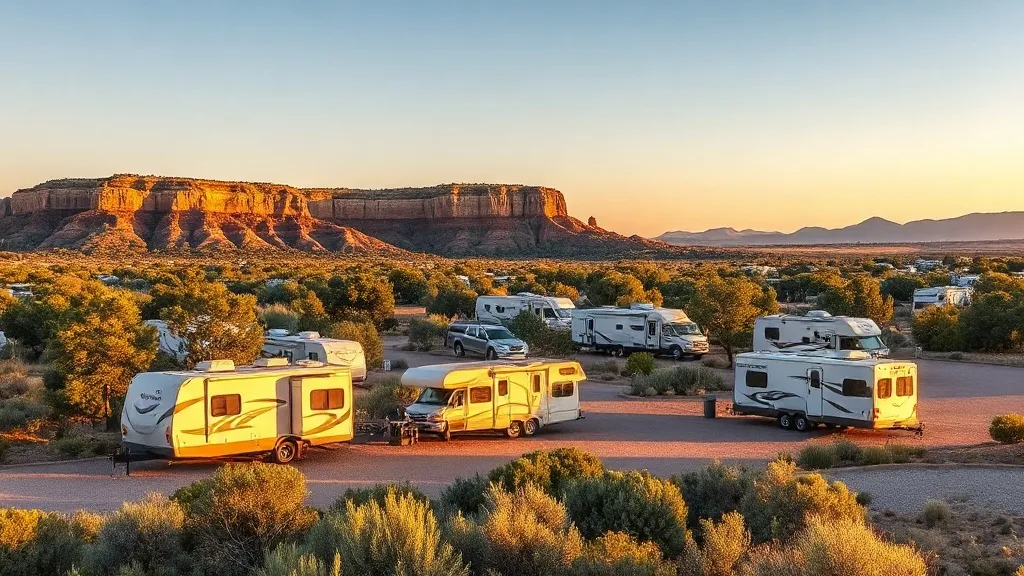
- A public-park setting: the 1,680-acre park transitions from prairie toward Cheyenne Mountain rather than placing RVs in a commercial parking lot.
- Useful shoulder-season access: year-round operation makes the park relevant beyond peak summer.
- City convenience: groceries, fuel, and Colorado Springs services remain within practical driving distance.
- Clear reservation horizon: inventory can be booked up to six months ahead.
What to plan around
- The entry pass is extra: the campsite rate is not the complete stay cost.
- No campground Wi-Fi: bring a connectivity backup if work depends on internet access.
- Seasonal camper services: showers and laundry are unavailable from November through April.
- Reservations required: this is not a dependable spontaneous overnight stop.
- A car-dependent location: Garden of the Gods, Manitou Springs, and central Colorado Springs require driving.
Campground layout and sites
The official map identifies three camping loops: Gobbler Grove, Raptor Glen, and Swift Puma. It marks sites 18, 19, 45, 46, and 49 as accessible.
Older reviews rank individual loops and sites by views or privacy, but those judgments can change with vegetation, neighboring equipment, and the assigned site’s orientation. Use the official booking map to compare:
- pad length and back-in versus pull-through access;
- distance from restrooms and camper services;
- proximity to internal roads and shared facilities;
- accessibility features;
- shade and site photos, where the reservation record provides them.
The park’s published rule allows one camping unit and up to six people per site. Tent pads measure 12 by 12 feet. Do not infer that every RV site fits every large rig simply because the campground offers full hookups; the selected site’s listed dimensions control.
Full hookups and campground services
All RV sites have electric, water, and sewer according to the official brochure. That makes Cheyenne Mountain materially easier than a dry state-park campground for a multi-night stay.
Individual campsites also list picnic tables and fire rings. The park lists firewood and ice among campground amenities. Fire availability is always subject to current restrictions, so the presence of a ring does not guarantee that a wood fire is permitted during the stay.
The camper-services building provides coin-operated showers and laundry from April through November. It closes November through April. Winter campers should arrive prepared to use their RV bathroom and confirm which loop, restroom, and water services are operating.
There is no campground Wi-Fi. The official park material does not support promising a particular carrier, upload speed, video-call quality, or streaming performance at every campsite. Check a carrier map and bring redundancy if connectivity is essential.
How reservations work
Reservations are required and open up to six months ahead through Colorado Parks and Wildlife. The published reservation phone number is 1-800-244-5613.
For a summer weekend or holiday period, search when the six-month window opens and keep a second Colorado Springs campground in reserve. For flexible travelers, compare several arrival days and site lengths rather than searching one exact configuration.
Check-in is at 1 p.m. and checkout is at noon. The maximum stay is 14 days in a 28-day period. Review the current confirmation for late-arrival procedures instead of assuming the gate or office will remain staffed.
Location and RV access
The park address is 410 JL Ranch Heights Road, Colorado Springs, CO 80926, southwest of central Colorado Springs near Highway 115. Use the park’s current directions and compare them with any RV-specific height or weight restrictions for the approach.
The location works as a base for:
- trails and wildlife viewing within the park;
- Garden of the Gods;
- central Colorado Springs;
- day trips toward Pikes Peak and the foothills.
Do not confuse the public state park with the military installation inside Cheyenne Mountain. They are separate facilities, and the state-park campground does not provide public access to the military complex.
Pets, wildlife, and fires
Pets are allowed under current park rules but must be kept on a leash no longer than six feet and cannot be left unattended. Owners must clean up waste and obey any trail-specific restrictions.
Wildlife can pass through the campground. Store food, trash, and scented items securely, maintain distance, and never feed animals.
Fire rings are provided, but Colorado fire restrictions can change quickly. Check the park’s current alert before lighting a fire and confirm at arrival. A propane cooking setup with an on/off valve can be a useful backup, though it too must comply with the active restriction.
Summer versus winter stays
April through November
This is the full-service period for coin-operated showers, laundry, and the camper-services activity room. It is also the period most likely to produce reservation competition.
November through April
The campground remains a year-round option, but CPW reduces loop and service availability. The camper-services building is closed. Freezing temperatures can affect how an RV uses water even when the park lists year-round camping, so confirm current pedestal and water status before connecting.
Who should book Cheyenne Mountain?
Cheyenne Mountain is a good fit for:
- RV travelers who want electric, water, and sewer at the site;
- hikers who want trails directly from a Colorado Springs campground;
- travelers who can reserve ahead;
- self-contained winter campers who accept reduced services;
- visitors using a vehicle for regional sightseeing.
Look elsewhere if:
- dependable campground Wi-Fi is non-negotiable;
- a pool, hot tub, or organized resort program is the priority;
- you need a walkable Manitou Springs location;
- your dates are fixed and no correctly sized site is available;
- you need showers and laundry during the winter closure.
For other public-land and mountain options, see our Colorado Rocky Mountains RV parks guide, the best RV parks in Colorado pillar, and the Colorado hub.
Frequently asked questions
How many campsites are at Cheyenne Mountain State Park?
Colorado Parks and Wildlife currently lists 61 campsites total. The park offers both full-hookup RV sites and tent camping.
Do RV sites have full hookups?
Yes. The official campground brochure says all RV sites have electric, water, and sewer hookups. Confirm the selected site’s equipment length and connection details when booking.
How much does camping cost?
CPW publishes campsite fees of $21–$41 per night; a full-hookup RV site is $41 and the cabins are $120. A park pass is additional: $10 per day for Colorado plates, $15 for out-of-state plates. Checkout displays the complete price for the specific reservation.
Does the campground have showers and laundry?
Yes, from April through November. The coin-operated showers, laundry, and camper-services building close from November through April.
Is Cheyenne Mountain State Park open in winter?
Camping is available year-round, but winter has reduced loop and service availability. Confirm the exact operating facilities before a cold-weather stay.
Is there Wi-Fi or guaranteed cell service?
The campground does not provide Wi-Fi. Do not assume that a particular carrier or campsite will support remote work; bring a backup if connectivity is critical.
Official booking source
Use the Colorado Parks and Wildlife camping page for current fees, operating status, rules, and reservations. The official page and booking confirmation supersede details in this review.
Facts reviewed September 9, 2026 against CPW’s Cheyenne Mountain camping page, CPW’s statewide camping and parks-pass pages, and Campendium user reports. Fees change; the reservation checkout total is the final word.
Frequently asked questions
How much does Cheyenne Mountain State Park camping cost?
CPW lists campsites at $21 to $41 per night; a full-hookup RV site is at the top of that range at $41, walk-in tent sites at the bottom, and the two cabins are $120 per night with a 2-night minimum. Add a daily vehicle pass of $10 for Colorado plates or $15 for out-of-state plates unless you hold an annual or Keep Colorado Wild pass, plus CPW's reservation fee at checkout.
Do Cheyenne Mountain State Park RV sites have full hookups?
Yes. All 51 RV sites have electric (30/50-amp), water and sewer hookups, on paved pads in three loops: Gobbler Grove, Raptor Glen and Swift Puma Heights. Campendium users report a 40-foot practical maximum, but the site dimensions listed in the CPW reservation system control, so match your rig to the specific site.
Does Cheyenne Mountain State Park campground have showers?
Yes, from April through November. The camper-services building has coin-operated showers and laundry and closes November through April, when only flush toilets stay open. Winter campers should plan on using their RV bathroom.
How far ahead can you reserve Cheyenne Mountain State Park camping?
Six months. Reservations are required year-round and open at midnight Mountain time exactly six months before arrival at cpwshop.com or 1-800-244-5613. Summer weekends in the full-hookup loops go quickly, so search the day the window opens and keep a private Colorado Springs park as a fallback.
Can you camp at Cheyenne Mountain State Park by the month?
No. CPW enforces a maximum stay of 14 days in any 28-day period, so there is no monthly rate. Two weeks at the $41 full-hookup rate runs $574 in site fees plus passes. For monthly RV stays near Colorado Springs, look at the private parks in our Colorado Springs RV parks guide.
Do I need tickets or a pass to enter Cheyenne Mountain State Park?
Every vehicle needs a valid parks pass, camping or not: $10 per day for Colorado plates, $15 per day for out-of-state plates since May 1, 2026, or $4 per person on foot or bike. The $80 annual affixed vehicle pass or the $29 Keep Colorado Wild pass bought with Colorado vehicle registration covers entry. Campers pay the pass on top of the site fee.
Is Cheyenne Mountain State Park open for camping in winter?
Yes, camping is available year-round, but CPW reduces loop and service availability from November through April, closes the showers and laundry, and leaves flush toilets as the only camper service. Confirm which loop and water services are operating before a cold-weather stay.
About the author
Dale HartmanLead RV Park Reviewer
Dale has lived on the road full-time since 2014, when he sold the house in Boise and moved into a 34-foot fifth wheel with his wife and a stubborn beagle named Otis. In the years since, he's parked at more than 400 campgrounds across 41 states — from boondocking sites with no hookups to luxury resorts with concrete pads and pickleball courts.
More from Dale →Campgrounds in this guide
Facts pages for each park — hookups, rig limits, rates and booking, plus every guide that covers it.
Keep reading
Cherry Creek State Park Campground Review: Camping Inside Metro Denver
An honest review of Cherry Creek State Park Campground in Aurora — full-hookup sites, loop-by-loop shade reality, highway noise, fees, and whether Denver's in-city state park is worth booking.
Moraine Park Campground Elevation, Prices & RV Review (2026)
Moraine Park Campground review with its 8,160-foot elevation, 244 sites, 49 electric hookups, 40-foot limit, 2026 fees and reservation rules.
Morefield Campground Review: Mesa Verde's Only In-Park Campground (2026)
A researched Morefield Campground review — verified 2026 prices ($38 dry, $51 full hookup), address, 7,800-foot elevation, 267 sites, 15 full hookups, 46-foot RV limit, fees and season dates.