Texas State Parks vs Private RV Parks: Which Is Right for Your Rig?
Texas state parks vs private RV parks compared on real cost — including the per-person entrance fee most comparisons forget — plus hookups, rig fit, and booking windows.

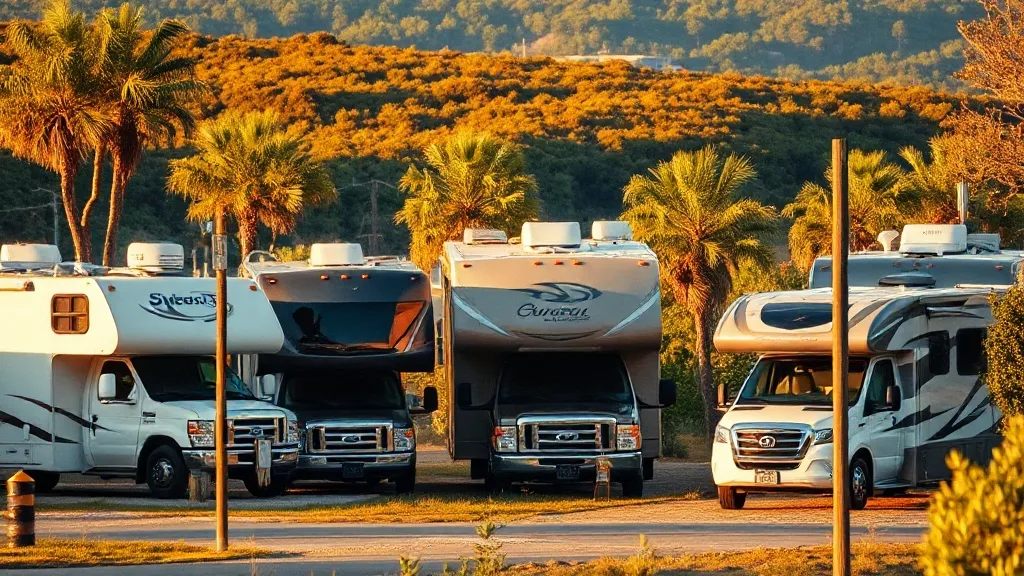
The honest answer: state parks win on price and setting, private parks win on hookups and flexibility — but the price gap is smaller than the nightly rate implies. Texas state parks charge a per-person daily entrance fee on top of the campsite, which private parks do not, so a couple’s real state park cost is higher than the site price on the reservation page. The $70 Texas State Parks Pass removes that for a year across 88 parks and is the single best value decision in this comparison for anyone doing more than a couple of state park nights. The other deciding factors: sewer hookups are scarce at state parks, and state park booking opens only five months out while private parks take reservations far earlier.
Texas has more RV parks than any other state — over four thousand at last count — and the first decision most campers face isn’t which park but which kind of park. State parks run by Texas Parks and Wildlife Department, or private campgrounds and resorts run by everyone from mom-and-pop operators to publicly traded hospitality companies. The two categories share a name and a general purpose, but in practice they’re almost different activities.
One puts you on a shaded site under century-old live oaks along a spring-fed river, with deer browsing through camp at dawn and a $25 receipt on your dashboard. The other puts you on a manicured pad with 50-amp power, cable TV, a resort pool, and a bill that rivals a mid-tier hotel. Both have their place. Neither is universally better. And the people who are loudest about one being superior to the other are usually the ones who’ve never seriously tried the alternative.
We’ve spent weeks in both systems across Texas — from Hill Country state parks to Gulf Coast private resorts, Panhandle canyons to East Texas pine forests. Here’s what we’ve learned about how these two worlds actually compare when it comes to cost, hookups, amenities, reservations, rig compatibility, and the thing that’s hardest to quantify: what it actually feels like to be there.
Quick Comparison Table
Before we get into the weeds, here’s the overview. These are representative ranges — individual parks on both sides will fall outside these numbers, but this captures where the bulk of the market sits.
| Criteria | Texas State Parks | Private RV Parks |
|---|---|---|
| Nightly cost | $13–$30 + $4–$7 entry per person | $40–$95 (resort), $30–$50 (basic) |
| Hookups | Water/electric (30 amp typical) | Full hookups (30/50 amp, sewer) |
| Sewer connection | Rarely — dump station instead | On-site at most parks |
| Wi-Fi | None or unreliable | Included (quality varies) |
| Cell signal | Weak to moderate at many parks | Usually strong (town-adjacent) |
| Max rig length | 30–40 ft typical, some exceptions | 50–70 ft common |
| Pool/hot tub | No | Yes, at resort-tier parks |
| Laundry | Sometimes | Almost always |
| Reservation window | 5 months ahead (8 AM CT release) | 6–12 months, flexible |
| Cancellation policy | Strict — 2 days before, fees apply | Varies, often more lenient |
| Site spacing | Moderate to generous | Tight (basic) to generous (resort) |
| Natural setting | High — the main draw | Low to moderate |
| Pet restrictions | Leash required, some trail limits | Varies by park, breed restrictions common |
| Cable TV | No | Often included |
Now let’s break each category down in the detail it deserves.
Cost: The Gap Is Real, But Not Always What You Think
The headline numbers look dramatic. A current water-and-electric site at Palo Duro Canyon State Park costs $26 per night plus $8 daily entry for each adult. A private full-hookup park may cost more, but private rates are date-specific and should be compared using a live quote. The state-park price advantage is real; the exact multiple is not universal.
That’s a two-to-four-times price difference. Over a week, you’re looking at $140 to $180 at a state park versus $300 to $650 at a private resort. Over a month, the gap becomes a mortgage payment.
But the raw nightly rate doesn’t tell the whole story.
The Texas State Parks Pass
At $70 per year, the Texas State Parks Pass waives the daily entry fee for everyone in your vehicle at all 80-plus state parks. If you’re visiting three or more state parks in a year — which most Texas RVers do — the pass pays for itself immediately. It effectively drops your per-night cost by $5 to $14 depending on how many people are in your rig. A couple visiting Guadalupe River State Park ($7 per person per day) saves $14 daily, which means the pass breaks even in five days of camping.
Hidden Costs at Private Parks
Private parks often tack on charges that aren’t in the advertised rate. Watch for: resort fees ($5–$10/night), extra vehicle charges ($5–$15/night for a tow vehicle or trailer), early check-in fees, late checkout fees, Wi-Fi upgrade fees for faster speeds, and holiday surcharges that can add 20 to 50 percent during peak weekends. A $50/night park can quietly become $65 to $75 when you add everything up.
When Private Parks Offer Better Value
There’s one scenario where private parks can actually cost less per useful dollar: extended stays. Many private parks offer weekly rates at 15 to 25 percent off nightly pricing, and monthly rates that drop to $600 to $1,200 — which starts approaching state park territory when you factor in the full hookups and included amenities. If you’re staying put for a month while working remotely or snowbirding, a private park with a monthly deal and 50-amp service might be the smarter financial play than shuffling between state parks every few days.
Hookups: The Single Biggest Practical Difference
This is where the two systems diverge most sharply, and it’s the factor that drives more camping decisions than any other.
State Park Hookups
The vast majority of Texas state park campsites offer water and electric only, typically at 30 amps. A handful of parks — Eisenhower State Park on Lake Texoma being the notable exception — offer some full-hookup sites with sewer connections, but they’re the minority. Most parks provide a centralized dump station that you’ll use when breaking camp.
What 30-amp service means in practice: you can run your air conditioning OR your microwave, but not both simultaneously without tripping the breaker. In a Texas summer — where overnight lows stay above 80 degrees in much of the state from June through September — this is a genuine quality-of-life issue. You’ll be managing your electrical load constantly, cycling the AC off to make coffee, turning it back on when the rig hits 85 inside.
Some newer campground loops at parks like Palo Duro Canyon have been upgraded to include 50-amp pedestals, but they’re not the norm. Always check the specific site details on the Texas Parks and Wildlife reservation system before booking.
Private Park Hookups
Private parks almost universally offer full hookups: 30/50-amp electric, water, and sewer at the site. The better parks also include cable TV connections, and some newer resort-tier parks are adding fiber internet jacks at each site.
The 50-amp service changes the experience fundamentally. You can run both air conditioning units on a dual-AC rig simultaneously, which is the difference between comfortable sleep and a miserable night when it’s 100 degrees outside. The on-site sewer connection means no dump station visits, no carefully monitoring your gray and black tank levels, no last-morning scramble to find a dump station on your way out. You just open the valve and forget about it.
For full-timers and long-term travelers, this isn’t a luxury — it’s a basic operational requirement. For weekend warriors with a smaller rig and a single AC unit, state park water-and-electric service works perfectly fine.
Reservations: Two Very Different Systems
The State Park Gauntlet
Texas state park reservations open on a rolling five-month window, and for popular parks, the process feels more like concert ticket sales than campground booking. Reservations drop at 8:00 AM Central Time exactly five months before your target date, and high-demand parks like Garner State Park, Guadalupe River State Park, Enchanted Rock, and Palo Duro Canyon can sell out weekend sites within minutes.
The reservation system itself — run through reserve.tpwd.texas.gov — has improved in recent years but still has quirks. You can’t easily search across multiple parks or date ranges. Site maps are sometimes outdated. And the cancellation policy is strict: cancel more than two days before arrival and you’ll pay a fee; cancel within two days and you lose the full amount.
The practical impact is that state park camping in Texas requires planning. Spontaneous “let’s go this weekend” trips to popular parks are essentially impossible from March through November. Midweek availability is better, but even that dries up during spring break, wildflower season (mid-March to mid-April), and the extended Thanksgiving weekend.
Private Park Flexibility
Private parks generally accept reservations much further in advance — six to twelve months is standard, and some resort parks allow bookings a full year out. The booking process is typically through the park’s own website, by phone, or through aggregators like Campspot and RoverPass. Most will let you see specific site maps with photos before booking.
Cancellation policies vary but tend to be more lenient than the state system, especially for longer stays. Many parks offer free cancellation up to 7 or 14 days before arrival. And the critical difference for travelers with flexible schedules: walk-up availability exists. Especially at non-resort parks during non-peak seasons, you can pull up and get a site same-day. Try that at Garner State Park on a Saturday in July and you’ll be sleeping in a Walmart parking lot.
Rig Size and Compatibility
This is the category where big-rig owners have effectively no choice.
State Park Size Limits
Texas state parks were built decades ago, many of them by the Civilian Conservation Corps in the 1930s. The roads are narrow, the turns are tight, the sites are designed for the travel trailers and pickup campers of a previous era. Most sites top out at 30 to 40 feet, and that’s the official limit — the practical limit may be shorter once you account for trees, utility posts, and turning radius.
Guadalupe River State Park caps out at 36 feet. Pedernales Falls is similar, with a few pull-throughs stretching to 40. Palo Duro Canyon is the notable exception, with Hackberry and Sagebrush campground areas that can accommodate rigs up to 60 feet — but that’s unusual for the state system.
If you’re running a 42-foot fifth wheel or a 45-foot Class A diesel pusher, most state parks are simply not designed for you. You’ll either need to leave the rig at a private park and drive your tow vehicle to the state park for day visits, or limit yourself to the handful of state parks with larger sites.
Private Park Accommodation
Private parks, especially those built or renovated in the last twenty years, are designed around the modern full-size RV. Pull-through sites of 60 to 70 feet are common at resort parks. Pioneer Beach Resort in Port Aransas accommodates rigs up to 70 feet. The Silos at Canyon RV Park near Palo Duro has pull-throughs designed for 70-foot-plus rigs.
The sites are also generally more level (many are concrete pads rather than the gravel-and-dirt sites at state parks), wider to accommodate slide-outs on both sides, and laid out with straighter road access so you’re not making three-point turns between live oak trees to reach your spot.
Amenities: What You Actually Get
State Parks: Nature Is the Amenity
Texas state parks don’t pretend to be resorts. What they offer is the land itself: river access at Guadalupe River and Garner, canyon trails at Palo Duro, beach camping at Mustang Island, dark skies across most of the system. The built amenities are functional — restrooms with showers (varying in cleanliness from excellent to “pack your own toilet paper”), picnic tables, fire rings, and sometimes interpretive programs run by rangers.
What they don’t offer: pools, hot tubs, playgrounds (some exceptions), laundry facilities (hit or miss), Wi-Fi, cable TV, camp stores, or organized activities. The general store at a state park, when it exists, will sell you firewood and bug spray and that’s about it.
For families with young kids who need a pool, couples who want to sit in a hot tub after a long drive, or full-timers who need reliable internet for remote work — state parks require you to bring or find those things yourself. Which is fine if that’s your expectation, and frustrating if it isn’t.
Private Parks: The Manufactured Experience
Higher-end private parks in Texas have entered an amenities arms race. El Campo Lost Lagoon, winner of the 2024 OHI Large Park of the Year, has what it claims is the world’s largest RV resort pool. Camp Fimfo Waco features a water playground, swim-up bar, mini golf, and pickleball courts. Jamaica Beach RV Resort on Galveston Island offers a lazy river. These aren’t campgrounds — they’re outdoor hospitality venues that happen to have RV hookups.
Even mid-tier private parks typically include a pool, a laundry room, a small camp store, and decent Wi-Fi. Basic parks — the $30-to-$40-per-night variety — may only offer hookups and a bathhouse, but even they usually have better infrastructure than a state park.
The tradeoff is obvious: the more amenities a park builds, the more the setting feels like a parking lot with palm trees rather than a natural landscape. You won’t hear the river from your site at Pioneer Beach Resort. You’ll hear the pool music and the kids on the waterslide. Whether that’s a feature or a bug depends entirely on what you’re there for.
Atmosphere and Experience: The Intangible Factor
This is the comparison that’s hardest to put in a table but matters the most.
The State Park Feel
Camping at Guadalupe River State Park on a Tuesday evening in October is one of the best experiences available to an RVer in Texas. The light goes gold through the live oaks. Deer pick their way between the sites. The river sounds like distant conversation. Your neighbors are either quiet or not there at all. The air smells like cedar and campfire smoke.
This is what people mean when they say they want to “go camping.” The state park system, for all its booking hassles and hookup limitations, delivers something that private parks structurally cannot: immersion in a landscape that has been conserved specifically because it’s worth conserving. The 5,000 acres of Pedernales Falls State Park exist to protect the waterfalls and the golden-cheeked warbler habitat and the 300-million-year-old limestone formations. You’re camping in something, not just at something.
The trade-off is real: state parks can feel remote in ways that are inconvenient. Cell service at Big Bend area parks ranges from weak to nonexistent. Getting groceries from Garner State Park means a 30-minute drive to Uvalde. And when things go wrong — a blown fuse, a water leak, a medical issue — you’re further from help.
The Private Park Feel
Camping at Pioneer Beach Resort in Port Aransas on a Saturday in June is a different animal entirely. It’s social, loud, busy, and unapologetically commercial. Kids are running between sites on golf carts. Someone is grilling fajitas six feet from your awning. The resort pool is packed. The fishing pier is lined with families. It feels like a beach town that happens to have RV hookups rather than hotel rooms.
This isn’t worse — it’s different. For families who prioritize built amenities, groups traveling together, or snowbirds who want a longer-stay community, the private-park model can be the right fit. Near Palo Duro, compare a private operator’s live hookup, rig-fit and cancellation details with the state park’s current $26 water/electric sites rather than relying on an old universal rate.
Head-to-Head: Real Park Comparisons
Theory is useful. Specific comparisons are better. Here are two pairs of parks that illustrate the state-versus-private divide in practice.
Guadalupe River State Park vs Pioneer Beach Resort
These parks are nothing alike geographically — one’s a Hill Country river park, the other’s a Gulf Coast beach resort — but they represent the archetypes well.
Guadalupe River SP gives you 95 shaded sites along one of Texas’s most beautiful rivers for $20 to $25 per night plus $7 per person entry. Hookups are water and 30-amp electric only. Sites max out at 36 feet. Cell service is unreliable. There’s no pool, no Wi-Fi, no laundry, no camp store. What there is: tubing on crystal-clear water, four miles of hiking trails, golden-cheeked warblers, and the kind of quiet that costs nothing and can’t be manufactured. You’ll need to book weekend sites months ahead at 8 AM sharp.
Pioneer Beach Resort gives you 200-plus full-hookup sites with 30/50-amp service, sewer at the site, Wi-Fi, cable TV, a pool, a fishing pier, and beach access for $45 to $95 per night depending on season. Rigs up to 70 feet fit comfortably. Cell service is strong. You can book a week before arrival in the off-season. What there is: a beach vacation with your rig as the hotel room, social atmosphere, every convenience handled. What there isn’t: solitude, nature immersion, or the sense that you’re somewhere wild.
Palo Duro Canyon SP vs a Private Canyon-Area Base
These two sit fifteen minutes apart in the Texas Panhandle, serving the same attraction — America’s second-largest canyon — from opposite philosophies.
Palo Duro Canyon SP puts you inside the canyon. The current RV inventory is 97 water-and-electric sites at $26 nightly plus entry: 18 in Juniper, 47 across Mesquite/Sagebrush and 32 in Hackberry. Some Mesquite/Sagebrush and Hackberry sites hold RVs up to 60 feet. Juniper and Mesquite/Sagebrush list 30/50 amp; Hackberry lists 20/30 amp. The full Palo Duro camping guide shows the loop-by-loop choice.
A private base near Canyon or Amarillo can add sewer at the site or other commercial amenities that the state park does not list. Request a live quote for the exact dates and equipment, then compare the drive, hookup package and cancellation terms with the state park total.
For many travelers, the answer is both. Book a few nights inside the state park for the experience, then move to the private park for a night or two to do laundry, dump tanks, resupply, and catch up on email over reliable Wi-Fi. This state-park-plus-private-park strategy is one of the smartest approaches to Texas RV travel.
Who Should Choose State Parks
State parks are the right choice if you:
- Travel in a rig under 36 feet — you’ll fit comfortably at most state parks
- Value natural settings over manufactured amenities
- Can plan ahead — booking five months out at 8 AM doesn’t bother you
- Don’t need 50-amp power — a single AC unit on 30 amps handles your cooling
- Want to save money — the price difference adds up fast over weeks and months
- Travel midweek when availability is better and the parks are emptier
- Are comfortable with basic hookups — water and electric with a dump station on departure
- Buy the $70 annual parks pass — it’s one of the best deals in Texas outdoor recreation
Who Should Choose Private Parks
Private parks are the right choice if you:
- Run a big rig — anything over 40 feet needs private park infrastructure
- Need 50-amp service — dual-AC rigs in Texas heat require it
- Want full hookups including on-site sewer — especially for stays longer than a few days
- Travel spontaneously — walk-up availability exists at many private parks
- Work remotely and need reliable Wi-Fi and cell service
- Travel with kids who want pools, playgrounds, and organized activities
- Are staying long-term — monthly rates at private parks can be surprisingly reasonable
- Prefer convenience — laundry, camp store, and restaurants within walking distance
The Hybrid Strategy: Best of Both
The smartest Texas RVers don’t choose sides — they alternate. The rhythm looks like this: three or four nights at a state park soaking up the landscape, then one or two nights at a private park to handle logistics. Dump your tanks. Do three loads of laundry. Download a week’s worth of shows and podcasts. Buy groceries without driving 45 minutes. Take a long hot shower without watching the water heater timer. Then head back into the state park system refreshed and restocked.
This hybrid approach works especially well in regions like the Hill Country, where state parks and private parks are geographically close. Spend a few nights at Guadalupe River State Park or Pedernales Falls, then shift to a Fredericksburg private park for resupply and a night on the town. Or camp inside Palo Duro Canyon for the experience, then pull up to a private park in Canyon for a full-hookup reset before heading to your next destination.
For our full roundup of Texas parks worth your time, check our guide to the best RV parks across the state. And for Hill Country specifically — where the state-versus-private choice is most interesting — our Hill Country RV parks guide covers the region in detail.
Final Verdict
There is no verdict. That’s the honest answer. Texas state parks offer some of the best-value, most beautiful camping in the country, and the $70 annual pass is practically a gift. Private parks offer comfort, convenience, and big-rig compatibility that the state system simply can’t match. The “right” choice depends on your rig, your budget, your tolerance for planning ahead, and whether you came to Texas to be in nature or to vacation near it.
Most RVers, given enough time in Texas, end up using both systems and wondering why they ever thought it had to be one or the other. The state parks are where you go to remember why you bought an RV. The private parks are where you go to remember that hot showers and reliable Wi-Fi are also pretty great. Texas is big enough for both.
Frequently asked questions
Are Texas state parks cheaper than private RV parks?
Usually yes, but by less than the sticker price suggests. Texas state parks charge a per-person daily entrance fee on top of the campsite, which a private park does not. A couple paying entry at a typical park adds meaningfully to every night's cost. The state park still generally wins on price, but the gap narrows once you count entry, and it narrows further if you need full hookups.
Is the Texas State Parks Pass worth it for RVers?
For most RV trips, yes. The pass costs $70, lasts a year, and gives unlimited free entry to 88 state parks for the holder and their guests, though the holder must be present. If you are paying per-person entry across several state park stays in a year, it pays for itself quickly — and it removes the entry fee from every night-by-night cost comparison.
How far ahead can you book a Texas state park campsite?
Five months in advance, with the window opening at 8 a.m. Private Texas parks usually book much further out or take reservations any time, which is a genuine advantage if you plan more than five months ahead. Payment at booking covers the full reservation cost including entrance fees.
Do Texas state parks have full hookups?
Some do, but far fewer than private parks, and sewer is the scarce item. Water and electric is the common state park configuration, with a central dump station instead of a sewer connection at the pad. If you need sewer at the site for a long stay, private parks are the reliable answer.
Should I choose a Texas state park or a private RV park?
Choose the state park for scenery, space, quiet, and price, and if water and electric is enough. Choose the private park for full hookups, big-rig pull-throughs, laundry, reliable Wi-Fi, long stays, and last-minute or far-ahead booking. Many experienced Texas RVers alternate — state parks for the destination nights, private parks for the resupply and laundry nights.
About the author
Marisol ReyesCamping & Outdoors Editor
Marisol spent six years as an interpretive ranger in the California and Colorado state park systems before turning to writing full-time. She knows public-land camping from the inside — how reservation windows really work, why some loops fill before others, and which 'first-come, first-served' sites are worth gambling on.
More from Marisol →Keep reading
Hill Country vs Gulf Coast: Where Should You RV Camp in Texas?
Texas Hill Country or Gulf Coast for RV camping? Compared on season, humidity, hookups, cost, and hurricane risk — with a clear answer for each time of year.
Amarillo RV Parks: I-40 Overnights, Big-Rig Resorts and Palo Duro Canyon Camping
Five Amarillo, Texas RV parks compared — Amarillo KOA Journey, Oasis RV Resort, Fort Amarillo RV Resort, Big Texan RV Ranch and Palo Duro Canyon State Park — with hookups, I-40 access, big-rig fit and the Cadillac Ranch stop.
Galveston RV Parks: Island State Park, Seawall Resorts and Bayside Value Compared
Six Galveston Island RV parks compared — Galveston Island State Park's verified 2026 fees, Jamaica Beach RV Resort, Stella Mare, Dellanera, Sandpiper and Bayou Shores — with hookups, beach access and booking notes.