Big Sur RV Camping (2026): Hookups, Prices, Rig Limits & Fire Closures
A current guide to Big Sur RV camping, with official rig limits, campground utilities, fees, reservations, and Highway 1 planning.
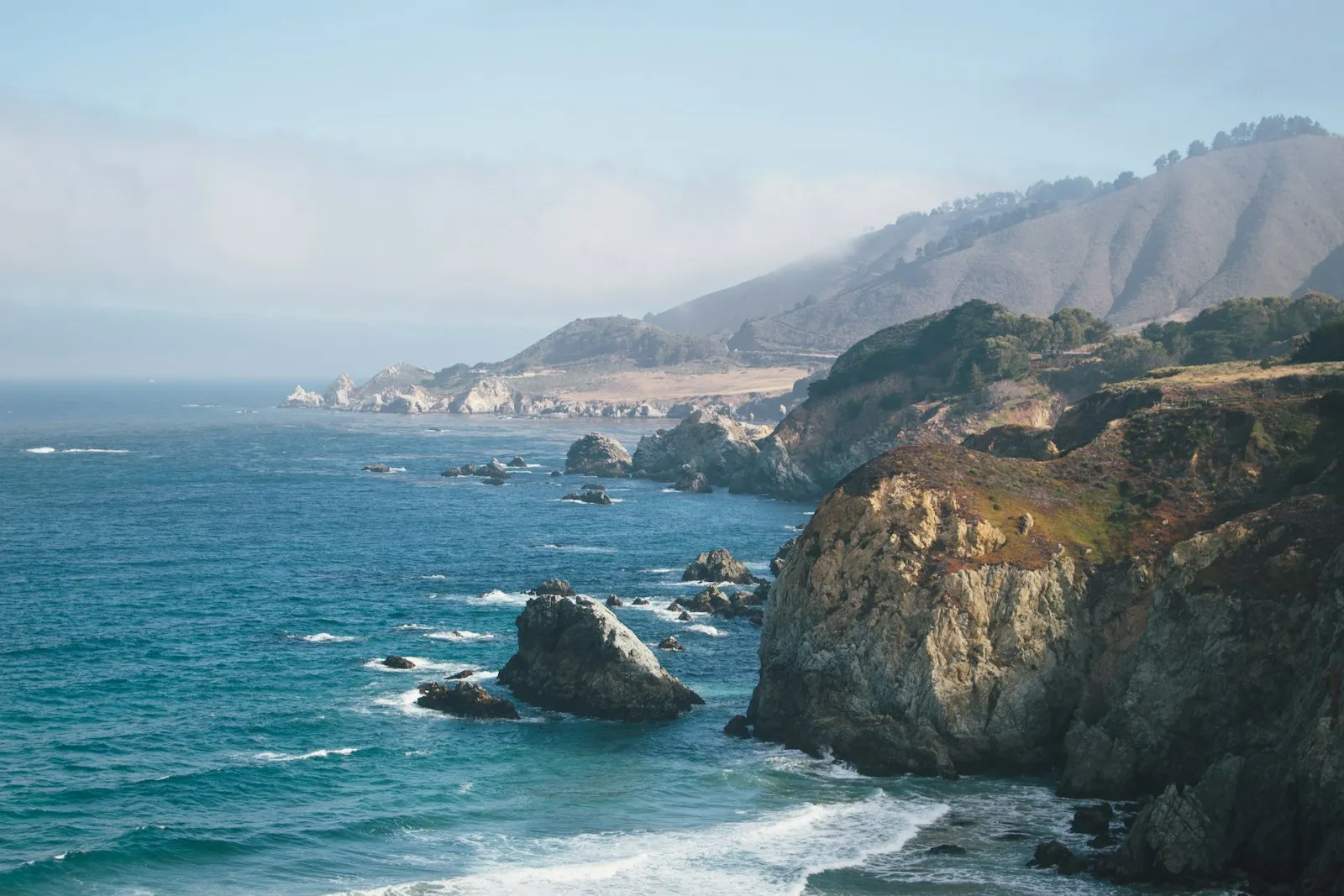
Big Sur RV camping is possible, but site dimensions—not a universal Highway 1 limit—decide where you fit. Pfeiffer Big Sur State Park publishes a maximum trailer length of 27 feet and motorhome length of 32 feet, charges $50 for standard sites or $60 for premium riverfront sites, and has a dump station but no hookups. Kirk Creek is dry camping with no water, cell service, showers, or dump station; its reservation records list the allowed equipment length site by site.
Highway 1 reopened to through travel in Big Sur on January 14, 2026. Maintenance, one-way traffic controls, weather, and slides can still change the trip, so check Caltrans immediately before departure. California State Parks also prohibits RVs in the day-use parking lots at Andrew Molera and Julia Pfeiffer Burns state parks; use a smaller vehicle for those stops.
Fire status, September 22, 2026: The Timber Fire (from August 9) and Plaskett Fire (from August 27) closed Highway 1 through Big Sur for more than a month; the highway fully reopened on September 14. As of today Pfeiffer Big Sur State Park is closed until further notice, Kirk Creek and Plaskett Creek are closed under Los Padres National Forest closure order 05-07-51-26-10, and Limekiln is open with restrictions and cash only. Fernwood Resort reports all facilities open. Backcountry trails east of Highway 1 are closed indefinitely.
Big Sur RV campgrounds: hookups, max length and prices (2026)
Every campground in the Big Sur corridor that takes an RV, with what the operator publishes. “Quoted at booking” means the operator does not post a nightly RV rate; you see it in the online booking system or by phone.
| Campground | Hookups | Max RV length | 2026 nightly price | Status Sept 22, 2026 |
|---|---|---|---|---|
| Fernwood Resort | Water + 30-amp electric | 30-ft motorhome / 28-ft trailer | $70–$145 (2 people, 1 vehicle) | Open |
| Big Sur Campground & Cabins | Water + electric | Up to 40 ft in select sites | Quoted at booking | No closure posted; call (831) 667-2322 |
| Riverside Campground & Cabins | Water + 20-amp electric | 30 ft | Quoted at booking | No closure posted; call (831) 667-2414 |
| Pfeiffer Big Sur State Park | None (dump station) | 32-ft motorhome / 27-ft trailer | $50 standard, $60 premium | Closed until further notice |
| Limekiln State Park | None | 24-ft motorhome / 15-ft trailer | $50 | Open with restrictions, cash only |
| Kirk Creek (USFS) | None | 30 ft | $45 | Closed (fire closure order) |
| Plaskett Creek (USFS) | None | Site-specific | $45 | Closed (fire closure order) |
Extras at the private parks. Fernwood adds $5 per extra person, $5 per dog, $10 per extra car and $20 to dump tanks, and its electric sites across the bridge are not reservable for RVs between Memorial Day and Labor Day. Big Sur Campground & Cabins charges $5 per extra person (five max), $5 per pet and $15 for a second vehicle; cancel 14 or more days out for a $25 fee, inside 14 days and you lose a night plus tax. Riverside charges $5 per pet per night and allows one vehicle per site. At the state parks a second vehicle is $10 a night.
None of that means you should skip it. It means you should plan properly. This guide covers every campground that will actually take an RV, the highway sections that will test your nerves, and the nearby alternatives that give you Big Sur access without the tight-road anxiety. We wrote it for people who want the honest logistics, not the Instagram version.
Quick answer: Big Sur RV camping with hookups means one of three private parks on the Big Sur River: Fernwood Resort ($70–$145 a night, 30-amp, 30-foot motorhome limit), Big Sur Campground & Cabins (the only one taking 40-foot rigs, in select sites) or Riverside Campground & Cabins (20-amp, 30 feet). All are water and electric only; no campground in the corridor offers sewer or full hookups. The public campgrounds have no hookups and cost $45–$60: Pfeiffer Big Sur (32-foot motorhomes, dump station, showers), Limekiln (24 feet) and the Forest Service’s Kirk Creek (30 feet) and Plaskett Creek. After the 2026 fires, Pfeiffer, Kirk Creek and Plaskett Creek are closed for now. Rigs over 40 feet should basecamp in Morro Bay, Pismo Beach or Monterey and drive in.
For more options along the California coast, see our best RV parks in California guide or browse all California camping destinations.
Big Sur RV Camping With Hookups vs Without
| Campground | Operator | Electric | Water at site | Sewer | Dump station | Showers |
|---|---|---|---|---|---|---|
| Pfeiffer Big Sur State Park | CA State Parks | No | No (spigots in campground) | No | Yes | Yes (coin-op) |
| Kirk Creek | USFS concessionaire | No | No (no drinking water) | No | No | No |
| Plaskett Creek | USFS concessionaire | No | No | No | No | No |
| Limekiln State Park | CA State Parks | No | No | No | No | Yes (token-operated) |
| Fernwood Resort | Private | Yes (30 amp) | Yes | No | Yes ($20) | Yes |
| Big Sur Campground & Cabins | Private | Yes | Yes | No | Yes | Yes |
| Riverside Campground & Cabins | Private | Yes (20 amp) | Yes | No | No | Yes |
The short version: if you need power, book one of the three private parks. If you need to dump tanks in the corridor, that means Fernwood ($20), Big Sur Campground & Cabins, or Pfeiffer once it reopens. Nobody in Big Sur offers a sewer connection.
RV Size and Highway 1
Highway 1 through Big Sur is a two-lane road carved into steep coastal mountains. In the best stretches, lanes are about 10 feet wide with no shoulder. In the worst stretches — particularly between Julia Pfeiffer Burns State Park and the southern approach near Lucia — the road narrows further, with blind curves that hug cliff edges hundreds of feet above the ocean.
Limits That Actually Matter
There is no single number in the current Caltrans Big Sur road report that guarantees every legal RV will be comfortable on every curve, pullout, or campground road. Plan with three separate checks:
- Road status: Review the live Caltrans Highway 1 report on departure day.
- Campground fit: Use the operator’s exact equipment limit for the specific campsite—not a campground-wide estimate from a blog.
- Day-use access: Do not plan to park an RV at Andrew Molera or Julia Pfeiffer Burns state parks; both official pages prohibit RVs in their day-use lots.
Pfeiffer’s published ceiling of 27 feet for trailers and 32 feet for motorhomes is a useful upper bound for the central public campground. Longer rigs should compare a basecamp in Monterey County or Morro Bay and tour Big Sur in a smaller vehicle.
The Sections to Respect
The tightest driving is between Ragged Point (south end) and Julia Pfeiffer Burns State Park. This stretch includes the steepest grades, the sharpest switchbacks, and the narrowest shoulders. If you are approaching from the south via San Simeon, the first 15 miles will test you.
The section between Carmel and Pfeiffer Big Sur is comparatively easier — wider lanes, gentler curves, more pullouts. If you are entering from Monterey or Carmel, you will reach the main campgrounds without dealing with the worst of the road.
Rig size tip: If your equipment is near a site’s limit, confirm the complete combined dimensions with the campground and inspect the route from your direction of travel. A smaller tow vehicle or rental car makes day-use stops far easier.
Pullouts are scattered along the highway, but they fill up fast during summer. When a faster vehicle stacks up behind you, use the next pullout. It is not optional — California law requires you to pull over when five or more vehicles are behind you.
RV Campgrounds in Big Sur (Public, No Hookups)
These are the campgrounds located within the Big Sur corridor itself, run by either California State Parks or the US Forest Service. They are the most scenic options, but they require trade-offs: no hookups, limited space, and reservations that fill up months in advance.
Pfeiffer Big Sur State ParkPark details →
Closed as of September 22, 2026: California State Parks closed Pfeiffer Big Sur “until further notice” on September 15 because of the Timber and Plaskett fires. Check the park page before booking.
Pfeiffer is the largest and most established campground in Big Sur. It sits about a mile inland from the coast in a canyon thick with coast redwoods and big-leaf maples. The Big Sur River runs through the park, and in summer the swimming holes are the main event for families.
For RVers, Pfeiffer is the primary option because it has the largest sites and the most straightforward highway access. The entrance is well-signed, the camp roads are paved, and the park staff are experienced at directing larger rigs to compatible sites. That said, “large” here is relative. This is not a KOA with 60-foot pull-throughs. Most sites are back-in, the roads are narrow, and trees limit your maneuvering room.
The campground loops vary considerably. Do not infer fit from the loop alone: compare the reservation record with your complete trailer or motorhome length, then ask the park before arrival if the assigned site’s approach is a concern.
There is a dump station in the park, a small camp store, and a restaurant at the Big Sur Lodge within walking distance. The lodge also has a gift shop and laundry, which is helpful for extended stays.
- Hookups: None — dry camping only
- Sites: 189 sites total, mix of tent and RV
- Max equipment length: 27-foot trailer; 32-foot motorhome
- Cost: $50 standard; $60 premium riverfront; $10 for a second vehicle
- Cell signal: Minimal to none — Verizon occasionally picks up a bar near the lodge
- Season: Year-round, though some loops close in winter
- Reservation: ReserveCalifornia.com — opens on a rolling 6-month window
- Dump station: Yes, located near the campground entrance
- Showers: Yes (coin-operated)
Reservation tip: Summer weekends at Pfeiffer sell out within minutes of the booking window opening. Set a phone alarm for exactly 8:00 AM Pacific, six months before your target date. Weekdays are dramatically easier to book.
Kirk Creek CampgroundPark details →
Closed as of September 22, 2026 under the Forest Service’s Timber and Plaskett fire closure order.
Kirk Creek is the campground that shows up in every “most beautiful campgrounds in America” list, and it earns the spot. The sites sit on a bluff 100 feet above the Pacific, with unobstructed ocean views from almost every spot. At sunset, there is nothing between you and the horizon except sea otters and kelp beds.
The trade-off is access and size. Kirk Creek is located on the southern stretch of Highway 1, about 30 miles south of Pfeiffer — meaning you have to drive through the tighter section of the road to get here. The campground itself is compact. Sites are close together, the access road is narrow, and there are no paved pads. You are parking on packed dirt on a coastal bluff.
The Forest Service limits Kirk Creek to RVs no longer than 30 feet, and Recreation.gov also publishes equipment limits site by site. One site record lists a 39-foot driveway, but that is the parking pad, not permission for a 39-foot rig. Filter by equipment type and complete length before selecting a site. There is no dump station, drinking water, cell service, or shower; vault toilets are available.
Kirk Creek is managed for the US Forest Service and reservable through Recreation.gov. Check the current booking status rather than driving down in expectation of an unreserved site.
- Hookups: None
- Sites: 33 reservable sites, plus 2 first-come
- Max RV length: 30 feet (Forest Service); check the site record too
- Cost: $45 per night per site
- Cell signal: None — no carrier works here reliably
- Season: Year-round, weather permitting
- Reservation: Recreation.gov
- Dump station: No
- Showers: No — vault toilets only
- Generator policy: Generally not permitted; check current rules
Reality check: Kirk Creek is spectacular, but if you need hookups, reliable cell service, or hot showers, this is not the campground for you. It is tent-camping-with-a-view territory. Bring a self-contained rig and enough water for your stay.
Plaskett Creek CampgroundPark details →
Closed as of September 22, 2026 under the same fire closure order as Kirk Creek.
Plaskett Creek sits just south of Kirk Creek, also on the southern stretch of Highway 1. It is managed by the same USFS concessionaire and shares the no-hookups, no-frills approach. What it offers over Kirk Creek is slightly larger sites and more tree cover — Plaskett is set back from the bluffs in a grove of Monterey pines rather than perched on the cliff edge.
Plaskett Creek’s reservation records specify equipment and driveway limits by site. Filter the live inventory using the complete length of your equipment rather than relying on a campground-wide maximum.
Sand Dollar Beach, one of the best beaches along the Big Sur coast, is a short walk from Plaskett Creek. The jade hunting is real — people find small pieces of nephrite jade along the shore, particularly after winter storms.
- Hookups: None
- Sites: 44 sites, 2 of them first-come
- Max RV length: Site-specific; verify the reservation record
- Cost: $45 per night
- Water: The Forest Service currently lists no potable water
- Cell signal: None
- Season: Year-round, weather permitting
- Reservation: Recreation.gov
- Dump station: No
- Showers: No — vault toilets only
- Nearby: Sand Dollar Beach trailhead (0.5 miles)
Limekiln State ParkPark details →
Limekiln is the small state park campground on the southern coast, about 2 miles south of Lucia, with sites along Limekiln Creek under redwoods and a short walk to a cove beach. It suits small rigs only: the park caps motorhomes at 24 feet and trailers at 15 feet. There are no hookups and no dump station (the nearest is at Pfeiffer), but there are token-operated hot showers for registered campers. Reservations are strongly encouraged and there are no first-come sites. As of September 2026 the park is operating with restrictions from the fires, and all transactions are cash only.
- Hookups: None
- Max RV length: 24-foot motorhome; 15-foot trailer
- Cost: $50 standard site; $10 extra vehicle
- Showers: Yes ($1 token for 5 minutes)
- Dump station: No
- Reservation: ReserveCalifornia; call (831) 643-6036 for current conditions
Big Sur RV Parks With Hookups (Private)
Private campgrounds in Big Sur offer something the public parks do not: hookups. They also charge more, tend to be tighter, and book up just as fast during peak season. But if you need electricity for your AC or want to keep your refrigerator running without a generator, these are your options within the corridor.
Fernwood ResortPark details →
Fernwood is the most well-known private campground in Big Sur, located directly on Highway 1 about a mile south of Pfeiffer Big Sur State Park. It is part campground, part resort, part bar — the on-site tavern is one of the few places in Big Sur to get a burger and a beer without a fine-dining price tag.
Each RV site has a pedestal with water and 30-amp electric. There is no sewer hookup, but Fernwood has a dump station ($20 if you use it). The sites are tight. Fernwood was not designed for modern RVs, and the layout reflects its origins as a tent campground that added RV sites over time. Backing in can be an adventure, particularly on busy weekends when cars and pedestrians are everywhere.
That said, the location is excellent. You are within walking distance of the Big Sur River, the General Store is across the highway, and Pfeiffer Beach — the one with the purple sand and the keyhole rock arch — is a short drive down Sycamore Canyon Road.
- Hookups: Electric (30 amp) and water — no sewer; dump station $20
- Sites: Approximately 25 RV sites
- Max RV length: 30-foot motorhome; 28-foot trailer; towed-in rental trailers prohibited
- Cost: $70–$145 per night for 2 people and 1 vehicle; $5 extra person, $5 per dog, $10 extra car
- Limits: 6 people and 2 vehicles per site; electric sites across the bridge not reservable for RVs Memorial Day to Labor Day
- Check-in / out: 12 PM–10 PM / 11 AM; quiet hours 10 PM–8 AM
- Cell signal: Minimal — same dead zone as the rest of the corridor
- Season: Year-round
- Reservation: fernwoodbigsur.com or (831) 667-2422
- Extras: On-site restaurant/tavern, camp store, live music on weekends
Big Sur Campground & CabinsPark details →
This privately owned campground sits along the Big Sur River about a mile north of Pfeiffer State Park. The river access is the main draw — in summer, the swimming holes here are some of the best in the corridor, and the setting under the redwoods is genuinely beautiful.
The RV sites have water and electric hookups (the operator does not publish amperage), and there is a central dump station. Sites are modest in size but better organized than Fernwood. The campground caters to a mix of tent campers, RVers, and cabin renters, and the vibe tends toward families and couples rather than party crowds.
This is the one campground in the corridor that says it can take trailers and motorhomes up to 40 feet, in select sites. Call ahead with the complete rig dimensions so the operator can match you to one of those pads.
There is a playground, a basketball court, and an inner tube rental operation in summer. The camp store is small but covers basics.
- Hookups: Electric and water — dump station on-site
- Sites: Approximately 30 RV sites among 81 total sites
- Max RV length: Up to 40 feet in select sites
- Cost: Quoted at booking for 2 people and 1 vehicle; $5 extra person (5 max), $5 per pet, $15 second vehicle
- Cancellation: 14+ days out, $25 fee; inside 14 days, one night plus tax forfeited
- Check-in / out: 12 PM / 11 AM
- Cell signal: Minimal
- Season: Year-round
- Reservation: bigsurcamp.com — book online or by phone
- Extras: River swimming, playground, inner tube rentals, camp store
Riverside Campground & CabinsPark details →
Riverside is the third private campground in the central Big Sur cluster, located between Fernwood and Pfeiffer State Park along the Big Sur River. It is the smallest and quietest of the three private options, which is either a selling point or a limitation depending on what you want.
RV sites have water and 20-amp electric hookups, which is enough for lights and a fridge but not for running a big air conditioner. There is no sewer and no dump station, so arrive with empty tanks. Sites are shaded by redwoods and set along the riverbank. The atmosphere is peaceful — no tavern, no live music, no crowds. It is the closest thing to a private park experience that still feels like actual camping.
The campground is small and its internal access is tighter than a large resort. The operator caps RVs at 30 feet; towed vehicles are welcome, but only one vehicle is allowed per site, so a second car parks off-grounds.
- Hookups: Electric (20 amp) and water — no sewer, no dump station
- Sites: 34 tent and RV sites plus 12 cabins
- Max RV length: 30 feet
- Cost: Quoted at booking; $5 per pet per night
- Cell signal: Minimal
- Season: Call to confirm, (831) 667-2414
- Reservation: Online through Campspot, by phone or reservations@riversidecampground.com
RV Parks Near Big Sur for Big Rigs
If your rig exceeds the in-corridor site’s published limit—or if you want full hookups and easier provisioning—compare a basecamp outside the Big Sur corridor and drive in with a smaller vehicle. To the south, our Pismo Beach RV camping guide covers full-hookup parks about two hours below the corridor.
Morro Bay (South Approach)
Morro Bay is south of the Big Sur corridor and has private full-hookup inventory plus a state park. Verify current site fit and pricing with each operator; the advantage is access to groceries, fuel, and services outside the remote corridor.
From Morro Bay, you can drive into Big Sur for a day trip in your tow vehicle. The drive north on Highway 1 is part of the experience — Hearst Castle, the elephant seal rookery at Piedras Blancas, and the Ragged Point overlook are all en route.
- Morro Dunes RV Park: Full hookups and pull-through inventory — live quote
- Morro Bay State Park: Public camping — verify the exact site’s limits and current fee
San Simeon
San Simeon State Park is south of the Big Sur corridor and offers public camping without the central corridor’s campground access. Check ReserveCalifornia for the exact site’s equipment limit, utilities, and current price.
- San Simeon Creek Campground: Verify exact site and current fee through ReserveCalifornia
Carmel and Monterey (North Approach)
Coming from the north, the Monterey Peninsula offers RV inventory at Laguna Seca Recreation Area and private parks in Carmel Valley. Match the exact site to the rig and use the current booking quote. This base also avoids taking the camping unit into day-use lots that prohibit RVs.
Approaching Big Sur from the north also means you only drive the easier, wider section of Highway 1 to reach the main campground cluster around Pfeiffer.
- Laguna Seca Recreation Area: Hookup inventory — verify exact site and current fee
- Saddle Mountain RV Park: Full-hookup inventory — live quote
Big Sur RV Campground Comparison
| Campground | Max RV | Hookups | Showers | Cost/Night | Cell Signal | Reservations |
|---|---|---|---|---|---|---|
| Pfeiffer Big Sur SP (closed Sept 2026) | 27-ft trailer / 32-ft motorhome | None | Yes | $50–60 | Minimal | ReserveCalifornia |
| Limekiln SP | 15-ft trailer / 24-ft motorhome | None | Yes | $50 | None | ReserveCalifornia |
| Kirk Creek (closed Sept 2026) | 30 ft | None | No | $45 | None | Recreation.gov |
| Plaskett Creek (closed Sept 2026) | Site-specific | None | No | $45 | None | Recreation.gov |
| Fernwood Resort | 28-ft trailer / 30-ft motorhome | Electric/Water | Yes | $70–$145 | Minimal | fernwoodbigsur.com |
| Big Sur CG & Cabins | 40 ft (select sites) | Electric/Water | Yes | Quoted at booking | Minimal | bigsurcamp.com |
| Riverside CG | 30 ft | Electric/Water | Yes | Quoted at booking | Minimal | Campspot / phone |
| Morro Dunes (basecamp) | Verify exact site | Full | Yes | Live quote | Strong | morrodunes.com |
| San Simeon Creek (basecamp) | Verify exact site | None | Yes | Live quote | Moderate | ReserveCalifornia |
| Laguna Seca (basecamp) | Verify exact site | Full | Yes | Live quote | Strong | co.monterey.ca.us |
Planning Your Big Sur Camping Trip
Best Season
Big Sur’s peak season runs from Memorial Day through Labor Day, and it earns every bit of its reputation during these months — warm days, fog-free mornings (mostly), and the river swimming holes at full flow. It is also when every campground is fully booked, Highway 1 traffic is heaviest, and pricing is at its peak.
The shoulder seasons — April through May and September through October — are the sweet spot for RV camping. Weather is often excellent. Crowds thin out dramatically. Campground availability improves from “impossible” to “plan a month ahead.” The wildflowers peak in April and May. The fall light is extraordinary.
Winter (November through March) brings rain, the possibility of Highway 1 closures from landslides, and reduced campground availability. Some private parks close entirely. Pfeiffer Big Sur stays open year-round, but winter camping here means cold nights, wet weather, and the genuine risk of being stuck if the highway closes behind you. That said, winter Big Sur is hauntingly beautiful and almost empty. If your rig is self-contained and you are comfortable with the risks, it is a different world.
Seasonal tip: September and October are the warmest months on the Big Sur coast — fog season ends, the sun comes out, and most tourists have gone home. This is the insider window.
Big Sur RV Camping Reservations
Reservations at Big Sur campgrounds require genuine planning. Here is the system:
- State Parks (Pfeiffer Big Sur): Book on ReserveCalifornia.com. Reservations open on a rolling window, typically six months in advance. For summer weekends, be online at exactly 8:00 AM Pacific on the first available booking day. These sites sell out in minutes, not hours.
- USFS (Kirk Creek, Plaskett Creek): Book on Recreation.gov. These also use a rolling window, typically six months out. Competition is slightly less intense than the state parks, but summer weekends are still difficult.
- Private parks: Book directly with each campground. Fernwood and Big Sur Campground & Cabins both have online booking. Riverside books online through Campspot or by phone. For summer weekends, book three to four months ahead minimum.
Cancellations do happen. Check back regularly in the week before your target dates — people cancel, weather changes plans, and sites open up. Midweek arrivals (Tuesday through Thursday) are significantly easier to book at every campground.
Highway 1 Driving Tips for RVs
Driving Highway 1 in an RV requires a different mindset than driving it in a car. Plan for these realities:
- Speed: Expect to average 25–35 mph through the corridor. Some curves are posted at 15 mph, and in an RV, those posted speeds are not conservative.
- Time: The 70 miles between Carmel and San Simeon takes about 3 hours in a car. In an RV, budget 4–5 hours with stops. More if you actually want to enjoy the views.
- Pullouts: Use them. California Vehicle Code requires pulling over when five or more vehicles are behind you. This is not just courtesy — it is law, and CHP does enforce it on Highway 1.
- Fuel: Fill up before you enter the corridor. There is one gas station in the Big Sur corridor (at the Chevron near Fernwood), and it charges a significant premium — often $2–3 more per gallon than stations in Carmel or Cambria.
- Brake management: The grades on Highway 1 are not extreme by mountain standards, but they are sustained. Downshift on descents. If you smell your brakes, you have already waited too long.
Supplies and Provisions
Big Sur has a handful of small stores — the Big Sur Deli, the General Store near Pfeiffer, and the store at Fernwood — but selection is limited and prices reflect the remoteness. Stock up on groceries and supplies in either Monterey/Carmel (north) or Cambria/Morro Bay (south) before entering the corridor.
Water is available at Pfeiffer Big Sur and the private campgrounds, but not at Kirk Creek or Plaskett Creek. If you are heading to a USFS campground, fill your fresh water tank before you arrive.
Propane refills are not available within the Big Sur corridor. Plan accordingly.
Cell Signal and Connectivity
Be prepared to be offline. There is no reliable cell service through most of the Big Sur corridor. Verizon has the best coverage, occasionally picking up a bar or two near the Big Sur Lodge and the Post Ranch area, but do not count on it for anything critical. AT&T, T-Mobile, and other carriers are effectively dead zones through the entire stretch.
If you need to make calls or check email, drive to the northern end of the corridor near Andrew Molera State Park, where reception improves slightly, or drive out to Carmel or Cambria for full service.
Plan your route, download offline maps, and tell someone your itinerary before you enter Big Sur. This is not a connectivity-optional suggestion — it is a safety one.
For more California campground options, see our complete California RV parks and camping guide or explore all California destinations.
Facts reviewed September 22, 2026 against operator-published pages: Fernwood’s RV page (rates, fees, lengths), Big Sur Campground & Cabins’ and Riverside’s RV pages (hookups, lengths, fees; neither publishes nightly RV rates), the Forest Service pages for Kirk Creek and Plaskett Creek (fees, 30-foot limit, closure) and closure order 05-07-51-26-10, California State Parks’ Big Sur fees page, Limekiln camping page and Pfeiffer closure notice, and news reports of the September 14 Highway 1 reopening. Site counts for the private parks are approximate. Earlier facts checked July 18, 2026 against Caltrans’ Regent’s Slide update, live Highway 1 conditions, Pfeiffer Big Sur State Park, Andrew Molera access, Julia Pfeiffer Burns access, and Kirk Creek on Recreation.gov. Conditions, fees and site availability can change.
Frequently asked questions
Is there Big Sur RV camping with hookups?
Yes, but only water and electric, at three private campgrounds on the Big Sur River: Fernwood Resort (30-amp, motorhomes to 30 feet, trailers to 28 feet, $70–$145 a night for two people), Big Sur Campground & Cabins (up to 40 feet in select sites, rates quoted at booking) and Riverside Campground & Cabins (20-amp, up to 30 feet, rates quoted at booking). No campground in the corridor has sewer or full hookups. Pfeiffer Big Sur, Limekiln, Kirk Creek and Plaskett Creek have no hookups at all.
Is Big Sur RV camping open after the 2026 fires?
Partly. Highway 1 fully reopened on September 14, 2026 after the Timber and Plaskett fires, and Fernwood Resort says all its facilities are open. But Pfeiffer Big Sur State Park has been closed until further notice since September 15, and Kirk Creek and Plaskett Creek are closed under a Forest Service fire closure order. Limekiln State Park is operating with restrictions and cash only. Check each campground before driving in.
Which RV campground in Big Sur is best for a first visit?
Pfeiffer Big Sur State Park for public camping (largest sites, paved roads, dump station, showers) or Big Sur Campground & Cabins for hookups and a dump station. Kirk Creek has the best views but no water, showers, or dump station.
Can I camp in Big Sur with a 40-foot Class A?
Only at Big Sur Campground & Cabins, which takes trailers and motorhomes up to 40 feet in select sites, so book early and name your length. Pfeiffer Big Sur tops out at 32 feet for motorhomes, Kirk Creek and Fernwood at 30, Riverside at 30 and Limekiln at 24. The day-use lots at Andrew Molera and Julia Pfeiffer Burns prohibit RVs, so a basecamp outside the corridor plus a smaller touring vehicle is often the practical plan.
How much does RV camping in Big Sur cost?
Public campgrounds with no hookups cost $45 a night at Kirk Creek and Plaskett Creek, $50 at Limekiln, and $50 standard or $60 premium at Pfeiffer Big Sur, plus $10 for a second vehicle at the state parks. With hookups, Fernwood charges $70–$145 a night for two people and one vehicle, plus $5 per extra person, $5 per dog, $10 per extra car and $20 to use the dump station. Big Sur Campground & Cabins and Riverside quote RV rates at booking rather than publishing them.
How far in advance should I book Big Sur RV camping?
Six months for summer weekends, two to three months for summer weekdays, about a month for shoulder season, and often a week or two in winter. Pfeiffer books through ReserveCalifornia, Kirk Creek and Plaskett Creek through Recreation.gov, and the private parks directly.
Are there RV parks near Big Sur for big rigs?
Yes. Morro Dunes RV Park in Morro Bay and Laguna Seca Recreation Area or Saddle Mountain RV Park near Monterey offer full hookups and easier access, and you can day-trip into Big Sur in a smaller vehicle.
What if Highway 1 is closed?
There is no alternate route through Big Sur. Check the Caltrans road conditions page before any trip and have a backup destination ready, particularly in winter and spring when slides are most likely.
About the author
Marisol ReyesCamping & Outdoors Editor
Marisol spent six years as an interpretive ranger in the California and Colorado state park systems before turning to writing full-time. She knows public-land camping from the inside — how reservation windows really work, why some loops fill before others, and which 'first-come, first-served' sites are worth gambling on.
More from Marisol →Campgrounds in this guide
Facts pages for each park — hookups, rig limits, rates and booking, plus every guide that covers it.
Keep reading
RV Camping in Sequoia National Forest: Campgrounds, Kern River & Free Dispersed Sites
The National Forest, not the National Park — where to RV camp around Hume Lake, the Western Divide, and the Kern River, plus the free dispersed camping the park can't offer.
Oceanfront RV Parks in California: Where You Can Park With a Pacific View
Seven verified California oceanfront RV parks with 2026 rates, hookup types, and rig-length limits — from Morro Strand and Pismo to Jalama, Carpinteria, San Elijo, and Doheny.
RV Camping in Yosemite National Park: The In-Park Campground Guide
RV parks near Yosemite are great — but if you want to sleep inside the park, here's the honest guide to every Yosemite campground that takes RVs.