Jekyll Island Campground Review: Camping on Jekyll Island, Sites, Rates and Driftwood Beach
Jekyll Island Campground review — 179 sites (167 full hookup), 30/50-amp, back-ins from $51 and pull-throughs from $54 a night, a half-mile from Driftwood Beach. Honest take on camping on Jekyll Island.
Jekyll Island is the Georgia coast’s quiet triumph: a state-owned barrier island where development is capped by law, the beaches are backed by maritime forest rather than condos, and a bike path circles the whole thing. Jekyll Island Campground is the only campground on the island, and it sits at the north end under the same live oaks that make the place feel like a set from a period drama. Camping on Jekyll Island is, for a lot of Southeast RVers, the trip they come back to every year.
This review is based on the campground’s own published details and our read of what the campground is actually like to stay in. It is honest about the fee stacking (island parking plus site plus pets), the size limits and the fact that “walking distance to the beach” means a real walk.
For the wider region, see our Georgia hub, and compare Jekyll with the neighbouring coast in our Hilton Head and Lowcountry and St. Augustine RV parks guides.
Quick answer: Jekyll Island Campground has 179 sites — 167 full-hookup sites with water, power and sewer at 30 and 50 amps, plus 12 primitive tent sites with water only. Full-hookup back-in sites start from $51 per day, pull-throughs from $54 and tent sites from $36, with a $4 per-pet fee and a separate daily island parking fee at the gate. The maximum RV length is 45 feet, but each site has its own limit. The campground sits on 18 wooded acres at the north end of the island, half a mile from Driftwood Beach and within walking distance of Clam Creek. Reserve well ahead for spring, fall and holidays.
Jekyll Island Campground at a glance
| Spec | Detail (as listed by the campground) |
|---|---|
| Total sites | 179 (167 full hookup, 12 primitive tent) |
| Hookups | Water, power (30 and 50 amp), sewer on full-hookup sites; water only on tent sites |
| Rates | Back-in full hookup from $51/day; pull-through from $54/day; tent from $36/day |
| Pets | Pet friendly, $4 per pet |
| Max RV length | 45 ft, with site-specific limits |
| Location | 18 wooded acres, north end of the island, half a mile from Driftwood Beach |
| Amenities | Free Wi-Fi, two bathhouses with hot showers, card-operated laundry, general store, bike rentals |
| Reservations | Strongly recommended; $25 fee for cancellations at least 7 days out, higher inside 7 days |
| Island access | Daily parking fee at the island entrance, charged for each day of stay |
Location and getting there
Jekyll Island sits between Brunswick and St. Simons on the Georgia coast, roughly midway between Savannah and Jacksonville, and it is an easy detour off I-95. The causeway from Brunswick crosses the marsh to the island’s single entrance gate, where the daily parking fee is collected. From the gate, the campground is at the far north end, past the historic district and near the fishing pier at Clam Creek.
The roads are flat, paved and easy for any rig within the 45-foot limit. The causeway and island roads have no clearance issues we are aware of, but the campground’s interior roads and site pads are among the trees, so pay attention to overhead branches on the larger sites.
The sites
The 167 full-hookup sites are split between back-ins and pull-throughs, all with water, sewer and 30/50-amp power. Pull-throughs carry a small premium (from $54 versus $51 per day) and are the easy pick for larger rigs or one-night stops. The 12 primitive sites are tent-only in practice, with water hookups but no power or sewer.
What the numbers do not tell you is how uneven the sites are in size and shade. Because the campground was carved out of maritime forest and the operator states that each site has a size-specific limit “based on the landscape,” two adjacent sites can differ substantially in width and in how much awning and slide clearance you have. Filter carefully by your actual rig length in the reservation system, and if you have a choice, choose a site rated for a few feet more than you need.
Site surfaces are a mix; do not expect the concrete pads of a resort. This is a wooded, sandy-soil campground and it feels like one.
Hookups and amenities
- Electric: 30 and 50-amp on full-hookup sites
- Water and sewer: On all 167 full-hookup sites
- Wi-Fi: Free across the campground; expect it to be adequate for email rather than streaming at busy times
- Bathhouses: Two, with toilets and hot-water showers
- Laundry: On site, card-operated washers and dryers
- General store: RV supplies, firewood, propane, ice and personal items
- Bike rentals: On site — the best way to see the island
The absence of a pool, playground complex or organized activities is a feature rather than a bug. Jekyll Island itself is the amenity: the beach, the historic district, the pier and the bike trail.
Driftwood Beach and Clam Creek
Driftwood Beach is the reason most people come. Erosion at the north end has toppled a forest of live oaks and pines onto the sand, and the bleached, sculptural trunks make it one of the most photographed beaches in the Southeast. It is roughly half a mile from the campground — a comfortable walk or a two-minute bike ride — and it is spectacular at sunrise and at low tide, when the driftwood is fully exposed.
Clam Creek, with its fishing pier and picnic area, is even closer and is where you go for a marsh sunset, a crab line, or a look at the Sidney Lanier Bridge across the sound.
Neither is a swimming beach in the resort sense; for a wide, groomed beach with lifeguards, head south along the island’s east side.
The rest of the island
Jekyll’s historic district — the Jekyll Island Club and the “cottages” of the Gilded Age millionaires who wintered here — is a few miles south of the campground and is worth an afternoon. The Georgia Sea Turtle Center is nearby and is a genuine highlight for families. The island bike trail runs roughly the length of the island, and because through-traffic is limited and speeds are low, it is one of the safest places on the coast to ride with kids.
Choosing a site: back-in, pull-through or tent
With only two full-hookup categories, the site decision is simpler than at a big resort, but it still matters.
- Pull-through (from $54/day): The default for anything over about 35 feet, for one- or two-night stays where you do not want to unhitch, and for anyone nervous about backing between trees. The premium over a back-in is small.
- Back-in (from $51/day): Usually a little more private, often with more tree cover behind the rig. Fine for most trailers and motorhomes if you check the site’s individual length rating.
- Primitive tent (from $36/day): Water only. Twelve sites, so they book out early on spring weekends.
Whatever you pick, read the site-specific length limit in the reservation system rather than relying on the 45-foot campground maximum. That figure is the ceiling for the largest sites, not a promise for every pad. If you can, ask for a site away from the entrance road and store, which see the most golf-cart and vehicle traffic.
Pros and cons
| We liked | We would flag |
|---|---|
| Full hookups on 167 of 179 sites, 30 and 50 amp | Sites vary a lot in size and shade; the 45-foot max is site-dependent |
| Half a mile to Driftwood Beach, walking distance to Clam Creek | Island parking fee on top of the site rate for every day of the stay |
| Bike rentals, general store, laundry and two hot-shower bathhouses on site | No pool or activity program — the island is the amenity |
| Reasonable published floor rates ($51 back-in, $54 pull-through) | Seven-day cancellation window with a $25 fee, higher inside a week |
| Quiet, dark, wooded and pet friendly ($4 per pet) | Free Wi-Fi is fine for email but not for streaming at busy times |
Camping on Jekyll Island versus staying nearby
If the campground is full — and in spring and fall it will be — the usual fallbacks are mainland campgrounds around Brunswick and the state parks along I-95, then a day trip onto the island with the parking fee. That works, but it misses the point: the best of Jekyll is early morning and evening, when the day visitors have gone and Driftwood Beach and the bike trail are empty. If you can only get two nights on the island, take two nights on the island rather than five nights on the mainland.
We have not verified current site counts or rates for the mainland alternatives, so check the Georgia State Parks system and the individual operators for your dates.
Getting around
Bring or rent bikes. The island trail connects the campground to Driftwood Beach, the fishing pier, the historic district and the beach pavilions on the east side, and it is flat the whole way. Driving is easy — the roads are wide and quiet — but parking at the most popular beach access points fills on busy weekends, and a bike lets you skip that entirely. Golf carts are common in the campground itself.
What it costs, all in
This is where Jekyll catches first-timers out. Budget for three layers:
| Cost layer | What we know |
|---|---|
| Campsite | From $51 (back-in) or $54 (pull-through) per day, full hookup; from $36 tent |
| Pets | $4 per pet |
| Island parking fee | Daily fee at the entrance gate, charged for each day of stay — check the Jekyll Island Authority for the current amount |
| Cancellation | $25 if at least 7 days out; higher inside 7 days |
The “from” prices are the campground’s published floor; expect higher rates in peak season and for the most desirable sites, and confirm the total when you book.
Reservations and best time to go
Reservations are strongly recommended and, in practice, essential for March through May, October, and any holiday. Summer is hot and humid but busy with families; the campground’s tree cover helps more than you would expect. Winter is mild and the quietest time of year — good for cyclists and birders, and the easiest window to get a walk-in site.
The seven-day cancellation rule means it pays to lock in dates you are sure of and to watch the weather during hurricane season (roughly June through November, peaking August to October).
Verdict
Jekyll Island Campground is not fancy, and it is not cheap once you stack the island fee on top of the site fee. It is, however, one of the most rewarding campgrounds on the Southeast coast: full hookups under live oaks, a half-mile walk to one of the region’s signature beaches, and an island built for bikes rather than cars. Book a full-hookup pull-through if you are over 35 feet, budget for the gate fee, and give yourself at least three nights.
If you are working down the coast, our St. Augustine RV parks guide picks up an hour and a half south, and for a broader Southeast beach shortlist see the best beachfront RV parks in the USA. Not sure how much full hookups matter for a beach stay? Read full hookup vs partial hookup.
Frequently asked questions
How much does it cost to camp at Jekyll Island Campground?
The campground lists full-hookup back-in sites from $51 per day, full-hookup pull-through sites from $54 per day and primitive tent sites from $36 per day. There is a $4 per-pet fee, and a separate daily island parking fee applies at the Jekyll Island entrance for each day of your stay.
Does Jekyll Island Campground have full hookups?
Yes. 167 of the 179 sites have full hookups — water, power and sewer — with 30 and 50-amp electrical service. The 12 primitive tent sites have water hookups only.
What is the maximum RV length at Jekyll Island Campground?
The maximum RV length allowed is 45 feet, but each site has its own size limit based on the landscape, so choose a site rated for your rig rather than assuming every site takes 45 feet.
How far is the campground from Driftwood Beach?
About half a mile. The campground sits on 18 wooded acres at the north end of the island within walking distance of Clam Creek and Driftwood Beach, and bike rentals are available on site.
Do I need reservations for camping on Jekyll Island?
Reservations are strongly recommended and are effectively required in spring, fall and holiday periods. Cancellations at least seven days before arrival carry a $25 fee; cancellations inside seven days cost more.
Is there a fee to drive onto Jekyll Island?
Yes. Jekyll Island charges a daily parking fee at the entrance gate, and the campground notes it applies for each day of your stay. Check the Jekyll Island Authority for the current amount and multi-day pass options.
About the author
Marisol ReyesCamping & Outdoors Editor
Marisol spent six years as an interpretive ranger in the California and Colorado state park systems before turning to writing full-time. She knows public-land camping from the inside — how reservation windows really work, why some loops fill before others, and which 'first-come, first-served' sites are worth gambling on.
More from Marisol →Campgrounds in this guide
Facts pages for each park — hookups, rig limits, rates and booking, plus every guide that covers it.
Keep reading
Anchor Down RV Resort Prices, Map & Review: Douglas Lake, Dandridge TN (2026)
An honest Anchor Down RV Resort review: 2026 prices and fees, the site map and lakefront site numbers, what the operator publishes, what to ask before booking, and how it compares with the Gatlinburg and Pigeon Forge parks 30-plus minutes away.
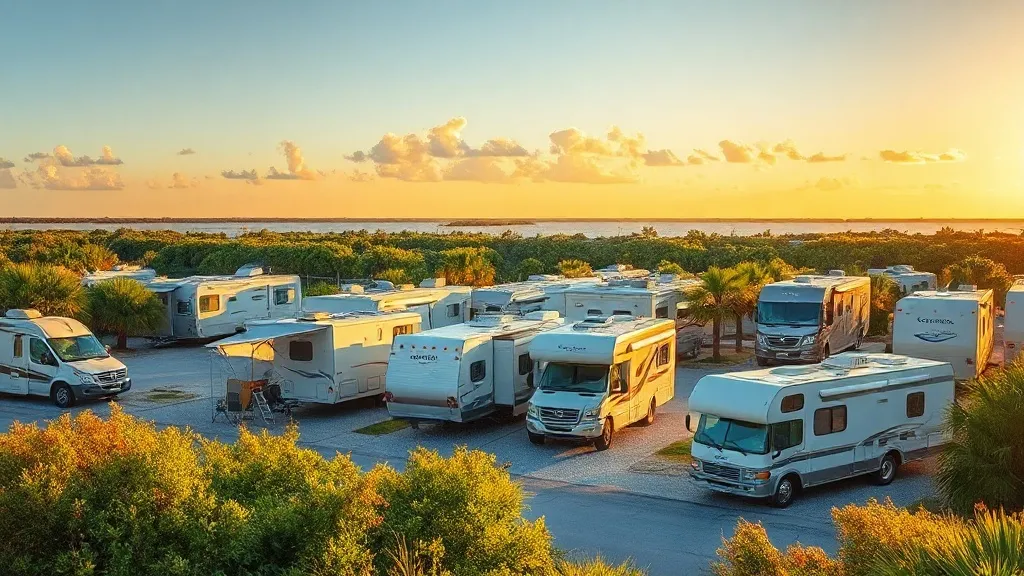
Boyd's Key West Campground Review: Sites, Rates & Is It Worth It (2026)
An honest Boyd's Key West Campground review: full-hookup 30/50-amp sites with cable on Stock Island four miles from Duval Street, the heated pool, marina and tiki hut, what the operator publishes on rates, and how it compares with Bluewater Key, Sunshine Key and Bahia Honda.
Colter Bay RV Park Review: Grand Teton's Only Full-Hookup Campground
Colter Bay RV Park, Wyoming: 112 full-hookup sites on Jackson Lake in Grand Teton National Park, 45-foot pull-throughs, 20/30/50 amp, no generators, booked on Recreation.gov.