Dead Horse Ranch State Park Camping: RV Sites & Fees (2026)
Verified Dead Horse Ranch State Park camping guide covering the $50 RV fee, 106 electric sites, loop sizes, 65-foot combination fit, reservations, showers, dump station, and Sedona trade-offs.
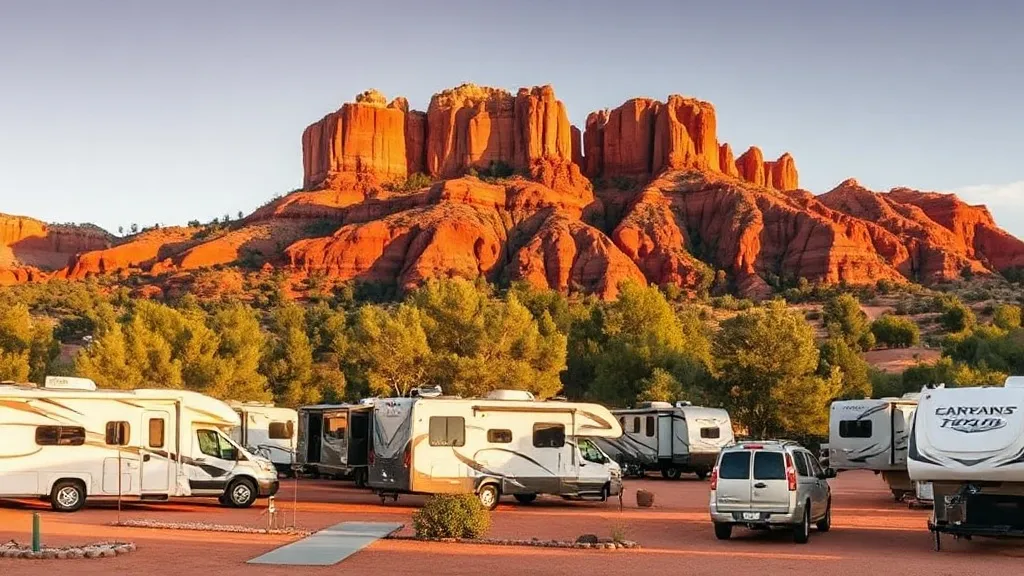
Dead Horse Ranch State Park is the practical answer for RV travelers who want developed camping in the Verde Valley without paying for a private Sedona resort. The park publishes 106 campsites across its three RV-capable loops, potable water, 30/50-amp electricity, hot showers, and a dump station. The current electric-site fee is $50 per night plus a $3.60 reservation fee.
The name is stranger than the campground. This is a year-round Arizona state park in Cottonwood, not a novelty stop, and its value comes from the location: access to the Verde River Greenway, fishing lagoons, shared-use trails, and a workable day-trip base for Sedona.
There are two important catches. First, these are not full-hookup sites—there is no sewer connection at the pad. Second, the park’s 65-foot figure applies to many truck-and-trailer combinations on pull-through sites, not every campsite. The individual reservation record still controls.
For every private, public, and dispersed option nearby, read our Sedona RV parks and camping guide. The broader state silo is best RV parks in Arizona.
Dead Horse Ranch at a Glance
| Detail | Verified current information |
|---|---|
| Location | 675 Dead Horse Ranch Road, Cottonwood, AZ 86326 |
| RV-capable loops | Quail 43, Red-Tail 36, Cooper’s Hawk 27 |
| RV utilities | Potable water and 30/50-amp electricity |
| Sewer | No at-site sewer; camper dump station available |
| Electric-site fee | $50/night |
| Reservation fee | $3.60, nonrefundable |
| Motorhome fit | Most pull-throughs accept up to 40 feet |
| Truck/trailer fit | Most pull-throughs accept combinations up to 65 feet |
| Check-in / checkout | 2 p.m. / noon |
| Maximum stay | 14 nights in a 30-day period |
| Generators | Prohibited |
| Park season | Open year-round |
Check the official campground page and the live reservation record before travel.
Which Campground Loop Should You Book?
Dead Horse Ranch uses four named loops, but only three are relevant to RV travelers.
Quail Loop
Quail has 43 campsites, including one accessible site. It is the largest of the RV loops, so it generally gives the reservation system the most inventory to work with. A larger loop does not mean every pad has the same length or turning radius; filter by the actual equipment and inspect the selected site’s record.
Red-Tail Loop
Red-Tail has 36 campsites, including one accessible site. It offers the same basic campground utility model: potable water and electrical service, with restrooms, showers, and the central dump station supporting the stay.
Cooper’s Hawk Loop
Cooper’s Hawk has 27 campsites, including two accessible sites. It is the smallest of the three RV-capable loops and therefore has fewer alternatives when a specific length or date is important.
Blackhawk Is Tent-Only
Blackhawk has 17 nonelectric campsites and one accessible site. Arizona State Parks explicitly reserves it for tents: RVs, campers, and vans are not permitted. That distinction matters because the park’s published $25 nonelectric rate is not a budget dry-RV category.
Do not select Blackhawk simply because the fee is lower. RV travelers should plan around one of the three electric loops unless the official inventory changes.
RV Fit: Understanding the 40- and 65-Foot Numbers
The park says most pull-through sites can accommodate a 40-foot motorhome or a truck-and-trailer combination up to 65 feet. Those are different measurements.
A 40-foot motorhome towing a car is not automatically the same product as a 65-foot truck/trailer combination. The reservation flow needs the equipment type and complete length as requested. The parking pad, tow-vehicle position, road approach, and current site rules all affect whether a combination works.
Use this booking sequence for a long rig:
- Enter the correct equipment type and full length.
- Filter for pull-through inventory.
- Open the individual site’s detail rather than relying on the park summary.
- Confirm where the tow vehicle can remain after setup.
- Call 928-634-5283 if the displayed fit is ambiguous.
The park also requires vehicles and trailers to remain on paved surfaces. A long combination cannot extend into the road or landscape simply because the booking system accepted the trailer.
Hookups, Water, and Tank Planning
Dead Horse Ranch is a partial-hookup campground. RV sites provide potable water and 30/50-amp electricity, but there is no sewer at the campsite.
Registered campers can use the dump station without an extra dump fee. Noncampers currently pay $20. That arrangement works well for a short stay if fresh, gray, and black-tank capacity match the itinerary, but it is not the same convenience as connecting a sewer hose on arrival.
Practical tank plan:
- Arrive with holding tanks empty.
- Confirm that the potable-water connection at the selected site is operational.
- Use campground showers to reduce gray-water load.
- Schedule the dump before checkout instead of waiting until the final minute.
- Never release gray water on the ground; park rules require it to be contained.
Generators are prohibited, which makes the electrical pedestal important rather than optional for RV campers. Check both the requested amperage and the exact site’s service before arrival.
Fees and What the Camping Price Includes
The park currently publishes:
- $50/night for a campsite with electricity
- $25/night for a nonelectric campsite
- $3.60 nonrefundable campground reservation fee
- $15/night for an additional vehicle when the listed exemptions do not apply
Because Blackhawk is tent-only, RV travelers should budget from the $50 electric rate rather than advertising the $25 figure as an RV bargain.
Camping fees include park day-use access during the registered stay. Arriving before noon on arrival day can trigger the separate park entrance fee, even though campground check-in begins at 2 p.m. The public pages contain nuanced wording around included and additional vehicles, so confirm the exact vehicle count when reserving rather than assuming two unrelated vehicles are included.
Reservations and Cancellation Rules
Reservations open 365 days ahead and can be made until one day before arrival. Peak-season weekends require a two-night minimum. Arizona State Parks says Dead Horse Ranch often sells out in spring and fall, so the one-year window is useful for fixed weekend plans.
Current campground cancellation rules are:
- Every campsite cancellation carries a $20 fee.
- Cancel before 2 p.m. Arizona time on the day before arrival and the $20 cancellation fee plus $3.60 reservation fee are withheld.
- Cancel later and the first-night camping fee is also forfeited.
- Two reservation modifications are free; further changes require cancellation and rebooking.
- A guest who has not arrived by noon on the day after the first reserved night forfeits all payments and the site can return to inventory.
Full payment is due when booking. Read the official Arizona State Parks reservation policy at checkout because system rules can change.
Arrival, Occupancy, and Quiet Hours
Check-in is 2 p.m. and checkout is 12 noon. An early arrival does not guarantee that the site is ready. The maximum stay is 14 nights within a 30-day period.
Statewide reservation terms allow up to ten people at a developed campsite, with no more than six adults. The campground page caps parking and charges for additional vehicles under its current conditions. Keep all parking permits visible and use only designated paved areas.
Quiet hours run 10 p.m. to 8 a.m. Generators and amplified music are prohibited. This is an important fit question for dry campers: the electric pedestal replaces the generator plan, and campground quiet does not depend on negotiating generator hours with a neighbor.
Showers, Restrooms, and Park Facilities
All campground loops have modern accessible restrooms with hot water. Showers are free to registered campers; the park does not supply toiletries.
Other useful facilities include:
- Visitor center and park store, normally open daily except Christmas
- Limited camping, fishing, food, and drink supplies
- Dump station
- Playground
- Three fishing lagoons
- River day-use and lagoon areas
- Trails connecting toward Coconino National Forest and the Verde River Greenway
- Eight dry camping cabins in a separate river-adjacent area
No RV campsite sits directly on the Verde River. The park explains that river flooding makes river-edge camping unsafe and impractical. Choose Dead Horse Ranch for access to the water and greenway, not for a private riverfront pad.
Fishing, Trails, and a Sedona Base
The park’s three lagoons and the Verde River support fishing. Arizona State Parks lists channel catfish in summer, rainbow trout in winter, and naturally reproducing largemouth bass and bluegill. A valid license and current fishing regulations still apply.
Most park trails are shared by hikers, cyclists, and equestrians. The trail system reaches riparian cottonwood/willow habitat and connects beyond the immediate campground. That makes Dead Horse Ranch useful for a trip that is not entirely centered on driving into Sedona.
For Sedona days, leave the RV established and use a smaller vehicle. Cottonwood provides groceries, restaurants, fuel, and repair services without navigating Sedona’s trailhead traffic in the rig. The trade-off is the commute: this is a Verde Valley base, not a campsite beneath Cathedral Rock.
Pets and Fire Rules
Pets must remain leashed, cannot be left unattended, and are not allowed inside park buildings. Clean up immediately and plan trail time around heat and the animal’s tolerance.
Gathering firewood is prohibited. Fire restrictions can tighten rapidly in Arizona, so a fire ring or grill shown on a map does not override a current restriction. Verify the live park alert before bringing fuel or planning outdoor cooking.
What Works
A real partial-hookup state-park option. Water, 30/50-amp electricity, showers, and a dump station cover the services most RVers need without private-resort pricing.
Unusually flexible pull-through inventory. Many sites can screen combinations up to 65 feet, provided the individual site and parking plan fit.
Year-round access. Cottonwood’s lower elevation makes the park a practical shoulder- and winter-season base.
More than a Sedona overflow lot. Fishing, the Verde River Greenway, trails, playground, and Cottonwood services justify staying even when Sedona is not the only objective.
What Does Not Work for Everyone
No at-site sewer. Longer stays require a deliberate dump schedule.
No generator fallback. Electrical service must match the rig because generators are prohibited.
Spring and fall sellouts. A spontaneous weekend arrival is not a dependable plan.
No riverfront campsites. Water access is nearby, but the campsite itself is not beside the Verde River.
The $25 rate is not an RV loophole. The nonelectric Blackhawk loop is tent-only and prohibits campers and vans.
Final Verdict
Dead Horse Ranch State Park is the best public-campground value to investigate for an RV-based Sedona and Verde Valley trip. It combines 106 RV-capable electric sites, potable water, showers, a dump station, long-combination pull-through inventory, and year-round operation.
Book it for partial hookups and a strong Cottonwood base. Do not book it expecting full hookups, a riverfront pad, generator use, or guaranteed 65-foot fit on any open site. Select the exact equipment record, reserve early for spring or fall, and make the dump plan before arrival.
FAQ
How much is RV camping at Dead Horse Ranch?
Electric campsites are currently $50 per night plus a nonrefundable $3.60 reservation fee. The $25 nonelectric category is in Blackhawk, which is tent-only and prohibits RVs, campers, and vans.
Does the campground have full hookups?
No. RV sites have potable water and 30/50-amp electricity but no sewer. A dump station is free for registered campers.
Can a big rig fit?
Many pull-through sites accept motorhomes up to 40 feet and truck/trailer combinations up to 65 feet. Confirm the exact site; those figures are not universal pad guarantees.
Are showers included?
Yes. Hot showers and accessible restrooms are free for registered campers. Bring toiletries.
When can I reserve?
Up to 365 days ahead and at least one day before arrival. Peak-season weekends require two nights.
Can I run a generator?
No. Generators are prohibited throughout the campground.
Frequently asked questions
How much is RV camping at Dead Horse Ranch State Park?
Arizona State Parks currently lists electric campsites at $50 per night and nonelectric sites at $25, plus a nonrefundable $3.60 reservation fee. Blackhawk is the nonelectric tent-only loop and does not allow RVs, campers, or vans. Verify the selected site and checkout total before paying.
Does Dead Horse Ranch State Park have full hookups?
No. RV sites provide potable water and 30/50-amp electricity but not sewer at the site. A dump station is free for registered campers; noncampers currently pay $20.
What is the RV length limit at Dead Horse Ranch?
The park says most pull-through sites accommodate motorhomes up to 40 feet and truck-and-trailer combinations up to 65 feet. That is not a guarantee for every parking pad. Enter the complete equipment length and confirm the individual site record.
How far ahead can I reserve Dead Horse Ranch?
Arizona State Parks accepts campground reservations up to 365 days ahead and at least one day before arrival. Peak-season weekends require two nights, and the park says it often sells out in spring and fall.
Does Dead Horse Ranch have showers and a dump station?
Yes. Accessible restrooms and hot showers are free for registered campers, and a dump station is available. The park does not provide toiletries, and there are no sewer hookups at individual sites.
About the author
Marisol ReyesCamping & Outdoors Editor
Marisol spent six years as an interpretive ranger in the California and Colorado state park systems before turning to writing full-time. She knows public-land camping from the inside — how reservation windows really work, why some loops fill before others, and which 'first-come, first-served' sites are worth gambling on.
More from Marisol →Campgrounds in this guide
Facts pages for each park — hookups, rig limits, rates and booking, plus every guide that covers it.
Keep reading
Flagstaff KOA Holiday Review: RV Sites & Big-Rig Fit (2026)
A verified 2026 Flagstaff KOA review covering full and partial hookups, the 75-foot campground maximum, live prices, patio sites, current fire alerts, and big-rig trade-offs.
Verde Ranch RV Resort Review: Sites, Rates & Rules (2026)
Verified Verde Ranch RV Resort review covering 389 full-hookup sites, 75-foot pull-throughs, live rates, monthly costs, Wi-Fi, pool, pet rules, and Sedona trade-offs.
Wahweap RV & Campground Prices, Fees & Review (2026): Lake Powell's Front Porch
An honest review of Wahweap RV & Campground at Lake Powell: 2026 prices (full hookups from $83, guests report $92 to $100; dry sites about $30), the nightly fee, $30 park entry, 139 full-hookup sites, check-in rules and what the water level means for your trip.