Full Hookup RV Parks: What 'Full Hookups' Really Mean (and Where to Find the Best)
What a full hookup RV site actually includes — 30/50 amp power, water, sewer — plus verified full-hookup parks across the Sun Belt and national-park country.

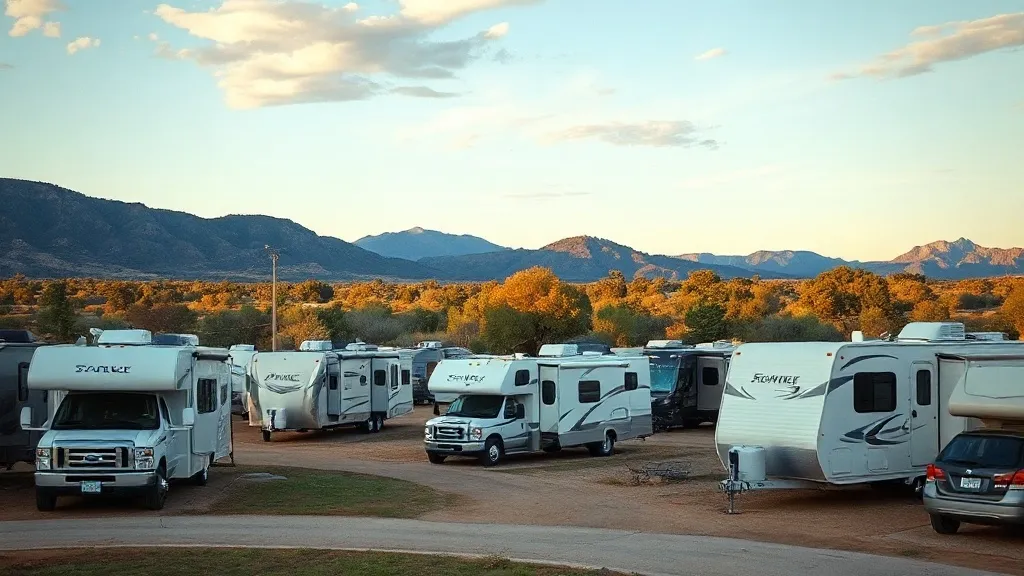
“Full hookups” is one of those phrases that gets thrown around so casually in the RV world that newcomers assume it means everything — premium, deluxe, the works. It doesn’t. It’s a precise, almost boring technical term, and understanding exactly what it covers (and what it doesn’t) is the difference between booking a site that fits your trip and showing up to a frustrating surprise.
We get the question constantly: what is a full hookup RV site, really? The short answer is three utilities delivered to your pad — electric, water, and sewer. The longer answer, the one that actually helps you book well, involves amperage, water pressure, tank management, and the honest trade-offs between full, partial, and dry sites. This guide walks through all of it, then profiles full-hookup parks across the Sun Belt and national-park country that we consider genuinely standout, every one of them web-verified for hookup type, site count, and current rates.
What “full hookup” actually means
A full hookup site connects your RV to three services at the pedestal:
- Electric — a powered pedestal with either a 30 amp or 50 amp outlet (good parks offer both).
- Fresh water — a pressurized spigot you connect a drinking-water hose to, so you run off city water instead of your onboard tank.
- Sewer — a capped drain at the pad where you connect your sewer hose, so gray and black water empty directly instead of filling your holding tanks.
That’s it. That’s the whole definition. Cable TV, Wi-Fi, a concrete patio, a fire ring — those are amenities a park may layer on top, but none of them are what makes a site “full hookup.” When a listing says full hookup, you are guaranteed those three utilities and nothing more.
The amperage question: 30 amp vs 50 amp
This is the single most important detail for matching a site to your rig, and it trips up more first-timers than anything else.
A 30 amp service is a single 120-volt leg delivering about 3,600 watts. That’s enough for a smaller travel trailer or a Class C running one air conditioner, a fridge, and lights — but you’ll be doing power math if you try to run the microwave and AC together.
A 50 amp service is not “20 amps more.” It’s a fundamentally different connection: two 120-volt legs for roughly 12,000 watts total. That’s why bigger fifth wheels and Class A coaches with two or three roof ACs, residential refrigerators, and washer-dryers are wired for 50 amp. If your rig has a 50 amp cord, you want 50 amp sites; running it on a 30 amp adapter all day will leave you tripping breakers every time the second AC kicks on.
Field tip: Always carry both a 50-to-30 amp and a 30-to-50 amp adapter (often called “dogbones”), plus a surge protector / electrical management system. Pedestals at older parks can be miswired, and an EMS that reads voltage before connecting has saved more than one expensive RV electrical system.
Water and sewer, briefly
On full hookups you run off city water through a pressure regulator (set it around 40–50 psi; some parks push 80+ psi, which can split fittings). The sewer connection means you can leave your gray tank valve open for continuous drainage, but keep the black tank valve closed until it’s two-thirds full, then dump — otherwise solids stack up and liquids drain away, which is exactly the problem you don’t want.
Full vs partial vs dry — a quick orientation
Parks and campgrounds generally offer three tiers, and knowing which you actually need saves money:
- Full hookup — electric + water + sewer at the pad. Best for stays of several nights, snowbird seasons, and anyone who wants to live normally without rationing.
- Partial hookup — usually electric + water, but no sewer. You’ll use the park’s dump station on the way out. Perfectly fine for shorter stays if you don’t mind one trip to the dump.
- Dry camping / boondocking — no hookups at all. You run on battery, solar, fresh-water tank, and holding tanks. Common at national-park and Forest Service campgrounds, and often the most scenic option.
We dig into exactly when partial or dry is the smarter choice — and how to manage water, power, and waste without full hookups — in our companion piece, full hookup vs partial hookup.
What to look for beyond the three utilities
Once you know a site has full hookups, these are the details worth checking before you book:
- 50 amp availability if your rig needs it — not every full hookup park has 50 amp at every site.
- Pad surface — concrete and asphalt drain better and stay cleaner than gravel or dirt, which matters for a longer stay.
- Pull-through vs back-in — if you run a long rig, a pull-through means you never unhitch. (See our guide to big-rig friendly RV parks for the full breakdown.)
- Site length and width — published max lengths assume you can use the full pad; check whether slide-outs and an attached truck still fit.
- Sewer location — a connection at the rear of the pad versus the middle changes how you park.
Renting an RV for this trip? Compare rigs, prices, and pickup locations on RVshare and Outdoorsy — both let you filter by rig size, dates, and location.
Standout full-hookup parks across the Sun Belt and national-park country
These are parks we’d point a friend toward when full hookups are the priority. Each one is verified for full hookup utilities and current details; we’ve noted honest cons too.
Pelican Lake Motorcoach Resort — Naples, Florida
A genuine high-end motorcoach resort near the western edge of the Everglades. Every one of its sites is full hookup with 50 amp, and the layout is built around lakes and resort amenities rather than crammed rows.
- Hookups: Full hookup, 50 amp, water, sewer, Wi-Fi
- Sites: 289 full hookup sites
- Cost: From roughly $65/night (seasonal; approximate)
- Max RV length: Up to ~80 ft
- Reservations: Direct with the resort
- Best for: Snowbirds and large motorcoaches wanting resort polish near Naples and the Everglades
This is an ownership-style resort, so it skews toward Class A coaches and longer stays; it’s not a budget overnight stop.
Eagle View RV Resort at Fort McDowell — Fort McDowell, Arizona
Run by the Fort McDowell Yavapai Nation in the Sonoran high desert northeast of Phoenix, with paved sites and clean mountain views. Note honestly: despite some listings implying otherwise, reviewers consistently report this is a back-in park.
- Hookups: Full hookup, 30/50 amp, water, sewer
- Sites: ~150 paved sites (around 140 full hookup)
- Cost: Mid-range; varies by season (approximate)
- Max RV length: Up to ~70 ft on the larger pads
- Reservations: Direct / online reservation system
- Best for: Winter desert stays near Phoenix with casino, pool, and pickleball on site
Pala Casino RV Resort — Pala, California
A well-run resort in the hills of northern San Diego County, walking distance to the casino with a free shuttle. All sites are full hookup with 50 amp, on concrete pads.
- Hookups: Full hookup, 50 amp, water, sewer, cable
- Sites: 100 full hookup sites (17 pull-through, 30+ back-in)
- Cost: ~$55–90/night depending on day of week
- Max RV length: Pull-throughs are 30 x 72 ft (rigs 36 ft+ steered to 50 amp pull-throughs)
- Reservations: Direct with the resort
- Best for: A polished Southern California base with full amenities near Palomar Mountain
Bentsen Palm Village RV Resort — Mission, Texas
Deep in the Rio Grande Valley snowbird belt, this 55+ resort uses a distinctive hub-and-spoke circle layout that gives big rigs unusually generous maneuvering room. Full hookups with 30/50 amp throughout.
- Hookups: Full hookup, 30/50 amp, water, sewer
- Sites: 237 sites, 92 of them pull-through
- Cost: Mid-range; seasonal/monthly snowbird rates (approximate)
- Max RV length: Pads up to ~80 ft
- Reservations: Direct with the resort
- Best for: Winter Texans wanting an easy big-rig layout near the Bentsen-Rio Grande Valley birding country
Zion River Resort — Virgin, Utah
The standout full-hookup base for Zion National Park, set along the Virgin River minutes from the park’s western approach on SR-9. Big-rig friendly with long pull-throughs.
- Hookups: Full hookup, 30/50 amp, water, sewer, cable
- Sites: Full hookup sites including pull-throughs
- Cost: Premium for the region (gateway location; approximate)
- Max RV length: Pull-throughs ~60–70 ft
- Reservations: Direct with the resort
- Best for: Exploring Zion in a big rig without sacrificing hookups
Grand Canyon Railway RV Park — Williams, Arizona
The only all-paved RV park in Williams, and a smart Grand Canyon base if you’d rather ride the historic train to the South Rim than drive. Every site is 50 amp and full hookup.
- Hookups: Full hookup, 30/50 amp, water, sewer
- Sites: 124 paved sites, 73 pull-through
- Cost: Mid-range (approximate)
- Max RV length: Pull-throughs around 65–70 ft
- Reservations: Direct with the Railway & Hotel
- Best for: Grand Canyon visitors who want paved full hookups plus the train option
Comparison table
| Park | Region | Cost (approx) | Hookups | Max length | Reservations |
|---|---|---|---|---|---|
| Pelican Lake Motorcoach Resort | Naples, FL | From ~$65/night | Full, 50 amp | ~80 ft | Direct |
| Eagle View RV Resort | Fort McDowell, AZ | Mid-range | Full, 30/50 amp (back-in) | ~70 ft | Direct |
| Pala Casino RV Resort | Pala, CA | ~$55–90/night | Full, 50 amp | 72 ft pull-thru | Direct |
| Bentsen Palm Village | Mission, TX | Mid-range | Full, 30/50 amp | ~80 ft | Direct |
| Zion River Resort | Virgin, UT | Premium | Full, 30/50 amp | ~60–70 ft | Direct |
| Grand Canyon Railway RV Park | Williams, AZ | Mid-range | Full, 30/50 amp | ~65–70 ft | Direct |
Planning a full-hookup trip
Best seasons. The Sun Belt full-hookup resorts (Florida, southern Arizona, the Rio Grande Valley) peak in winter — November through March — when snowbirds fill them and rates climb. Book those months out. The national-park gateways (Zion, Grand Canyon) flip the other way: spring and fall are ideal, summer is hot and crowded but the parks stay full.
Reservation strategy. The premium resorts (Pelican Lake, Pala, Bentsen Palm) take direct bookings and often reward longer stays with weekly and monthly rates that dramatically lower the per-night cost. For winter in Arizona, Texas, or Florida, reserve months ahead; the best full-hookup parks sell out their season.
Rig-size notes. Full hookups don’t guarantee your rig fits — confirm site length, width, and whether your slides clear. If you’re at 40 ft or above, read our big-rig friendly RV parks guide before booking. And if you’re weighing whether you even need sewer at the site, our full hookup vs partial hookup comparison lays out when partial saves money.
Budgeting. Full hookup resorts run more than partial or dry sites — often $55–100+ a night at the nicer ones. For multi-week snowbird stays, the monthly rate is where the value lives; expect to pay metered electric on top during peak AC or heating months.
For state-by-state picks, start at our state hubs for Arizona, Florida, Texas, and California, or our flagship guides to the best RV parks in Arizona, the best RV parks in Florida, Texas, and California.
Frequently asked questions
What does a full hookup RV site include?
A full hookup site gives you three utilities at the pad: electric (either 30 or 50 amp), pressurized fresh water, and a sewer connection where your gray and black tanks drain directly into the park's system. Many resorts also add cable TV and Wi-Fi, but those are extras, not part of the 'full hookup' definition.
What is the difference between 30 amp and 50 amp service?
A 30 amp connection delivers roughly 3,600 watts on a single 120-volt leg, which is fine for smaller rigs running one air conditioner. A 50 amp connection is actually two 120-volt legs for about 12,000 watts, enough to run two or three air conditioners plus a residential fridge and microwave at the same time. Most rigs over 35 feet are wired for 50 amp.
Is a full hookup site worth the extra cost?
For stays longer than two or three nights, usually yes. You can do laundry, take long showers, and run the AC without watching tank levels or hunting for a dump station. For a one-night overnight on a travel day, a partial or even dry site is often the better value.
Can you stay at a full hookup park in a small RV or van?
Absolutely. Full hookup sites work for any rig that has the matching connections. Smaller rigs and vans typically use 30 amp service and a standard water and sewer hose. Just bring a 50-to-30 amp adapter in case the pedestal is wired for 50 amp only.
Do full hookup parks always have pull-through sites?
No. Full hookup describes the utilities, not the site shape. Plenty of full hookup parks are all back-in. If you drive a long rig and want to avoid unhitching, filter specifically for pull-through sites in addition to full hookups.
About the author
Marisol ReyesCamping & Outdoors Editor
Marisol spent six years as an interpretive ranger in the California and Colorado state park systems before turning to writing full-time. She knows public-land camping from the inside — how reservation windows really work, why some loops fill before others, and which 'first-come, first-served' sites are worth gambling on.
More from Marisol →Keep reading
Mesa & Apache Junction RV Resorts: 12 Parks With 2026–27 Rates
The East Valley snowbird deep dive: Mesa Spirit, Viewpoint, Valle del Oro, Monte Vista, Towerpoint, Mesa Regal, Sun Life, Good Life, Val Vista Villages, the Mesa/Apache Junction KOA, Lost Dutchman State Park and Usery Mountain, with 2026–27 nightly, monthly and seasonal rates, 55+ rules and short-stay policies.
Quartzsite RV Parks: 10 Hookup Parks, La Posa LTVA and Free BLM (2026–27)
Park-by-park guide to RV camping in Quartzsite, Arizona for the 2026–27 snowbird season: full-hookup parks with verified nightly, monthly and seasonal rates, the La Posa LTVA permit, the five free 14-day BLM areas, and the January 2027 show dates.
Yuma RV Parks: 12 Best Snowbird Resorts and BLM Camps (2026–27)
Verified 2026–27 guide to RV parks in Yuma, Arizona: Sun Vista, Westwind, Fortuna de Oro, Caravan Oasis, Bonita Mesa, Villa Alameda, Cocopah Bend, Yuma Lakes, the River Front KOA, Winterhaven across the river, and BLM boondocking at Imperial Dam LTVA and Senator Wash, with nightly, monthly and seasonal rates, 55+ rules and the Los Algodones day trip.