RV Camping in Great Smoky Mountains National Park: In-Park Campgrounds (2026)
How to RV camp inside Great Smoky Mountains National Park on the Tennessee side — Elkmont and Cades Cove campgrounds, rig limits, the no-hookup reality, and how to actually get a reservation.

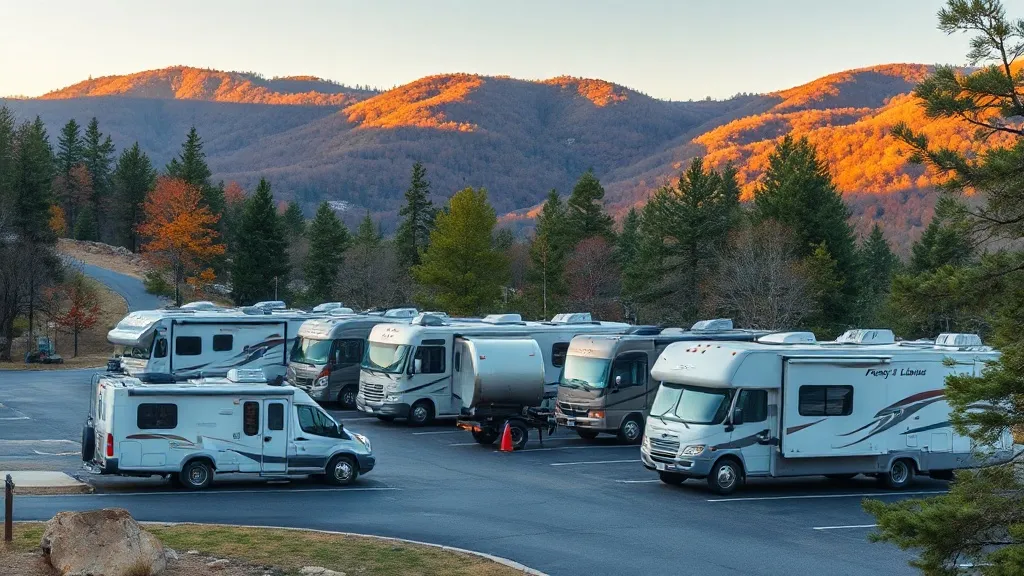
Great Smoky Mountains is the most-visited national park in the country — somewhere north of 13 million visits in a typical year, which is more than Yellowstone and Grand Canyon combined. Most of those people are day-trippers funneling through Gatlinburg, snapping a photo at Newfound Gap, and heading back to the pancake houses by dinner. They never see the park the way you can from inside it: the river noise after the crowds thin out, the fog lifting off the ridges at 6 a.m., elk and black bears moving through the meadows before the loop roads fill up.
That’s the case for camping in-park. You wake up where everyone else is fighting traffic to get to. The catch — and it’s a real one — is that the Smokies are an old-school national park when it comes to camping. There isn’t a single campground inside the park boundary with hookups. No electric, no water at the site, no sewer. Every campground here is dry camping, period. If you came expecting a 50-amp pedestal and a sewer connection, the Smokies will recalibrate your expectations fast.
For RVers, that narrows things down. There are several developed campgrounds in the park, but only two on the Tennessee side really make sense for most rigs: Elkmont and Cades Cove. Both take reservations through recreation.gov, both are dry camping, and both put you in genuinely beautiful corners of the park. This guide covers what they’re actually like, what fits, and how to lock in a site before they sell out. For the bigger picture across the state, see our roundup of the best RV parks in Tennessee.
Elkmont Campground
Elkmont is the largest campground in the park, with 211 sites spread along the Little River and its tributaries about eight miles from Gatlinburg. It’s the closest of the major campgrounds to the Gatlinburg/Pigeon Forge orbit, which makes it the easy pick if you want one foot in the wilderness and one foot near a grocery run. The sites sit under heavy hardwood canopy, and a good number back up to water — the Little River here is a wide, rocky, swimmable-in-summer stream that does a lot of the work of making this place feel special.
The campground is laid out with paved drives and gravel tent pads, so RV maneuvering is reasonable by national-park standards. Each site has a fire ring and a picnic table. Of the 211 sites, 25 are tent-only and 10 are ADA-accessible, so the usable RV inventory is a bit smaller than the headline number suggests. The posted RV limit is 35 feet — that’s the hard ceiling here, and it’s worth measuring your rig honestly including the bumper and any rear-mounted bike rack, because turns on the loops are tight and there’s no graceful way to back out of a site that doesn’t fit.
Elkmont’s claim to fame is the synchronous fireflies in late spring, one of the few places on Earth where the fireflies flash in unison. Demand for that window is so intense the NPS runs it as a lottery event — if you want to be here for it, you’re entering a drawing, not just booking a site. The rest of the season is calmer, and the campground runs from April 3 through November 29, 2026.
- Hookups: None (dry camping only)
- Sites: 211 total (25 tent-only, 10 ADA)
- Max RV length: 35 ft
- Cost: $30/night
- Season: April 3 – November 29, 2026
- Reservations: Required year-round via recreation.gov (#232487) or 877-444-6777, up to 6 months ahead
- Amenities: Paved drives, gravel tent pads, fire rings, picnic tables, flush toilets, drinking water; no hookups, no showers
- Best for: RVers up to 35 ft who want the largest campground, river sites, and the shortest hop to Gatlinburg
It’s worth being clear-eyed about what Elkmont is and isn’t. It’s a big, busy, popular campground close to a tourist town, so it’s not the place to find solitude in peak season. But for a comfortable base with river access and easy resupply, it’s hard to beat. For a closer look at site selection and which loops to request, see our Elkmont Campground review.
Cades Cove Campground
Cades Cove is the one most people fall in love with. It sits at the entrance to the famous 11-mile, one-way Cades Cove Loop — a paved road through a broad mountain valley dotted with historic cabins, churches, and a working grist mill, and arguably the single best wildlife-viewing drive in the park. White-tailed deer are a near-guarantee, and black bears and even the park’s reintroduced elk turn up regularly, especially in the early morning and at dusk. Staying in the campground means you can drive the loop before the day-trippers arrive, which is the difference between a peaceful sunrise lap and bumper-to-bumper crawl.
The campground itself is more open than Elkmont — meadow and woodland edges rather than dense river canopy — and it accepts slightly bigger rigs. The posted limit is 40 feet for a motorhome, dropping to 35 feet for a vehicle-plus-trailer combination. Like everywhere in the park, there are no hookups and no showers. What sets Cades Cove apart for RVers is that it’s one of only two campgrounds in the park open year-round, and it keeps its key services running year-round too: drinking water, flush toilets, trash collection, and — crucially — a dump station. That dump station matters more than it sounds, because in a no-hookup park, having a reliable place to empty tanks on-site is a genuine convenience you won’t find at every campground here.
- Hookups: None (dry camping only)
- Sites: Confirm current count with the park/recreation.gov
- Max RV length: 40 ft (motorhome); 35 ft for vehicle + trailer combo
- Cost: $30/night
- Season: Open year-round
- Reservations: Via recreation.gov (#232488)
- Amenities: Drinking water, flush toilets, trash, dump station (all year-round); no hookups, no showers
- Best for: Bigger rigs (up to 40 ft), wildlife lovers, and anyone who wants the loop road at sunrise — plus winter campers who need a year-round option
A note on winter: because Cades Cove stays open, it’s one of the few legitimate cold-season RV options inside the park. Just remember you’re dry camping, so plan your battery, propane, and freshwater strategy for the temperatures — overnight lows in the valley can drop below freezing. For the full breakdown of loops, the closest sites to the loop-road entrance, and seasonal notes, see our Cades Cove Campground review.
Elkmont vs Cades Cove at a glance
| Elkmont | Cades Cove | |
|---|---|---|
| Recreation.gov # | 232487 | 232488 |
| Hookups | None | None |
| Max RV length | 35 ft | 40 ft (35 ft combo) |
| Cost | $30/night | $30/night |
| Season | Apr 3 – Nov 29, 2026 | Year-round |
| Dump station | Confirm with park | Yes, year-round |
| Showers | No | No |
| Setting | River canopy, near Gatlinburg | Open valley, at the loop road |
| Signature draw | Synchronous fireflies (lottery) | Cades Cove wildlife loop |
Dry camping in the Smokies: what to know
Since there are no hookups anywhere in the park, you’re boondocking with amenities — meaning the campground has water spigots, toilets, and trash, but your rig is running on its own systems. A few things worth planning around:
Water. Both campgrounds have potable drinking water available at the campground (not at individual sites), so arrive with your freshwater tank as full as you want it and refill from the central spigots as needed. Bring a long, food-safe drinking-water hose and a watering can or jug — it makes topping off your tank from a shared spigot much less of a chore.
Generators. Like most NPS campgrounds, generators are allowed only during limited posted hours, not around the clock and not overnight. Quiet hours are strictly enforced, and your neighbors will notice. If you rely on a generator to keep batteries and devices charged, run it during the allowed window and lean on solar, a beefier battery bank, or simply lower power draw the rest of the time. This is a park where a little dry-camping discipline goes a long way.
Bears and food storage. This is black bear country in a serious way — the Smokies have one of the densest bear populations in the eastern US. Food storage rules are not a suggestion. Keep all food, coolers, trash, toiletries, and anything scented locked inside your hard-sided RV or in the provided food-storage lockers when you’re not actively using them. Never leave food out at your site, even for a few minutes, and never store food in a tent. A fed bear is a dead bear, and a careless camper can get one euthanized. Use the bear-proof dumpsters and follow whatever the campground postings say that season.
Cell service. Don’t count on it. Coverage is spotty to nonexistent deep in the park, and Cades Cove in particular sits in a valley where most carriers simply don’t reach. Plan offline: download your maps, your recreation.gov reservation confirmation, the loop-road guide, and any directions before you lose signal. Tell someone your itinerary. Treat being unreachable as a feature, not a bug — but go in prepared for it rather than surprised by it.
Reservations and timing
Every campground in the park is now reservation-based through recreation.gov — there’s no first-come, first-served gamble to play here. Elkmont requires reservations year-round and you can book up to six months in advance; you can reserve online at recreation.gov or by phone at 877-444-6777. Cades Cove also books through recreation.gov.
A few timing realities:
The six-month window is real, and it matters. Summer weekends and the entire October leaf-peeping season at these campgrounds get snapped up fast — fall in the Smokies is one of the most popular times to visit anywhere in the country. If you have specific dates in October or a holiday weekend in mind, set a calendar reminder and book the moment your window opens at the six-month mark. Waiting until a few weeks out usually means scraps or nothing.
The fireflies lottery is its own thing. The synchronous firefly event at Elkmont in late spring is not a normal reservation — access during that window is awarded by lottery through recreation.gov, typically opening earlier in the year. If seeing the synchronous fireflies is a bucket-list item, watch the recreation.gov and NPS pages for the lottery announcement and apply when it opens. Confirm the current year’s dates and lottery process with the park/recreation.gov, since they shift slightly year to year.
Build in flexibility. Because there are no hookups and showers are nonexistent in-park, a common play is to split a trip: a few nights inside the park for the early-morning magic, then a night or two at a full-hookup park in the gateway towns to dump, recharge, and take a long hot shower before the next leg.
Prefer hookups? Stay in the gateway towns
If dry camping isn’t your thing — or you’ve got a big rig, you’re traveling in summer heat and want to run AC all night, or you simply like a sewer connection — the answer is to base out of the gateway towns and day-trip into the park. Gatlinburg and Pigeon Forge are loaded with commercial RV parks offering full hookups, pull-throughs for big rigs, laundry, pools, and the kind of amenities the park itself will never have. You trade the sunrise-in-the-park experience for comfort and convenience, and for a lot of RVers that’s the right call. See our guide to Gatlinburg & Pigeon Forge RV parks for the options, and the broader Tennessee hub for everything else in the state.
Plenty of people do both: a couple of nights inside the park to catch the quiet hours, then a hookup site in town to recharge. There’s no wrong answer — just be honest about what your rig and your travel style need.
A note on the other campgrounds
Elkmont and Cades Cove get the focus here because they’re the two that fit most RVs and offer the most. The park has a couple of smaller developed campgrounds too. Abrams Creek and Look Rock are smaller and more limited — fine for compact rigs and tents, but check current RV length limits and seasons closely before counting on them, as they’re not built for big motorhomes. And if you’re approaching from the North Carolina side, Smokemont is the main campground over there. For a Tennessee-side RV trip, though, Elkmont and Cades Cove are where you’ll want to start.
FAQ
Do any Great Smoky Mountains campgrounds have hookups? No. Not one campground inside the park has electric, water, or sewer hookups at the site. Every in-park campground is dry camping. For hookups, stay at a commercial park in Gatlinburg or Pigeon Forge and day-trip in.
What’s the biggest RV that fits? Elkmont’s limit is 35 feet. Cades Cove allows up to 40 feet for a motorhome, or 35 feet for a vehicle-plus-trailer combination. Measure your rig honestly, including anything hanging off the back, and verify the limit for the specific site you book.
Is there a dump station in the park? Cades Cove has a dump station available year-round, which is a big plus for a no-hookup park. Confirm dump-station availability at Elkmont with the park/recreation.gov before you rely on it. Many RVers dump at their gateway-town park on the way out.
How far ahead do I need to book? You can reserve up to six months in advance, and you should use that full window for summer weekends and all of October. Fall in the Smokies sells out early. Book at recreation.gov or call 877-444-6777.
Can I camp in the park in winter? Yes — Cades Cove is open year-round and keeps water, flush toilets, trash, and its dump station running through winter. Just plan your dry-camping power, propane, and freshwater for cold nights, since valley lows can drop below freezing.
What about the synchronous fireflies? The synchronous fireflies at Elkmont happen in late spring and are accessed via a recreation.gov lottery, not a standard reservation. Watch for the lottery announcement and apply when it opens. Confirm the current year’s dates and process with the park/recreation.gov.
Will I have cell service? Mostly no. Service is spotty to nonexistent deep in the park, and Cades Cove sits in a dead zone for most carriers. Download maps, reservations, and directions before you arrive and plan to be offline.
About the author
Marisol ReyesCamping & Outdoors Editor
Marisol spent six years as an interpretive ranger in the California and Colorado state park systems before turning to writing full-time. She knows public-land camping from the inside — how reservation windows really work, why some loops fill before others, and which 'first-come, first-served' sites are worth gambling on.
More from Marisol →Keep reading
Best RV Parks in Tennessee: Smokies, Music City & Beyond (2026)
Tennessee's best RV parks by region — Smokies gateways, Nashville, Chattanooga, the Cumberland Plateau and Memphis — with verified hookups, prices, rig limits and honest planning notes.
Gatlinburg & Pigeon Forge RV Parks: Full-Hookup Smokies Basecamps (2026)
The best full-hookup RV parks in the Gatlinburg–Pigeon Forge–Townsend corridor — riverside sites, Dollywood proximity, and year-round options minutes from Great Smoky Mountains National Park.
Nashville RV Parks: Where to Camp for Music City (2026)
The best RV parks for visiting Nashville — full-hookup options near downtown, lakeside Corps campgrounds, and which base gets you to Broadway without paying downtown prices.