Elkmont Campground Prices, Sites & Review (2026)
A current Elkmont Campground review for Great Smoky Mountains — $30 rate, RV-site limits, riverside choices, generator rules, and no-hookup logistics.

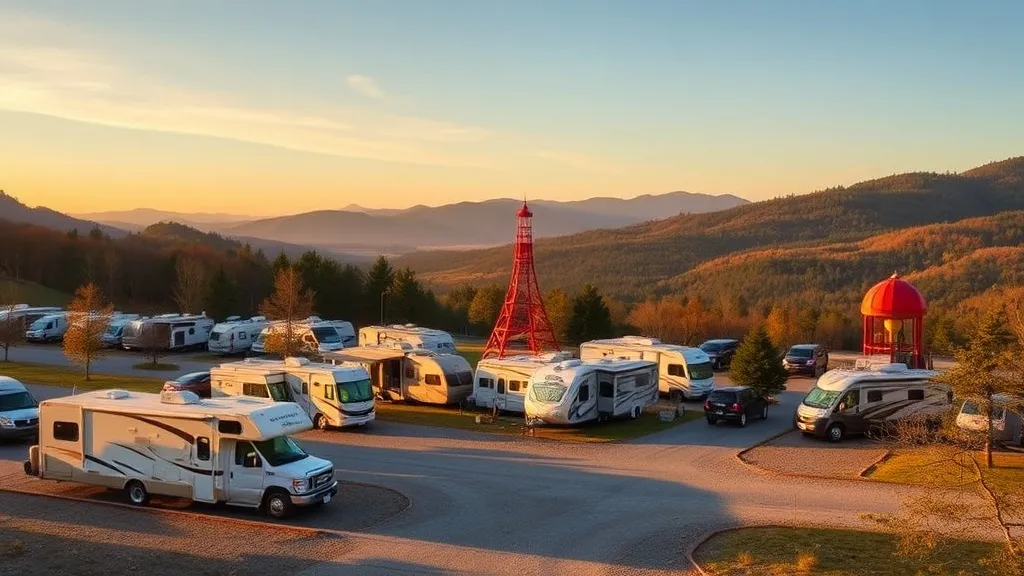
Verified September 9, 2026: The NPS Great Smoky Mountains fee table lists Elkmont at $30 per night, the same as every standard frontcountry campground in the park. The Recreation.gov listing confirms 200 tent/RV sites plus 20 walk-in tent sites, no electric, water or sewer hookups, generator hours of 8 AM–8 PM (banned May 15–Oct 31 in Loops A, B, L, M and N), and the nearest dump station about six miles away near Sugarlands. Campendium’s most recent reports (December 2025) still show the $30 rate and a 35-foot maximum RV length.
Quick answer: Elkmont Campground prices are a flat $30 per night for every standard tent/RV site in 2026 — there is no riverside surcharge, no extra-vehicle fee and no hookups to pay for, because there are none. The park sells nothing but the site. Add a $10 recreation.gov cancellation fee if your plans change, and budget for a parking tag ($5/day, $15/week, $40/year) only if you park your tow vehicle at trailheads. Elkmont is open from early April to late November, has a 35-foot RV limit, and books out six months ahead.
Elkmont Campground at a glance
| Elkmont Campground | |
|---|---|
| Prices | $30/night, all standard sites, no seasonal variation |
| Sites | 200 tent/RV plus 20 walk-in tent; 9 ADA-accessible |
| Hookups | None (5-amp medical-only power at 3 ADA sites) |
| Max RV length | 35 ft; individual sites often shorter |
| Season | Early April to late November (2026 listing: April 3–November 29) |
| Reservations | Required; recreation.gov #232487, 6 months ahead |
| Cell signal | Poor to none, all carriers |
| Dump station | None on site; ~6 miles away at Sugarlands |
| Showers | None |
Elkmont Campground prices and fees (2026)
The NPS runs one price for all nine standard frontcountry campgrounds in the Smokies, and Elkmont is no exception. What you see on recreation.gov is what you pay.
| Item | 2026 rate | Notes |
|---|---|---|
| Standard tent/RV site | $30/night | Same rate April through November, weekday or weekend |
| Walk-in tent site | $30/night | 20 sites; park in the lot and carry gear in |
| ADA site (5-amp medical power) | $30/night | 3 sites; power for medical equipment only |
| Group camp (separate listing) | Priced per group | Recreation.gov #232436, not part of the family campground |
| Extra vehicle | $0 | Two vehicles per site allowed if they fit in the driveway; no fee |
| Pets | $0 | Leashed (6 ft max) in the campground; banned on nearly all trails |
| Reservation fee | $0 | The $30 includes the recreation.gov booking |
| Cancellation | $10 | Recreation.gov fee; cancelling inside 24 hours also forfeits the first night |
| Change fee | $10 | Standard recreation.gov charge to modify dates |
| Parking tag | $5/day, $15/week, $40/year | Only needed when your vehicle parks outside your site for 15+ minutes |
| Firewood | Sold on site | Certified heat-treated bundles only; outside firewood is banned |
For comparison, Look Rock is the only Smokies campground with electric sites, at $36, and it is an hour away on the Foothills Parkway. Private full-hookup parks in Pigeon Forge run $70–$120 a night in peak season, so Elkmont is a genuine bargain — you are simply trading hookups, showers and signal for the river and the price.
Elkmont Campground is the workhorse of Great Smoky Mountains National Park — 200 standard tent/RV sites plus 20 walk-in tent sites along the Little River in a deep hardwood cove, roughly eight miles from Gatlinburg. It is the park’s largest campground, operates from early April through late November in 2026, and sits near the synchronous firefly viewing area. It’s one of the stops in our guide to the best RV parks in Tennessee.
The 2026 price is $30/night. Elkmont has no regular hookups, no showers, and—critically—no on-site dump/fill station. Potable water is available at restroom spigots, but hoses are not allowed; the nearest dump/fill station is about six miles away across from Sugarlands Visitor Center.
Here is the honest assessment up front: Elkmont is the best RV base inside the park for rigs 35 feet and under that can camp without hookups. The riverside setting is genuinely beautiful — many sites sit feet from the rushing Little River, and the canopy keeps things shaded and cool even in a humid Smokies July. Trail access is unbeatable, with the Little River and Jakes Creek trails leaving directly from camp, and Gatlinburg’s groceries and gas only fifteen minutes out.
The caveats are non-negotiable. There are zero hookups — no electric, no water, no sewer. The maximum RV length is 35 feet, a hard physical constraint on these narrow, tree-lined loops. Cell service is poor to nonexistent. And to see the fireflies at peak you cannot simply drive in — access is controlled by a lottery for vehicle reservations, and demand wildly outstrips supply.
This review covers Elkmont honestly so you can decide whether the trade-offs work for your rig. For the full lay of the land, start with our RV camping in Great Smoky Mountains National Park guide.
Getting There and the Setting
Elkmont sits in the Tennessee section of the park, in a wooded river cove off Little River Road between Sugarlands Visitor Center and the Townsend “Y.” From Gatlinburg, take US-441 South to Sugarlands Visitor Center, then Little River Road (TN-73) westbound about five miles, then left onto Elkmont Road for roughly 1.5 miles to the entrance. The trip runs about eight miles and 20 minutes, since Little River Road is a winding, scenic two-lane that hugs the water.
The approach matters in a larger rig: Little River Road is curvy with low stone guardrails and no shoulders, and Elkmont Road narrows as it climbs into the cove. Drive slowly and stay off your brakes on the descents. Coming from Townsend, you can reach Little River Road from the west at the “Y,” a gentler approach that avoids the steepest Gatlinburg-side curves.
The setting is the whole point. Elkmont occupies a broad, shaded cove where the Little River tumbles out of the high country — loud, cold, and clear, lined with rhododendron and mature hardwoods. The campground grew up around the old Elkmont resort community, whose preserved cabins sit just up the road. At roughly 2,150 feet, the cove stays noticeably cooler and shadier than the lowlands.
The nearest full services are in Gatlinburg (about eight miles), with Pigeon Forge ten miles further for big-box groceries, fuel, and RV supplies. Sugarlands Visitor Center, five miles back, has restrooms, a bookstore, and ranger information.
Fuel and supply tip: Top off fuel and do your big grocery run in Pigeon Forge or Sevierville before you head into the cove. There is no gas, no store, and no reliable cell signal at Elkmont, and backtracking out the winding river road for a forgotten item burns the better part of an hour.
The Campground — Loops and Sites
Elkmont has 200 standard tent/RV sites and 20 walk-in tent sites, spread across loops that follow the river cove. Nine campsites are ADA-accessible; three of those provide 5-amp service for medical equipment only. Sites have paved driveways, gravel tent pads, fire rings, and picnic tables. The defining variable from site to site is simple: how close are you to the water, and does the listed driveway fit your equipment.
Riverside vs. Interior
The single most important choice at Elkmont is riverside versus interior. The loops closest to the Little River put you within sight and earshot of the rushing water — the sites people drive across the country for. They book first and book hard. The trade-off is that riverside sites can run smaller and tighter, with more foot traffic from neighbors wandering down to wade or fish.
Interior sites, set back on the inner loops, are generally roomier and more level with better tree screening — but you lose the river sound that defines the place. For a rig pushing the length limit, an interior or upper-loop site is often the more realistic fit, even if it is not the postcard.
Sites to Request
- Riverside sites along the lower loops for river access and the sound of the water — the most coveted sites, worth booking the instant your window opens.
- Sites listed for your exact rig length if you are over 30 feet; on these tight loops the listed maximum is the real maximum.
- Upper-loop interior sites for more level, roomier pads with better privacy if you are running a larger trailer or motorhome.
Sites to Avoid
- Tight riverside sites if you are near the 35-foot limit — the postcard view is not worth a multi-point struggle into a sloped, tree-pinched pad.
- Sites on the main loop road, which pick up circulating traffic.
- Low-lying sites close to the water, which can be damp, buggy, and prone to puddling after the frequent Smokies rain.
The 35-Foot Limit Is a Hard Constraint
This is the constraint that catches people out: Elkmont’s maximum RV length is 35 feet, and it is a genuine physical limit, not a suggestion. The loops are narrow, the pads are built into a forested cove with mature trees pressing in, and individual sites carry their own maximum lengths that are often well under 35 feet. If your rig — measured bumper to bumper, trailer plus hitch — is anywhere near that ceiling, filter your recreation.gov search by your true length and book only a site listed to fit. There is no fudge room. Big-rig owners over 35 feet should not attempt Elkmont; see the hookup alternative below.
A note on the numbers you will see elsewhere: some third-party listings quote “160 sites for RVs 12 to 54 feet.” That figure counts driveway length, not what you can actually maneuver into a sloped, tree-lined pad with a tow vehicle. Recreation.gov itself warns that “extreme slope or length of driveway make certain sites more suitable for tents than RVs,” and Campendium’s user-reported maximum is 35 feet. Trust the per-site listing, not the headline.
The Dry-Camping Reality
Elkmont is a standard no-hookup campground, and self-sufficiency is the price of admission.
No Hookups
There are no regular hookups — no electric, water, or sewer at standard sites. Three ADA sites have 5-amp service reserved for medical equipment. The nightly rate is $30, and sites are bookable up to six months in advance through Recreation.gov or by calling 877-444-6777. The 2026 season runs from early April to late November (the listing showed April 3 through November 29; confirm loop-by-loop availability, since not every loop opens at the start or stays open at the end).
What that means in practice:
- Water: Potable water is available at spigots near each restroom, but hoses may not be attached. Arrive with a full tank or bring containers you can carry.
- Generators: Allowed from 8 AM to 8 PM and may not be left running unattended. From May 15 through October 31, generators are prohibited entirely in Loops A, B, L, M and N.
- Dump station and water fill: Elkmont has no dump/fill station. The nearest is across from Sugarlands Visitor Center, approximately six miles away.
- No showers: Like most Smokies NPS campgrounds, Elkmont has no showers. Some visitors use facilities in Gatlinburg, or simply embrace the dry-camp rhythm.
- Check-in: At the campground office, 9 AM–5 PM. The campground is not gated, so late arrivals can drive to their site and check in the next morning — but if you have not checked in by noon the day after your arrival date, the site is forfeited as a no-show. Quiet hours are 10 PM–6 AM.
Connectivity
Cell service is poor to nonexistent in the cove for every major carrier. Campendium has a handful of 4G/5G reports for Verizon and AT&T, but far more “no reception” comments; treat any signal as a bonus. Treat Elkmont as an offline campground: download maps, trail info, and reservations before you arrive. The disconnection is part of why the cove still feels removed from the chaos of Gatlinburg — but remote workers should not count on getting anything done.
Bear Country
This is active bear country, and food storage rules are strict and strictly enforced. Store all food, coolers, toiletries, and anything scented inside your hard-sided RV, never at your site or in a tent. Keep your site clean and use the bear-proof receptacles. A food-conditioned bear is a dead bear, so the rules protect the animals as much as you.
Fireflies and Seasonal Timing
Elkmont is world-famous for the synchronous firefly display in late May and early June. For a roughly two-week window, the Photinus carolinus fireflies flash in eerie, rolling unison — waves of light pulsing through the dark forest, a display found in only a handful of places on the planet. It has made Elkmont a bucket-list destination.
The catch is access. During the peak you cannot just drive to Elkmont to watch. The park runs a lottery for vehicle reservations to control demand — applications open in spring through recreation.gov, winners are drawn, and a parking pass is required to access the viewing area on peak nights. The exact dates shift each year with temperature, so the park announces the predicted peak and lottery details a few months out. Confirm the current-year dates and lottery process on recreation.gov and the park website before building a trip around it.
Two honest notes. First, a campground reservation does not automatically guarantee firefly viewing access during the lottery period — verify how the current-year rules treat registered campers, as policies have evolved. Second, the firefly peak is the single busiest window of the season; if you want a quiet riverside camp rather than the light show, the rest of summer and the uncrowded weeks of October are far easier to book.
Beyond the fireflies, fall is the other marquee season — the Smokies put on one of the best hardwood color displays in the East, peaking mid-to-late October at Elkmont’s elevation, with crisp nights ideal for a campfire. Spring brings wildflowers and high water; summer is green, humid, and buggy but cool in the shaded cove.
What’s Nearby
Trails From the Campground
- Little River Trail: Leaves the upper end of the campground and follows the river upstream on an old railroad grade — a wide, gentle path past cascades and pools, one of the most accessible trails in the park straight from your campsite.
- Jakes Creek Trail: Also departs the Elkmont area, climbing more steeply into the backcountry and connecting to the wider trail network.
- Elkmont Historic District: A short stroll up the road, the preserved “Daisy Town” cabins of the old resort community are worth wandering — a quiet, slightly haunting piece of Smokies history.
Beyond the Cove
- Laurel Falls: One of the park’s most popular waterfall hikes, a paved 2.6-mile round-trip off Little River Road. Go early — the small lot fills fast, and parking requires a park tag.
- Cades Cove: The famous wildlife-and-history loop is a reasonable drive west via Laurel Creek Road; the eleven-mile loop is prime for spotting deer, turkey, and black bears at dawn and dusk. If you are weighing where to base, see our sibling review of Cades Cove Campground, the park’s other major Tennessee-side RV option.
- Gatlinburg and Pigeon Forge: Eight to eighteen miles out, the gateway towns offer restaurants, the SkyLift and aquarium, Dollywood, and every tourist diversion imaginable — a useful release valve on a rainy day.
- Newfound Gap Road (US-441): The trans-park highway climbs to the state line at Newfound Gap and on toward Clingmans Dome, the highest point in the park, accessed back through Sugarlands.
Parking tag reminder: Your campsite reservation covers a vehicle parked at its assigned site. If you park that vehicle elsewhere in the park for more than 15 minutes—including at trailheads—you need a paid parking tag ($5 daily, $15 weekly, $40 annual).
Elkmont Campground reviews: the honest details
What Works
The riverside setting is the real deal. The Little River is a loud, cold, beautiful mountain river, and falling asleep to it from a riverside site is what people remember for years. The canopy keeps the cove meaningfully cooler than the lowlands — no small thing in a Smokies summer.
The location is unbeatable for park access. Trails leave straight from camp, Laurel Falls and the central park are minutes away, and Gatlinburg’s full services sit a short drive out. You can reach most Tennessee-side highlights without long commutes.
It is genuinely affordable. At $30 per night inside the most-visited national park in America, Elkmont is a fraction of what private full-hookup resorts in Pigeon Forge charge in peak season.
The disconnection is a feature. No cell signal, no hookups, no showers — and as a result, a cove that still feels like the woods despite being the park’s largest campground.
What Doesn’t Work
No hookups means real planning. Full freshwater on arrival, charged batteries, careful tank management, and generators confined to posted hours. For a weekend it is easy; for a week it takes discipline, and the heavy canopy limits how much solar can bail you out.
The 35-foot limit shuts out big rigs entirely. This is a small-and-mid-rig campground. Anything over 35 feet will not fit, and even rigs in the low 30s need to match a specific site’s posted length.
Sites are tightly packed. The most common complaint in 2025–2026 reviews is spacing: an August 2025 Campendium reviewer called the sites “small and tightly packed together,” and that matches our read of the lower loops. Privacy comes from the canopy, not from distance to your neighbor.
Loop closures can shrink the campground. A December 2025 reviewer reported several loops closed with no explanation given. Off-season, expect only part of the campground to be open and check which loops are bookable before you commit to a date.
Humidity and bugs are part of the deal. A damp river cove in summer means mosquitoes, gnats, and the occasional run of rainy days. Bring repellent and rain gear.
The firefly window is a logistical scramble. The lottery is competitive, the dates move, and a campsite booking does not cleanly guarantee viewing access.
Who It’s Best For
- Self-contained RVers with adequate battery, water, and tank capacity for no-hookup stays.
- Small-to-mid-size rigs (35 feet and under) that fit the loops — ideally well under the limit.
- Hikers who want trails leaving straight from camp and quick access to the central park.
- Budget-conscious campers who want to stay inside the park at national-park rates.
- Travelers who genuinely want to unplug and don’t mind no signal and no showers.
Who Should Look Elsewhere
- Big-rig owners over 35 feet — Elkmont physically cannot accommodate you.
- RVers who need hookups or want showers, reliable power, and internet — see the Gatlinburg & Pigeon Forge RV parks with full hookups just outside the park.
- Remote workers who need connectivity — the cove is effectively offline.
- First-timers chasing only the fireflies without a lottery plan — that single goal is the hardest to guarantee.
Full Specs and Booking
Elkmont Campground — Great Smoky Mountains National Park (Tennessee)
- Location: Little River cove off Little River Road, ~8 miles from Gatlinburg
- Elevation: ~2,150 feet
- Total sites: 200 standard tent/RV sites plus 20 walk-in tent sites; 9 ADA-accessible sites
- Max RV length: 35 feet (hard limit; verify per-site length on recreation.gov)
- Hookups: None (no electric, no water, no sewer)
- Rate: $30/night, all sites
- Season: Early April – late November (2026 listing: April 3 – November 29)
- Reservations: Bookable up to 6 months in advance via Recreation.gov (campground #232487) or 877-444-6777
- Check-in: Campground office 9 AM–5 PM; no-show forfeiture at noon the day after arrival
- Quiet hours: 10 PM–6 AM
- Site amenities: Paved driveway, gravel tent pad, fire ring, picnic table
- Flush toilets: Yes, with cold running water
- Showers: None
- Potable water: Spigots near restrooms; hoses may not be attached
- Dump station: None on-site; nearest station is about 6 miles away at Sugarlands
- Generator hours: 8 AM–8 PM; prohibited May 15–Oct 31 in Loops A, B, L, M and N
- Cell coverage: Poor to none — plan to be offline
- Food storage: Strict bear-country rules; store all food and scented items secured
- Pets: Allowed on a leash no longer than 6 feet in the campground; not permitted on most park trails (a Smokies-wide rule)
- Fireflies: Synchronous display late May / early June; peak access via vehicle-reservation lottery (confirm current-year dates and rules)
- Parking tag: Not needed for a vehicle at its assigned campsite; required when that vehicle parks elsewhere in the park
Booking strategy: Set a reminder for exactly six months before your target date and book the moment the window opens on recreation.gov — riverside sites and any dates near the firefly peak go almost immediately. Filter by your exact rig length so you only see sites that truly fit. If you strike out, check daily for cancellations, which happen regularly in the weeks before a trip. For the fireflies specifically, watch recreation.gov in spring for the separate lottery announcement, and do not assume a campsite reservation covers viewing access.
FAQ
Can I bring a big rig to Elkmont?
Only if it is 35 feet or under — and ideally well under. That is a genuine physical limit on these narrow, tree-lined loops, and individual sites carry their own shorter maximums. Filter your recreation.gov search by your true bumper-to-bumper length and book only a site listed to fit. Rigs over 35 feet cannot be accommodated and should look at the full-hookup parks in Gatlinburg and Pigeon Forge.
Does Elkmont have hookups?
No regular campsite has electric, water, or sewer hookups, and there are no showers. Three ADA sites have 5-amp medical-equipment service only. Potable-water spigots are near the restrooms, but there is no on-site dump/fill station; use the facility across from Sugarlands Visitor Center. If you need full hookups, look at private parks outside the park.
When is the best time to camp at Elkmont?
Late May to early June brings the synchronous fireflies but also the most intense competition and the access lottery. October delivers spectacular fall color, crisp campfire nights, and easier booking — many regulars consider it the best all-around time. Summer is green, humid, and buggy but cool in the shaded cove; spring offers wildflowers and high water. For a quiet riverside camp, aim for fall or a midweek summer stay.
How do the fireflies and the lottery work?
Elkmont’s synchronous fireflies flash in unison for about two weeks in late May or early June, with the exact peak shifting each year by temperature. During the peak, vehicle access is controlled by a lottery run through recreation.gov — you apply in spring, winners receive a parking pass, and demand far exceeds supply. The dates and rules (including how they apply to campers) change year to year, so confirm the current-year details on recreation.gov and the park website rather than assuming a campsite reservation covers viewing. For broader planning, see our Great Smoky Mountains RV camping guide.
Are pets allowed?
Pets are allowed on a leash within the campground, but Great Smoky Mountains National Park prohibits pets on nearly all trails, including the Little River Trail and Laurel Falls — a park-wide rule. Dogs are limited to the campground, roads, and a couple of designated paths. If hiking with your dog is central to your trip, the Smokies is a difficult park for it.
Is there cell service or internet at Elkmont?
Effectively no. Coverage in the cove is poor to nonexistent for all carriers, and there is no campground Wi-Fi. Download maps, trail details, and your reservation before you arrive and plan to be offline. For full-hookup parks with connectivity just outside the park, see the Gatlinburg & Pigeon Forge RV parks, and for the wider picture, the best RV parks in Tennessee pillar guide and Tennessee hub.
Facts checked September 9, 2026 against the NPS fee table ($30 standard sites), the Recreation.gov listing (site count, generator loops, dump station, check-in), the NPS Elkmont page (pets, quiet hours, firewood) and Campendium (35-ft limit, cell reports). Rates and operating conditions can change.
Frequently asked questions
What are Elkmont Campground prices?
Every standard tent/RV site at Elkmont costs $30 per night in 2026, the flat rate the National Park Service charges at all of its Smokies frontcountry campgrounds. There is no premium for riverside sites and no extra-vehicle fee for a second car at your site. Recreation.gov charges a $10 fee if you cancel, and cancelling inside 24 hours also forfeits the first night.
Does Elkmont Campground have electric hookups?
No. Elkmont has no electric, water or sewer hookups at any standard site. The only power is 5-amp service at three ADA sites, restricted to medical equipment. Generators are allowed 8 AM to 8 PM except in Loops A, B, L, M and N, where they are banned May 15 through October 31.
How do Elkmont Campground reservations work?
All 220 sites are reservation-only through recreation.gov (campground #232487) or 877-444-6777, and the booking window opens six months ahead on a rolling basis. Riverside sites and anything near the late-May firefly window sell out within minutes of release, so set a reminder for 10 AM Eastern exactly six months before your arrival date.
What is the Elkmont Campground elevation?
Elkmont sits at about 2,150 feet in the Little River cove. That is high enough to run noticeably cooler and shadier than Gatlinburg and Pigeon Forge in summer, but low enough that the campground stays open from early April into late November.
Will a 35-foot fifth wheel fit at Elkmont Campground?
Only barely, and only in a site listed for 35 feet. Elkmont's maximum RV length is 35 feet measured bumper to bumper, and many individual sites carry shorter limits, so filter recreation.gov by your true length and book a site that explicitly lists it. Anything longer should use the full-hookup parks in Gatlinburg or Pigeon Forge.
Is Elkmont Campground worth it? What do reviews say?
Reviews consistently praise the riverside sites, the trail access and the $30 price, and consistently complain about tight spacing, no showers, no hookups and zero cell signal. Our verdict: the best in-park base in the Smokies for self-contained rigs under 35 feet, and a poor fit for anyone who needs power, showers or connectivity.
When does Elkmont Campground open and close in 2026?
Elkmont is a seasonal campground that opens in early April and closes in late November; the 2026 recreation.gov listing showed April 3 through November 29. Not every loop is open at the start and end of the season, so check the loop-by-loop availability on recreation.gov before booking shoulder-season dates.
About the author
Dale HartmanLead RV Park Reviewer
Dale has lived on the road full-time since 2014, when he sold the house in Boise and moved into a 34-foot fifth wheel with his wife and a stubborn beagle named Otis. In the years since, he's parked at more than 400 campgrounds across 41 states — from boondocking sites with no hookups to luxury resorts with concrete pads and pickleball courts.
More from Dale →Campgrounds in this guide
Facts pages for each park — hookups, rig limits, rates and booking, plus every guide that covers it.
Keep reading
Anchor Down RV Resort Prices, Map & Review: Douglas Lake, Dandridge TN (2026)
An honest Anchor Down RV Resort review: 2026 prices and fees, the site map and lakefront site numbers, what the operator publishes, what to ask before booking, and how it compares with the Gatlinburg and Pigeon Forge parks 30-plus minutes away.
Cades Cove Campground Prices, Sites, Showers & Review (2026)
Cades Cove Campground review with the verified $30/night 2026 price, 161-site inventory, 40-foot RV limit, no hookups or showers, year-round loops, reservation fees, and vehicle-free Wednesdays.
Best RV Parks in Tennessee: Smokies, Music City & Beyond (2026)
Tennessee's best RV parks by region — Smokies gateways, Nashville, Chattanooga, the Cumberland Plateau and Memphis — with verified hookups, prices, rig limits and honest planning notes.