Cades Cove Campground Prices, Sites, Showers & Review (2026)
Cades Cove Campground review with the verified $30/night 2026 price, 161-site inventory, 40-foot RV limit, no hookups or showers, year-round loops, reservation fees, and vehicle-free Wednesdays.

Verified September 9, 2026: Recreation.gov lists 161 sites (130 standard non-electric, 31 tent-only) at $30 per night for every site type, with rate templates loaded through 2028, check-in 1 p.m., checkout noon, a 14-night limit and 6 people per site. Recreation.gov adds an $8 reservation fee online ($9 by phone) and a $10 cancellation fee plus the first night if you cancel the day before or day of arrival. The NPS campground page (updated August 12, 2026) confirms year-round operation and no showers or hookups. Campground office: (865) 448-4103.
Quick answer: Cades Cove Campground prices are simple: $30 a night for any site, tent or RV, all year, plus the $8 Recreation.gov booking fee. A three-night stay is $98, or $53 with a Senior or Access pass. What you get for that is a paved spur, a picnic table, a fire ring, flush toilets, drinking water and a dump station at the mouth of the best wildlife drive in the Smokies. What you do not get is any hookup, any shower, or any cell signal. The 40-foot RV limit is real, and most individual sites are rated for 24 to 35 feet.
Cades Cove Campground is worth it for wildlife watchers and self-contained RVers who want to start the Cades Cove Loop at dawn. The official inventory has 161 total sites: 126 standard campsites, 31 tent-only sites, and four group sites. Individual campsites cost $30 per night, the RV maximum is 40 feet, and the campground operates year-round.
The trade-off is equally clear: ordinary sites have no electric, water, or sewer hookups, and the campground has no showers, laundry, cell service, or internet. You come for the location, not resort amenities. The National Park Service campground page and Recreation.gov listing are the final checks for current notices and site availability.
If you need hookups, showers, and reliable cell service, look outside the park entirely. Start with our RV camping in Great Smoky Mountains National Park guide for the full picture, and our roundup of the best RV parks in Tennessee for the broader state.
Cades Cove Campground at a glance
| Cades Cove Campground | |
|---|---|
| Prices | $30/night, all sites, all year; + $8 Recreation.gov fee per booking |
| Sites | 161 (130 standard non-electric, 31 tent-only; NPS counts 4 as group sites); 11 ADA sites |
| Hookups | None; 5-amp medical-only outlets on C31 and C57; dump station and potable water year-round |
| Max RV length | 40 ft RV / 35 ft trailer campground ceiling; most sites rated 24–35 ft, two rated 42 ft |
| Season | Year-round; off-season only C1–C12 and C26–C61 open |
| Reservations | Recreation.gov, 6 months ahead; office (865) 448-4103 |
| Check-in / out | 1 p.m. / 12 p.m.; office 8:30 a.m.–4:30 p.m., late arrivals check in next morning 8:30–9 a.m. |
| Showers | None |
| Generators | Loop B 8 a.m.–8 p.m.; Loop C generator-free while Loop B is open |
| Cell signal | Poor to none on all carriers; Recreation.gov site records average under 35% coverage |
| Pets | Leashed, 6 ft max; allowed on roads, not on trails (except Gatlinburg and Oconaluftee River trails) |
Cades Cove Campground prices and fees (2026)
The National Park Service charges one flat rate at Cades Cove. There is no peak-season surcharge, no weekend premium and no separate RV rate; the Recreation.gov fee templates for 2026 show $30 per night for standard non-electric, tent-only and the two medical-outlet sites alike.
| Item | 2026 price | Notes |
|---|---|---|
| Standard non-electric site (RV or tent), per night | $30 | Up to 6 people and 2 vehicles per site |
| Tent-only site, per night | $30 | 31 sites; walk-in from a shared parking pad |
| ADA site with 5-amp medical outlet (C31, C57), per night | $30 | No surcharge for electricity; proof of medical need required at check-in |
| Group site, per night | Confirm on Recreation.gov | Separate inventory; not in the individual-site rate table |
| Recreation.gov reservation fee | $8 online / $9 by phone | Nonrefundable, per booking |
| Cancellation | $10 service fee | Cancel the day before or day of arrival and you also forfeit the first night; one-night bookings forfeit everything |
| Date change outside original dates | $10 | Through Recreation.gov |
| Senior / Access pass | 50% off the $30 | Applies to the site fee only, not the reservation fee |
| Park entrance fee | None | Great Smoky Mountains has no entrance fee |
| Parking tag | Not needed at your site | $5/day, $15/week or $40/year if you park elsewhere in the park for more than 15 minutes |
| Dump station, water, firewood lockers | Included | Firewood sold seasonally at the campground store; only certified heat-treated wood may be brought in |
| Extra vehicle | 2 vehicles included | A third vehicle needs a parking tag and space is tight |
| Pet fee | None | Leash 6 ft max |
Worked example: two adults in a 30-foot trailer for four nights in October pay 4 × $30 + $8 = $128. A Senior pass holder pays $68. The private full-hookup parks in Townsend charge $60 to $90 a night for the same dates, so a week at Cades Cove saves $200 to $400 in exchange for dry camping.
Getting There and the Setting
Cades Cove Campground is tucked into the southwest corner of the park, well away from the busy Gatlinburg/Pigeon Forge corridor. That is part of its appeal and part of its challenge: it is remote, and reaching it involves a slow, scenic drive.
The standard approach is from Townsend, Tennessee — the “peaceful side of the Smokies” — via Laurel Creek Road, roughly 7 to 8 winding miles to the Cades Cove area. The road is paved and manageable for a legal-size rig, but narrow, curvy, and slow; budget more time than the mileage suggests. From the Gatlinburg/Sugarlands side the drive is considerably longer — the better part of an hour of mountain driving just to reach the turnoff, which is exactly why people staying near Gatlinburg day-trip here and complain about the time it eats.
The setting is the payoff. The campground sits in a forested, shaded pocket at the entrance to Cades Cove proper — a broad, isolated valley ringed by mountains, dotted with historic homesteads, log cabins, and three preserved churches from the 19th-century farming community that lived here. Step out to the Loop and the landscape opens into the wide green pastures the cove is famous for.
Fuel and supplies: Stock up before you commit to the drive in. Townsend has groceries, gas, and basic supplies; Maryville and Alcoa (about 30–40 minutes out) have full-service shopping. There is a seasonal camp store near the campground, but selection is limited and it does not operate year-round. Do not count on it for a full resupply.
The Campground — Loops and Sites
Cades Cove has 161 total sites, including 31 tent-only sites and four group sites. The most important number for an RVer is the 40-foot RV maximum; trailers are limited to 35 feet. That is a campground ceiling, not a promise that every campsite fits the maximum.
Current site records on Recreation.gov rate most sites for a maximum vehicle of 24 to 35 feet, a handful for 27 to 34, and only two for 42 feet, even though the paved driveways themselves often run 40 to 50 feet. Each site’s Max Vehicle Length controls. Filter by equipment length and confirm the parking spur, surface, and accessibility designation before reserving.
A few practical notes on the loops:
- Generator hours and the quiet loop. Where generators are permitted, they run only from 8 a.m. to 8 p.m. Loop C is generator-free while Loop B is open.
- Off-season layout. During winter, the NPS lists sites C1–C12 and C26–C61 as open. Loop B and the remaining Loop C sites generally operate from mid-spring through November 30.
- Site limits. Each campsite allows up to six people, and the maximum stay is 14 consecutive days.
Sites to request: Loop C for guaranteed quiet; sites with confirmed spur lengths that comfortably exceed your rig; and outer-perimeter sites for more tree screening.
Sites to avoid: tight interior sites where driveways face each other, and sites nearest the entrance and store, which pick up the most traffic on weekend turnover days. And never book a site whose listed maximum is anywhere near your rig’s length — national park spurs are unforgiving.
No Hookups — But a Dump Station and Year-Round Water
Let’s be direct about what Cades Cove is not: it is not a full-service RV park. There are no hookups of any kind — no electric, water, or sewer at the sites — and no showers anywhere in the campground. This is standard inside Great Smoky Mountains National Park. If you are new to no-hookup camping, plan accordingly: you run on your batteries, fresh-water tank, and holding tanks.
What you do get is better than many in-park campgrounds, especially because these amenities run year-round:
- Dump station on-site, so you can empty tanks during a longer stay.
- Drinking water for refilling jugs and topping off your fresh tank.
- Flush toilets — a step up from the vault toilets at some park campgrounds.
- Trash collection, which also matters for bear management (more below).
The year-round angle is the real differentiator. Potable water, flush toilets, trash service, food-storage lockers, and the dump station stay available through winter. Standard sites do not have electricity; C31 and C57 have five-amp outlets reserved for medical equipment and should not be treated as hookup sites. This is a genuine advantage over Elkmont Campground, which operates seasonally.
The Cades Cove Loop — Why People Really Come
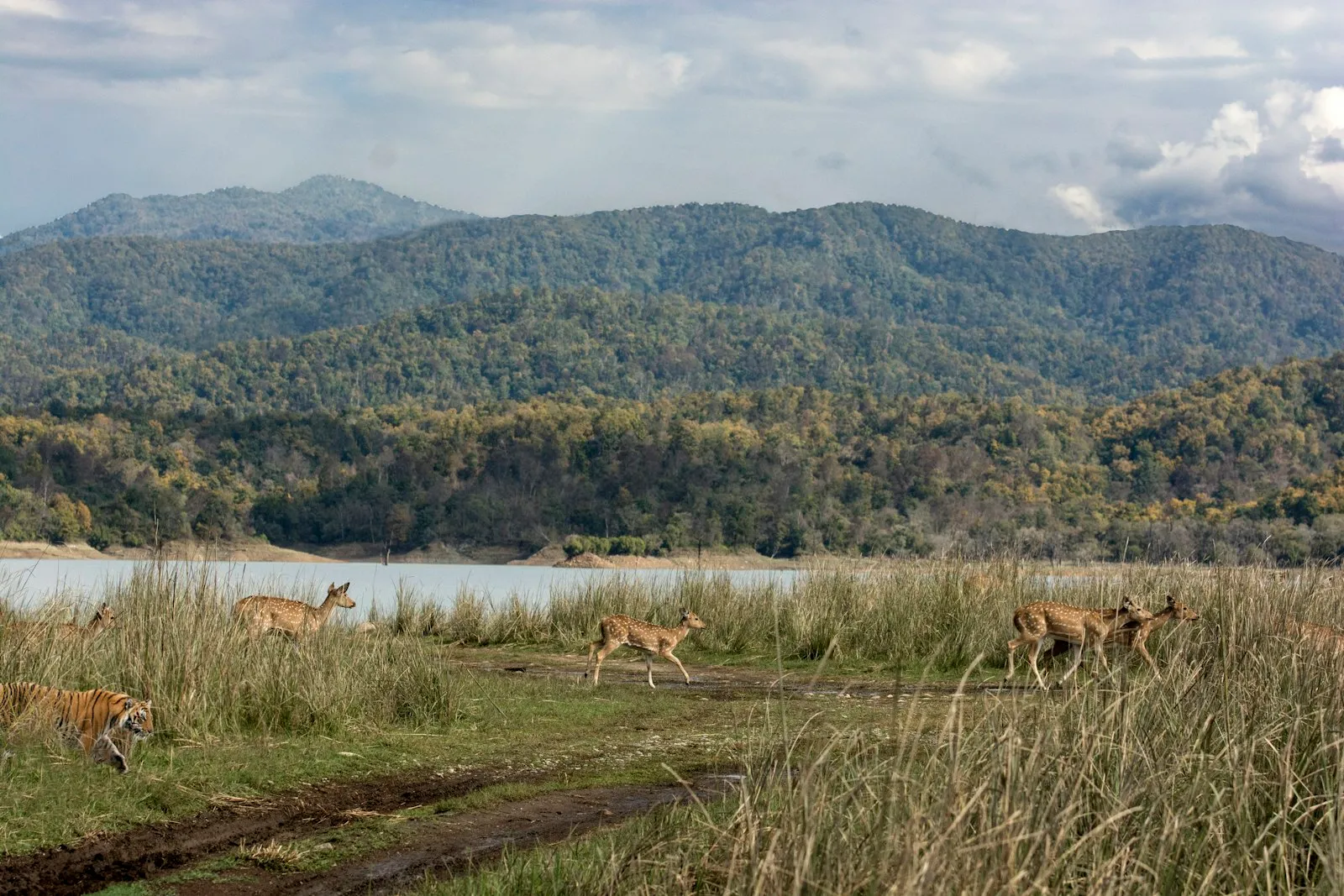
Strip away the specs and here is the truth: people book the campground because of the Loop. The 11-mile, one-way Cades Cove Loop Road circles the valley, and it is the single best wildlife drive in the park. White-tailed deer graze the meadows in numbers, wild turkeys strut the field edges, and black bears are regularly spotted along the tree lines, especially in spring and fall. Mixed in are the historic homesteads, log cabins, the John Cable Mill, and three pioneer churches that make the Loop as much a history tour as a wildlife drive.
Two things make camping here specifically worth it:
Dawn is everything. Wildlife is most active at first light, and the Loop is far less crowded then. Camped at the entrance, you can be on the road at sunrise — long before the cars file in from Townsend. By 10 or 11 AM in peak season the one-way Loop can back up into a slow-rolling jam; at 6:30 AM it can feel like the valley is yours. That head start is the entire argument for staying at the campground instead of day-tripping.
Vehicle-free Wednesdays. In 2026, the Loop closes to motor vehicles every Wednesday from May 6 through September 30. Class 1 and Class 2 e-bikes are allowed. Parking is limited, and a parking tag is required when a vehicle is left elsewhere in the park for more than 15 minutes. The NPS recommends carrying water, food, first-aid supplies, and bicycle tools because there is no cell service. Verify the current vehicle-free schedule before traveling.
One warning that goes with the wildlife: this is serious bear country, and food-storage rules are strict and enforced. All food, coolers, cookware, and scented items must be stored in your hard-sided RV or in bear-resistant storage when not in active use. Never leave anything on the picnic table, and never feed or approach wildlife. The bears that make Cades Cove magical are the same ones that get euthanized when campers get careless.
What’s Nearby
Inside the cove and the park:
- Abrams Falls. The marquee hike from Cades Cove — a roughly 5-mile round-trip to a powerful, low waterfall with a big plunge pool. The trailhead is off the Loop Road, an easy add-on to a Loop morning. Moderate, popular, and worth it.
- The Loop’s historic sites. Plan time to stop at the churches, the Cable Mill area, and the preserved cabins; pick up the self-guiding tour booklet at the start.
- Backcountry trails. Cades Cove launches longer hikes into the high country, including routes toward Thunderhead and the Appalachian Trail.
Outside the park:
- Townsend — the “peaceful side of the Smokies,” the nearest gateway town and your closest resupply, with tubing on the Little River, a few restaurants, groceries, and gas.
- Maryville and Alcoa — about 30–40 minutes out, with full-service shopping, big-box stores, and RV services.
- The Gatlinburg/Pigeon Forge corridor — the busy, attraction-heavy side, a longer drive away. If you want full-hookup RV parks, restaurants, and the Dollywood experience, see our Gatlinburg & Pigeon Forge RV parks guide.
The Honest Details
What Works
The location is unbeatable for wildlife. Camped at the mouth of the Loop, you can be out at dawn when deer, turkeys, and bears are active and the road is empty. No other base camp in the park puts you this close to the best wildlife drive in the Smokies — for photographers and wildlife watchers, that alone justifies the stay.
Year-round operation is rare and valuable. As one of only two campgrounds in the park open all year, it lets you camp inside the Smokies in the off-season — fewer crowds, the cove at its most atmospheric in winter mist or fall color, with water, flush toilets, trash, and the dump station all running.
The dump station and year-round water make stays manageable. For a no-hookup campground, an on-site dump and potable water are a real plus.
The price is right. At $30 a night for a spot at the entrance to one of the most beautiful valleys in the East, Cades Cove is a tremendous value next to the private full-hookup parks outside the gates.
What Doesn’t Work
No showers, no hookups. This is primitive national park camping. After a humid summer day on the Abrams Falls trail, you will want a shower you do not have. Arrive self-contained and comfortable managing battery, fresh water, and tanks for the full stay.
It is genuinely remote. The slow, winding drive from Townsend — and the much longer haul from the Gatlinburg side — is part of the package. Plan your resupply runs and accept that everything is a drive away.
The Loop’s popularity is a double-edged sword. The same wildlife and scenery that make it famous draw enormous crowds. By midday in peak season the one-way Loop can crawl, and a single car stopped to watch a bear can stall traffic. The dawn advantage is real, but afternoon Loop drives mean traffic.
Poor to no cell service. Coverage in the cove is poor to nonexistent. If you need to be reachable or work remotely, this is not your spot — plan to be offline.
Generator hours are limited. Where allowed, generators run only during posted daytime hours, and Loop C bans them outright when Loop B is open. Factor those windows into your energy plan; if you want quiet, Loop C is the move.
Who It’s Best For
It is best for wildlife watchers and photographers who want dawn access to the Loop, self-contained RVers comfortable without hookups or showers, off-season campers chasing one of the only ways to camp inside the park in winter, cyclists who want the vehicle-free mornings, and budget travelers who would rather pay $30 here than $60-plus at a private park.
Look elsewhere if you run a rig over 40 feet (you exceed the park maximum), you need hookups, showers, or laundry, you depend on reliable internet and cell service, or you want to be near Gatlinburg’s attractions — in which case the drive will frustrate you and our Gatlinburg & Pigeon Forge RV parks guide is the better fit.
Full Specs and Booking
Cades Cove Campground — Great Smoky Mountains National Park
- Location: Southwest corner of the park, at the entrance to the Cades Cove Loop Road; accessed via Laurel Creek Road from the Townsend entrance
- Sites: 161 total, including 31 tent-only and four group sites
- Max RV length: 40 feet; trailers are limited to 35 feet; individual spur lengths vary
- Hookups: None (no electric, water, or sewer at sites)
- Rate: $30/night, all site types, verified on Recreation.gov for 2026; $8 online reservation fee; $10 cancellation fee
- Check-in / checkout: 1 p.m. / 12 p.m.; office hours 8:30 a.m.–4:30 p.m.; quiet hours 10 p.m.–6 a.m.
- Address: 10042 Campground Drive, Townsend, TN 37882
- Campground office: (865) 448-4103
- Season: Open year-round — one of only two campgrounds in the park open all year
- Dump station: Yes, on-site
- Drinking water: Yes (year-round)
- Flush toilets: Yes (year-round)
- Showers: No
- Trash collection: Yes (year-round)
- Generators: 8 a.m.–8 p.m. where permitted; Loop C is generator-free when Loop B is open
- Camp store / bike rental: Seasonal, near the campground (summer and fall)
- Cell coverage: Poor to none
- Bear rules: Strict, enforced food-storage requirements — store all food and scented items in a hard-sided vehicle or bear-resistant storage
- Pets: Allowed on leash in the campground; prohibited on most park trails
- Reservations: Recreation.gov, up to six months in advance
- Parking tags: The vehicle parked at its assigned campsite does not need a tag. A tag is required when that vehicle parks elsewhere in the park for more than 15 minutes.
Booking strategy: Reservations open six months ahead on Recreation.gov, and peak-season weekends (especially in October for fall color, and around the vehicle-free Wednesdays) book fast. Set a reminder for your six-month window, have your payment and site preferences ready, and filter by spur length so you only see sites that fit your rig. Midweek and off-season dates are far easier to grab — and the off-season is when Cades Cove is at its quiet best.
FAQ
Can I bring a big rig to Cades Cove Campground?
Up to a point. The maximum is 40 feet for an RV and 35 feet for a trailer, but that is the ceiling, not a guarantee for every site. Each site’s parking-spur length is listed on Recreation.gov, so filter by equipment length and confirm the specific record before booking.
Are there showers at Cades Cove Campground?
No. There are no showers and no hookups of any kind. You do get drinking water, flush toilets, trash collection, and an on-site RV dump station — all year-round. Come self-contained and plan for shower-free days, or bring a portable shower setup.
Is Cades Cove Campground open year-round?
Yes. It is one of only two campgrounds in the park open year-round. Water, flush toilets, trash, and the dump station all keep running through winter, making it one of the very few ways to camp inside the park in the off-season — when crowds thin and wildlife viewing is often at its best. The open loops and site count change off-season, so check current Recreation.gov availability for your dates.
What wildlife will I see at Cades Cove?
Expect white-tailed deer in large numbers, wild turkeys, and good odds of black bears along the tree lines, especially in spring and fall. Wildlife is most active at dawn and dusk, which is the whole reason camping here pays off — you can be on the Loop at first light before the crowds. Keep your distance, never feed wildlife, and follow the bear food-storage rules to the letter.
Are pets allowed at Cades Cove Campground?
Yes, on a leash in the campground — but the park prohibits pets on nearly all of its trails, including hikes off the Loop like Abrams Falls. Your dog is welcome at your site and on the paved Loop Road shoulders, but not on most hikes. Plan around that, and never leave a pet unattended in bear country.
Cades Cove Campground reviews: what campers say
Recreation.gov site ratings for Cades Cove cluster around 4.3 to 4.4 out of 5, based on a few dozen reviews per site. The praise repeats: deer walking through the loops at dusk, bears seen from the campsite, being first onto the Loop Road at sunrise, clean flush toilets for a national park, and the quiet of Loop C. Reviewers who booked in late October or in winter describe the campground as close to empty and the cove at its most atmospheric.
The complaints are the same ones this review has already made. No showers after a humid hike. Spurs that are shorter than the driveway length implies, so a 35-foot fifth wheel booked into a site rated for 27 feet ends up with the truck parked at an angle. Generator noise in Loop B during the 8 a.m. to 8 p.m. window. The slow, nine-mile drive to Townsend for anything the seasonal store does not stock. And zero cell signal, which some reviewers list as a feature.
For the other side of the park, see the Elkmont Campground review; for the wider context, the Great Smoky Mountains RV camping guide and the Tennessee hub.
Facts reviewed September 9, 2026 against the Recreation.gov campground and site records for facility 232488 (rates, spur and vehicle lengths, check-in times, cancellation terms), the Recreation.gov reservation policies page, and the NPS Cades Cove Campground and vehicle-free days pages.
Frequently asked questions
How much does Cades Cove Campground cost?
Every individual site, standard or tent-only, is $30 per night on Recreation.gov through 2026, plus an $8 online reservation fee ($9 by phone). Senior and Access pass holders pay half the site fee. There is no charge for the dump station, water or the five-amp medical outlets on sites C31 and C57.
Is Cades Cove Campground worth it?
Yes for wildlife watchers, cyclists and self-contained campers who want to be on the Cades Cove Loop at dawn before the day-trippers arrive. It is a poor fit if you need hookups, showers, cell service or a base near Gatlinburg attractions, which are an hour of mountain driving away.
What do reviews say about Cades Cove Campground?
Recreation.gov reviewers rate individual sites around 4.3 to 4.4 out of 5. The praise is for the Loop access, deer and bear sightings from the campground itself, flush toilets and the quiet Loop C. The complaints are the lack of showers and hookups, tight spurs on many sites, the slow drive in from Townsend and zero cell signal.
Does Cades Cove Campground have showers?
No. There are no showers and no hookups anywhere in the campground. You get flush toilets, drinking water, trash collection, food-storage lockers and an RV dump station, all of which run year-round. The nearest public showers are at private campgrounds in Townsend.
What is the maximum RV length at Cades Cove Campground?
The campground maximum is 40 feet for a motorhome and 35 feet for a trailer, but most site records on Recreation.gov cap the vehicle at 24 to 35 feet and only a couple allow 42. The selected site's Max Vehicle Length controls whether your rig fits, not the campground ceiling.
Can you camp in Cades Cove year-round?
Yes. Cades Cove is one of only two campgrounds in Great Smoky Mountains National Park open all year. In the off-season only sites C1 to C12 and C26 to C61 are open, by reservation, and generators are then allowed in Loop C with restricted hours until Loop B reopens in spring.
When are Cades Cove vehicle-free Wednesdays in 2026?
The National Park Service scheduled vehicle-free Wednesdays on the Loop Road from May 6 through September 30, 2026. Class 1 and Class 2 e-bikes are allowed, parking is limited, and the park recommends bringing water, food, first aid supplies and bike tools because there is no cell service.
About the author
Marisol ReyesCamping & Outdoors Editor
Marisol spent six years as an interpretive ranger in the California and Colorado state park systems before turning to writing full-time. She knows public-land camping from the inside — how reservation windows really work, why some loops fill before others, and which 'first-come, first-served' sites are worth gambling on.
More from Marisol →Campgrounds in this guide
Facts pages for each park — hookups, rig limits, rates and booking, plus every guide that covers it.
Keep reading
Anchor Down RV Resort Prices, Map & Review: Douglas Lake, Dandridge TN (2026)
An honest Anchor Down RV Resort review: 2026 prices and fees, the site map and lakefront site numbers, what the operator publishes, what to ask before booking, and how it compares with the Gatlinburg and Pigeon Forge parks 30-plus minutes away.
Elkmont Campground Prices, Sites & Review (2026)
A current Elkmont Campground review for Great Smoky Mountains — $30 rate, RV-site limits, riverside choices, generator rules, and no-hookup logistics.
Best RV Parks in Tennessee: Smokies, Music City & Beyond (2026)
Tennessee's best RV parks by region — Smokies gateways, Nashville, Chattanooga, the Cumberland Plateau and Memphis — with verified hookups, prices, rig limits and honest planning notes.