Best RV Parks in Tennessee: Smokies, Music City & Beyond (2026)
Tennessee's best RV parks by region — Smokies gateways, Nashville, Chattanooga, the Cumberland Plateau and Memphis — with verified hookups, prices, rig limits and honest planning notes.

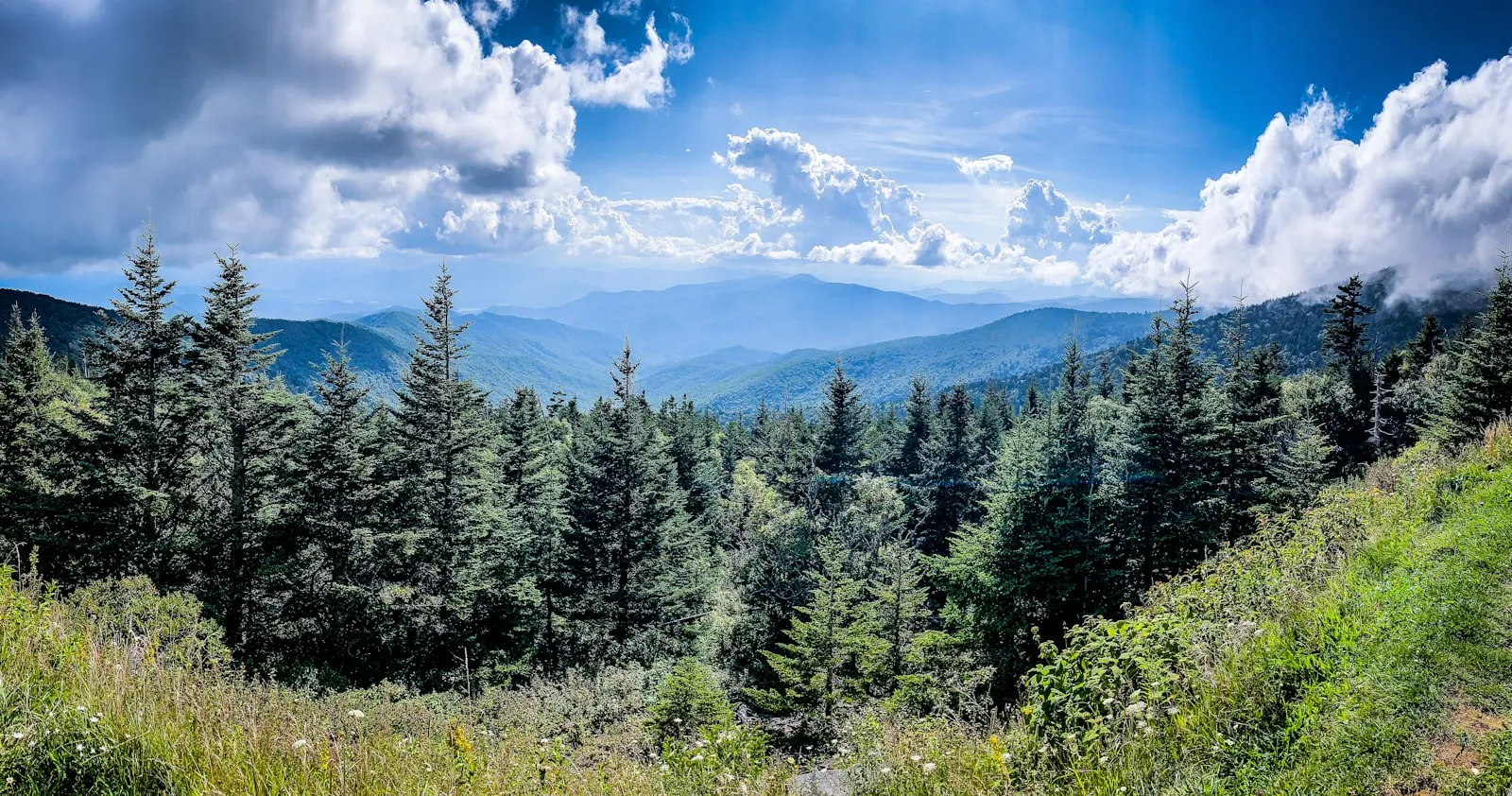
Tennessee runs about 440 miles east to west, and it changes character every hundred of them. The eastern end rises into the Great Smoky Mountains — the single most-visited national park in the United States, drawing roughly 13 million people a year. The middle holds Nashville, where the camping question is really a logistics question: how do you get to Broadway without parking a 40-foot rig downtown? Further south sits Chattanooga, wedged between the Tennessee River and the bluffs of Lookout Mountain. The Cumberland Plateau hides some of the best state-park camping in the Southeast. And the western end runs down to the Mississippi and Memphis. For RV travelers, that range means Tennessee works as a destination and as a crossroads — I-40 threads the whole state, and you can build a trip that starts in a mountain cove and ends with barbecue and barge traffic on the river.
The center of gravity, though, is the Smokies. The volume of RV parks clustered around Gatlinburg, Pigeon Forge, and Townsend is among the densest in the country, precisely because the park itself offers no hookups. That single fact shapes most Tennessee RV trips: you decide whether you want to sleep inside the park and dry-camp, or stage in a full-service resort in one of the gateway towns and drive in. This guide covers both, then works west across the rest of the state — Nashville, Chattanooga and the southeast, the Cumberland Plateau, and Memphis — with verified specs and the planning notes that actually matter.
For state-by-state browsing, visit our Tennessee camping overview.
Related guides: Anchor Down RV Resort Review: Douglas Lake, Dandridge TN (2026)
Great Smoky Mountains: Inside the Park
Great Smoky Mountains National Park has frontcountry campgrounds on the Tennessee side, and they share one defining trait: no hookups, anywhere. Every site is dry camping — no electric, no water, no sewer at the pad. What you get instead is location: you wake up inside one of the most biodiverse landscapes in North America, steps from rivers and trailheads, for about $30 a night.
The two marquee Tennessee-side campgrounds are Elkmont and Cades Cove.
Elkmont is the park’s largest campground — 211 sites along the Little River, about eight miles from Gatlinburg, accommodating RVs up to 35 feet. It’s open seasonally (roughly March through late November) and is the epicenter of the famous synchronous firefly display in late spring, which runs on a vehicle-reservation lottery. Cades Cove sits in the park’s southwest corner at the entrance to the 11-mile Cades Cove Loop — the best wildlife drive in the park — takes rigs up to 40 feet, stays open year-round, and crucially has a dump station and year-round water.
- Hookups: None (dry camping; dump station and water at Cades Cove)
- Sites: Elkmont 211, Cades Cove ~159
- Cost: ~$30/night
- Max RV length: 35 ft (Elkmont), 40 ft (Cades Cove)
- Reservations: recreation.gov, up to 6 months out
- Best for: Travelers who prize location over amenities and have a rig under 40 ft
Field tip: Cell service is poor to nonexistent inside the park. Download maps offline, tell someone your itinerary, and don’t count on reaching the gateway towns by phone from your site.
For the full in-park breakdown — rig limits, which loops to request, generator hours, and the firefly lottery — see our guide to RV camping in Great Smoky Mountains National Park. Or go straight to the deep dives: the Elkmont Campground review and the Cades Cove Campground review.
Gatlinburg, Pigeon Forge & Townsend: Full-Hookup Gateways
If you want full hookups near the Smokies — and most RVers do — you stage in the gateway corridor that wraps the park’s northern boundary. This is one of the most concentrated RV-park markets in the country, and each town has a personality:
- Gatlinburg is closest to the main park entrance. Greenbrier Campground here runs roughly 120 full-hookup sites, a mix of river-frontage and wooded, less than half a mile from the Greenbrier park entrance.
- Pigeon Forge is the attractions hub — Dollywood, dinner shows, the parkway. Pigeon Forge RV Resort offers 200-plus full-hookup sites about six miles from Dollywood, and the year-round Pigeon Forge / Gatlinburg KOA Holiday sits along the Little Pigeon River.
- Townsend bills itself as the “peaceful side of the Smokies.” Parks here sit on the Little River with mountain views and a fraction of the Parkway bustle.
- Sevierville offers value between the bigger towns — closer to I-40, a short drive to both Pigeon Forge attractions and the park.
The right base depends on whether you’re here for the park (Gatlinburg/Townsend), the attractions (Pigeon Forge), or a quieter, better-value stay (Sevierville/Wears Valley). Expect roughly $50–95/night in summer and October, with the premium river-frontage and resort sites at the top of that range.
Full breakdown with spec blocks and a town-by-town decision guide: Gatlinburg & Pigeon Forge RV parks.
Nashville & Middle Tennessee: Music City
Nashville is a destination in its own right, and the RV strategy is all about access. There’s no RV camping on Broadway — you base 15 to 25 minutes out and solve transport separately.
The standout is Two Rivers Campground, in the Cumberland River loop near the Opryland area: full hookups, rigs up to 54 feet, a pool, laundry, free cable, live music most nights, and — the detail that matters in a traffic-and-parking town — a shuttle to downtown.
- Hookups: Full (30/50 amp)
- Sites: ~100, pull-through and back-in
- Cost: ~$60–85/night (higher on event weekends)
- Max RV length: up to ~54 ft
- Reservations: Direct; book well ahead for festival and event weekends
- Best for: First-time Nashville visitors who want to skip downtown driving
Lakeside Army Corps campgrounds on J. Percy Priest Lake, east of the city, offer a more natural alternative for travelers who’d rather trade convenience for scenery — water and electric sites, lower prices, and far quieter surroundings, booked through recreation.gov.
See our full Nashville RV parks guide for the closest-to-downtown options, the lakeside alternatives, and how to actually get to the honky-tonks.
Renting an RV for this trip? Compare rigs, prices, and pickup locations on RVshare and Outdoorsy — both let you filter by rig size, dates, and location.
Chattanooga & Southeast Tennessee
Chattanooga is one of the most underrated RV stops in the South — a compact, walkable downtown on the Tennessee River, with Lookout Mountain, Rock City, Ruby Falls, and the Tennessee Aquarium all within a short drive. Two big-rig-friendly parks anchor the area.
Raccoon Mountain Caverns & Campground sits in a quiet mountain setting about 15 minutes west of downtown, with a show cave right on-site.
- Hookups: Full and partial (up to 50 amp); ~166 sites, many pull-through
- Sites: ~166, big-rig friendly
- Cost: Demand-priced — roughly $45–60/night midweek, spiking to $100-plus on summer weekends
- Max RV length: Large rigs and toy haulers accommodated
- Reservations: Direct
- Best for: Families (cave tours, pool, dog park) wanting a quiet base near the city
Holiday Travel Park of Chattanooga is the closest full-service park to downtown and the aquarium, just across the line in Rossville, GA.
- Hookups: Full or partial; ~170 sites
- Sites: ~170, big-rig friendly to ~70 ft, many pull-through
- Cost: ~$45–70/night
- Max RV length: Up to ~70 ft
- Reservations: Direct
- Best for: Big rigs and travelers who want the shortest hop to downtown attractions
Field tip: Raccoon Mountain uses dynamic, day-of-week pricing — a Saturday can cost roughly double a Thursday. If your dates are flexible, arriving and departing midweek saves real money here.
The Cumberland Plateau: Fall Creek Falls
Between Nashville and Knoxville, the Cumberland Plateau is where Tennessee’s state-park camping shines — and where you get the most value in the entire state. The crown jewel is Fall Creek Falls State Park, home to one of the highest waterfalls in the eastern United States at 256 feet, plus gorges, swimming holes, and miles of trails.
Fall Creek Falls State Park Campground
- Hookups: Water and electric (20/30/50 amp) at all sites; 107 sites with full sewer connections; dump station for the rest
- Sites: 200-plus across five areas (A–E), paved spurs
- Cost: ~$22–32/night for RV sites (a fraction of gateway-town prices)
- Max RV length: Select sites accommodate rigs up to 65 ft
- Reservations: reserve.tnstateparks.com, bookable up to a year out; open year-round
- Best for: Hikers and waterfall chasers wanting full-feature sites at state-park prices
The trade-off with the plateau is that it’s genuinely rural — services are sparse, the nearest big grocery runs can be a drive, and weekends in summer and on fall color weekends fill up. But for the money, and for the scenery, it’s hard to beat. Private options like Mountain Glen RV Park near Pikeville give you a full-hookup fallback when the state-park sites are booked.
Field tip: Stock up on groceries and fuel before you climb onto the plateau. Once you’re at Fall Creek Falls, the nearest full-service towns are 20-plus minutes of two-lane road away.
Memphis & West Tennessee
The western end of the state is the thinnest for dedicated RV resorts, but Memphis itself — Beale Street, Graceland, the National Civil Rights Museum, world-class barbecue — is worth the drive across the flatlands.
Graceland RV Park & Campground is the obvious play for Elvis pilgrims: it sits right next to Elvis Presley’s Memphis, and you can walk to the visitor center from your site.
- Hookups: Full (pull-through and back-in gravel sites)
- Sites: Mid-size park with pool, pavilion, showers
- Cost: ~$45–60/night
- Reservations: Direct
- Best for: Graceland visitors who want to skip parking and shuttle hassles
Tom Sawyer’s RV Park is the regional favorite, perched on the Mississippi River with front-row barge and tugboat traffic. Note the honest geography: it’s technically just across the river in West Memphis, Arkansas — about 10 miles from downtown Memphis and 20 from Graceland — but it’s the de facto Memphis RV park for many travelers.
- Hookups: Full (30/50 amp), city water and sewer; long, level concrete pull-throughs
- Sites: ~30-plus concrete sites
- Cost: From ~$34/night
- Reservations: Direct, year-round
- Best for: Big rigs and river watchers who don’t mind a short drive into the city
- The catch: The park sits inside the levee and can close during Mississippi River high water — always confirm the river stage before relying on it in spring.
For travelers crossing the state, the I-40 corridor and Tennessee River parks around the western lakes fill the gaps, but plan ahead: this is the part of Tennessee where you can’t assume a full-hookup resort is waiting at the next exit.
Tennessee RV Parks at a Glance
| Park | Region | Cost/night | Hookups | Max length | Reservations |
|---|---|---|---|---|---|
| Elkmont / Cades Cove | Smokies (in park) | ~$30 | None (dry) | 35 / 40 ft | recreation.gov |
| Greenbrier / PF resorts | Gatlinburg–Pigeon Forge | ~$50–95 | Full 30/50 | 50 ft+ | Direct |
| Two Rivers | Nashville | ~$60–85 | Full 30/50 | ~54 ft | Direct |
| Raccoon Mountain | Chattanooga | ~$45–100+ | Full/partial 50 | Large rigs | Direct |
| Holiday Travel Park | Chattanooga | ~$45–70 | Full/partial | ~70 ft | Direct |
| Fall Creek Falls SP | Cumberland Plateau | ~$22–32 | W/E, 107 full | up to 65 ft | tnstateparks.com |
| Graceland RV Park | Memphis | ~$45–60 | Full | Mid-size | Direct |
| Tom Sawyer’s RV Park | Memphis (W. Memphis, AR) | from ~$34 | Full 30/50 | Big rigs | Direct |
Planning Your Tennessee RV Trip
When to go
Tennessee’s RV season is long, but the Smokies have two peaks: summer (June–August, warm and busy, with the firefly event bookending late spring) and October leaf season, which is arguably the single most crowded — and most beautiful — time in the gateway towns. Book those dates months ahead. Spring is gorgeous and quieter; winter is mild at lower elevations but cold and sometimes snowy up high, and most in-park campgrounds close (Cades Cove is the year-round exception). The Cumberland Plateau and Chattanooga share the fall-color rush; West Tennessee around Memphis is more spring-and-fall friendly, with hot, humid summers.
Smokies traffic and leaf season
The gateway corridor — especially the Pigeon Forge Parkway and the Gatlinburg spur — turns into stop-and-go traffic on summer and October weekends, and the in-park roads (Cades Cove Loop, Newfound Gap) crawl. Plan to move your rig and run errands midweek or early morning, and treat any October Saturday as a full traffic day. The leaf-season surge also drives gateway-town prices to their annual highs.
Reservation strategy
In-park campgrounds book exclusively through recreation.gov, up to six months in advance — set a calendar reminder for the day your window opens, especially for summer, October, and the firefly lottery. State parks (Fall Creek Falls and others) book through reserve.tnstateparks.com up to a year out and are the best-value sites in the state, so they go fast on weekends. Private parks book directly; the popular Pigeon Forge, Gatlinburg, and Nashville resorts fill for summer weekends, festival dates, and all of October well ahead.
Rig size
The in-park limit is the binding constraint: 35 feet at Elkmont, 40 feet at Cades Cove (35 for a vehicle-plus-trailer combo). Anything larger stays in the gateway towns, where parks routinely handle 50-foot-plus rigs with pull-throughs; Holiday Travel Park in Chattanooga and Fall Creek Falls both take rigs to roughly 65–70 feet. The mountain approach roads also reward smaller, more maneuverable rigs — and the Cumberland Plateau’s two-lane access roads are best driven in daylight.
Budgeting
Tennessee spans the full price range. In-park dry camping is ~$30/night; state parks run ~$22–32 with hookups; private Smokies and Nashville resorts run ~$50–95, peaking in October. A money-saving move many travelers use: split the trip, dry-camping a few nights inside the park for the experience, then recharging on full hookups in town or on the plateau for less.
Bears and food storage
The Smokies have one of the densest black bear populations in the East. In-park campgrounds enforce strict food-storage rules — all food and scented items in a hard-sided vehicle or bear box when not in use. This applies in the gateway towns too; a fed bear is a dead bear.
More Tennessee RV Guides
Use this guide as your starting point, then go deeper:
- Regions: RV camping inside Great Smoky Mountains NP · Gatlinburg & Pigeon Forge RV parks · Nashville RV parks
- Park reviews: Elkmont Campground · Cades Cove Campground
- Browse: All Tennessee camping
Frequently asked questions
Can you camp inside Great Smoky Mountains National Park in an RV?
Yes, at frontcountry campgrounds like Elkmont (RVs up to 35 ft) and Cades Cove (up to 40 ft), but none have hookups. All in-park camping is dry camping at about $30/night, reserved through recreation.gov up to six months ahead.
Where do you stay with full hookups near the Smokies?
In the gateway towns — Gatlinburg, Pigeon Forge, Sevierville and Townsend — where private resorts offer full 30/50-amp hookups, pull-throughs and big-rig room within 10 to 30 minutes of the park entrances.
What's the best RV base for visiting Nashville?
A full-hookup park 15 to 25 minutes from downtown with a shuttle, like Two Rivers Campground, so you skip downtown parking and traffic. Army Corps campgrounds on Percy Priest Lake are a more scenic, lower-cost alternative.
When is the busiest time for Tennessee RV camping?
October leaf season in the Smokies is the single busiest stretch, followed by summer. Both require booking months ahead in the gateway towns and right at the six-month window on recreation.gov for in-park sites.
How big an RV can you bring into the Smokies?
Up to 35 feet at Elkmont and 40 feet at Cades Cove (35 feet for a vehicle-and-trailer combination). Larger rigs should base in the gateway towns and drive in, where private parks routinely handle 50-foot-plus rigs.
Are there good RV parks in West Tennessee near Memphis?
Yes, but fewer than out east. Graceland RV Park & Campground sits next to Elvis Presley's Memphis, and Tom Sawyer's RV Park on the Mississippi (just across the river in West Memphis, AR) is a favorite — though it can close during high water.
About the author
Marisol ReyesCamping & Outdoors Editor
Marisol spent six years as an interpretive ranger in the California and Colorado state park systems before turning to writing full-time. She knows public-land camping from the inside — how reservation windows really work, why some loops fill before others, and which 'first-come, first-served' sites are worth gambling on.
More from Marisol →Keep reading
Gatlinburg & Pigeon Forge RV Parks: Full-Hookup Smokies Basecamps (2026)
The best full-hookup RV parks in the Gatlinburg–Pigeon Forge–Townsend corridor — riverside sites, Dollywood proximity, and year-round options minutes from Great Smoky Mountains National Park.
RV Camping in Great Smoky Mountains National Park: In-Park Campgrounds (2026)
How to RV camp inside Great Smoky Mountains National Park on the Tennessee side — Elkmont and Cades Cove campgrounds, rig limits, the no-hookup reality, and how to actually get a reservation.
Nashville RV Parks: Where to Camp for Music City (2026)
The best RV parks for visiting Nashville — full-hookup options near downtown, lakeside Corps campgrounds, and which base gets you to Broadway without paying downtown prices.