Flamingo Campground Everglades: 2026 RV Review
An honest 2026 Flamingo Campground review with current $33–$60 rates, 41 electric sites, no water or sewer hookups, and practical trip advice.

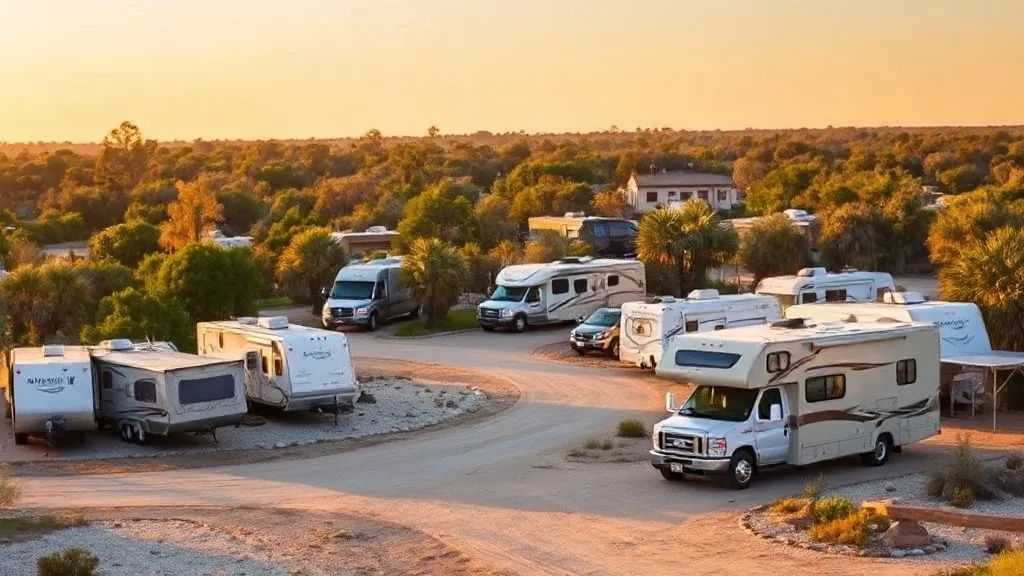
Flamingo Campground is the best in-park RV base for exploring the southern Everglades, especially if you secure one of its 41 electric sites. Current 2026 prices are $50 on weekdays and $60 on weekends for electric RV sites, or $33 and $38.50 for dry RV sites. The tradeoffs are equally clear: there are no water or sewer hookups at individual sites, bathhouses do not have hot water, reliable cell service is unlikely, and the nearest full grocery run is back toward Homestead.
Go in the drier months, arrive provisioned, and treat the remoteness as part of the experience. Flamingo is 38 miles beyond the Homestead-area park entrance at the end of the Main Park Road. It is a memorable place to wake up near Florida Bay, but it is not a full-hookup resort in disguise.
Information and prices in this review were checked against the National Park Service and the current campground operator on August 5, 2026. Always confirm the live booking page before paying because availability and operating conditions can change.
Flamingo Campground at a glance
| Detail | Current information |
|---|---|
| RV sites | 65 in T Loop |
| Electric sites | 41; selected 20-, 30-, and 50-amp service |
| Water/sewer at site | None |
| Dry RV rate | $33 Mon–Thu; $38.50 Fri–Sun |
| Electric RV rate | $50 Mon–Thu; $60 Fri–Sun |
| Dump and water | Shared dump station and potable-water fill available |
| Showers | Bathhouses, but no hot water |
| Generator hours | T Loop only, 8 a.m.–8 p.m. |
| Quiet hours | 10 p.m.–6 a.m. |
| Cell/Wi-Fi | Unreliable; limited AT&T may work near the west end, Wi-Fi only inside the visitor center during operating hours |
| Best season | November–April |
| 2026 alert | Bayside Campground is closed for all of 2026 |
The park entrance fee is not included in the camping price. The operator also publishes a 10% camping discount for eligible pass holders; confirm eligibility and the actual discounted total before booking.
The honest verdict
Flamingo works best for an RVer who values location over campground polish. Staying here saves the repeated 76-mile round trip between the main entrance and Florida Bay. That makes sunrise wildlife stops, paddling, fishing, and unhurried evenings realistic instead of turning every day into a commute.
An electric site changes the experience. Even in winter, southern Florida can be warm and humid. Shore power lets you run appropriate cooling, refrigeration, and charging without depending on a generator. Dry sites are viable for a self-contained rig, but generator use is limited to T Loop and only between 8 a.m. and 8 p.m.
The limitations are not minor. No site has water or sewer. The bathhouses do not provide hot water. Connectivity is poor, and a forgotten prescription or major grocery item means a long drive. Campers who need full hookups, dependable remote-work internet, or resort facilities will be happier outside the park.
T Loop: the RV choice
The National Park Service camping page lists 65 RV sites at Flamingo, while the operator identifies 41 electric sites in T Loop. The electrical service is not identical at every pedestal, so match the booking description to your rig rather than assuming every electric site offers 50 amps.
T Loop includes pull-through options, useful for longer combinations and travelers who do not want to back onto a site after the drive south. Enter the actual length of the RV and tow vehicle in the booking system and use the site details there; a campground-wide RV-site count does not guarantee that every pad fits every rig.
There are no individual water or sewer hookups. Fill the fresh-water tank at the campground’s potable-water point and use the shared dump station. For a longer stay, tank capacity matters more than it would at a conventional private park.
The current Flamingo campground information is the best source for live availability, site attributes, rates, and closures. It explicitly notes that the bathhouses do not have hot water. That matters because older descriptions sometimes use “showers” in a way that sounds like hot showers are available.
What the 2026 rates include—and do not include
Flamingo uses weekday and weekend pricing:
| Site type | Monday–Thursday | Friday–Sunday |
|---|---|---|
| Dry RV site | $33 | $38.50 |
| Electric RV site | $50 | $60 |
These are campsite prices, not an all-in trip price. Everglades National Park admission is separate. Taxes, optional items, or booking terms may affect the checkout total. If comparing Flamingo with a private park near Homestead, account for fuel and time: an outside stay adds roughly 76 park-road miles each day you visit the Flamingo area.
The weekend premium makes a Sunday-through-Thursday stay noticeably cheaper. On the other hand, paying for electricity is often worthwhile here because it reduces generator dependence and improves comfort in a hot, humid environment.
Getting there and provisioning
Vehicle access is through Everglades National Park’s Homestead entrance. From the entrance area, continue about 38 miles down the Main Park Road to Flamingo. There is no public transit to the campground and no through-road to the Gulf Coast entrance or Shark Valley.
The road is paved and appropriate for RV traffic, but it is still a remote drive with wildlife, slow vehicles, and multiple visitor stops. Allow more time than a map’s uninterrupted estimate, especially if this is your first visit.
Provision in Homestead or Florida City. The Flamingo marina area sells fuel, ice, snacks, and basic supplies, but it is not a substitute for a supermarket. Before leaving town, check:
- Fuel for the motorhome or tow vehicle
- Fresh water and tank capacity
- Food, prescriptions, insect repellent, and sunscreen
- Tire pressure and basic repair equipment
- Offline maps and any reservation documents
The marina’s presence is genuinely useful. It gives campers nearby access to boat fuel, rentals, tours, and limited essentials. It does not eliminate the need to arrive self-sufficient.
Cell service, Wi-Fi, and remote work
Plan as though you will have no dependable connection at the campsite. The park’s current visitor information says cell service is generally limited to AT&T near the west end of the developed area, around the vicinity of Nine Mile Pond, and even that should not be treated as guaranteed campsite coverage. Public Wi-Fi is available inside the Guy Bradley Visitor Center during its operating hours.
That is enough to send an occasional message if conditions cooperate, but not a sound basis for video meetings or full workdays. Download maps, confirmations, entertainment, and weather information before entering the park. If connectivity is essential, camp nearer Homestead and visit Flamingo as a day trip.
When to book
November through April is the practical window for most RV travelers. Temperatures are usually more comfortable, rainfall is lower, and insect pressure is generally less intense than during the wet season. It is also the popular season, so the limited electric inventory can disappear well ahead of desirable dates.
The wet season brings heat, humidity, thunderstorms, and potentially severe mosquito and no-see-um pressure. An RV with air conditioning and screened living space helps, but it does not change conditions outdoors. Check current park alerts before committing to a summer stay.
The operator publishes a 14-consecutive-night limit from November through April and a 30-night total limit per calendar year. Those rules make Flamingo a destination campground, not a seasonal snowbird base.
Bayside Campground closure
The operator says Bayside Campground is closed throughout 2026. Do not build an itinerary around an old page or map that shows it as an available alternative. Search results and third-party campground directories often lag behind operational changes.
For an RV trip, the practical response is straightforward: search the official booking inventory for T Loop, choose electric or dry camping deliberately, and keep an outside-the-park backup. The closure places more importance on Flamingo’s existing inventory during winter demand.
What to do from camp
Flamingo’s advantage is access to the southern end of the park. The marina is the hub for boat tours, paddling, fishing services, and rentals. The Main Park Road also connects a series of short trails and overlooks between the entrance and campground.
Useful stops include Royal Palm and the Anhinga Trail near the entrance, Pa-hay-okee Overlook, Mahogany Hammock, Nine Mile Pond, West Lake, and the Florida Bay shoreline. Current water levels, weather, wildlife activity, and construction can change what is worthwhile on a particular day, so ask at the visitor center rather than relying on a rigid checklist.
Paddlers should assess wind, route difficulty, tides where relevant, and return logistics before launching. A calm-looking mangrove route can still require navigation experience. Rentals or a guided trip are sensible for visitors unfamiliar with the area.
Wildlife and campsite behavior
The Everglades is active wildlife habitat, not a drive-through zoo. American crocodiles, alligators, birds, and other animals may be seen around the developed area and waterways. Keep the required distance, never feed wildlife, and follow posted instructions from park staff.
Store food, trash, and scented items securely. Keep pets under control and away from shorelines. Do not approach an animal for a photo or block its route. Conditions change quickly, so a posted closure or ranger direction always overrides advice from a travel guide.
Insects deserve their own plan. Bring effective repellent, long sleeves, and a screened place to sit. Dawn, dusk, calm weather, and recent rain can all affect pressure. “Dry season” means better odds, not zero mosquitoes.
What works well
- Location: you sleep at the end of the park road instead of commuting from Homestead.
- Electric inventory: 41 sites make air conditioning and power management easier.
- Access to the marina: tours, rentals, fuel, ice, and basic supplies are close.
- Distinct setting: few drive-in campgrounds put an RV this deep into the Everglades landscape.
- Lower weekday pricing: a midweek electric stay costs less than a weekend booking.
What may be a dealbreaker
- No site water or sewer: every RV manages tanks through shared facilities.
- No hot water in bathhouses: do not book expecting a hot campground shower.
- Weak connectivity: this is a poor remote-work base.
- Long resupply drive: major services are back toward Homestead.
- Heat and insects: the wet season can be uncomfortable even in a well-equipped rig.
- Bayside closure: 2026 has one fewer camping option in the Flamingo area.
Who should book Flamingo
Choose Flamingo if the Everglades itself is the reason for the trip and you can tolerate partial-hookup camping. It particularly suits birders, paddlers, anglers, photographers, and travelers who want early or late access to the southern park without a daily drive.
Choose a private park near Homestead if full hookups, hot showers, laundry, groceries, or dependable connectivity matter more. That trade exchanges immersion for convenience and adds driving on park days.
For a broader comparison, use our Everglades RV camping guide. You can also compare statewide options in the best RV parks in Florida or browse the Florida RV camping hub.
Booking checklist
Before confirming a site:
- Verify that Bayside remains closed for your dates.
- Confirm whether the selected T Loop site is dry or electric.
- Match the listed amperage and pad dimensions to your rig.
- Add the separate park entrance cost to the budget.
- Plan fresh-water filling and waste-tank capacity.
- Download maps and alerts for offline use.
- Provision in Homestead or Florida City.
- Recheck weather, insects, and current NPS conditions.
Flamingo is not effortless camping. That is also why it can feel like a real destination. With an electric site, a stocked RV, and realistic expectations, it is the strongest base for experiencing the far end of Everglades National Park.
Official sources checked
Frequently asked questions
Does Flamingo Campground have RV hookups?
Flamingo has 41 T Loop RV sites with electricity; selected pedestals provide 20-, 30-, or 50-amp service. No campsite has a water or sewer connection. Potable-water fill points and a dump station serve the campground.
How much is Flamingo Campground in 2026?
The operator lists dry RV sites at $33 Monday through Thursday and $38.50 Friday through Sunday. Electric RV sites are $50 on weekdays and $60 on weekends. Everglades National Park admission is separate.
Are there hot showers at Flamingo Campground?
No. The current campground operator specifically says its bathhouses do not have hot water. Older pages and reviews may describe showers without making that limitation clear.
What is the best time to camp at Flamingo?
November through April is the most practical RV season because temperatures and insect pressure are generally lower. Winter is also the busiest period, so reserve an electric site early if shore power matters.
Is Bayside Campground open in 2026?
No. The current operator says Bayside Campground will remain closed throughout 2026. RV travelers should book an available Flamingo Campground T Loop site rather than planning around Bayside.
About the author
Marisol ReyesCamping & Outdoors Editor
Marisol spent six years as an interpretive ranger in the California and Colorado state park systems before turning to writing full-time. She knows public-land camping from the inside — how reservation windows really work, why some loops fill before others, and which 'first-come, first-served' sites are worth gambling on.
More from Marisol →Campgrounds in this guide
Facts pages for each park — hookups, rig limits, rates and booking, plus every guide that covers it.
Keep reading
Boyd's Key West Campground Review: Sites, Rates & Is It Worth It (2026)
An honest Boyd's Key West Campground review: full-hookup 30/50-amp sites with cable on Stock Island four miles from Duval Street, the heated pool, marina and tiki hut, what the operator publishes on rates, and how it compares with Bluewater Key, Sunshine Key and Bahia Honda.
Topsail Hill Preserve State Park Camping Review: Florida's Full-Hookup State Park RV Resort on 30A
An honest review of camping at Topsail Hill Preserve State Park in Santa Rosa Beach, Florida — the Gregory E. Moore RV Resort's full-hookup sites, the tram to the beach, dune lakes, what to verify before booking and how it compares with Grayton Beach and Fort Pickens.
Bluewater Key RV Resort Prices (2026): Rates by Lot, Fees, Rules & Review
Bluewater Key RV Resort prices for 2026 and 2027: Tropical, Canal and Bayfront rates by Silver, Gold and Platinum tier, every published fee, minimum stays, RV restrictions, cancellation policy, what reviews say and honest trade-offs.