St. Mary Campground Prices, Sites & Review: Glacier's East Side
St. Mary Campground prices, reservation dates and an honest loop-by-loop review, including its no-hookup sites, wind exposure and 2027 construction closure.

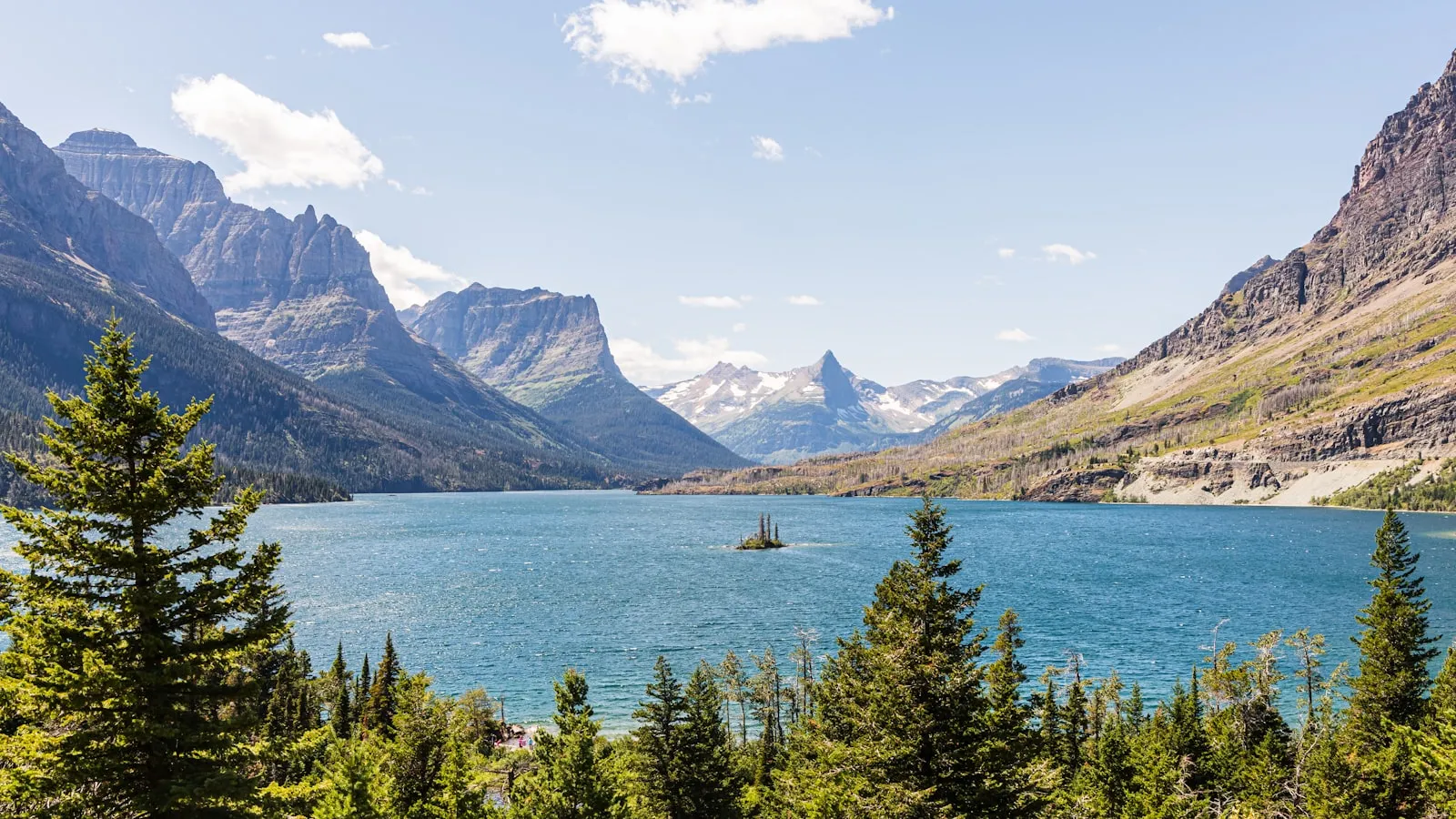
Verified September 9, 2026: Glacier’s 2024 frontcountry fee notice set St. Mary at $30 per night, and that rate is what Recreation.gov and Campendium still show. The Recreation.gov listing (#232492) confirms 142 reservable sites across Loops A, B and C, generators banned in Loop A, a 14-night maximum stay, 50% camping discount for Senior and Access pass holders, a day-of reservation window August 17–September 11, and a current hard-sided-only alert (no tents or soft-sided campers) because of bear activity. Site-by-site vehicle limits below come from the Recreation.gov site data.
Quick answer: Saint Mary Campground, Glacier National Park prices are $30 per night for every standard site in summer, $20 in primitive service (spring and fall, no water) and free in winter with an entrance pass. No site has hookups. Senior and Access passes cut camping to $15, but the $35 seven-day entrance fee is separate and there is no discount for annual passes. Book the moment your six-month window opens for July and August, and match your rig to a specific site’s limit: only 34 of 142 sites accept 35 feet or longer.
St. Mary Campground at a glance
| St. Mary Campground | |
|---|---|
| Prices | $30/night summer; $20 primitive; $0 winter (entrance pass required) |
| Sites | 148 (142 reservable on Recreation.gov) in Loops A, B, C |
| Hookups | None; dump station, potable water, flush toilets in season |
| Max RV length | Site-specific: 2 sites at 40 ft, 32 at 35 ft, most at 24–27 ft |
| Season | Reservable April 18–October 31, 2026; summer service May 22–September 11 |
| Reservations | Recreation.gov #232492, 6 months ahead; day-of only Aug 17–Sept 11 |
| Cell signal | None per NPS; faint Verizon near entrance; Starlink works |
| Showers | Yes, Loop C, seasonal, 4 stalls |
| Generators | Loops B and C only, posted hours; Loop A generator-free |
| Elevation | About 4,500 ft |
St. Mary Campground prices and fees (2026)
| Item | 2026 rate | Notes |
|---|---|---|
| Standard site, summer service | $30/night | All loops, all site types; same on weekends |
| Standard site, primitive service | $20/night | April 18–May 21 and from September 12; no potable water, limited loops. Third-party sites still quote $10; confirm on Recreation.gov for your dates |
| Winter camping (November–March) | $0 | Entrance pass required; no services; no reservations |
| Senior / Access pass discount | 50% off camping | Pass holder must be camping in the site and present the pass |
| Park entrance | $35/vehicle, 7 days | Or $30 motorcycle, $20 per person on foot or bike; interagency passes accepted |
| Non-U.S. resident surcharge | $100/person 16+ | New for 2026, on top of entrance fee, unless holding an annual pass |
| Recreation.gov cancellation | $10 fee | Cancelling inside 24 hours also forfeits the first night |
| Extra vehicle | $0 | Two vehicles per site maximum |
| Pets | $0 | Leashed in the campground; not allowed on trails |
| Maximum stay | 14 nights | Two sites may be held at once |
At $30 a night with no hookups, St. Mary costs roughly a third of the full-hookup KOA outside the village. That gap is the price of sleeping inside the park at the foot of Going-to-the-Sun Road.
If Glacier National Park has a sunrise side, this is it. St. Mary Campground sits at the eastern foot of Going-to-the-Sun Road, half a mile from the St. Mary Visitor Center, where the prairie slams into the Rocky Mountain Front and the peaks go pink before your coffee’s done. It’s the largest campground on Glacier’s east side — 148 sites, $30 a night in summer, no hookups — and after the 2026 closure of Two Medicine Campground for construction, it’s more important than ever.
Here’s the verdict up front: St. Mary is one of the best RV bases on Glacier’s east side, with three honest caveats — wind, no hookups and site-specific rig limits. The location is exceptional: Going-to-the-Sun Road begins here, Many Glacier is an easy day trip, and seasonal groceries, fuel and restaurants sit just outside the park. But the National Park Service lists no cell reception or internet, so do not treat this as a remote-work base. Match your exact equipment to a Recreation.gov site before paying. One more planning alert: every St. Mary campsite is scheduled to close January 1–June 30, 2027 for construction. This review covers the loops, current prices and how St. Mary compares with Apgar and Fish Creek on the west side.
Getting There
St. Mary Campground sits just inside Glacier’s east entrance, off US-89 in the village of St. Mary, Montana. Coming from the east — Great Falls, Browning, or anywhere off I-15 — you’ll roll across open Blackfeet Nation prairie on US-89 or US-2, watching the mountains grow from a blue smudge to a wall. It’s one of the great approach drives in the national park system, and the roads are paved highway the whole way. From the west side of the park, you have two options: over Going-to-the-Sun Road (roughly 50 miles of slow, spectacular driving from West Glacier — but note the vehicle size limits below) or around the southern boundary on US-2 through East Glacier, about two hours of easy highway towing.
Here’s the critical bit for RVers: vehicles over 21 feet long or 8 feet wide are prohibited on the alpine section of Going-to-the-Sun Road between Avalanche Creek and Rising Sun. That means you are not towing your trailer over Logan Pass — ever. You’ll bring the rig around on US-2, park it at St. Mary, and drive the Sun Road in your tow vehicle or toad. This is a feature, not a bug: the east entrance at St. Mary puts you at the doorstep of the road’s most jaw-dropping stretch (St. Mary Lake, Wild Goose Island, Logan Pass) without the two-hour approach west-siders face.
One genuinely good piece of 2026 news: Glacier is not requiring vehicle reservations in 2026 — the park suspended the timed-entry system parkwide, including Going-to-the-Sun Road and Many Glacier. For the first time in five years, you can drive in whenever you like. Expect that freedom to come with crowded trailhead parking by 8 a.m. in peak season.
Supplies in St. Mary village are better than you’d expect for a town this small. The St. Mary Grocery on Going-to-the-Sun Highway stocks fresh meat and produce, ice, firewood, beer, and wine; the Sinclair station next door is open 24 hours; and Trail and Creek Outfitters covers camping gear you forgot. There’s a proper restaurant (Snowgoose Grille) and a grab-and-go cafe in the village too. Everything is seasonal — much of it shutters by late September — so fall campers should provision in Browning or Kalispell. There’s no full-size supermarket within an hour, so do your big shop before you arrive.
The Campground
St. Mary spreads its 148 sites across three loops on a bench above the St. Mary River, a short walk from the lake. This is east-side terrain: aspen groves, low brush, and meadow rather than the deep cedar-hemlock forest of the west side. The upside is views — from the open sites you get a full panorama of the peaks framing the St. Mary valley, and the sunrises are legitimately worth setting an alarm for. The downside is exposure, to both sun and wind. Current alert: as of September 2026 Recreation.gov lists St. Mary as hard-sided camping only because of bear activity — no tents, no soft-sided pop-ups or truck-camper canvas. That restriction comes and goes with the berry season, so check the listing before you book if you sleep in fabric. Here’s how the loops break down, based on the consensus across Campendium, The Dyrt, and trip reports:
Loop A — quietest, most sheltered
Loop A holds the campground’s best tree cover. The central portion of the loop sits under genuinely tall trees that fully shade the sites within, while sites on the outer ends of the loop are more open. Generators are prohibited in Loop A, which makes it the pick for tent campers, small-rig owners running off batteries, and anyone who values quiet over engine charging. If you’re in a van or a truck camper and want shelter from the afternoon sun and the valley wind, request a mid-loop site here. Comfort stations sit at both the lower end (between sites A9 and A44) and the upper end of the loop.
Loop B — the middle ground
Loop B has more trees than C for the most part, though few are towering — think aspen and shorter conifers rather than old-growth shade. Generators are allowed here, and it’s where many mid-size RVs land. Sites in the middle of the loop are more private; sites on the ends are more open with bigger views. It’s a fair trade: pick your priority.
Loop C — views, showers, wind
Loop C is the split personality loop: roughly half the sites are tucked under trees and the other half are completely open to the elements. The open sites have the best mountain views in the campground — and zero wind protection. Reviewers describe gusty nights in open Loop C sites, including one report of tents being damaged in overnight wind. Loop C is also where the shower house lives, which makes it convenient and slightly busier with foot traffic. Generators are allowed. If you’re in an RV and want the postcard view out your window, take an open C site and just plan to keep the awning stowed when you’re not sitting under it. If you’re in a tent, take the trees.
A few campground-wide notes from the review consensus: sites are a mix of back-ins and small pull-throughs with picnic tables, fire rings, and tent pads. Bear boxes are shared between clusters of three to four sites — this is serious grizzly country, and rangers enforce food storage hard. Everything with a scent lives in the box or your rig, always. Our Montana bear country RV guide covers the full protocol. Road noise from US-89 reaches the outer sites faintly but the campground quiets down well at night; this is not a party campground.
Treat connectivity as unavailable. Although scattered camper reports mention intermittent Verizon reception, the current NPS listing says no cell reception and no internet. That is the standard to plan around: download offline maps, campsite details and permits before you arrive, and do not schedule a work call from camp.
Hookups & Amenities
Let’s be clear about what you’re getting: St. Mary has no hookups. None. No electric, no water at the site, no sewer. This is dry camping with good infrastructure around it, priced at $30 a night. Here’s what that infrastructure includes:
- Potable water spigots throughout the campground — arrive with your fresh tank full anyway, and top off as needed
- Flush toilets and sinks with running water in the comfort stations
- Seasonal hot showers in Loop C for registered campers
- Dump station on site, which saves you the drive to a commercial dump
- Trash and recycling collection — use it religiously; this is grizzly habitat
Generator rules matter here: generators are allowed only in Loops B and C, and prohibited entirely in Loop A. Standard NPS quiet hours apply, so plan your battery charging around the posted generator windows. In practice this is a solar-friendly campground — the open sites in Loop C are terrible for wind but excellent for panels, with long summer daylight and minimal shading. If you’re running a residential fridge and no solar, book Loop B or C and mind your generator etiquette; your neighbors came here for the silence.
The absence of hookups is the price of sleeping inside the park boundary. If you need 50-amp and full sewer, the St. Mary/East Glacier KOA sits just outside the village — but you’ll pay several times the nightly rate and trade away the roll-out-of-bed access to the Sun Road.
What’s Nearby
This is the section where St. Mary earns its keep, because almost nothing in the national park system beats this location.
Going-to-the-Sun Road starts at your doorstep. The eastern stretch — from St. Mary along the north shore of St. Mary Lake, past the Wild Goose Island overlook (the most photographed view in Montana, five minutes from your campsite), Sun Point, and up to Logan Pass — is the road’s most dramatic run. Being based at St. Mary means you can hit Logan Pass at 7 a.m. before the parking lot fills, hike the Hidden Lake overlook boardwalk or Highline Trail, and be back at camp for lunch. Remember the 21-foot vehicle limit on the alpine section: explore in your tow vehicle. The park’s free shuttle also runs the Sun Road corridor in summer from the St. Mary Visitor Center, which solves the Logan Pass parking problem entirely.
Many Glacier is the day trip you build the trip around — about 40 minutes north via Babb. This is the heart of Glacier’s best hiking: Grinnell Glacier, Iceberg Lake, Ptarmigan Tunnel, and boat tours on Swiftcurrent Lake. The great 2026 news: the multi-year Swiftcurrent construction project is complete, the area reopens to full public access in mid-May 2026, and parking has expanded to 339 spaces — 171 more than before. After two summers of shuttles-only access and restrictions, Many Glacier is fully open again, and St. Mary is the closest reservable campground to it.
Hikes from the St. Mary valley itself are no consolation prizes. St. Mary Falls and Virginia Falls make a family-friendly waterfall double-header off the Sun Road ten minutes from camp. Sun Point’s shoreline trail delivers huge lake views for minimal effort. The Otokomi Lake trail climbs from Rising Sun into a red-rock cirque, and Beaver Pond Loop starts near the campground itself — a good leg-stretcher where rangers frequently remind you to carry bear spray, because you’re statistically likely to see why.
Add the St. Mary Visitor Center a half-mile walk away (ranger programs, astronomy nights with the Blackfeet Nation, trail condition intel) and shore fishing on St. Mary Lake — campers report catching lake trout and burbot from the rocky shoreline — and you can fill a week without repeating a day. For the wider east-side and park-wide picture, see our full Glacier National Park RV camping guide.
St. Mary Campground reviews: the honest details
What works
- Location, location, elevation. East entrance of the Sun Road, 40 minutes to Many Glacier, walkable village with groceries and 24-hour gas. No other in-park campground combines this access.
- Real seasonal amenities for a park campground. Flush toilets, potable water, a dump station, and hot showers for registered campers.
- Views and light. Open sites frame the Rocky Mountain Front, and the east side gets the sunrise. Photographers will not need convincing.
- The 2026 setup is the best in years. No vehicle reservations parkwide, Many Glacier construction finished with expanded parking, and St. Mary absorbing the campers displaced from Two Medicine — book early, but the trip logistics have never been simpler.
- Low-cost shoulder seasons. Primitive camping is $20 a night in spring and fall, and winter camping is free with an entrance pass for the genuinely hardy.
What doesn’t
- The wind. The St. Mary valley funnels serious gusts off the Divide. Reviewers report damaged tents and sleepless nights in open sites. Stake everything, stow the awning, and pick trees if you’re wind-averse.
- Site-specific equipment limits. Of 142 reservable sites, only 2 allow 40 feet and 32 allow 35 feet; 48 are capped at 27 feet and 24 at 24 feet. A campsite that fits one RV may not fit another. Filter with your exact equipment before booking.
- Four showers for the whole campground. Reviewers describe morning and evening lines at the Loop C shower house. Go mid-afternoon.
- Tired pavement and tight curves. Recent reviews mention broken, potholed loop roads and narrow curves that make some “pull-through” sites awkward for longer rigs.
- No dependable connectivity. The NPS lists no cell reception and no internet, whatever a one-off carrier report may say.
- No hookups and firm generator zoning. Loop A is generator-free; B and C have posted hours. If your power plan is “run the genny all afternoon,” you’ll annoy everyone including the rangers.
- Exposure. The thin east-side tree cover means open sites bake in July afternoons. Shade is a bookable amenity here — treat site selection accordingly.
- Seasonal everything. The village largely closes by late September, and shoulder-season camping means no water once the plumbing winterizes.
Who it’s best for
St. Mary is built for RVers whose equipment matches an available site, vans, truck campers, and hardy tent campers who prioritize location over comfort — people who would rather watch sunrise hit the peaks than have a 50-amp pedestal. It is the right base for photographers, Many Glacier day-hikers and anyone doing the full Sun Road experience. It is the wrong choice for hookup-dependent travelers, people who need reliable internet and light sleepers in tents who did not bring extra stakes.
Full Specs & Booking
- Hookups: None — dry camping only; generators permitted in Loops B & C only
- Sites: 148 total across three loops; mix of back-in and pull-through
- Cost: $30/night summer, $20/night primitive and $0 winter; park entrance pass still required
- 2026 reservations: April 18–October 31, up to six months ahead; no winter reservations
- Primitive service: April 18–May 21 and from September 12; check exact service availability for your stay
- 2027 closure: NPS listing showed all campsites closed January 1–June 30, 2027 for water-system construction; the park’s 2026 construction update describes partial closures fall 2026 through spring 2027 — confirm before booking
- Cell signal: NPS lists no reception and no internet; do not depend on anecdotal carrier reports
- Max RV length: Site-specific; 2 sites at 40 ft (Loop C), 32 at 35 ft, 7 at 32 ft, 6 at 30 ft, the rest 19–29 ft; enter exact equipment on Recreation.gov and obey the selected site’s limit
- Current restriction: Hard-sided camping only (bear activity), per Recreation.gov, September 2026
- Discounts: 50% off camping with Senior or Access pass; no discount for annual passes
- Elevation: About 4,500 ft
- Amenities: Seasonal potable water, flush toilets, hot showers in Loop C and dump station; food lockers year-round; picnic tables and fire rings
Book the instant your 6-month window opens for July and August dates — with Two Medicine Campground closed for construction all of 2026, east-side demand is squeezing into St. Mary and Many Glacier, and peak weekends vanish within minutes.
St. Mary vs. Apgar vs. Fish Creek
If you’re choosing among Glacier’s three big reservable campgrounds, the decision is really about geography. Apgar is the park’s largest campground, sitting in deep forest near Lake McDonald on the west side — more sheltered, more services within walking distance at Apgar Village, and far better for rigs entering from Kalispell or US-2 west, but it’s a two-hour haul from Many Glacier and you’re at the wrong end of the Sun Road for sunrise. Fish Creek sits in old-growth shade near Lake McDonald on the quieter northwest shore, with the same west-side geography trade-off. None of these three offers electric hookups. St. Mary gives up shelter in exchange for east-side views and unrivaled access to Many Glacier and the Sun Road’s best miles. Our take: west-siders who want village convenience go Apgar, west-siders who want a more wooded campground look at Fish Creek, and anyone whose Glacier dreams involve Grinnell Glacier or alpenglow on Wild Goose Island goes St. Mary — wind be damned. For how all three fit into a Montana-wide itinerary, start with our guide to the best RV parks in Montana.
For the rest of the east side and the Montana hub, see the Glacier National Park RV camping guide, the best RV parks in Montana pillar and the Montana hub.
Facts checked September 9, 2026 against the Recreation.gov listing (site data, generator loops, pass discounts, stay limits, hard-sided alert, entrance fees), Glacier’s 2024 fee-rate notice ($30 standard rate), the 2026 construction update (St. Mary and Two Medicine closures) and Campendium (cell reports, elevation, 2025–2026 reviews). The primitive-season rate could not be confirmed on an official page this month. Rates and operating conditions can change.
Frequently asked questions
What are Saint Mary Campground, Glacier National Park prices?
A standard site is $30 per night during summer service, the flat rate Glacier charges at all of its reservable campgrounds since the 2024 fee increase. Primitive service in spring and fall (no water, limited loops) is listed at $20, and winter camping from November through March is free with a park entrance pass. Senior and Access pass holders get 50% off camping; the $35 per-vehicle entrance fee is separate.
Can big rigs fit at St. Mary Campground?
Some can. Of the 142 sites listed on Recreation.gov, 32 carry a 35-foot maximum vehicle length and 2 in Loop C allow 40 feet; 48 sites are capped at 27 feet and 24 at 24 feet. Enter your exact RV or combined tow length on Recreation.gov and book only a site whose limit covers it.
Is there cell service at St. Mary Campground?
Do not plan on it. The National Park Service campground listing says there is no cell reception and no internet, and reviewers describe a bar or two of Verizon near the entrance fading to nothing inside the loops. Starlink works well in the open sites. Download maps and confirmations before arrival.
Which loop at St. Mary Campground is generator free?
Loop A. Generators are prohibited there entirely and allowed only in Loops B and C during posted hours. Loop A also has the campground's best tree cover, which makes it the pick for tent campers and anyone who wants shelter from the valley wind.
Does St. Mary Campground have showers?
Yes. The NPS lists seasonal hot showers in Loop C for registered campers, but there are only four of them for roughly 150 sites, so expect a line in the morning and evening. Potable water, flush toilets and the dump station are also seasonal; primitive and winter campers should check which services are operating for their dates.
How do reservations work at St. Mary Campground?
For 2026, reservations run April 18 through October 31 on Recreation.gov and open up to six months ahead, except August 17 through September 11, which switch to a day-of window. Primitive service applies April 18–May 21 and again from September 12, when only one loop stays open. Maximum stay is 14 nights.
Is St. Mary Campground open in early 2027?
Plan on no. The NPS listing we checked in August 2026 showed all St. Mary campsites closed January 1 through June 30, 2027, for water-system construction, and the park's 2026 construction update describes partial closures from fall 2026 through spring 2027. Confirm on Recreation.gov before building an early-2027 trip around it.
About the author
Marisol ReyesCamping & Outdoors Editor
Marisol spent six years as an interpretive ranger in the California and Colorado state park systems before turning to writing full-time. She knows public-land camping from the inside — how reservation windows really work, why some loops fill before others, and which 'first-come, first-served' sites are worth gambling on.
More from Marisol →Campgrounds in this guide
Facts pages for each park — hookups, rig limits, rates and booking, plus every guide that covers it.
Keep reading
Many Glacier Campground Prices, Showers & Reviews (2026)
An honest Many Glacier Campground review — 109 sites at $30/night, no hookups, token showers next door at Swiftcurrent, a famously tight RV limit, the 2026 reopening after the water-system rebuild, and the best trailhead access in Glacier.
Apgar Campground Review: Showers, Elevation, RV Fit & Prices (2026)
A researched Apgar Campground review — free seasonal showers, nearly 3,500-foot elevation, 194 sites, rig limits, no hookups, and Lake McDonald access.
Bozeman Hot Springs Campground Prices, Hours & Reviews (2026)
A researched Bozeman Hot Springs Campground review — dynamic pricing, verified site types, hot-springs access, hours, day-pass fees, and current policies.