Best RV Parks in Michigan: Great Lakes Campgrounds (2026)
An honest guide to Michigan's best RV parks and campgrounds, with verified 2026 state-park rates, hookups, booking rules and regional trip planning.

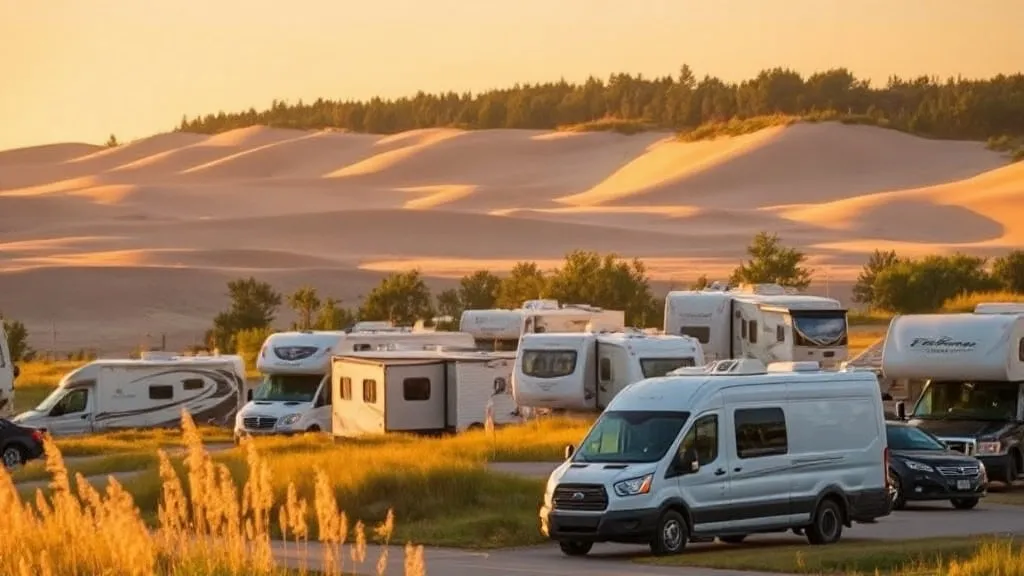
Michigan’s best RV camping is organized by water, not by city. Lake Michigan gives you dunes and sunset beaches; the Upper Peninsula gives you waterfalls, darker skies and longer drives; the Straits put Mackinac and both Great Lakes within the same itinerary. The right campground depends less on a generic rating than on which shore you actually want to explore.
For most first trips, start with one of three bases: Sleeping Bear Dunes for a national-lakeshore trip, Ludington for a developed Lake Michigan state park, or Tahquamenon Falls for an Upper Peninsula road trip. Michigan DNR’s 2026 state-park prices generally sit well below private-resort rates, but the nightly fee is not the whole total: an online reservation fee and a Recreation Passport for vehicle entry are separate.
Rates source-checked July 26, 2026; page reviewed August 5: Michigan DNR rates and equipment fit vary by campground, loop, amperage and exact site. Never treat a park-level price range or a neighboring site’s driveway as a promise for your reservation. Check the official DNR rate table and the exact listing in the Michigan reservation system.
Quick Picks
| Best for | Campground | 2026 base rate | Hookups | Important tradeoff |
|---|---|---|---|---|
| Sleeping Bear location | D.H. Day | $10 | None | Vault toilets; no showers on-site |
| Sleeping Bear facilities | Platte River | $31 non-electric; electric quote varies | Electric or none | No individual water/sewer |
| Lake Michigan state-park trip | Ludington | $20–$50 | Electric, semi-modern or rustic | Loop and site change the experience |
| Upper Peninsula first trip | Tahquamenon Falls | $36–$46 | Mixed electric inventory | Lower and Upper Falls areas are separate |
| Quiet Straits shoreline | Wilderness | $40–$50 | Mixed electric inventory | Remote; exact site matters |
| Traverse City access | Traverse City State Park | $45–$50 | 20/30/50-amp electric | Urban road noise and close spacing |
| Full-hookup state-park option | Aloha | $41–$56 | Electric and some full hookups | Recreation Passport and booking fee extra |
| Keweenaw Bay value | Baraga | $28–$43 | Electric and some full hookups | Better basecamp than destination resort |
1. Sleeping Bear Dunes: D.H. Day or Platte River
Sleeping Bear Dunes National Lakeshore is Michigan’s strongest first-time RV destination because the landscape is exceptional and the campground choice is unusually clear.
D.H. Day Campground is the rustic, low-cost option near Glen Haven, Lake Michigan and the Dune Climb. It has no hookups, flush toilets or on-site showers. It works best for vans, pop-ups and compact trailers that can fit the exact reservation listing. Read our D.H. Day review before choosing a generator loop.
Platte River Campground is the more developed option, with 179 sites, 96 electric sites, free hot showers, flush toilets and a seasonal dump station. Electric means electricity only—there is no water or sewer connection at the site. The Platte River review explains the site-specific limits and generator ban.
Use the complete Sleeping Bear Dunes camping guide to compare the two NPS campgrounds with private full-hookup alternatives.
2. Ludington State Park: Best All-Round Lake Michigan Base
Ludington is the state-park choice for travelers who want a real destination campground rather than a pad near an attraction. The park sits between Lake Michigan and Hamlin Lake, with beach, trail and lighthouse access supporting a multi-night stay.
The 2026 DNR table spans $20–$50, because Ludington is not one uniform campground. Beechwood and Pines offer modern electric inventory, while Cedar includes semi-modern and rustic choices. A low advertised rate therefore does not mean the site has electricity or the facility set you expect.
Our Ludington State Park camping review breaks down the booking decision. For a wider shoreline trip, use the Lake Michigan RV parks guide.
3. Tahquamenon Falls: Best Upper Peninsula First Stop
Tahquamenon Falls combines one of the Upper Peninsula’s defining natural attractions with state-park camping in both the Upper and Lower Falls areas. That geography matters: reserving “Tahquamenon Falls State Park” does not tell you which waterfall area will be closest to camp.
Michigan DNR’s 2026 rates for the relevant inventory run $36–$46, depending on campground service and amperage. Treat the reservation map as part of the trip planning, not just the checkout screen.
See the Tahquamenon Falls camping review for the Lower-versus-Upper decision, then build the road trip with our Upper Peninsula RV camping guide.
4. Wilderness State Park: Best Quiet Straits Base
Wilderness State Park occupies the northwest tip of Michigan’s Lower Peninsula near the Straits of Mackinac. It is the better fit for campers who want shoreline and space more than a busy resort schedule.
The 2026 DNR range is $40–$50 across semi-modern and modern electric inventory. Loop, service and exact site matter. This is not a place to arrive with an unmeasured fifth wheel and assume every lakeside-looking pin will fit.
Use our Wilderness State Park review for booking tradeoffs.
5. Traverse City State Park: Best for City Access
Traverse City State Park trades wilderness atmosphere for convenience. It puts RVers close to groceries, restaurants, repair services and the Grand Traverse Bay corridor. Michigan DNR’s 2026 West Loop rates are $45 for 20/30-amp sites and $50 for 50-amp sites.
Choose it when Traverse City is part of the trip—not when silence is the goal. It also works as a practical day-trip base for Sleeping Bear, although the national lakeshore campgrounds provide a much stronger in-park experience.
6. Aloha State Park: Best State-Park Full-Hookup Option
Aloha State Park on Mullett Lake is useful because Michigan’s public campgrounds do not commonly offer sewer at the site. The 2026 table lists $41–$46 electric sites and $51–$56 full-hookup inventory in the south loop.
That makes Aloha a strong northern Lower Peninsula stop for travelers who want a state-park setting without giving up full hookups. Confirm the exact service symbols before booking.
7. Baraga State Park: Best Keweenaw Bay Value
Baraga is a practical Upper Peninsula base on Keweenaw Bay. Its 2026 range runs from $28 for 20/30-amp inventory to $43 for selected full-hookup sites in South Camp.
Book Baraga for road-trip logistics, lake access and a lower public-campground price—not for a resort atmosphere. It can anchor a western UP itinerary toward the Keweenaw Peninsula or Porcupine Mountains.
How Michigan State-Park Pricing Works
Michigan’s DNR table describes modern campgrounds as having flush toilets, showers, a sanitation station, potable-water spigots and electric service. That does not mean every modern site has water or sewer at the pad.
Budget for three separate items:
- The exact campsite’s nightly rate.
- The reservation fee—currently $8 online or $10 through the call center.
- A Recreation Passport for vehicle entry.
The federal Sleeping Bear campgrounds use separate NPS admission and Recreation.gov rules. A Michigan Recreation Passport does not replace the federal entrance pass.
Best Time for an RV Trip
June through August brings the warmest beach conditions and the most booking pressure. Reserve the defining campgrounds at the opening of their booking window when dates are fixed.
September is the strongest all-round month for many RVers: cooler nights, fewer family crowds and an early taste of fall color in the north. Services can begin scaling back later in the season, so verify dump stations, showers and campground loops before arrival.
Spring rewards flexible travelers but brings cold water, mud, mosquitoes and delayed seasonal services. The Upper Peninsula warms later than southern Lake Michigan.
A Practical Seven-Night Route
For a first Michigan trip, do not try to cover both peninsulas in a week. Choose one:
- Lake Michigan week: Ludington for three nights, Sleeping Bear for three nights, then one flexible Traverse City night.
- Northern loop: Wilderness for two nights, Tahquamenon for three nights, then two nights at Straits/Aloha depending on ferry and route plans.
- Upper Peninsula week: Tahquamenon, Pictured Rocks area and Baraga/Keweenaw, with realistic drive days between them.
Michigan distances look manageable on a state map, but two-lane roads, bridge traffic and scenic stops slow an RV itinerary. Fewer bases make a better trip.
Frequently Asked Questions
What is the best RV park in Michigan for a first visit?
Platte River is the best first choice for Sleeping Bear facilities, Ludington for a Lake Michigan state-park trip, and Tahquamenon Falls for an Upper Peninsula itinerary.
Do Michigan state parks have full hookups?
Some do, but many offer electricity only. Aloha and selected Baraga inventory include full hookups; always verify the exact site symbols.
How far ahead can you reserve Michigan state parks?
Use the live Michigan DNR reservation system for the opening date that applies to your arrival. High-demand summer waterfront sites should be booked as soon as their window opens.
Is a Recreation Passport included in the camping rate?
No. Vehicle entry is separate from the campsite fee and reservation fee.
Which Michigan campground is best for large RVs?
There is no safe park-wide answer. Filter by your measured equipment and read the exact site’s driveway and equipment limits before paying.
About the author
Marisol ReyesCamping & Outdoors Editor
Marisol spent six years as an interpretive ranger in the California and Colorado state park systems before turning to writing full-time. She knows public-land camping from the inside — how reservation windows really work, why some loops fill before others, and which 'first-come, first-served' sites are worth gambling on.
More from Marisol →Keep reading
Ludington MI Campgrounds & RV Parks: 10 Best Options (2026)
A verified 2026 guide to the campgrounds and RV parks in and around Ludington, Michigan: state park loops, full-hookup resorts with Wi-Fi, city and county campgrounds, tent options, and where to find seasonal and long-term sites.
Lake Michigan RV Parks: Best Campgrounds on the Michigan Shore
A Lake Michigan RV camping guide with honest comparisons of Ludington, Sleeping Bear, Traverse City and northern shoreline bases.
Upper Peninsula RV Camping: 8 Best UP Campgrounds (2026)
A practical Upper Peninsula RV camping guide covering waterfall, Lake Superior and Keweenaw bases with verified 2026 public-campground rates.