Ruby's Inn RV Park & Campground Prices, Sites & Review: Is It Worth It Near Bryce Canyon? (2026)
Ruby's Inn RV Park review with 2026 prices (most stays $62–$82/night, live quote), 250 campsites, full hookups, April–October season, NPS shuttle access, amenities and what reviews say.

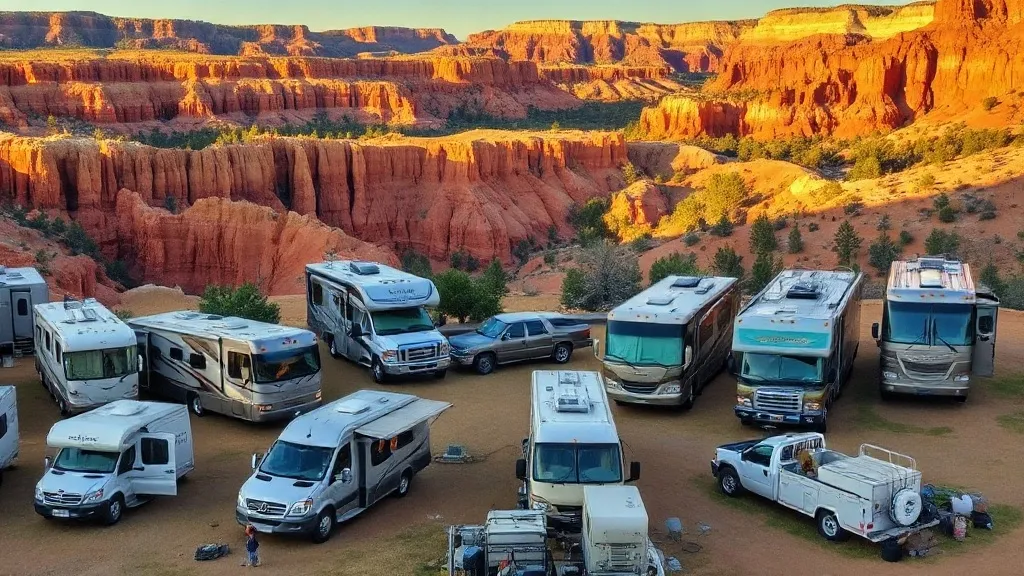
Verified September 9, 2026: The official campground page lists 250 campsites, electric-and-water or full-hookup categories, an April 1 to October 30 season and hot showers included in the rate; the Ruby’s Inn RV page adds 150+ full-hookup sites and large pull-throughs. Ruby’s publishes no static rate: Campendium campers report $62 to $82 a night for most stays (range $40 to $115), and Good Sam lists from $66. Quote your dates at brycecanyoncampgrounds.com or (866) 866-6616.
Quick answer: Ruby’s Inn RV Park and Campground prices are quoted live, not posted. Plan on $62 to $82 a night for an RV site in the main season, with a full-hookup pull-through in July at the top of that range or above and a water-and-electric site in April or October near $40 to $50. That buys the closest hookups to Bryce Canyon (half a mile from the entrance), an NPS shuttle stop at the campground, hot showers, a 24-hour laundromat and a heated pool. It is worth it when hookups and the shuttle matter more than camping among the hoodoos.
Ruby’s Inn RV Park is worth considering when hookups and shuttle access matter more than camping inside Bryce Canyon National Park. The campground’s current official page lists 250 shady and open campsites with electric-and-water or full-hookup inventory, plus a large pull-through area. Ruby’s Inn says the campground is about a half-mile from the park entrance and operates April 1–October 30.
The biggest practical advantage is the official Bryce Canyon shuttle stop outside the campground. For 2026, NPS lists shuttle service from April 3 through October 18, normally every 15 minutes, and the ride is free with park admission. It is an NPS park shuttle—not a separate complimentary shuttle operated by Ruby’s Inn.
Choose Ruby’s for a serviced base with hot showers, laundry, a heated outdoor pool, a store and nearby resort facilities. Compare in-park campgrounds if a national-park setting matters more than hookups, or look farther out if a live quote for Ruby’s does not justify the location.
See our Bryce Canyon RV parks guide for the full corridor and our Utah national parks RV guide for a multi-park route. The Utah RV park price index links directly to official pricing sources.
Ruby’s Inn RV Park at a glance
| Ruby’s Inn RV Park & Campground | |
|---|---|
| Prices | Live quote; most stays $62–$82/night, range $40–$115 (camper-reported); Good Sam from $66 |
| Sites | 250 (150+ full hookup, remainder water/electric; tent sites, tipis, cabins, group sites) |
| Hookups | 20/30/50-amp, water, sewer on full-hookup sites; dump station |
| Max RV length | No published limit; large pull-through area, 45-ft rigs reported |
| Season | April 1 – October 30 |
| Reservations | brycecanyoncampgrounds.com (Firefly booking engine) or (866) 866-6616 |
| Elevation | About 7,600–7,700 ft |
| Shuttle | Official NPS Bryce Canyon shuttle stop; 2026 service April 3 – October 18 |
| Cell signal | Verizon, AT&T and T-Mobile 4G/5G all reported usable; pines block Starlink on some sites |
| Reviews | Campendium 4.1/5 (91 reviews); Tripadvisor 4.1/5 (1,180 reviews) |
Ruby’s Inn RV Park prices and fees (2026)
Ruby’s runs its campground on a live booking engine and does not post a rate card. The figures below are what campers have actually paid, drawn from Campendium and Good Sam, and they are the right planning numbers until the booking screen gives you a firm total.
| Site type | Typical 2025–26 nightly rate | Notes |
|---|---|---|
| Full hookup pull-through (50-amp) | $75–$115 | Highest in June–August and around holiday weekends |
| Full hookup back-in | $62–$82 | The most commonly reported range; back-ins are tighter than the pull-throughs |
| Water and electric | $40–$65 | Cheapest RV category; shoulder months lowest |
| Tent site | $40–$50 | Hot showers included |
| Tipi (sleeps 6 or 8) | Live quote | Bring your own bedding |
| Camping cabin (sleeps 4) | Under $100 | Guest-reported, June 2026; no bathroom, shared bathhouse |
| Hot showers, Wi-Fi, pool | Included | No day-use surcharge for campers |
| Laundry | $2.25/load | 24-hour laundromat, guest-reported October 2025 |
| Good Sam Elite discount | 10% off nightly rate | Apply in the booking flow |
| Promo codes | Vary | Ruby’s ran a 20% off “summer26” code for 2–5 night stays July 26 – September 1, 2026 |
| Pet fee | Confirm with the park | Pets are allowed at sites; not on the NPS shuttle |
| Extra vehicle, reservation and cancellation fees | Confirm with the park | Not published on the pages reviewed; shown at checkout |
Two practical notes. First, the price gap between Ruby’s and the in-park campgrounds is smaller than it looks: North and Sunset campgrounds charge $30 a night with no hookups, so a full-hookup site at Ruby’s costs about $35 to $50 more per night for sewer, 50-amp power, showers and laundry. Second, Ruby’s is the priciest campground in the corridor; Bryce Canyon Pines and the Tropic and Cannonville parks 10 to 15 miles east typically quote $10 to $25 less for comparable hookups, at the cost of the shuttle stop.
Quick Verdict
| Question | Answer |
|---|---|
| How many campsites? | 250, according to the current official campground page |
| Full hookups? | Available; official wording also includes electric-and-water sites, so the exact category controls |
| Electrical service? | Current Ruby’s material lists 20/30/50-amp on full-hookup RV inventory |
| Big-rig option? | A large pull-through area is available; confirm the exact site’s fit |
| 2026 season? | Campground overview says April 1–October 30 |
| Park shuttle? | Yes, at the campground; NPS 2026 service runs April 3–October 18 |
| Showers and laundry? | Hot showers included; 24-hour laundromat listed |
| Current rate? | Live quote; most campers report $62–$82/night |
| Best for | RVers who want hookups, shuttle access and services near the entrance |
| Avoid if | You want to camp inside the park or need a publicly fixed nightly price |
Location and Season
The current official campground address is 300 South Main St, Bryce Canyon City, UT 84764, and the reservation phone is (866) 866-6616. Ruby’s Inn describes the location as about a half-mile from the Bryce Canyon entrance.
The current Ruby’s Inn overview publishes an April 1–October 30 season. That extends beyond the 2026 shuttle season, so an early-April or late-October campground stay should not assume shuttle service. Confirm both campground availability and transportation for the exact dates.
Sites, Hookups and Rig Fit
The official campground page states that all 250 campsites have electric and water or full hookups and that a large pull-through area is available. The wording does not mean every site has sewer or the same electrical pedestal.
Current Ruby’s Inn material separately describes full-hookup RV sites with 20/30/50-amp service, water and sewer. The correct booking workflow is therefore category-specific:
- Filter for RV inventory rather than tent, tipi or cabin accommodation.
- Select full hookup if sewer at the site is required.
- Match the listed rig and vehicle dimensions to the complete setup.
- Confirm electrical amperage for the selected category.
- Save the category details with the reservation.
The official pages do not publish one universal maximum RV length. “Large pull-through area” is useful evidence that longer rigs are served, but it is not permission to assume every remaining site fits every combination.
Amenities
The official amenities page currently lists:
- Free hot showers and flush toilets
- Heated outdoor campground pool
- 24-hour laundromat
- Free campground Wi-Fi
- Camper store
- Dump station
- Propane refills
- Picnic table and fire pit at sites
Campground guests are also shown access to parts of the broader Ruby’s Inn complex, including the general store and an indoor pool and hot tub. Because hours and seasonal availability can change, verify the specific amenity that matters for the trip.
Wi-Fi
Ruby’s lists free Wi-Fi throughout the campground but does not publish speed, coverage or a work guarantee. Bring a backup if connectivity is essential, especially because national-park terrain can limit cellular service.
Bryce Canyon Shuttle in 2026
The NPS shuttle page lists the following 2026 service:
- April 3–May 8: 8 AM–6 PM
- May 9–September 20: 8 AM–8 PM
- September 21–October 18: 8 AM–6 PM
Buses normally arrive every 15 minutes. Ruby’s Campground is an official stop, and riders need proof of park admission. Pets are not permitted on the shuttle. The published route serves the principal amphitheater viewpoints and trailheads; it does not replace transportation for every location on the park’s scenic drive.
This is the clearest reason to pay for the near-entrance location: a properly timed stay can leave the RV connected while the shuttle handles the busy amphitheater corridor.
Rates and Booking
Ruby’s does not publish a current static nightly RV rate on the pages reviewed. Use the official booking engine for a live quote based on dates, party and site category, and sanity-check it against the camper-reported ranges in the prices table above.
Compare the final amount rather than a headline rate:
- Taxes and booking fees
- Selected hookup level
- Site and equipment fit
- Pet or extra-vehicle terms
- Cancellation deadline and fee
- Whether the dates overlap the NPS shuttle season
Do not treat an old price reported by a directory or past guest as the current rate.
What Works
The campground stop makes the NPS shuttle genuinely useful. During the 2026 operating season, it reduces the need to move an RV into busy park parking areas.
The site mix covers more than one utility need. Electric-and-water and full-hookup inventory let travelers choose sewer at the site only when it is worth the price difference.
The amenity package supports multi-night stays. Included showers, laundry, a pool, propane and nearby groceries reduce logistical trips.
What to Check
The exact hookup category. Not all 250 sites should be assumed to have the same utility package.
The final price. A live quote is the only current pricing evidence.
Season alignment. The campground’s published season is longer than the NPS shuttle season.
Rig dimensions. A large pull-through area does not establish a universal maximum.
Desired setting. This is a private resort complex near the entrance, not an in-park campground among Bryce Canyon’s hoodoos.
Full Verified Specs
- Name: Ruby’s Inn RV Park & Campground
- Address: 300 South Main St, Bryce Canyon City, UT 84764
- Elevation: About 7,600–7,700 ft
- Phone: (866) 866-6616
- Official site: Bryce Canyon Campgrounds
- Season: April 1–October 30, according to the current Ruby’s overview
- Sites: 250 shady/open campsites
- Hookups: Electric-and-water or full-hookup categories
- Electrical: Full-hookup material lists 20/30/50 amp
- Pull-throughs: Large pull-through area; exact site fit controls
- Showers: Hot showers included
- Laundry: 24-hour laundromat listed
- Pool: Heated outdoor campground pool
- Store / propane: Yes
- Wi-Fi: Free, without a performance guarantee
- Shuttle: Official NPS campground stop; 2026 service April 3–October 18
- Rate: Live quote; camper-reported $62–$82/night typical, $40–$115 range
- Facts checked: September 9, 2026
FAQ
Is Ruby’s Inn RV Park inside Bryce Canyon National Park?
No. It is a private campground in Bryce Canyon City, about a half-mile from the park entrance according to Ruby’s Inn.
Does Ruby’s Inn have full hookups?
Yes, full-hookup inventory is available, but the official campground also lists electric-and-water sites. Choose the exact category containing the utilities you need.
Does the Bryce Canyon shuttle stop at Ruby’s campground?
Yes. NPS lists Ruby’s Campground as a stop. In 2026, service runs April 3–October 18 and is free with park admission.
How much is Ruby’s Inn RV Park?
Obtain a live quote from the official booking engine. Ruby’s does not publish a static nightly RV price, but campers reported $62 to $82 a night for most 2025 stays and $40 to $115 across the season.
Is Ruby’s Inn RV Park worth it?
It is strongest for an RV that fits a live category when full hookups, showers, laundry and an NPS shuttle stop justify the quote. It is less compelling if you can dry camp inside the park, will visit outside shuttle season or prefer a simpler campground farther from the entrance.
See the Bryce Canyon RV parks guide for the full corridor, the Utah national parks RV guide for a multi-park route, and the Utah hub for trip planning.
Facts reviewed September 9, 2026 against the official Ruby’s Inn campground pages, the NPS Bryce Canyon shuttle page, Campendium (91 reviews) and Good Sam. Nightly rates are dynamic; the ranges above are camper-reported, not a Ruby’s rate card.
Frequently asked questions
What are Ruby's Inn RV Park and Campground prices?
Ruby's does not publish a fixed rate sheet; the booking engine quotes by date and site type. Campers on Campendium reported $62 to $82 a night for most 2025 stays, with a spread of $40 to $115 across the season, and Good Sam lists sites from $66 a night. Expect the top of that range for a full-hookup pull-through in July and the bottom for a water-and-electric site in April or October.
Is Ruby's Inn RV Park inside Bryce Canyon National Park?
No. It is a private campground in Bryce Canyon City at 300 South Main Street, about a half-mile from the park entrance station. The in-park campgrounds, North and Sunset, are one to two miles farther in and have no hookups.
Does Ruby's Inn RV Park have full hookups?
Yes. Ruby's says more than 150 of its 250 sites have full hookups with 20/30/50-amp electric, water and sewer; the rest are water and electric only. Choose the exact category in the booking engine, because the site count alone does not guarantee sewer.
Does the Bryce Canyon shuttle stop at Ruby's campground?
Yes. Ruby's Campground is an official stop on the free NPS shuttle, which runs April 3 through October 18 in 2026, normally every 15 minutes. Riders need proof of park admission and pets are not allowed on board.
What is the elevation of Ruby's Inn at Bryce Canyon?
The campground sits at about 7,600 to 7,700 feet. Nights are cold even in July, often dropping into the 40s, and snow is possible at both ends of the April-to-October season. Bring a furnace and check the forecast before an early or late trip.
Does Ruby's Inn have laundry?
Yes. The campground has a 24-hour laundromat next to the camp store; a recent guest reported $2.25 per load. Hot showers are included in the nightly rate at no extra charge.
How long is the Ruby's Inn campground season?
Ruby's lists the campground as open April 1 through October 30. That is longer than the NPS shuttle season, so an early-April or late-October stay means driving into the park yourself.
About the author
Dale HartmanLead RV Park Reviewer
Dale has lived on the road full-time since 2014, when he sold the house in Boise and moved into a 34-foot fifth wheel with his wife and a stubborn beagle named Otis. In the years since, he's parked at more than 400 campgrounds across 41 states — from boondocking sites with no hookups to luxury resorts with concrete pads and pickleball courts.
More from Dale →Campgrounds in this guide
Facts pages for each park — hookups, rig limits, rates and booking, plus every guide that covers it.
Keep reading
Devils Garden Campground Review: The Only Campground Inside Arches
An honest review of Devils Garden Campground in Arches National Park — 51 dry-camping sites among the sandstone fins at $25/night, and why reservations vanish six months out.
Zion River Resort RV Park & Campground Prices, Sites & Review (2026)
An honest review of Zion River Resort in Virgin, Utah — verified 2026 full-hookup rates, riverfront vs standard sites, big-rig access, and how it compares to Watchman Campground inside Zion.
Spanish Trail RV Park Review: Moab Rates, Sites & Rig Fit (2026)
A researched Spanish Trail RV Park review — current $69–$120 rates, full-hookup site lengths, fees, cancellation terms, pool, and Moab access.