Columbia River Gorge RV Camping: Waterfalls, Wind & Riverside Sites
Verified Columbia River Gorge RV camping — Ainsworth, Memaloose, Viento, and Cascade Locks. Waterfalls, windsurfing, and honest notes on train noise.
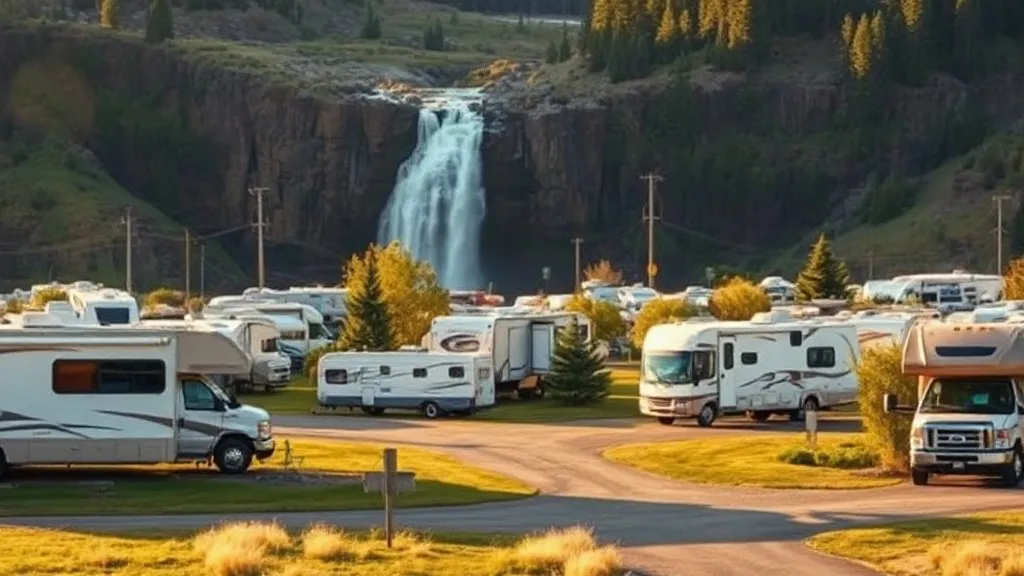
The Columbia River Gorge is one of the great scenic drives in America, and one of the more characterful places to camp by RV. East of Portland, the river has carved an 80-mile canyon through the Cascades, and the basalt walls on the Oregon side are stitched with waterfalls — Multnomah, Wahkeena, Horsetail — while the eastern end opens into the sun and wind that made Hood River the windsurfing capital of the country. You can stand in mossy rainforest one hour and golden grassland the next.
For RVers, the Gorge rewards a clear-eyed approach. The campgrounds are mostly Oregon State Parks strung along the corridor, and they share two truths: the river views and waterfall access are spectacular, and the proximity to Interstate 84 and the BNSF rail line means noise is part of the deal. We will not pretend otherwise — the parks that sit closest to the tracks are loud, and that is the price of being right on the river. Pack earplugs and pick your site with that in mind.
We have arranged this guide roughly west to east, from the waterfall corridor near Ainsworth out to the wind country around Hood River and The Dalles. Every park below was verified for current operation and hookups.
Ainsworth State Park — waterfalls and the best hookups
At the western, rainforest end of the Gorge, Ainsworth is the closest full-service campground to the famous waterfall corridor of the Historic Columbia River Highway. It is also the most big-rig-friendly park in this guide.
- Hookups: 40 full-hookup sites, 50-amp, water, sewer
- Sites: Loop A all pull-through (50–83 ft); Loop B mix of pull-through and back-in (36–55 ft); plus 6 walk-in tent sites
- Cost: 2026 full-hookup resident range $30–$53, top-of-range on summer days and weekends; non-residents add 25%
- Max RV length: Up to ~83 ft on Loop A pull-throughs
- Reservations: Oregon State Parks (ReserveAmerica), up to 6 months ahead
- Best for: Big rigs, waterfall hikers, anyone wanting full hookups near Multnomah Falls
The dump station carries a $10 fee, and the campground runs roughly mid-March through October 31. Set back into the trees, Ainsworth is generally quieter than the parks farther east, though you are never truly far from the freeway in this canyon.
Field tip: Use Ainsworth as your waterfall base and hit Multnomah Falls early — by mid-morning in summer the parking and shuttle situation gets genuinely difficult. A timed-entry permit system has applied to the Historic Highway waterfall corridor in recent seasons, so check current requirements before you drive up.
Memaloose State Park — river views and full hookups out east
Fourteen miles west of The Dalles near Mosier, Memaloose sits at the drier, sunnier eastern end of the Gorge with broad Columbia River views. It is one of only two full-hookup state parks in this corridor.
- Hookups: 43 full-hookup sites (30-amp), water, sewer; plus 66 tent sites
- Sites: Paved back-in RV sites; largest accommodates rigs up to ~58 ft
- Cost: 2026 full-hookup resident range $30–$53, top-of-range on summer days and weekends; non-residents add 25%
- Max RV length: Up to ~58 ft on the largest site
- Reservations: Oregon State Parks (ReserveAmerica), up to 6 months ahead
- Best for: River-view camping, eastern-Gorge sun, full hookups east of Hood River
Two honest cautions: Memaloose is wedged between I-84 and the rail line, so train and road noise carries at all hours, and the campground is accessible only from the westbound lanes of I-84 — if you are heading east you will need to pass it and loop back. It runs early March through the end of October.
Renting an RV for this trip? Compare rigs, prices, and pickup locations on RVshare and Outdoorsy — both let you filter by rig size, dates, and location.
Viento State Park — the windsurfer’s base near Hood River
Eight miles west of Hood River, Viento is the practical RV stop for the Gorge’s legendary wind. It has electric-and-water sites (no sewer at the sites) and quick access to the river.
- Hookups: 58 electric-and-water sites; 18 tent sites without hookups
- Sites: Standard state-park pads; flush toilets and hot showers
- Cost: 2026 electric/water resident range $28–$50, top-of-range on summer days and weekends; non-residents add 25%
- Max RV length: Mid-size friendly; confirm specific site lengths when booking
- Reservations: Oregon State Parks (ReserveAmerica), up to 6 months ahead
- Best for: Windsurfers and kiteboarders, cyclists on the Historic Highway State Trail
Like Memaloose, Viento sits tight against I-84 and the rail line — sites A1–A31 catch the most train noise, while the tent sites across the highway are farthest from the tracks. The day-use area is a trailhead for an accessible 5.6-mile stretch of the Historic Columbia River Highway State Trail.
Cascade Locks Marine Park — small, riverside, and central
Run by the Port of Cascade Locks, this little campground sits right on the Columbia near the Bridge of the Gods, walkable to town restaurants and breweries. It is small and modest, which is part of the charm.
- Hookups: 16 sites total — 12 with water and power, 4 with no hookups
- Sites: Open grassy area with river views; central bathhouse and dump station
- Cost: Approx. $30–$45/night (confirm current rates with the Port)
- Max RV length: Watch the 12-ft overhead railroad-trestle clearance entering the park
- Reservations: Open year-round; reservations taken roughly May 15–Sept 15
- Best for: Travelers who want to walk to town, sternwheeler and Bridge of the Gods access
Field tip: Campfires are not allowed here, though camp stoves are fine, and the 12-foot clearance under the rail trestle is a hard limit — measure your rig before you commit if you run tall.
The Washington side: an underrated alternative
Most Gorge camping guides stay on the Oregon shore, but the Washington side of the river has three Washington State Parks that are quieter, sunnier as you head east, and often easier to book — and the cross-river views back toward Oregon’s cliffs are excellent. The catch is that Washington State Parks require a Discover Pass for day use (camping fees cover your stay), and reservations run through the Washington system rather than Oregon’s, so plan accordingly.
Beacon Rock State Park — year-round full hookups
On the Washington shore near North Bonneville, Beacon Rock is anchored by its namesake 848-foot monolith with a railed trail to the top, plus miles of hiking and mountain-biking trails. The Woodard Creek campground is small but offers the only year-round full hookups in this stretch.
- Hookups: 5 full-hookup sites (electric, water, sewer) plus 2 standard sites in the lower campground; first-come Upper Campground (26 sites) up the hill
- Sites: Wooded; full-hookup sites fit rigs and combos up to ~40 ft
- Cost: From approx. $35/night for full hookups (confirm current Washington State Parks rates)
- Max RV length: ~40 ft
- Reservations: Washington State Parks, up to 9 months ahead; open year-round
- Best for: Off-season campers, hikers wanting the Beacon Rock summit trail and full hookups
Columbia Hills Historical State Park — petroglyphs and Horsethief Lake
Across the river from The Dalles near Dallesport, Columbia Hills sits in the dry, golden eastern Gorge along Horsethief Lake. It’s known for its Native American petroglyphs (including the famous “She Who Watches,” visitable by guided tour in season), good warm-water fishing, and big open sky.
- Hookups: Utility sites with electric and water; tent sites, cabins, and even a tipi
- Sites: Open, sunny sites near Horsethief Lake; verify length when booking
- Cost: Approx. Washington State Parks rates (confirm for 2026)
- Max RV length: Mid-size friendly; confirm specific sites
- Reservations: Washington State Parks (seasonal campground — typically spring through fall)
- Best for: Eastern-Gorge sun, fishing, petroglyph tours, and quieter nights than the Oregon trackside parks
Maryhill State Park — big rigs and full hookups at the eastern end
At the far eastern end near Goldendale, Maryhill spreads along 4,700 feet of Columbia shoreline and is the most big-rig-friendly park on either side of this stretch. It’s also a cultural anomaly: a full-scale Stonehenge replica and the Maryhill Museum of Art are minutes away.
- Hookups: 50 full-hookup (electric/sewer) sites, plus 20 standard and 2 primitive
- Sites: Riverside; full-hookup sites accommodate rigs up to ~60 ft
- Cost: From approx. $35–$45/night full hookup (confirm current Washington State Parks rates)
- Max RV length: Up to ~60 ft
- Reservations: Washington State Parks, up to 9 months ahead
- Best for: Big rigs, full hookups, eastern-Gorge sun and wind, and Stonehenge/Maryhill Museum visits
Field tip: The eastern Gorge — Columbia Hills and Maryhill — is in the rain shadow and runs hot, dry, and windy in summer. It’s the sunny counterpart to the misty, waterfall-soaked western end, and crossing back and forth over the Bridge of the Gods (toll) or The Dalles bridge lets you sample both climates in a day.
Comparison: Columbia River Gorge RV parks
| Park | Region | Cost (approx.) | Hookups | Max length | Reservations |
|---|---|---|---|---|---|
| Ainsworth State Park | West Gorge (OR) | $30–$45 | Full, 50A | ~83 ft | Oregon State Parks |
| Memaloose State Park | East Gorge (OR, Mosier) | $30–$45 | Full, 30A | ~58 ft | Oregon State Parks |
| Viento State Park | Near Hood River (OR) | $25–$40 | Electric + water | Mid-size | Oregon State Parks |
| Cascade Locks Marine Park | Cascade Locks (OR) | $30–$45 | Water + power (12) | 12-ft clearance | Port (seasonal) |
| Beacon Rock State Park | West Gorge (WA) | $35+ | Full (5 sites) | ~40 ft | Washington State Parks |
| Columbia Hills State Park | East Gorge (WA) | WA rates | Electric + water | Mid-size | Washington State Parks |
| Maryhill State Park | East Gorge (WA) | $35–$45 | Full (50 sites) | ~60 ft | Washington State Parks |
The waterfall corridor: logistics for RVers
The west end of the Gorge, along the Historic Columbia River Highway between Troutdale and Ainsworth, is the famous waterfall stretch — Latourell, Bridal Veil, Wahkeena, Multnomah, Horsetail, and more, strung along a narrow, winding old highway. The hard truth for RVers is that this road is not built for big rigs: tight curves, small pullouts, and limited parking mean you should not tour it in a 35-foot motorhome. Base your rig at Ainsworth (or Beacon Rock across the river) and explore the corridor in your tow vehicle or by shuttle.
Multnomah Falls, the crown jewel and Oregon’s tallest at 620 feet, is also the most crowded — its small lot off I-84 and the Historic Highway fill by mid-morning all summer. In recent seasons a timed-entry permit has been required for the Multnomah Falls/waterfall corridor during peak months; this changes year to year, so check Recreation.gov and the Forest Service site for current 2026 requirements before you go. The reliable move is to arrive at dawn, or visit on a weekday shoulder-season morning when the permit window and the crowds both ease.
Hood River, wind, and the windsurfing season
The eastern Gorge around Hood River is the windsurfing and kiteboarding capital of North America, and the reason is geography: the Gorge acts as a natural wind tunnel, funneling thermal westerlies created by the temperature gap between the cool coast and the hot inland desert. On summer afternoons from roughly June through September, those thermals reliably blow 20–35 mph straight up the river against the current — ideal sailing. The peak is June through August. If you’re coming to camp near the action, Viento is the most practical RV base, with the Hood River Event Site and the Hatchery launch a short drive east.
Even if you don’t sail, Hood River is worth a day: the walkable downtown has a dense cluster of breweries and cideries (it sits in fruit-orchard country), the Mount Hood Railroad runs scenic excursions, and the Fruit Loop driving route loops through orchards and farm stands south of town. It makes the eastern Gorge feel less like a drive-through and more like a destination.
Planning your Columbia Gorge RV trip
Best months: Late spring through early fall. May and June bring the waterfalls at full roar and green hillsides; July through September brings the reliable wind and warm river days that windsurfers chase. Most Oregon state-park campgrounds close by late October, though Beacon Rock on the Washington side stays open year-round.
A west-to-east itinerary: A satisfying 4–5 day loop runs with the change in scenery. Start at Ainsworth (or Beacon Rock across the river), basing there to explore the waterfall corridor by car and hike to the top of Beacon Rock. Move east to Cascade Locks for a night, walking to town and the Bridge of the Gods. Continue to Viento near Hood River for the wind, breweries, and the Fruit Loop. Finish at the sunny eastern end — Memaloose on the Oregon side or Maryhill/Columbia Hills on the Washington side — for river views, Stonehenge, and petroglyphs, then either loop back or carry on east. The trip takes you from misty rainforest to golden grassland in about 80 miles.
Reservation strategy: Ainsworth and Memaloose are the full-hookup prizes and book out for summer weekends — reserve at the six-month mark, which is the full Oregon State Parks window (bookings run through ReserveAmerica, not Recreation.gov). Viento is the windsurfing base, so it tightens up whenever the forecast is good. Cascade Locks is small enough that its dozen powered sites go fast in season.
What it actually costs in 2026: Oregon prices by rate range rather than a fixed per-park figure, and two details decide your total. Resident ranges run $28–$50 for electric-and-water and $30–$53 for full hookups, with tent sites $20–$34. But non-residents pay 25% more than every published rate — and most people driving the Gorge are not Oregonians, so budget the higher number. On top of that, Oregon’s 29 busiest parks charge top-of-range from May 1 through September 30 and year-round on Friday, Saturday and Sunday nights, capping at $52 for a full-hookup site. A summer weekend at Ainsworth is therefore a top-of-range, non-resident night — closer to $65 than the $30 floor. Day-use parking, where charged, is $10 in-state and $12 out-of-state, and Washington-side parks need a Discover Pass instead.
Rig-size notes: Ainsworth’s Loop A pull-throughs are the only sites in the corridor that comfortably take the biggest rigs. Memaloose tops out around 58 feet. At Cascade Locks, the 12-foot trestle clearance is the binding constraint, not site length.
The noise question: This is the one thing to plan around. If quiet sleep is non-negotiable, lean toward Ainsworth’s interior sites, bring good earplugs, and avoid the trackside loops at Memaloose and Viento. The river and the views are worth it — just go in with realistic expectations.
This guide is part of our Oregon RV silo. For the statewide overview see Best RV Parks in Oregon, and dig deeper at the Columbia River Gorge hub. Continuing your loop? See our Bend & Central Oregon RV parks guide, the Oregon Coast camping guide, and the Crater Lake camping guide.
Frequently asked questions
Which Columbia Gorge campground has full hookups?
Ainsworth State Park and Memaloose State Park both offer full-hookup sites. Ainsworth has 40 full-hookup sites with 50-amp service near the waterfall corridor; Memaloose has 43 full-hookup sites with 30-amp service farther east near Mosier.
Is there a lot of train noise at Gorge campgrounds?
Yes, and it is the honest downside here. Memaloose and Viento both sit between Interstate 84 and an active rail line, so expect train horns at all hours. Ainsworth is set back into the forest a bit and is generally quieter. Earplugs help everywhere.
Where do you camp for windsurfing in Hood River?
Viento State Park is just eight miles west of Hood River with electric-and-water sites and quick river access, making it the most practical RV base for the windsurfing scene. Cascade Locks Marine Park is another riverside option a bit farther west.
When are Columbia Gorge campgrounds open?
Most are seasonal. Ainsworth and Memaloose generally run mid-March through October. Cascade Locks Marine Park is open year-round but only takes reservations roughly mid-May through mid-September. Always confirm current dates before you go.
Are there RV campgrounds on the Washington side of the Columbia Gorge?
Yes. Beacon Rock State Park near North Bonneville has five year-round full-hookup sites, Maryhill State Park near Goldendale has 50 full-hookup sites for rigs up to about 60 feet, and Columbia Hills near Dallesport offers electric-and-water sites plus petroglyph tours. The Washington side is often quieter and easier to book, but reservations run through Washington State Parks and day use requires a Discover Pass.
Do I need a permit to see Multnomah Falls?
In recent peak seasons a timed-entry permit has been required for the Multnomah Falls and Historic Highway waterfall corridor during busy summer months. The requirement changes year to year, so check Recreation.gov and the Forest Service before you go. Arriving at dawn or visiting on a shoulder-season weekday morning is the reliable way to beat both the permit window and the crowds. The narrow Historic Highway is not suited to big rigs, so tour it in a tow vehicle.
Can big rigs camp in the Columbia Gorge?
Ainsworth is the best big-rig bet, with pull-through sites up to about 83 feet and 50-amp service. Watch the 12-foot clearance at Cascade Locks Marine Park, where an overhead railroad trestle limits tall rigs.
About the author
Marisol ReyesCamping & Outdoors Editor
Marisol spent six years as an interpretive ranger in the California and Colorado state park systems before turning to writing full-time. She knows public-land camping from the inside — how reservation windows really work, why some loops fill before others, and which 'first-come, first-served' sites are worth gambling on.
More from Marisol →Keep reading
Best RV Parks in Oregon: Coast, Cascades, Gorge & High Desert
The best RV parks in Oregon, region by region — verified coast, Crater Lake, Bend, Columbia Gorge, and Mt. Hood campgrounds with honest hookup and rig-size notes.
RV Parks in Bend & Central Oregon: High Desert, Lakes & Breweries
Verified RV parks around Bend, Sisters, and Sunriver — full-hookup resorts, riverside state parks, Cascade lakes, and a brewery scene worth slowing down for.
Crater Lake Camping: RV Guide to America's Deepest Lake
Everything you need to know about camping at Crater Lake — Mazama Village's short season, the rim drive's rig restrictions, and the nearby national forest alternatives that extend your options.